
Concrete Block Manufacturing Machine Price Guide (2024): Costs, Types & ROI
Investing in a concrete block machine is a major decision, and the wide range of prices can be confusing. Making the wrong choice can impact your profitability for years. You’re not just buying a piece of equipment; you’re investing in the production heart of your business. The initial sticker shock—or the allure of a cheap price tag—can lead to costly mistakes in capacity, reliability, or total cost of ownership.
This comprehensive guide, compiled from industry data and expert insights, will demystify the costs. We’ll break down the price factors for every machine type—from manual to fully automatic—and show you how to calculate your true Return on Investment (ROI). Our goal is to provide unbiased, factual information to help you make a confident investment decision.
Written by a construction equipment analyst with over a decade of experience in manufacturing technology and machinery cost evaluation.
Understanding the Price Spectrum: From Manual to Fully Automatic
The first step in navigating the market is understanding the fundamental categories of machines. Price scales dramatically with automation, output, and sophistication. Think of this as a ladder: each rung represents a significant step up in investment, capability, and potential business scale.
Imashini z'Abantu n'Ikora ku Giti cye: Amasoko yo Gushora Imari mu Ntango
These machines represent the most accessible point of entry into block manufacturing, prioritizing low capital expenditure over high output and labor efficiency.
- Igiciro: $1,000 – $25,000
- Byiza Kuri: Small-scale startups, entrepreneurs, niche product lines (like decorative pavers), community projects, or regions with very low labor costs and low-volume demand.
- Key Cost Factors:
- Number of Molds: A machine that can produce 4 blocks per cycle costs more than a single-block model.
- Ubwoko bw'ingufu: Manual (lever-operated) is cheapest, followed by hydraulic and basic electric vibration systems.
- Brand & Build Quality: Even in this range, robust steel fabrication and quality molds affect price and longevity.
Inkingi y'ingenzi: This is a hands-on operation. Your primary costs shift from machinery to labor and time. Output is measured in blocks per day, not per hour.
Stationary Block Machines: The Workhorse for Mid-Scale Production
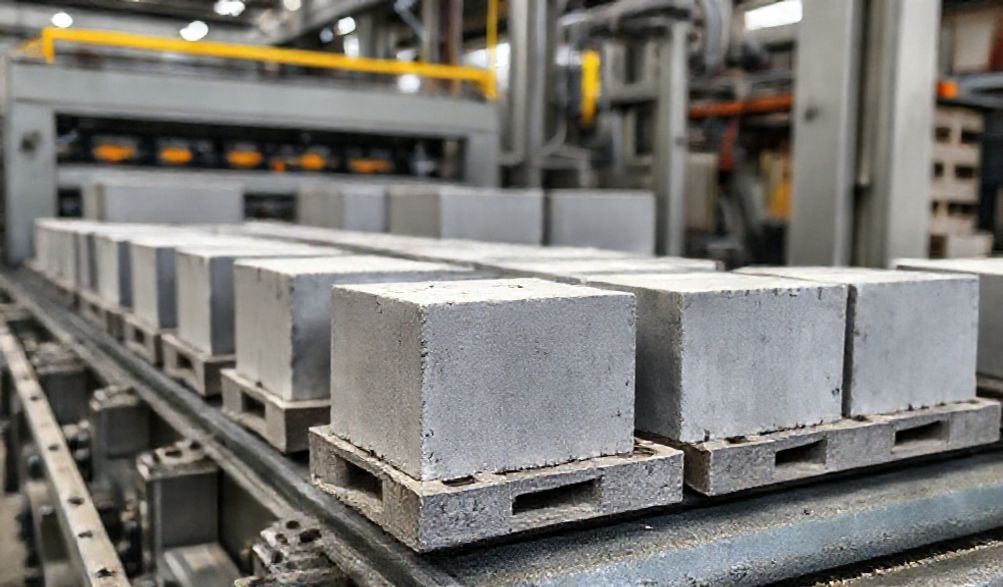
This is the most common category for serious small to medium-sized enterprises (SMEs). These are “stationary” because the machine sits in one place, and blocks are moved away on pallets. They offer a balance of automation, output, and price.
- Igiciro: $25,000 – $100,000+
- Byiza Kuri: Established block yards, businesses supplying local construction projects, and operations with steady, predictable demand.
- Key Cost Factors:
- Production Capacity (BPH): A machine rated for 1,500 blocks per hour (BPH) is priced significantly higher than one rated for 800 BPH.
- Urugero rw'ibikorwa bya roboti: Basic models may require manual feeding of concrete, while higher-priced units include automatic mixer feeders, conveyor belts, and semi-automatic pallet circulators.
- Sisitemu ya Paleti: The size, material (steel vs. plastic), and circulation method (manual transfer vs. chain-driven) are major cost components.
Inkingi y'ingenzi: This is where you start to see real production efficiency. Labor is focused on machine oversight and handling finished blocks, not on the molding process itself.
Fully Automatic Block Making Plants: High-Volume Production
These are complete production systems, often called “block making plants.” They feature high levels of automation, from raw material handling to curing and stacking.
- Igiciro: $100,000 – $500,000+
- Byiza Kuri: Large-scale manufacturers, industrial suppliers to mega-projects, and businesses in high-demand urban markets.
- Key Cost Factors:
- Urugero rw’ikoreshwa ry’imashini: Robotic pallet handlers, automatic stackers, and integrated curing systems (like steam curing chambers) add substantial cost.
- Ubushobozi bwo Gukora Plants can range from 5,000 to over 20,000 blocks per 8-hour shift.
- Integrated Systems: The highest-priced units include onboard batching plants, computerized color dosing systems, and advanced quality control sensors.
Inkingi y'ingenzi: This is a capital-intensive industrial operation. The high initial investment is justified by very low per-unit labor costs, exceptional consistency, and massive output.
Key Factors That Determine Concrete Block Machine Price
Within each category, prices vary widely. Understanding these seven core drivers will help you decode any supplier’s quotation.
Ubushobozi bwo Gukora n'Umusaruro
Capacity is the primary price engine. It’s not a linear relationship.
- Ikorerezo Rishingiye: A machine rated for 2,000 BPH will always cost more than a 1,000 BPH model from the same brand and series. You’re paying for a larger, more powerful vibration system, heavier-duty frames, and bigger hydraulics.
- The Cost of Scalability: Doubling output often requires more than doubling the price. Engineering a machine to run faster and longer while maintaining precision and durability involves higher-grade components and complex design, leading to a disproportionate cost increase.
Level of Automation and Technology
This is where you pay for efficiency, consistency, and ease of operation.
- Control Systems: A basic hydraulic system with manual levers is inexpensive. A Programmable Logic Controller (PLC) with a color touchscreen interface for setting block dimensions, vibration time, and pressure adds thousands to the price but reduces operator error and setup time.
- The Price of Precision: Advanced vibration technology (like dual-axis or variable-frequency vibration) ensures denser, stronger blocks with a better finish. High-precision pressure control systems also contribute to a higher price tag but deliver a superior, more consistent product.
Machine Type & Block Variety
Not all machines make all products. Specialization and versatility come at different costs.
- Specialized Machines: A machine engineered solely for high-speed production of standard hollow blocks is often optimized for that task and may be more cost-effective for that specific product.
- The Cost of Versatility: A “multi-purpose” machine that can produce hollow blocks, solid blocks, and pavers by changing molds will command a higher price. This flexibility requires a more adaptable mold system and press design. Consider if you need a Swiss Army knife or a dedicated chef’s knife.
Brand Reputation, Origin, and After-Sales Support
This factor heavily influences price and long-term value.
- Brand & Origin Premium: Established European, American, or top-tier Asian brands often carry a 20-40% price premium. This reflects decades of R&D, proven durability, and higher manufacturing standards. Competitive manufacturers, often from specific regions in Asia, offer lower upfront costs by optimizing supply chains and manufacturing processes.
- The Critical Trust Factor: The most important value differentiator is after-sales support. A higher price should include:
- Comprehensive warranty (e.g., 12-24 months).
- Availability of local technical support or trained agents.
- A reliable supply of genuine spare parts.
- Detailed installation and training services.
Paying less upfront for a machine with no local support can lead to catastrophic downtime costs later.
Beyond the Sticker Price: Calculating Your Total Investment
The machine’s price is just the beginning. A realistic budget must account for the entire ecosystem required to start production.
Ancillary Equipment & Setup Costs
You cannot run a block machine in isolation. Budget for these essentials:
- Concrete Pan Mixer or Batching Plant: ($5,000 – $50,000+). Consistent concrete is critical.
- Imashini z'umuhanda wo gutwara ibintu: ($2,000 – $15,000). For feeding the block machine.
- Pallets: ($50 – $200 each). You’ll need dozens, if not hundreds.
- Sisitemu yo Kuvura: Racks ($2,000) or a dedicated curing room/steam chamber ($10,000 – $50,000+).
- Gukorana n'ibikoresho: Forklift or hydraulic stacker ($10,000 – $30,000).
- Raw Material Storage Silos/Bins: ($3,000 – $20,000).
- Site Preparation: Foundation, power hookup, and shelter.
A rough estimate: For a medium-scale stationary plant, ancillary costs can range from 30% to 70% of the base machine price.
Operational Costs: Raw Materials, Labor, and Power
These are your recurring expenses that determine profitability.
- Raw Materials (Cement, Aggregates): This is typically 60-70% of your ongoing production cost. The machine itself doesn’t change this, but a more efficient machine wastes less material.
- Umurimo: This is the biggest variable. A manual machine may require 4-6 workers for meaningful output. A fully automatic plant might need only 2-3 for supervision and handling. Calculate the long-term wage savings of automation against its higher upfront cost.
- Gukoresha Amashanyarazi: High-vibration hydraulic systems are power-hungry. Modern electric vibrator systems can be more efficient. Request power rating specs (kW) from suppliers to estimate your utility costs.
Maintenance, Spare Parts, and Downtime
This is where supplier choice becomes critical.
- Maintenance Budget: Allocate 3-5% of the machine’s initial cost annually for routine maintenance (seals, hoses, lubrication).
- Spare Parts Inventory: An initial spare parts kit (common wear items) should be part of your purchase negotiation.
- The High Cost of Downtime: If your machine stops, revenue stops. A reliable supplier with fast spare parts logistics is invaluable. This is a non-negotiable aspect of due diligence.
How to Get the Best Value: A Buyer’s Checklist
Navigate the purchasing process strategically with this experienced-based checklist.
Define Your Business Needs Clearly
Answer these questions before you even look at a machine brochure:
- What block types and sizes will I sell? (Hollow, solid, paver, interlocking?)
- What is my target daily and monthly production volume?
- Who is my target market? (Local homeowners, contractors, government projects?)
- What is my available space, power supply, and labor situation?
Research and Compare Suppliers Thoroughly
- Request Detailed Quotations: Insist on a line-item quote specifying model, capacity (BPH), motor power, control system, included accessories, and warranty terms.
- Ask for Customer References: Speak to past buyers, preferably in a similar climate or market. Ask about machine performance and, crucially, after-sales service.
- Verify Company History: How long have they been in business? Do they have a physical address and service network? Search for independent reviews or industry forum mentions.
The Importance of Factory Testing & Trial Runs
If possible, visit the factory or a local installation.
- Witness a Production Run: See the machine operate at its claimed capacity.
- Use Your Mix Design: Provide your local aggregate and cement sample. Have the supplier produce blocks to verify the machine works with your specific materials and that block quality meets your standards.
Negotiating the Deal: Price, Payment Terms, and Shipping
- Negotiate on Value, Not Just Price: Ask for an extended warranty, inclusion of a spare parts kit, or free on-site training.
- Clarify Incoterms: Understand exactly what the price includes (FOB, CIF, etc.). Who pays for shipping, insurance, and port clearance?
- Payment Terms: A standard structure might be 30% deposit, 60% before shipment, 10% after successful installation. Secure favorable terms that protect you.
Frequently Asked Questions (FAQ)
Q: What is the cheapest type of concrete block machine I can buy?
A: Small manual or basic semi-automatic machines offer the lowest upfront cost, starting around $1,000. However, carefully consider the high labor input and low output relative to your business goals.
Q: How much does a medium-scale automatic block making machine cost?
A: A reliable stationary automatic machine with a production capacity of 2,000-5,000 blocks per 8-hour shift typically ranges from $50,000 to $120,000, depending on configuration, automation features, and brand origin.
Q: Are used concrete block machines a good option to save money?
A: They can be, but carry significant risk. You must factor in potential refurbishment costs, the lack of a warranty, and potential difficulty sourcing obsolete parts. A pre-purchase inspection by an independent technician is absolutely essential.
Q: Besides the machine price, what is the biggest cost in block manufacturing?
A: Raw materials (cement and aggregates) are consistently the largest ongoing cost, often 60-70% of your production expense. For semi-automatic operations, labor is the second-largest cost. For automatic plants, energy and systematic maintenance become key cost centers.
Q: How long does it take to see a return on investment (ROI)?
A: This varies massively based on scale, market, and efficiency. A small manual operation with good sales might see ROI in 6-12 months. A medium automatic plant often targets a 1.5 to 3-year ROI. A large fully automatic plant may have a 2-4 year ROI horizon. Detailed financial modeling based on your local selling prices and costs is crucial.
Conclusion
The “right” price for a concrete block manufacturing machine is not the lowest number on a quote. It is the price that represents the best long-term value, reliability, and alignment with your specific production goals. A cheaper machine that cannot meet your demand or that suffers constant breakdowns is far more expensive than a appropriately sized, well-supported unit.
Invest time in planning, supplier vetting, and financial modeling. Your concrete block machine is the core of your business; choosing it wisely is the foundation of your success.
Ready to refine your budget? Use the factors and checklist in this guide to create a shortlist of machine specifications that match your needs. Then, contact 3-5 reputable suppliers for detailed quotes and consultations to make a confident, informed investment.
<