
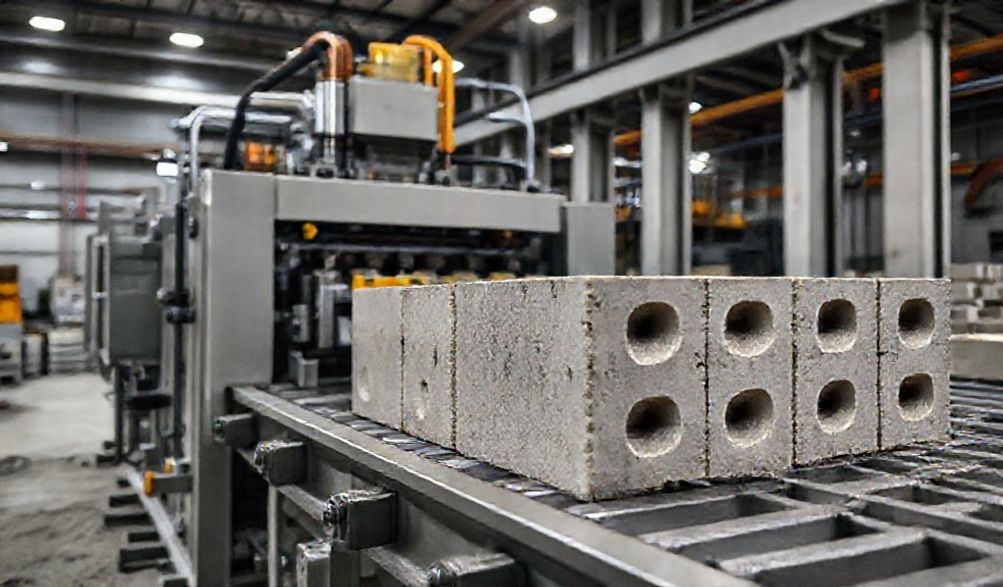
Concrete Block Manufacturing Machine Price: A Complete 2026 Guide from FUDA Factory Experts
Investing in a concrete block manufacturing machine is a major decision, and navigating the wide range of prices can be overwhelming. How do you ensure you’re getting the best value, not just the lowest price? A machine that’s too cheap might cost you a fortune in downtime, while an over-specified model can cripple your ROI before you even begin.
As industry veterans with over two decades of experience in block production technology, we at FUDA Factory have guided thousands of businesses through this critical purchase. This comprehensive guide cuts through the noise, providing transparent insights into concrete block manufacturing machine price factors, models, and how to make a cost-effective investment.
You will learn the key determinants of cost, get a clear 2026 price range breakdown by machine type, understand the often-hidden true cost of ownership, and discover how to evaluate a supplier like FUDA for long-term profitability.
Key Factors Determining Concrete Block Manufacturing Machine Prices
The price tag on a block making machine is not arbitrary. It’s a direct reflection of its capabilities, durability, and the technology embedded within. Understanding these factors empowers you to match your investment to your business goals.
Ubwoko bwa Mashini n'Urwego rwa Automatique (Ubwikorera bw'inshuro nkeya (Manual) cyangwa Ubwikorera busigaye (Semi-Auto) cyangwa Ubwikorera bwuzuye (Fully Automatic))
This is the primary driver of cost. The level of automation dictates not only the initial price but your ongoing labor expenses and production consistency.
- Imashini z'ibikorwa by'amaboko: Operated entirely by hand, from mixing to molding and curing. They have the lowest purchase price but the highest labor cost and lowest output.
- Imitungo Imigendeshwa n'ikiremwamuntu: Mechanize the critical compaction and vibration process but may require manual feeding of concrete or block removal. They offer a middle ground in price and output, ideal for scaling from manual operations.
- Imashini Zikora Byikoresho Zishobora Kwikorera Ubwabyo. Integrated systems that automate the entire process—batching, mixing, molding, curing, and stacking. They command a higher price but deliver maximum output with minimal labor, ensuring consistent quality and profitability at scale.
Ubushobozi Bwo Gukora & Ibisohoka (Imbaho ku Isaha)
A machine rated for 2,000 blocks per 8-hour shift is engineered differently than one built for 20,000. Higher capacity requires:
- More powerful vibration motors and hydraulic systems.
- A heavier, more robust frame to withstand constant stress.
- Larger pallet sizes and faster cycling mechanisms.
- Consequently, price scales significantly with capacity. It’s crucial to buy for your projected growth, not just your current needs.
Mold Customization & Block Type Versatility
The mold is the heart of the machine, defining what you can produce. Costs vary based on complexity:
- Standard Molds: For common hollow blocks or solid blocks are typically included or are low-cost.
- Ibikoresho bya Molds Byateguwe: For interlocking paving stones, specialty shapes, or unique design blocks require custom design and machining, adding to the price.
- Imashini Zikora Imirimo Myinshi: Machines capable of quickly switching between multiple block types (e.g., from hollow block to curbstone) use more complex mold systems and controls, increasing the initial investment.
Ingingo Shingiro n'Ubwiza bwo Kubaka
This is where “price” and “cost” diverge. A cheaper machine often uses inferior components that fail prematurely. Key components that impact both price and longevity include:
- Sisitemu ya Hydraulique: The quality of pumps, valves, and cylinders determines reliability and maintenance frequency.
- Moteri zo Gutigisa: High-quality, balanced motors ensure proper block compaction and density, and last longer.
- Umutwe & Imiterere: Heavy-duty steel and superior welding resist deformation over years of operation.
- Sisitemu yo Gucunga PLC: A reliable, user-friendly PLC ensures smooth automation and easier troubleshooting.
Investing in quality here reduces your total cost of ownership through less downtime and lower repair costs.
Power Requirements & Energy Efficiency
The power source and consumption directly affect your operating budget.
- Electrical vs. Diesel: Diesel-powered machines are often more expensive upfront and have higher fuel costs but are essential in areas with unreliable grid power.
- Ubwubatsi Bufite Ubushobozi Bwo Gukoresha Ingufu neza Modern machines with variable-speed drives and optimized hydraulic circuits may have a slightly higher price but significantly reduce electricity consumption, paying back the difference over time.
Price Range Breakdown by Machine Type (2026 Market Overview)
Based on our manufacturing experience and current market analysis, here is a transparent overview of what you can expect in 2026. These are indicative price ranges; final quotes depend on specific configuration and customization.
Imashini z'Ubwubatsi bwa Block z'Abantu na Semi-Omatike
Price Range: $3,000 – $18,000
Ideal for entrepreneurs, small-scale startups, or businesses producing niche architectural blocks.
- Imashini z’ibikoresho by’amaboko: Entry-level, suitable for very low-volume production or testing the market.
- Imitungo Imigendeshwa n'ikiremwamuntu: A significant step up in output and consistency. Prices vary based on size and whether they include a simple mixer or conveyor.
Medium-Scale Fully Automatic Block Machines
Price Range: $25,000 – $70,000
This is the most popular range for growing businesses and established block yards aiming to expand capacity and reduce labor dependency. These are stationary or mobile single-machine systems that produce between 4,000 to 10,000 standard blocks per 8-hour shift.
Large-Scale Fully Automatic Production Lines
Price Range: $70,000 – $300,000+
These are complete factory solutions for high-volume commercial production. The price reflects integrated systems:
- Umurongo w'Ubukorikori Bwuzuye Bwikora: Includes automatic pallet circulator, block stacker, and cement silo.
- Complete Plant with Batching System: Integrates a computerized batching plant, mixer, and block machine for a seamless, closed-loop process with minimal human intervention, outputting 15,000+ blocks per shift.
Beyond the Sticker Price: The True Cost of Ownership
The invoice price is just the beginning. Smart buyers evaluate the total investment over a 5-10 year horizon.
Shipping, Logistics, and Installation Costs
These are often overlooked but can add 15-30% to the landed cost.
- FOB Price vs. CIF/DAP: Understand the Incoterms. FOB means you arrange and pay for main shipping and insurance.
- Destination Port: Freight costs vary dramatically by region.
- Local Installation: Factor in the cost of a local technician or the factory engineer’s travel for installation and commissioning.
Spare Parts Inventory & Long-Term Maintenance
A machine is a long-term asset. Its maintenance cost is pivotal.
- Parts Availability & Cost: A reputable factory will have affordable, readily available spare parts. The “cheapest” machine may have obscure, expensive, or unavailable parts.
- Preventive Maintenance Schedule: Quality machines have clear maintenance guidelines. Following them prevents major, costly breakdowns.
Operational Costs: Labor, Energy, and Raw Materials
A more efficient machine can justify a higher purchase price.
- Umurimo: A fully automatic line may replace 8-10 manual workers, with savings paying back the machine in months or years.
- Energy: An energy-efficient model reduces your monthly power bill.
- Guhombera ibikoresho: Precise batching and vibration reduce raw material waste, improving your margin on every block.
The High Cost of Downtime & Poor After-Sales Service
This is the ultimate hidden cost. When your machine stops, your revenue stops.
- Machine Reliability: A robustly built machine has less unplanned downtime.
- Supplier Responsiveness: How quickly does the factory respond to technical questions? Can they provide remote troubleshooting or dispatch parts immediately?
- Ubufasha bwa tekiniki Access to clear manuals, wiring diagrams, and training videos is invaluable.
Choosing a partner who stands behind their machine is not an expense; it’s insurance for your business continuity.
Why Choose FUDA as Your Block Machine Factory Partner?
In an industry with many options, partnership is everything. Here’s what sets FUDA apart.
Over 23 Years of Manufacturing Expertise & Industry Experience
Since 2001, FUDA has evolved from a local machinery workshop into a globally recognized manufacturer. We’ve lived through every industry shift and technological advancement, embedding that hard-won knowledge into every machine we design.
Transparent Pricing & Customized Solutions
We believe in no-surprise quotes. Our engineers work with you to understand your raw materials, target block types, and production goals before providing a tailored proposal. We don’t just sell a machine from a catalog; we configure a solution for your business.
Rigorous Quality Control & Machine Testing
Every machine undergoes a stringent 48-hour continuous test run at our factory before shipment. We test with real concrete to verify output, block density, and system stability, ensuring you receive a machine that is ready for production, not just assembly.
Comprehensive After-Sales Support
Our commitment begins after the sale. Our support package includes:
* Detailed installation manuals and video guides.
* Remote video commissioning and operator training.
* A dedicated, responsive after-sales team for technical support.
* An efficiently managed spare parts department with global shipping.
Global Client Portfolio & Success Stories
We have successfully delivered reliable block making solutions to over 85 countries, including key markets across Africa, Southeast Asia, the Middle East, and South America. Our case studies and client testimonials speak to our ability to deliver results in diverse operating conditions.
Bibazo Byinshi Byibazwa (FAQ)
Q1: What is the cheapest concrete block machine I can buy?
A: The absolute cheapest option is a small manual press. However, we advise strongly against buying based on price alone. First, define your minimum viable daily output. A slightly higher investment in a semi-automatic machine often yields a faster return by enabling serious production and consistent quality.
Q2: How much does a standard fully automatic block making machine from FUDA cost?
A: A “standard” model like our FUDA-1000M, configured to produce approximately 5,000-6,000 standard hollow blocks (200x200x400mm) per 8-hour shift, typically starts in the range of $42,000 to $52,000 FOB. The final price depends on specific options like the mixer type, conveyor length, and control system preferences.
Q3: Are there any hidden costs when importing from China?
A: With a transparent partner like FUDA, there are no “hidden” costs, but there are associated costs you must budget for: the FOB price, international sea freight & insurance, import duties (specific to your country), port clearance & local transport fees, and installation/commissioning costs. We provide a detailed cost breakdown to help you plan.
Q4: Can FUDA provide a customized machine for a specific block design?
A: Yes, absolutely. Custom mold design and machine adjustment are core services. We have an in-house engineering team that can create molds from your provided samples or technical drawings. We then provide a comprehensive quote based on your specific block design and required output capacity.
Q5: What is the warranty and how do I get spare parts?
A: We offer a standard warranty of 12 months for core components and the electrical system (excluding standard wear parts like mold liners). When you need spare parts, simply contact our after-sales team with your machine model and part number. We can ship parts via air or sea freight, and provide tracking information promptly.
Ibyo byose
The “right” price for a concrete block manufacturing machine is one that balances your initial investment with long-term productivity, reliability, and support. It’s an investment in the foundation of your business.
At FUDA Factory, we position ourselves not as a distant vendor, but as an expert partner invested in your success. We combine decades of experience with transparent collaboration to provide you with durable machinery that delivers a strong return on investment for years to come.
Ready to get a transparent, customized quote for a machine that fits your budget and production goals? Contact the FUDA engineering team today with your block types and target output for a detailed proposal.
Want to evaluate all your options systematically? Download our free “Block Machine Investment & Supplier Evaluation Checklist” to ensure you ask the right questions and make a confident decision.
<