
Inshinga yo Guhanga Amatafari mu Rwanda (2026)
Intangamarara
Ubugande buraka. Kuva mu nkengero z’Umujyi wa Kampala zihuta kugenda zikazamuka kugeza mu midugudu ya Gulu na Mbarara ikura, umushinga w’ubwubatsi urimo guhindura imiterere y’igihugu. Iki kuzamurwa gishyigikiwe n’umubare w’abaturage ukomeje kwiyongera, imijyi ikura, hamwe n’ibibazo by’ingutu z’amazu menshi. Nyamara, iki kuzamuka kizanye n’ikibazo gikomeye: igiciro cy’ibikoresho by’ubwubatsi gikomeye cyane hamwe n’ingaruka zabyo ku bidukikije.
Mu myaka myinshi, ibikoresho byakoreshejwe cyane byari amatafari yatwitswe n’ibikoresho bya sima. Ariko, amatafari yatwitswe byagize uruhare runini mu gusenya amashyamba—ikibazo gihambaye mu Uganda—kubera ko hakenerwa inkwi nyinshi mu mafuru. Kandi, bigenera ingufu nyinshi kandi bikazana umwotsi mubisha. Ibikoresho bya sima, nubwo bifite imbaraga, bihenze bitewe n’igiciro cyiza cya sima n’ibindi bikoresho, kandi ibikorwa byabyo birema umwanda mwinshi.
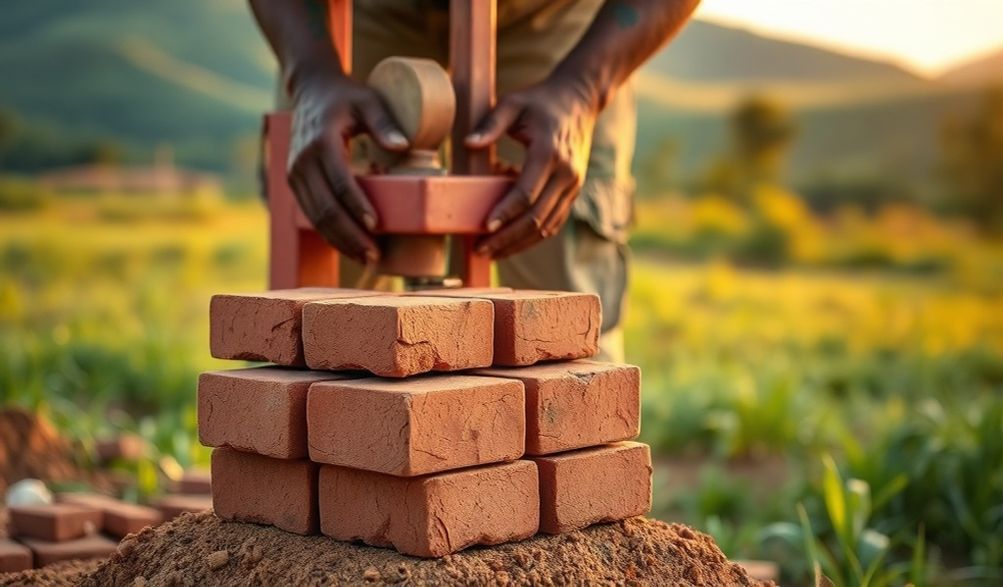
Injira umuti w'impinduka:mashini yo gukora amatafari y'ubutaka muri UgandaNk’ikindi kizwi nka Interlocking Stabilized Soil Block (ISSB) press cyangwa Compressed Earth Block (CEB) machine, ubu buhinzi buhindura uburyo Abanyarwanda bakorera imishinga. Bufasha mu kubaka mu buryo bworoshye, burambye, kandi budahungabanya ibidukikije, hakoreshejwe ubutaka bwo mu karere mu gukora amatafari y’icyiza.
Iyi nyigisho yateguwe kuba umuyoboro wawe ukomeye. Ihuriye hamwe n'ubumenyi bukora mu rwego rw'ubucukuzi hamwe n'ibisobanuro byihariye by'umwuga w'ubwubatsi mu Uganda, tugutangira amakuru y'ingirakamaro azwi kandi wizerwa. Tuzasuzuma inyungu zihambaye, tuzatandukanya ubwoko bw'imashini ziboneka, tuzasuzuma ibiciro, kandi tuzasobanura iby'ingenzi biganisha ku gutsinda. Niba uri umunyamuryango w'umunyarwanda, umushishozi ushaka gukora ubucuruzi, cyangwa umuyobozi w'umushinga, iyi nyigisho izagufasha gufata ibyemezo bishingiye ku bumenyi mu gukoreshaimashini z'ububumbe bwo mu butaka muri UgandaGukora ibikorwa byubaka mu buryo butazigera no mu buryo bwiza.
Kubera Lera Imashini yo Gukora Amatafari y’Ubutaka mu Gucukumbura mu Uganda?
Gukoresha uburyo bwo gukora amatafari y’ubutaka si umwanzuro wo kubaka gusa; ni umwanzuro w’ingamba ufite inyungu zihambaye kuri konti yawe, umuryango wawe, n’ibidukikije.
Ubushobozi bwo Gukoresha Amafaranga N’Ubukungu
Ubukungu bw’amatafari y’ubutaka butandukanye ne’ibikoresho bisanzwe.
* Kugabanya cyane igiciro cy'ibikoresho:Ingufu nyamukuru yawe—ubutaka—kenshi iboneka aho uherereye cyangwa ikaboneka mu murenge wanyu mu giciro gito. Ibi birekera aho gucuruza amatafari yatwitswe cyangwa ibikomoka ku bindi bintu byaguzwe.
* Low Operational Costs: Machines range from simple manual levers to hydraulic systems. They require no burning fuel and, in the case of manual presses, no electricity or diesel, keeping ongoing production costs remarkably low.
* Business and Job Creation: A single machine can seed a small enterprise. It creates opportunities for machine operators, soil suppliers, and masons trained in interlocking brick laying, fostering economic empowerment within local communities.
Environmental Sustainability & Preservation
In a country where environmental conservation is crucial, soil brick technology presents a responsible alternative.
* Halts Deforestation: By completely eliminating the need for firewood kilns, ISSB production directly addresses one of the key drivers of deforestation and forest degradation in Uganda.
* Zero Emissions from Production: There is no burning process. This means no smoke, no air pollution, and a dramatic reduction in the carbon footprint associated with your building project.
* Low Transport Impact: Utilizing on-site or locally sourced subsoil drastically cuts down the fuel and emissions from transporting heavy materials like sand and aggregate over long distances.
Structural Integrity & Durability
Do not mistake “earth” for “weak.” Properly made soil bricks are formidable building components.
* Ubushobozi Bwinshi Bwo Gukandagira: When the correct soil mix is stabilized with a small amount of cement or lime and highly compressed, it achieves compressive strength that meets and often exceeds that of traditional fired bricks.
* Seismic Resistance & Strength: The interlocking design creates a mechanical bond between bricks, resulting in walls with exceptional tensile strength. This makes them highly resistant to cracking and perform well in seismic conditions. Walls can be built with minimal or no mortar, further saving cost.
* Ubushyuhe bwo hejuru cyane: The density and composition of compressed earth provide excellent thermal mass. Buildings stay cooler during the day and warmer at night, reducing the need for artificial cooling and enhancing comfort—a major advantage in Uganda’s climate.
Types of Soil Brick Making Machines Available in Uganda
Choosing the right machine depends entirely on your scale, budget, and power availability. Here’s a breakdown of the common types found in the Ugandan market.
Manual Press Machines (Most Common for Startups)
These are the workhorses of small-scale and community-based projects.
* Byiza Kuri: Individual homeowners, self-build groups, NGOs, community projects, and small-scale entrepreneurs starting out.
* Ibintu by'ingenzi: They are entirely human-powered via a lever system. They are highly portable, affordable, and require no electricity or fuel.
* Output Reality: A dedicated 2-3 person team can realistically produce 300 to 500 high-quality bricks in an 8-hour day. This is perfect for building a single home or undertaking small commercial projects.
Hydraulic or Diesel-Powered Machines (For Medium-Scale Production)
When you need higher output for a business or a larger construction project, these machines are the next step.
* Byiza Kuri: Small to medium-sized block-making enterprises, real estate developers, and larger institutional builds like schools or clinic complexes.
* Ibintu by'ingenzi: These use a hydraulic system, powered by a diesel engine or an electric motor (where grid power is reliable). They apply greater, more consistent pressure, leading to higher brick density and uniformity.
* Ibitekerezo: Output can reach several thousand bricks per day. Factor in the costs of diesel, maintenance, and potentially a generator if grid power is unstable.
Fully Automated Electric Machines (For Large-Scale Production)
These are for industrial-level production and established block yards.
* Byiza Kuri: Large construction companies, major block suppliers, and large-scale housing projects requiring vast, consistent brick supplies.
* Ibintu by'ingenzi: They feature automated feeding, compression, and ejection systems. Output is the highest, with perfect uniformity, and labor requirements are reduced primarily to machine operation and material handling.
* Key Challenge: The capital investment is significant. They also depend entirely on a reliable and powerful electricity supply, often necessitating a large industrial generator as a backup, which adds to operational complexity and cost.
Key Considerations Before Buying a Machine in Uganda
Success with soil bricks starts long before the machine arrives. Careful planning in these areas is non-negotiable.
Soil Testing & Stabilization: The Critical First Step
This is the most important advice any expert will give you. The failure of a soil brick project almost always traces back to poor soil science.
* Suitable Soil: The ideal soil is a mix of clay (as the binder), silt, and sand (for granular strength). Pure clay will crack; pure sand will not bind.
* The Role of Stabilizers: A small percentage of stabilizer—typically 5-8% cement or 3-5% lime—is mixed with the soil. This chemically stabilizes the brick, giving it lasting strength and water resistance. The correct type and amount depend entirely on your soil test results.
* Where to Test: Do not guess. Invest in a professional soil test. Affordable testing services are available at institutions like Makerere University’s Department of Civil Engineering or other regional construction material labs. This report is your blueprint for success.
Project Scale & Required Output
Be realistic about your needs.
* Define Your Goal: Are you building your own house? Starting a business to supply bricks? Equipping a community project? Your goal dictates the machine type.
* Calculate Brick Needs: A typical 3-bedroom house may require 8,000-12,000 bricks. Compare this to the daily output of a manual (300/day) vs. a hydraulic machine (2000/day) to understand your project timeline.
Budget & Total Investment Cost
Look beyond the machine’s price tag.
* Total Cost Breakdown:
* Machine Cost (Primary investment)
* Soil Testing Fees
* Cost of Stabilizer (Cement/Lime)
* Tools (Sieves, mixing trays, moisture testers)
* Training for your team
* Transportation and setup
* Critical Factor: Prioritize suppliers who can guarantee after-sales service and spare part availability within Uganda or East Africa. A cheap machine with no support can become a very expensive paperweight.
Supplier Reliability & After-Sales Support
Your relationship with the supplier is key to long-term success.
* Choose Reputable Partners: Opt for suppliers with a verifiable track record in Uganda or the East African region. Look for those who understand local conditions.
* Essential Questions to Ask:
* What is the warranty period and what does it cover?
* Do you provide on-site installation and training?
* Where are your spare parts stocked, and what is the typical lead time?
* Can you provide references from past clients in Uganda?
Operational Guide: Making Quality Bricks in Ugandan Conditions
With the right soil and machine, producing excellent bricks is a methodical process.
Step-by-Step Production Process
- Sourcing & Sieving: Excavate soil from below the topsoil (which contains organic matter). Sieve it through a 10mm mesh to remove stones, roots, and debris.
- Proportional Mixing: Measure your sieved soil and the required percentage of stabilizer (e.g., 95% soil, 5% cement) by volume. Mix them dry until the color is uniform.
- Moisture Content Control: Gradually add water while mixing. The ideal moisture is critical—use the “drop test.” A handful of the mix should form a ball that holds its shape but crumbles when poked. Too wet, and bricks will stick; too dry, and they won’t bind.
- Compression & Ejection: Load the mix into the machine’s mold and apply compression. For manual machines, this means using the lever fully. Eject the brick carefully onto a pallet.
- Gukora: This is where bricks gain strength. Stack them under a shade (plastic sheeting or a shed) and keep them moist by sprinkling water lightly 2-3 times a day for 14 to 28 days. Protect them from direct rain and harsh sun during this period.
Common Challenges & Troubleshooting
- Bricks Cracking After Ejection: Usually caused by soil being too dry or having too much clay. Re-test soil and adjust moisture; consider adding a little more sand.
- Bricks Sticking in the Mold: The mix is too wet. Reduce water and ensure the mold is clean and lightly oiled (with used engine oil) between presses.
- Low Final Strength: Insufficient compaction (not pressing hard enough), incorrect stabilizer percentage, or improper curing. Review each step.
- Adapting to Seasons: In the dry season, you’ll need to add more water and cure diligently. In the rainy season, protect your soil stockpile and curing bricks from heavy downpours; you may need less added water.
The Business Case: Starting a Soil Brick Enterprise in Uganda
For the entrepreneur, a soil brick machine is not just a tool; it’s a business-in-a-box.
Market Analysis & Potential Clients
The market is diverse and growing:
* Individual Homeowners: Seeking affordable, quality building materials.
* Abashinzwe Kubaka Amazu: Looking to reduce construction costs for housing projects.
* NGOs & Aid Organizations: Needing sustainable, community-friendly building solutions for schools, clinics, and sanitation projects.
* Government & Municipalities: For public housing and infrastructure under affordable housing initiatives.
* Commercial Builders: For offices, warehouses, and hotel complexes where thermal comfort is a selling point.
Basic Financial Modeling
Let’s model a simple manual press business:
* Cost per Brick (Estimate):
* Soil: Negligible
* Cement (5% stabilizer): ~UGX 50
* Labor & Overheads: ~UGX 30
* Total Cost: ~UGX 80-100 per brick
* Selling Price: ISSBs typically sell for UGX 150 – 250 each, depending on region and quality.
* Profit Margin: A clear UGX 70-150 profit per brick. A small team producing 400 bricks/day creates significant income potential. Your break-even point on a manual machine investment can be as short as a few months.
Success Stories & Case Studies
The proof is in the buildings. Across East Africa, ISSB technology has proven itself:
* School Projects: Numerous primary and secondary schools in Uganda and Kenya have been built with ISSBs, often by NGOs, due to their low cost and community-involvement model.
* Housing Cooperatives: Groups like the Nyakaana Housing Cooperative in Uganda have utilized this technology for member homes, drastically cutting costs.
* Commercial Use: Guest lodges and demonstration centers, such as those promoted by Build Your Future Uganda and other social enterprises, showcase the aesthetic and practical viability of soil brick construction.
FAQ Section
Q1: What is the typical price range for a soil brick making machine in Uganda?
A: Prices vary widely. A basic manual press can range from UGX 2 million to UGX 10 million. Hydraulic machines start around UGX 15 million and can go up to UGX 50 million or more for larger, diesel-powered models. Fully automated electric lines are a significantly larger investment. Always get detailed quotations from multiple suppliers.
Q2: Can I use the soil from my own plot in Kampala/Mbarara/Gulu, etc.?
A: There’s a very high chance you can. The red clay soils common in much of Uganda are often excellent for brick making. However, you must test it first. A simple test can confirm suitability and tell you exactly what stabilizer and proportion you need.
Q3: How many bricks can I make per day with a manual machine?
A: With an efficient 2-3 person team (one mixing, one pressing, one stacking/curing), you can realistically produce 300 to 500 bricks in an 8-hour workday. Output depends on workflow organization and soil preparation.
Q4: Are soil bricks approved for construction by Ugandan authorities?
A: Approval often depends on the local municipal or district council. The key is to present the technology professionally. Come with your soil test report, brick compressive strength test results (which you can get from a lab), and photos/references of existing approved structures built with ISSBs. Engage with building inspectors early in your planning process.
Q5: Where can I get training on using these machines in Uganda?
A: Reputable machine suppliers often provide basic training. For more comprehensive training, look to technical institutes offering construction courses or NGOs focused on sustainable building, such as Good Earth TrustcyangwaHabitat for Humanity, which sometimes run workshops. The Uganda Institute of Professional Engineers (UIPE) may also have resources.
Ibyo byose
Themashini yo gukora amatafari y'ubutaka muri Uganda represents more than just a piece of equipment; it symbolizes a smarter, more sustainable, and self-reliant future for Ugandan construction. It directly tackles the triple challenges of high cost, environmental damage, and the need for durable housing. This technology empowers individuals to build their own homes and entrepreneurs to build thriving businesses, all while preserving Uganda’s precious natural resources.
The path forward is clear. Start with the foundational step: get your soil tested. Use that knowledge to engage with reputable suppliers who offer not just a machine, but the training and support necessary for long-term success. The buildings of Uganda’s future can be stronger, cooler, cheaper, and greener. The tool to build that future is already here.
Ready to explore your project? Contact a reputable supplier today to discuss your soil testing and machine options.
Have experience with soil bricks in Uganda? Share your insights in the comments below to help others in our community.
For more guides on sustainable building in East Africa, subscribe to our newsletter.
<