
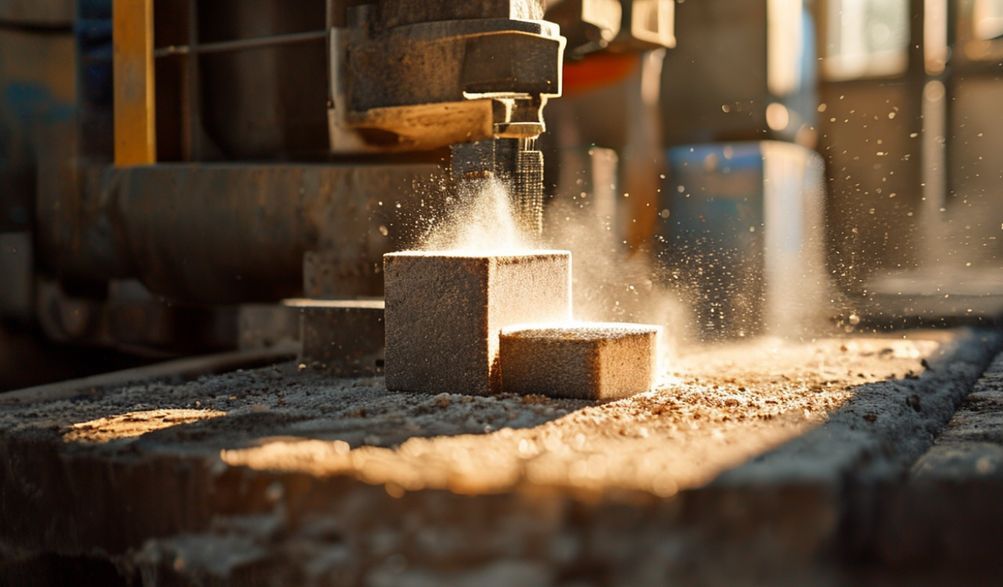
Gukubura Imashini Yogukora Amafomati ya Sima Yigiciro Gito: Umuyoboro W’umuguzi W’umwizerwa (2026)
Intangamarara
Gutera inzu yawe, gutangiza ubucuruzi buto bwo kubaka, cyangwa gukora umushinga w’umuryango? Imashini ikora amabuye ya sima ishobora kuba impinduka ikomeye, ihindura ibikoresho by’ibanze kugira ngo ibe amabuye y’ubatswe agaciro. Ariko kuri benshi, ikibazo kinini ni igiciro.
Niba ushakisha "mashini yo gukora amatafari ya sima yo mu giciro gito," birashoboka ko wahuye n'amahitamo atangaje, amafaranga y'ubucuruzi atangaje, n'isezerano ridasobanutse. Gushaka ibicuruzwa mu giciro gito birashobora kuba impamvu yo gutanga amafaranga adahagije, aho igiciro gito cyihishe amafaranga menshi yo mu gihe kirekire n'ibibazo byo gukora.
Uyu mwongozo uzuye wateguwe kugirango ukuyobore muri uwo muzabure. Tuzasubiramo ibisobanuro by’ijambo “giciye” mu rwego rw’ibikorwa, tugasuzuma ibice bitandukanye by’imashini ziboneka, kandi tugashyiraho ibintu ngenderwaho mwibanda cyane. Intego yacu ni ugushishikariza gushaka imashini yizewe, ifite igiciro gikwiye, ikaba ifite agaciro k’ukuri kandi ikomeza igihe kirekire.
Gukurikije ubunararibonye bw’imyaka mu rwego rw’ubucuruzi no gusuzuma ibikoresho, iki gice kigabanyiriza amarangamutima yo kwamamaza kugira ngo kiguhe amakuru y’ukuri kandi ashimishije, abikenewe kugira ngo utange amafaranga yawe udashidikanya. Reka dushyireho ishingiro ryizima ryo gufata icyo wemeza.
"Gufata" Biteye Mu By'umwihariko ku Mashini za Block?
Ijambo "gucirirwa" ni urusika mu mwuga w’imashini. Irashobora kuvuga "igiciro gito cya mbere" cyangwa "agaciro kiza," kandi guhuza ibyo byombi ni ikosa ribanziriza umunyeshuri ashobora gukora. Gucirirwa nyakuri bishobora gupimwa mu gihe cyose cy’ubuzima bw’ibikoresho.
Initial Price vs. Total Cost of Ownership (TCO)
The price tag is just the beginning. A machine with a rock-bottom purchase price can become a money pit due to:
* Frequent breakdowns and costly repairs.
* Expensive, hard-to-find spare parts.
* Low production output, increasing labor costs per block.
* Poor block quality leading to waste and rejected materials.
You must consider the Igiciro Cyose Cy'Umwihariko (TCO). This includes:
* Purchase Price
* Maintenance (regular lubrication, part replacements)
* Repairs (unexpected breakdowns)
* Operating Costs (labor, electricity or diesel, raw material waste)
A machine that costs $1,000 more upfront but operates for 5 years with minimal downtime is infinitely “cheaper” than a $500 machine that fails in 6 months.
The Quality vs. Affordability Balance
Extremely low-priced, no-name machines often cut corners where it matters most:
* Safety: Weak frames or faulty wiring can pose serious risks.
* Ubumenyi burambuye Poor vibration systems produce blocks of uneven density and size, unacceptable for structural work.
* Ubushobozi bwo gukomeza Substandard steel in molds and frames wears out rapidly.
The smart approach is to seek value-for-money. This means identifying machines from reputable manufacturers that offer robust construction and critical features at a competitive, sensible price. You’re paying for engineering, not just metal.
Defining Your “Cheap”: Budgeting for Your Needs
Before looking at prices, define your needs. Your budget should be a function of your project scope.
* Are you making blocks for a single home?
* Are you supplying a local construction market?
* What is your required daily output?
Set a realistic budget range that allows for a machine capable of meeting your output goals reliably. “Cheap” should mean the most cost-effective solution for your specific situation, not the lowest number on the internet.
Types of Affordable Cement Block Making Machines
Understanding the categories of machines is key to matching the right technology to your budget and goals.
Imashini z’ubukoresha z’ubwubatsi
These are the most basic and entry-level options.
- Byiza kuri: Ultra-low budget, very small-scale projects (e.g., garden walls, small sheds, DIY enthusiasts), or regions with no power access.
- Inziza:
- Igiciro cyo mbere gito.
- Nta gucanwa cyangwa diziri bisabwa.
- Byoroshye gusobanukirwa no gukoresha.
- Ibibi:
- Bikunze cyane kandi bishobora gutera umubiri umunaniro.
- Very slow production speed.
- Block quality heavily depends on operator skill, leading to potential inconsistency.
Ibirarishushanya bya Semi-Otomatiki byo Gukora Ibikoresho bya Bloki
This category offers the best balance for small to medium-scale commercial ventures.
- Byiza kuri: Small businesses, startup block yards, and projects requiring steady, consistent production.
- Inziza:
- Excellent balance of price and productivity.
- Uses electric or diesel engines to power vibration and compaction, ensuring dense, strong blocks.
- Significantly faster output than manual machines.
- Consistent block quality with minimal operator skill.
- Ibibi:
- Inshoramari yo mbere nziza kuruta izikoreshwa n'abantu.
- Requires a power source and basic operator training.
Small Mobile Block Machines (Egg-Layers)
Named for their method of laying blocks directly on the ground, these are a popular on-site solution.
- Byiza kuri: On-site production for medium-scale projects (like a housing estate), eliminating block transport costs.
- Inziza:
- Produce blocks directly on a prepared slab, easy to move.
- Moderate price point.
- Good output for a mobile unit.
- Ibibi:
- Block quality can be slightly lower than stationary semi-automatics.
- Requires a level, prepared casting surface.
- Generally slower than stationary semi-automatic models.
Key Features to Prioritize When Buying on a Budget
When funds are limited, you must invest in the right features. Do not compromise on these core elements.
Build Quality & Core Components
This is where value machines separate themselves from junk.
- Umutwe & Imiterere: Look for a machine built with a robust, welded steel frame. Avoid thin, sheet-metal constructions that will flex and fail under constant vibration.
- Sisitemu yo Gutengurwa: The heart of the machine. A powerful, well-balanced vibration motor (often 2-4 motors) is non-negotiable for creating dense, strong blocks. Ask about the power (KW/HP) and frequency of the vibration system.
- Ibirimba: Molds should be made from hardened, high-quality steel to resist wear. Check how easy it is to change molds to produce different block types (solid, hollow, interlocking, paving stones). Versatility adds long-term value.
Ubushobozi bwo Gukora n'Umusaruro
Match the machine to your actual needs to avoid overspending.
- Understand the cycles per hournablocks per cycle. A machine that makes 4 blocks per 30-second cycle is very different from one that makes 1 block per 60-second cycle.
- Be realistic about your daily needs. Buying a massive, underutilized machine strains your budget, while an overworked small machine breaks down.
- Verify the block sizes (4”, 5”, 6”, etc.) the machine can produce to ensure it meets your local market standards.
Inkomoko y'Agashusho & Ibiciro by'Ukorana
The running cost is a critical part of your TCO.
- Electric vs. Diesel:
- Umuriro w'amashanyarazi Cheaper to run and maintain, quieter, and preferred for fixed locations with stable grid power.
- Diesel: Essential for sites with no electricity. Higher fuel and maintenance costs but offers complete independence.
- Always check the power consumption (KW for electric) or fuel consumption (liters/hour for diesel) specifications. An inefficient motor is a hidden, ongoing expense.
Where to Find Reliable and Affordable Machines
Knowing where to look is half the battle. Focus on suppliers that offer sustainability, not just a sale.
Direct from Manufacturers vs. Local Distributors
- Buying Direct from Manufacturers:
- Potential Pros: Possibly lower prices, ability to customize, direct communication with the factory.
- Potential Cons: May lack local spare parts inventory, shipping and import logistics can be complex and costly, after-sales support may be slow due to time zones/distance.
- Buying from Local/Regional Distributors:
- Potential Pros: Invaluable local after-sales service, readily available spare parts, hands-on technical support, and often, help with installation and training.
- Potential Cons: The unit price may be slightly higher to cover their service overhead.
For first-time buyers, a reputable local distributor is often the safer, more valuable choice.
Evaluating Online Marketplaces & Suppliers
Online research is crucial, but caution is paramount.
- Red Flags to Avoid:
- No physical address or verifiable company history.
- Prices that seem unrealistically low.
- Vague or missing technical specifications.
- Only stock photos, no videos of the actual machine operating.
- Pressure to pay via unsecured methods.
- Green Flags to Look For:
- Detailed product pages with specs, manuals, and parts lists.
- Real operation videos showing the machine working.
- Clear contact information and a professional presence.
- Genuine customer testimonials or case studies.
The Critical Role of After-Sales Service
For a “cheap” machine to be a smart buy, support is non-negotiable. Before purchasing, ask:
* What is the warranty period and what does it cover?
* Are spare parts (molds, vibration motors, bearings) readily available? Can you get a parts catalog?
* Is technical support available via phone or online?
* Do they provide operation and maintenance manuals?
Smart Tips to Save Money Without Sacrificing Quality
True savings come from smart strategies, not just buying the lowest-cost item.
Consider a Quality Used or Refurbished Machine
A well-maintained used machine from a known brand can be an excellent value.
* Where to Look: Reputable machinery dealers, industry auctions, or direct from businesses upgrading their equipment.
* Inspection Checklist:
* Check for excessive wear on the mold faces and frame.
* Ask for maintenance records.
* Test run the machine, if possible, to listen for unusual noises from the vibration system.
* Inspect the hydraulic system (if present) for leaks.
Start with a Basic Model & Expand Later
Many manufacturers offer modular machines.
* You can start with a core semi-automatic model.
* As your business grows and cash flow improves, you can add accessories like a hydraulic system for easier operation, a conveyor belt, or a block elevator.
* This spreads the cost over time and ensures you only pay for what you currently need.
Master DIY Maintenance & Source Local Parts
Reduce long-term running costs by being proactive.
* Learn Basic Maintenance: Any operator should know how to:
* Lubricate all moving parts regularly.
* Check and tighten bolts and nuts.
* Clean the mold thoroughly after each production run.
* Source Generic Parts Locally: Components like standard bearings, seals, electric motors, and hydraulic hoses can often be sourced from local industrial suppliers, reducing downtime and avoiding expensive “branded” part markups. Get the part numbers from your machine’s manual.
Bibazo Byinshi Byibazwa (FAQ)
Q1: What is the cheapest type of cement block making machine?
A: Manual block making machines have the lowest upfront cost, often ranging from a few hundred to a couple thousand dollars. However, remember to factor in the high labor cost and slower production speed.
Q2: Can a cheap machine produce strong, standard-quality blocks?
A: Yes, but it depends on the definition of “cheap.” A value-oriented semi-automatic machine from a known brand can produce excellent blocks. An extremely low-cost, poorly made machine will likely produce weak, inconsistent blocks that may not meet construction standards.
Q3: How much should I realistically budget for a good starter machine?
A: For a new, small semi-automatic machine capable of professional results, a realistic starting budget is typically between $3,000 and $8,000, depending on features and capacity. Significant price variations exist by region and manufacturer.
Q4: What are the most common problems with low-cost block machines?
A: Frequent breakdowns due to weak frames or poor-quality vibration motors, inconsistent block density, difficulty sourcing replacement parts, and lack of manufacturer support are the most common issues.
Q5: Is it better to buy a machine locally or import it directly?
A: For your first machine or if you lack technical expertise, buying from a local or regional distributor is strongly advised. The higher price is often justified by readily available service and parts, which minimizes costly downtime.
Ibyo byose
Finding a truly “cheap” cement block making machine is a journey focused on long-term value, not short-term savings. It’s about prioritizing durable build quality, reliable performance, and unwavering after-sales support over the allure of a tempting low price.
Define your project needs clearly, set a budget based on Total Cost of Ownership, and diligently research suppliers with proven track records. Use the features and checklists in this guide as your roadmap.
Ready to take the next step? Use this guide as your checklist. Contact 2-3 shortlisted suppliers, ask for customer references, and if possible, request a live demonstration. Your perfect, cost-effective block machine is out there—armed with the right knowledge, you’re ready to find it.
Investing in machinery is a significant decision. We are committed to providing accurate, experience-based information to help our readers build with confidence.
<