
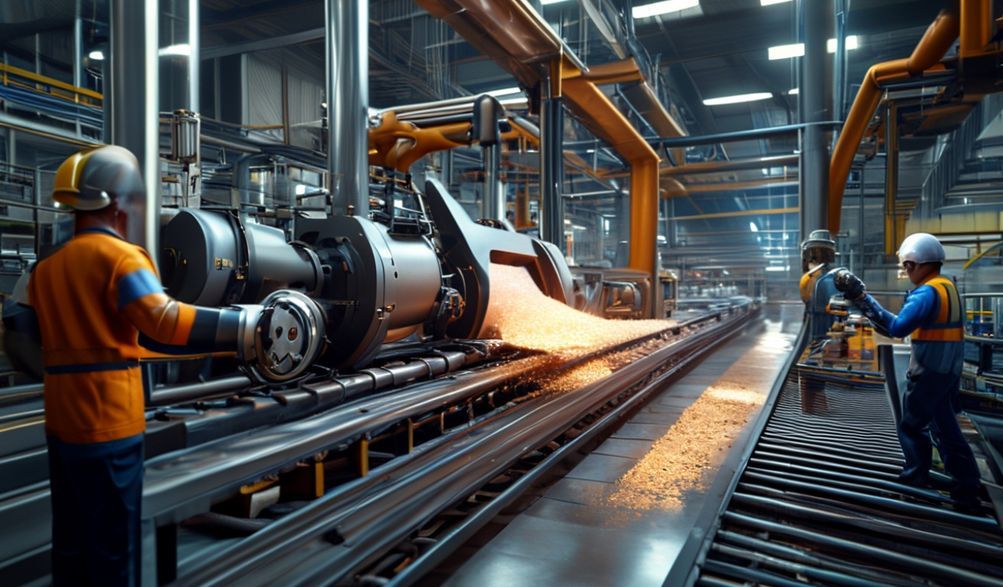
Igiciro cya Mashini Zikora Amatafa ya Fly Ash Zikora mu buryo bw'ikoranabuhanga: Uruhando rwuzuye rw'umuguzi mu mwaka wa 2026
Ushaka gushora imari mu ruganda rutunganya amatafari ya fly ash ariko ukazahuzwa n’ubwinshi bw’ibiciro by’imashini? Ntabwo uri wenyine. Kugenda mu kwishora imari mu ruganda rukora byimazeyo ni umwanzuro ukomeye, urimo ibiciro bigoye n’amasezerano ahanganye. Ubu buyobozi bukuraho urujijo. Bishingiye ku isesengura ry’imyaka myinshi mu nganda, amakuru ataziguye aturutse ku bakozi b’imashini, n’inama n’abafite inganda zakunze gutsinda, duha amakuru asobanutse, yizewe ukeneye. Tuzi ko uri gukora ubushakashatsi ku gikoresho gikomeye kizasobanura umusaruro n’inyungu z’ubucuruzi bwawe mu myaka iri imbere. Ibi ntabwo ari urutonde rw’imibare gusa; ni igice cyuzuye cy’ibintu bigira ingaruka ku giciro cy’imashini yawe.igiciro cya mashini ikora amatafari y’ivu ry’umuyonga mu buryo bwikoraingombwa zo mu buryo bwo gutegura amafaranga yihishe, ndetse n'ubushobozi bw'abahanga bwo kwizera ko ubona agaciro k'igihe kirekire ku mushinga wawe.
Gusobanukirwa n’Imashini Zikora Amatafari y’Ifumbire ya Fly Ash Zikora Abyishoboye
Mbere yo kwinjira mu biguzi, ni ngombwa kumenya neza icyo uguze. Ubu bumenyi bw'ibanze ni ingenzi mu gusuzuma ibiciro no kwirinda amakosa ashobora gutera ubusa.
Ni iki Gikoresho Gikora Amabuye y’Amashanyarazi mu Nzira Yihuse?
A fully automatic fly ash bricks machine is an integrated manufacturing system designed to produce bricks with minimal human intervention. From raw material feeding to finished brick stacking, the entire process is controlled by a programmable logic controller (PLC).
- How it differs: Unlike semi-automatic (operator-dependent for molding or feeding) or manual machines, the fully automatic system runs on a continuous cycle.
- Core Advantages: The primary benefits driving investment are unmatched productivity, exceptional consistency in brick dimensions and strength, and drastic labor savings. One operator can often manage what would require 15-20 workers in a manual setup.
Key Components and Their Role in the Machine’s Cost
The price tag is a direct reflection of the quality and sophistication of its core components. Understanding these helps you decipher quotes.
- Sisitemu ya Hydraulique: The heart of the machine. High-pressure, industrial-grade pumps and valves from brands like Bosch Rexroth or Yuken cost more but ensure years of reliable, high-pressure compaction with minimal downtime.
- Kontoro y'ibikorwa (PLC): The brain. Brands like Siemens, Mitsubishi, or Allen-Bradley offer superior reliability and precision in controlling the production cycle, affecting brick quality and machine synchronization.
- Igishushanyo n'Umubare Heavy-duty, vibration-resistant steel fabrication is non-negotiable for longevity. Thinner gauge steel reduces upfront cost but increases long-term maintenance.
- Mixer (Pan or Twin Shaft): A robust mixer ensures homogeneous raw material, which is critical for brick strength. Lined, heavy-duty mixers prevent wear and contamination.
- Conveyor Belts & Pallet Feeders: These must be precisely synchronized with the press. Automated pallet circulation systems represent a significant portion of the automation cost.
- Imikoro (Imikoro): The quality of steel (e.g., EN-19, EN-31) and precision of machining in the mold define brick shape, finish, and ejection smoothness. Hardened steel molds are a premium but necessary feature for high-volume production.
Key Factors Determining the Machine Price
Industry practice shows that price variation isn’t arbitrary. It’s dictated by several concrete, measurable factors.
Ubushobozi bwo Gukora (Amatafari ku Isaha)
This is the single most significant cost driver. Capacity is directly tied to the machine’s size, power, and component strength.
- 1000-2000 BPH (Entry-Level): Suitable for starting entrepreneurs or regional markets. Machines are more compact.
- 3000-5000 BPH (Mid-Range): The “sweet spot” for most commercial plants, balancing output with manageable investment.
- 8000+ BPH (High-Capacity Industrial): For large-scale producers and infrastructure projects. These are heavy-duty plants with multiple stations and complex material handling.
Level of Automation and Technology
“Fully automatic” encompasses a spectrum. The price increases with intelligence and precision.
- Basic Automation: PLC control of the core pressing and pallet circulation cycle.
- Automation Yihuta: Includes robotic handling for raw material or stacked bricks, IoT sensors for real-time monitoring of pressure and temperature, and AI-based vision systems for automatic quality control and rejection of defective bricks. This technology premium can be 20-40% but maximizes efficiency and minimizes waste.
Brand Reputation and Origin of Manufacture
Brand heritage and manufacturing origin create a well-defined price spectrum, correlating strongly with after-sales support.
- European (German/Italian) Brands: Synonymous with precision engineering, top-tier components, and extensive R&D. Command a premium price (often 2-3x higher) with matching service networks.
- Japanese/Korean Engineering: Excellence in reliability, automation, and energy efficiency. Positioned in the high-end price bracket.
- Indian Manufacturers: Have matured significantly, offering a strong balance of cost-effectiveness, good performance, and improving service networks. They dominate the mid-range market.
- Chinese Manufacturers: Offer the most competitive entry prices. The market is vast, ranging from low-cost, basic machines to manufacturers producing high-quality units for export. Due diligence on the specific factory is absolutely critical.
Machine Configuration and Customization
The base price is just a starting point. Optional features add cost but also capability.
- Auto Color Feeder: For producing facing bricks or multi-colored pavers.
- Special Curing Systems: Integrated steam curing chambers or automatic rack handling.
- Multi-Cavity Molds: For producing multiple bricks per cycle (e.g., 4-at-a-time, 6-at-a-time).
- Raw Material Pre-processing: Add-ons like automatic fly ash silos or sand feeders.
Detailed Price Breakdown (2026 Estimates)
Based on current market trends, component cost projections, and consultations with suppliers, here are transparent price estimates for 2026. Crucial Disclaimer: These are indicative ranges in USD. Final prices vary drastically based on geographic location, customs duties, currency exchange rates, and specific supplier negotiations. Always request a detailed, itemized quotation.
Entry-Level Fully Automatic Machines
- Igiciro: $50,000 – $80,000
- Capacity: 1,000 – 2,000 Bricks Per Hour
- Typical Features: Basic PLC control, standard hydraulic system, manual raw material feeding in some cases, and a single-cavity mold. Ideal for starting a business in a localized market.
Mid-Range Production Machines (Most Common)
- Igiciro: $80,000 – $150,000
- Capacity: 3,000 – 5,000 Bricks Per Hour
- Typical Features: This is the most popular range for serious entrepreneurs. Expect reliable brand-name PLCs and hydraulics, automated pallet circulation, optional auto-feeding, and better structural robustness. Offers the best balance of output and investment.
High-Capacity Industrial Plant Machines
- Igiciro: $150,000 – $300,000+
- Capacity: 8,000 – 12,000+ Bricks Per Hour
- Typical Features: These are complete plant solutions. They include heavy-duty components, often multiple pressing stations, fully automated raw material and brick handling systems, advanced monitoring, and are built for 24/7 operation with minimal downtime.
Beyond the Machine: The Total Investment Cost
Experienced plant owners advise that the machine cost is only 40-60% of the total capital required. Ignoring these ancillary costs is the most common planning error.
Ancillary Equipment Costs
- Pan Mixer or Twin-Shaft Mixer
- Conveyor systems for raw materials and bricks
- Brick Pallets (hundreds are needed for circulation)
- Curing Racks or a dedicated Curing Kiln/Chamber
- Raw material storage and handling equipment (loaders, hoppers)
Installation, Commissioning, and Training Charges
Most reputable suppliers charge separately for sending engineers to install, calibrate, and commission the plant on your site, and to train your operators. This can range from $3,000 to $10,000+.
Spare Parts and Annual Maintenance Budget
Operational data suggests budgeting 3-5% of the machine’s initial cost annually for routine maintenance and spare parts (seals, hoses, hydraulic oil, wear plates). Having this fund prevents catastrophic downtime.
Land, Shed, and Utility Setup Costs
- Land & Shed: A minimum of 10,000-15,000 sq. ft. is needed for a modest plant, including covered space for the machine, curing, and storage.
- Power Connection: These machines often require a high-tension (HT) industrial power connection (50-100 HP), which involves significant setup costs with the electricity board.
- Water Supply: A consistent, clean water source for mixing is essential.
How to Get the Best Value for Your Investment
Value isn’t about the lowest price; it’s about the lowest total cost of ownership over 10 years.
Evaluating Suppliers: Questions to Ask
- “Can you provide contact details for 2-3 plant owners in my region who have used your machine for over 2 years?”
- “What is the warranty period and what exactly does it cover? Are labor and travel included?”
- “What is your service response time? Do you have service engineers in my country/state?”
- “What is the guaranteed delivery time for critical spare parts?”
- “Can you provide a detailed list of the brands used for key components (PLC, hydraulic pumps, motors)?”
The Critical Role of After-Sales Service
A machine is a long-term asset. A slightly higher initial price from a supplier with a proven, responsive service network will save you tenfold in lost production during a breakdown compared to a cheap machine with no local support.
Considering Financing and ROI Calculation
A basic ROI model is essential:
1. Total Investment: Machine + Ancillary + Setup costs.
2. Monthly Production Capacity: (Bricks/Hour x Operational Hours/Day x Days/Month) at 80% efficiency.
3. Operating Cost per Brick: Raw materials (fly ash, sand, cement), labor, power, maintenance.
4. Selling Price per Brick: Your local market rate.
5. Monthly Gross Profit: (Selling Price – Operating Cost) x Monthly Production.
Calculate how many months of operation are needed to recover your initial investment. A well-run plant with a 4000 BPH machine can often see an ROI within 2-3 years.
Bibazo Byinshi Byibazwa (FAQ)
What is the average price of a fully automatic fly ash brick machine?
For a standard commercial plant with a capacity of 3000-5000 bricks per hour, the average machine price in 2026 is expected to be in the range of $80,000 to $150,000. This excludes ancillary and setup costs.
Is it cheaper to buy an Indian or a Chinese fly ash brick machine?
Typically, Chinese machines offer a lower initial purchase price. Indian machines are often competitively priced in the mid-range with a strong focus on after-sales service within the country. The “cheaper” option depends on your total cost calculation: a lower-priced machine with expensive, slow spare parts and no service can become far more expensive than a slightly higher-priced machine with excellent local support.
Can I get a fully automatic machine under $40,000?
For a genuine, reliable byuzuye mu buryo bwikora machine with standard features, finding a unit under $40,000 in 2026 is highly unlikely. At this budget, you are likely looking at high-end semi-automatic machines or very small-capacity basic automatics. It is crucial to realign expectations or consider phased investment.
How much profit can I expect from a fully automatic plant?
Profit is highly variable. It depends on your local brick selling price, cost of raw materials (especially cement), operational efficiency, and plant capacity. As a sample model: A 4000 BPH plant producing 60,000 bricks/day could see a net profit margin of 15-25% after all costs, but this must be calculated with your specific local data.
What are the most reliable brands in the market?
Reliability is tied to service. Well-known brands include Bosch (Germany) for hydraulics, Siemens (Germany) for PLCs, and machine OEMs like Aimix (China), Everon (India)naHanje Hydroton (India). However, the most reliable brand for you is the one with the strongest service and parts network in your specific region. Always verify this locally.
Ibyo byose
Theigiciro cya mashini ikora amatafari y’ivu ry’umuyonga mu buryo bwikora is a spectrum, defined decisively by your required production capacity, the level of technology you choose, and the brand reputation you invest in. As this guide has illustrated, the cheapest upfront option is rarely the most cost-effective over the lifespan of your plant. True value lies in prioritizing machine quality, supplier credibility, and comprehensive after-sales service.
Your final step should be grounded in due diligence. Visit existing plants using the shortlisted machines, speak candidly with their owners about downtime and service, and obtain multiple detailed, itemized quotations. Use this information not just to compare prices, but to compare long-term partnership potential. Make your investment with clarity and confidence, ensuring your brick plant is built on a foundation of productivity and profit for years to come.
<