
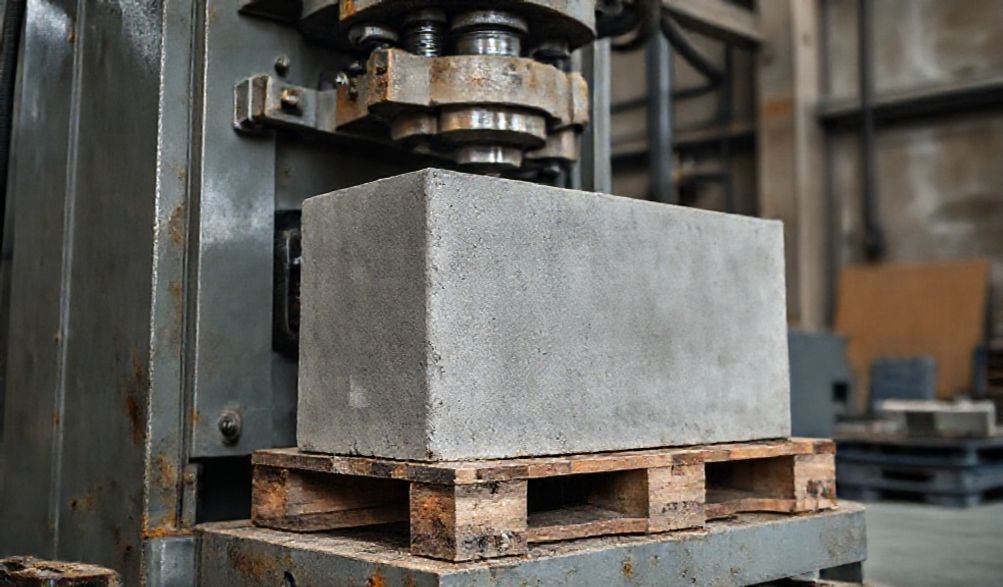
The Ultimate Guide to Building Block Making Machines: Types, Costs & How to Choose
Intangamarara
The global construction industry runs on a simple, fundamental unit: the building block. From the concrete hollow blocks shaping urban skylines to the interlocking pavers defining modern landscapes, these modular components are the literal building blocks of our infrastructure. Yet, behind this consistent demand lies a critical challenge for producers and entrepreneurs: how to manufacture these blocks efficiently, consistently, and profitably.
Traditional manual methods are plagued by inconsistency, high labor intensity, and severe limitations on scale. This is where technology steps in as the great enabler. A building block making machine is not just a piece of equipment; it’s the engine of modern, efficient construction material production. It transforms raw, inexpensive materials into precise, high-value products with remarkable speed.
This comprehensive guide is designed to cut through the complexity. Whether you’re a construction manager looking to bring production in-house, an entrepreneur eyeing the building materials market, or a project developer seeking cost efficiency, understanding this machinery is your first critical step. We will dissect machine types, break down costs, explore operational know-how, and provide a framework for calculating your return on investment, empowering you to make a decision grounded in expertise, not guesswork.
Icyitonderwa ku Bwigenge bw'Umwanditsi: This guide is compiled by industry professionals with over 15 years of experience in construction machinery manufacturing, plant design, and on-site application. The advice herein is drawn from practical field experience, ensuring you receive trustworthy, actionable insights.
What is a Building Block Making Machine? Core Principles & Benefits
At its core, a building block making machine is a device that automates the process of compacting a mix of raw materials into a mold to produce blocks of a specific shape, size, and density. It replaces the labor-intensive, variable process of hand-packing with a mechanized, repeatable system.
Uburyo Bw'ibanze Bwo Gukora: Kuva ku Bintu By'ingenzi Kugeza ku Bikoresho Byakozwe
The process, while varying by machine type, follows a consistent sequence:
- Kurisha: Pre-mixed raw material (e.g., cement, sand, aggregate, water) is loaded into the machine’s hopper.
- Gukomaho no Gukora Imiterere: The material is fed into a mold cavity on a vibrating table or under a hydraulic press. Here, a combination of high pressure (measured in tons) and often vibration compacts the material, removing air pockets and ensuring uniform density.
- Guhagarika The newly formed, “green” block is ejected from the mold onto a pallet or conveyor belt. In automatic machines, this is a seamless, continuous process.
- Gukora: The blocks are transferred to a curing area. Proper curing—often involving keeping the blocks moist and at a stable temperature for days—is essential for them to gain their full structural strength.
Key Advantages Over Traditional Manual Methods
- Consistent Quality & Dimensional Accuracy: Every block is identical, ensuring structural integrity, easier bricklaying, and less material waste on-site.
- High Production Speed & Output Capacity: Machines can produce hundreds to thousands of blocks per hour, a feat impossible manually. This scalability is key to meeting large project demands.
- Kunganuka Kw'Umushahara n'Ubucuruzi One automated machine can replace dozens of manual laborers, drastically reducing long-term wage costs and associated management overhead.
- Ability to Use Diverse Raw Materials: Modern machines can work with various mixes, including standard concrete, fly ash (an industrial byproduct), soil-cement for compressed earth blocks, and even recycled construction aggregate.
- Contribution to Sustainable Construction: By enabling the use of fly ash or recycled materials, and producing highly durable blocks locally (reducing transport emissions), these machines support greener building practices.
Types of Building Block Making Machines: A Detailed Breakdown
Choosing the right machine starts with understanding the landscape. They are categorized by operation, output, and mobility.
By Operation Method
-
Imashini z’ubukorikori bwa Block z’abantu:
- Use Case: Ideal for very small-scale startups, community projects, or remote locations with limited power.
- Uko Bikora: Operators manually fill the mold, engage a lever for compaction, and remove the block. It’s human-powered or uses a simple mechanical advantage.
- Inziza: Very low capital cost, simple to understand, no power needed for basic models.
- Ibibi: Extremely low output (100-500 blocks/day), physically demanding, quality heavily depends on operator skill.
-
Imashini zitanga ibikoresho byo kubaka ibyumba bigikorwa gato:
- Use Case: The sweet spot for most small to medium-sized businesses (SMEs) and growing block yards.
- Uko Bikora: The core compaction and molding process is mechanized (using hydraulic or vibration systems), but tasks like feeding raw material or moving pallets of fresh blocks require operator intervention.
- Inziza: Excellent balance of affordability and productivity. Offers good consistency, higher output than manual machines, and is easier to operate.
- Ibibi: Still requires a small crew. Output is limited by the speed of human-assisted steps.
-
Imashini z'ubwubatsi z'ibyumba zikora mu buryo bwikora:
- Use Case: Large-scale commercial plants, government projects, and high-volume manufacturers supplying to cities or major contractors.
- Uko Bikora: The entire process—from material feeding and mixing to molding, compaction, block ejection, pallet handling, and stacking—is automated via a Programmable Logic Controller (PLC). Labor is primarily for monitoring and maintenance.
- Inziza: Maximum output (thousands of blocks per hour), unparalleled consistency, minimal labor costs per block.
- Ibibi: High initial investment, requires stable three-phase power, complex maintenance, and significant space for the production line and curing racks.
By Block Type Produced
- Hollow Block Making Machines: Designed to produce blocks with cavities, reducing weight and material use while maintaining strength. These are the most common type for structural walls.
- Solid Block Making Machines: Produce dense, solid blocks used for foundations, paving, and where maximum load-bearing capacity or sound insulation is needed.
- Paver/Interlocking Block Making Machines: Specialize in producing paving stones with interlocking edges. They often apply higher pressure for greater density and frost resistance and can create a variety of colors and surface textures.
- Kerbstones and Special Shape Machines: Equipped with specialized molds to produce landscape curbing, retaining wall blocks, and other architectural elements.
By Mobility
- Ibimera bidasanzwe: Permanent installations for high-volume production. They are heavy, require a concrete foundation, and are integrated with auxiliary systems like conveyors and batching plants.
- Imashini z'ubwubatsi bwa Mobile Block Mounted on a trailer or skids. The key advantage is the ability to produce blocks directly on a construction site, eliminating transport costs for the finished blocks. Ideal for large, remote projects like dams, roads, or housing developments.
Critical Factors to Consider When Choosing Your Machine
Selecting a machine is a strategic business decision. The “best” machine is the one that fits your specific context perfectly.
Assessing Your Production Needs & Business Goals
Begin with a clear business plan:
* Ibikenewe: Calculate your needed blocks per shift, day, and month. Be realistic about current demand and growth projections. A machine operating at 80% capacity is healthier than one running at 110% or 30%.
* Block Portfolio: What types of blocks does your market demand? Hollow, solid, pavers? Ensure the machine you choose can accommodate the necessary molds.
* Budget Reality: Account for the total project cost: machine price, shipping, installation, foundation, auxiliary equipment (mixer, pallets, curing racks), and working capital for raw materials and labor.
Machine Specifications and Features Deep Dive
Look beyond the brochure. These technical specs dictate performance:
* Ingufu (Tonijeri): This directly correlates to block density and compressive strength. A 1,000-block-per-day machine might have a press force ranging from 50 to 400 tons. Higher tonnage is needed for solid blocks and pavers.
* Igihe cyo gukora The time to produce one block or one pallet of blocks. A shorter cycle time means higher potential output. Compare this metric across similar machines.
* Automation & Control System: A user-friendly PLC with a clear interface reduces operator error. Semi-automatic machines should have reliable hydraulic or vibration systems with easy controls.
* Ibikenewe by'ingufu: Verify if the machine needs single-phase or three-phase electricity, and the total connected load (in kW). This impacts your utility setup and running costs.
* Serivisi yo Nyuma yo Kugurisha: This is non-negotiable. Does the manufacturer or local dealer offer installation supervision, operator training, a warranty, and ready availability of spare parts? A slightly cheaper machine with no local support is a high-risk investment.
Uburyo bwo Gukoresha Ibikoresho by'ingenzi
Your local material availability should guide your choice. Test your proposed mix design (e.g., 1:3:6 cement-sand-aggregate, or a fly ash-based mix) with the machine supplier if possible. Some machines are optimized for finer, cement-rich mixes, while others can handle more granular or soil-based materials.
The Investment: Cost Analysis and Return on Investment (ROI)
A clear financial picture separates a profitable venture from an expensive mistake.
Understanding the Cost Structure
| Cost Component | Description & Range (USD – Approximate) |
| :— | :— |
| Machine Price | Imyitozo: $1,000 – $5,000
Semi-Auto: $10,000 – $50,000
Fully Auto: $50,000 – $300,000+ |
| Auxiliary Equipment | Concrete mixer, conveyor, pallet feeder, pallets, curing racks. Can add 20-50% to machine cost. |
| Installation & Foundation | Site preparation, concrete foundation, electrical hookup. Varies widely by location. |
| Operational Costs | Ubushobozi: Based on machine kW rating.
Umurimo: Crew size depends on automation.
Ibikoresho by'ibanze: Cement, aggregate, sand.
Maintenance: ~2-5% of machine cost annually. |
Calculating Your Potential ROI
A simplified framework: ROI = (Net Profit / Total Investment) x 100
1. Estimate Annual Revenue:
* (Blocks Produced per Day) x (Operating Days/Year) x (Selling Price per Block)
* Example: 2,000 blocks/day x 250 days x $0.50/block = $250,000 Revenue
2. Estimate Annual Total Costs:
* Raw Material Cost + Labor + Power + Maintenance + Depreciation + Overheads
* Example (simplified): $100,000 (materials) + $30,000 (labor) + $5,000 (power) + $3,000 (maintenance) = $138,000 Total Cost
3. Calculate Net Profit and ROI:
* Net Profit = Revenue – Total Cost = $250,000 – $138,000 = $112,000
* Assume Total Investment (Machine + Auxiliary) = $80,000
* ROI = ($112,000 / $80,000) x 100 = 140%
Icyo Ukwiriwe Gufata Nk'Inyungu: Variables like your local block market price, your production efficiency (reject rate), and your capacity utilization rate will dramatically affect this calculation. Always build a detailed, conservative financial model.
Operation, Maintenance, and Best Practices for Longevity
A machine is a long-term asset. Its productivity and lifespan depend entirely on how it is operated and cared for.
Essential Steps for Safe and Efficient Operation
- Always conduct pre-operation checks: fluid levels (hydraulic oil), loose bolts, and mold cleanliness.
- Ensure the raw material mix is consistent in proportion and moisture content. Variations here cause most production problems.
- Operators should be thoroughly trained on safety protocols, especially around moving parts and hydraulic systems.
Preventive Maintenance Schedule
Adhering to a schedule prevents costly breakdowns:
* Buri munsi: Clean the machine, especially the mold area. Check for oil leaks. Lubricate guide rails as per manual.
* Buri cyumweru: Tighten all bolts and nuts. Inspect hydraulic hoses for wear. Clean the hydraulic oil filter.
* Monthly: Check the hydraulic oil level and quality. Inspect the vibration motor mounts (if applicable). Calibrate pressure settings if needed.
Troubleshooting Common Issues
- Blocks Breaking or Chipping: Often caused by incorrect mix (too dry or lacking cement), insufficient compaction pressure, or rough handling during ejection/transfer.
- Poor Surface Finish: Usually indicates a worn-out mold, a dirty mold surface, or a mix that is too wet.
- Dimensional Inaccuracy: Can be due to a worn mold, excessive mold flex (insufficient machine tonnage for the block size), or an uneven feeding of material into the mold.
FAQ: Your Questions About Block Making Machines Answered
Q: What is the average lifespan of a building block making machine?
A: With proper maintenance and reasonable usage, a well-built machine can last 10 to 20 years. The core factor is the quality of the steel and components in the frame, mold, and hydraulic system. Neglecting maintenance can cut this lifespan in half.
Q: Can one machine produce different types and sizes of blocks?
A: Yes, through interchangeable molds. This is a major advantage. However, you must ensure the machine’s platen size (the area that presses the block) and its pressure capacity are suitable for the new mold’s design and the required block density.
Q: How much space is required to set up a block manufacturing plant?
A: It varies dramatically. A small semi-automatic operation might need 2,000-5,000 sq. ft. for the machine, raw material storage, and a curing area. A fully automatic plant with a curing rack system, aggregate storage, and a batching plant can easily require 20,000+ sq. ft.
Q: Are there eco-friendly options for block production?
A: Absolutely. This is a major trend. Machines are excellent for producing:
* Amatafari y’ubucucu bw’amakara: Using a industrial waste product.
* Compressed Stabilized Earth Blocks (CSEB): Using local soil with a small cement stabilizer.
* Blocks with Recycled Aggregate: Crushed concrete from demolition sites can replace natural aggregate.
Q: What are the most common mistakes first-time buyers make?
A: Based on field experience, the top pitfalls are:
1. Buying for today’s need, not tomorrow’s growth (under-capacity).
2. Choosing the absolute cheapest machine, sacrificing quality and service.
3. Not verifying local availability of spare parts and technical support.
4. Failing to test their specific raw material mix with the machine before purchase.
5. Underestimating the space, power, and labor required for the entire operation, not just the machine.
Ibyo byose
Navigating the world of building block making machines is a journey from fundamental principles to complex financial and operational planning. We’ve explored how these machines work, broken down the types from manual to fully automatic, and highlighted the critical factors—from pressure tonnage to after-sales support—that should guide your choice.
Remember, the most successful investment is rarely the cheapest upfront. It is the machine that aligns precisely with your production targets, raw material constraints, and budget, backed by a manufacturer with a proven track record of reliability and service. The future of block manufacturing points toward greater automation, smarter IoT-enabled monitoring, and a strong emphasis on sustainable materials.
Your final step is due diligence. Consult with multiple reputable manufacturers, request live demonstrations or references from existing clients, and meticulously refine your business plan. By approaching this decision with the knowledge contained in this guide, you position yourself not just to buy a machine, but to build a foundation for a profitable and enduring business.
<