
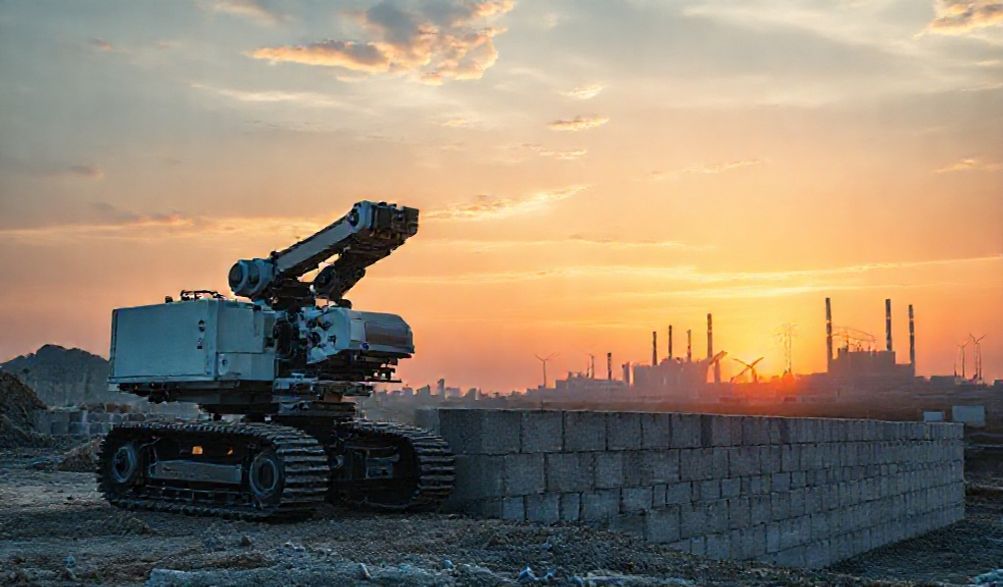
The Ultimate Guide to China’s Automatic Block Laying Machines: Spotlight on FUDA Factory
Intangamarara
The global construction industry is in the midst of a silent revolution. Faced with skilled labor shortages, tightening project deadlines, and relentless pressure to control costs, forward-thinking contractors and builders are turning to automation as the ultimate solution. At the forefront of this shift is a transformative piece of equipment: the automatic block laying machine. These robotic systems are redefining on-site productivity, moving construction from a manual craft to a precision-driven, industrial process.
China has emerged as the undisputed epicenter for manufacturing these advanced machines, offering a compelling blend of technological sophistication and competitive pricing. Within this vast industrial landscape, factories like the Umurima w'ibikoresho byo gucukura FUDA have carved out significant reputations as specialized producers. With over two decades of operation, FUDA represents a segment of Chinese manufacturers focused on providing comprehensive block production and laying solutions to a global market.
This guide serves as an impartial, comprehensive resource. We aim to equip contractors, project managers, and procurement officers with the knowledge needed to navigate the market for automatic block layers. We’ll dissect the technology, analyze the advantages of sourcing from China, and provide a framework for evaluating manufacturers—using FUDA as a case study to illustrate what a established factory in this space typically offers. Our analysis is built on a review of industry trends, technical specifications, and procurement best practices, designed to support your informed decision-making.
Understanding Automatic Block Laying Machines
What is an Automatic Block Laying Machine?
An automatic block laying machine is a sophisticated robotic system designed to automate the entire process of wall construction. It goes far beyond simply manufacturing blocks. Its core function is to:
* Pick blocks from a pallet or conveyor.
* Apply mortar or adhesive with precision.
* Placenaposition each block according to a pre-programmed digital layout.
* Bond it into the growing wall structure with consistent pressure and alignment.
Contrast this with traditional methods:
* Manual Laying: Reliant on skilled masons, subject to human fatigue, variability in speed and quality, and high labor costs.
* Semi-Automatic Aids: Perhaps using mechanical conveyors or mortar pumps, but still requiring manual placement and alignment of every block.
The automatic machine removes these bottlenecks, creating a continuous, controlled production line directly on the construction site.
Key Applications and Benefits in Modern Construction
Ibyo Bikoresho Byibanze:
* Large-Scale Residential Housing: Ideal for repetitive structures like apartment complexes, townhouses, and suburban developments.
* Amazu y'Ubucuruzi n'Ubukungu: For warehouses, factories, and office buildings where large, straight walls are common.
* Projets y’ibikorwa remezo: Efficiently constructing retaining walls, sound barriers, and other civil structures.
* Prefabricated Construction: Can be used to automate wall panel production in a controlled factory setting.
Tangible Benefits:
* Ubucuruzi Budasanzwe: Capable of laying 1,000 to 2,000+ blocks per day, compared to a few hundred by a skilled mason crew.
* Pinpoint Precision & Consistency: Ensures perfect alignment, level courses, and uniform mortar joints, enhancing structural integrity and aesthetic appeal.
* Kubika Abakozi n'Ubucuruzi Bwinshi: Reduces dependency on large, skilled crews, mitigating labor shortages and controlling one of the most volatile project costs.
* Ubuzima Bwiza Bwihuse: Minimizes heavy lifting, repetitive strain injuries, and on-site manual labor in hazardous areas.
* Predictable Project Timelines: Weather-dependent delays are reduced, and completion dates become more reliable due to constant, programmable output.
Why Source from China? The Manufacturing Landscape
China’s Role in Global Construction Machinery
China’s dominance in heavy machinery manufacturing is no accident. It’s the product of:
* Unrivaled Scale & Supply Chains: Concentrated industrial hubs create unparalleled efficiency in sourcing components like steel, hydraulics, and control systems.
* Advanced Manufacturing Infrastructure: Decades of investment have resulted in factories equipped with CNC machining centers, robotic welding, and advanced assembly lines.
* Ubushobozi bwo gucuruza mu gihe cy’ibiciro bikwiye: Economies of scale and integrated supply chains allow Chinese manufacturers to offer attractive price points without necessarily sacrificing core functionality.
While the market includes a spectrum from budget-oriented to premium-tier manufacturers, the perception that “Chinese-made” equates to “low quality” is outdated. The key is knowing how to identify the serious, credible manufacturers from the rest.
Evaluating Chinese Manufacturers: Beyond the Price Tag
The initial quotation is just the starting point. True evaluation digs deeper into the manufacturer’s fundamentals. Use this checklist:
-
Factory Credentials & History:
- How long have they been in business? (e.g., 10+, 20+ years indicates stability).
- What is their primary export experience? Do they have references in your region?
- Ibyemezo: Look for ISO 9001(Ukurwanda k'Ubwiza)CE marking (indicating compliance with EU health, safety, and environmental standards). These are tangible commitments to process.
-
R&D and Engineering Capability:
- Do they have a dedicated engineering team?
- How often do they update their machine models? This signals investment in innovation.
-
Inzira zo Kugenzura Ubuziranenge
- What are their in-house testing procedures? (e.g., dry-run testing of every machine before shipment).
- What are their standards for core components? (e.g., using recognized brands for PLCs, motors, and bearings).
-
After-Sales Service Structure:
- This is the most critical differentiator. What is their warranty policy?
- Do they offer remote support? How quickly can they dispatch technicians?
- Is there a guaranteed supply of spare parts for 5-10 years?
Prioritizing these factors transforms a purchase from a risky transaction into a strategic, long-term investment.
Deep Dive: FUDA Block Making Machine Factory Analysis
Company Profile and Market Position
Based on publicly available information, FUDA Block Making Machine Factory is positioned as a specialist in the design and production of block making and related construction machinery. The factory, with its stated years of operation, focuses on serving both the domestic Chinese market and international export clients. Companies like FUDA typically market themselves as integrated solution providers, offering not just machines but the technical support that goes with them.
Product Range Overview: From Block Making to Automated Laying
A factory like FUDA generally offers a portfolio that covers the block production ecosystem:
* Imashini z'ubaka ibibumbe bya sima: From manual and semi-automatic models to fully automatic, high-output stationary machines for producing hollow blocks, solid blocks, and interlocking blocks.
* Imashini Zikora Amatafari For producing landscaping and paving stones.
* Automatic Block Laying Systems: This is the core of our keyword focus. Such factories often provide:
* Robotic Arm-Based Layers: Flexible units that can pick and place blocks for complex layouts.
* Gantry-Style Systems: For high-speed, linear wall construction on large, open sites.
* Typical specifications for competitive machines in this class include output capacities of 800-1500+ blocks per hour, compatibility with standard block sizes (e.g., 200x200x400mm), and high levels of automation requiring only 1-2 operators.
Technology and Innovation Focus
Leading manufacturers in this category are increasingly integrating state-of-the-art features to stay competitive. When evaluating a factory’s offerings, look for:
* Advanced Control Systems: PLC (Programmable Logic Controller) with touch-screen HMI (Human-Machine Interface) for easy operation and programming.
* Precision Drives: Servo motors and precision guides for accurate, repeatable block placement.
* Software Integration: Capability to import digital wall layouts, potentially from BIM (Building Information Modeling) software, to guide the machine’s actions.
* Data Connectivity: Features that allow for production monitoring and diagnostics.
A factory’s emphasis on these technologies in their marketing and specifications is a strong indicator of their market positioning.
The Importance of Direct Factory Engagement
Regardless of the manufacturer, proactive due diligence is non-negotiable. Best practices include:
1. Request Detailed Documentation: Ask for technical datasheets, exploded parts diagrams, and electrical schematics.
2. Demand Visual Proof: Request high-resolution videos of the specific machine model in operation, preferably from a recent project.
3. Verify Certifications: Ask for copies of ISO, CE, or other relevant certificates.
4. Arrange a Virtual or Physical Audit: A video call tour of the factory floor or, ideally, a site visit can reveal much about their operational scale and quality culture.
5. Check Project References: Ask for contact information for past international clients who have purchased similar equipment.
Critical Factors Before Purchasing an Automatic Block Layer
Kugenzura Ibyo Umushinga Wawe Ukenera
Avoid buying an over- or under-powered machine by conducting a thorough needs analysis:
* Umushinga wo Kubarurira Total number of blocks for the project and daily output requirements.
* Block Specifications: Type (hollow, solid, interlocking), size, and weight.
* Site Conditions: Ground stability, space for machine operation and material staging, accessibility.
* Utilities: Available power supply (voltage, phase); some machines may require a dedicated high-capacity connection.
Total Cost of Ownership (TCO) Analysis
The machine price is only 60-70% of the story. A complete TCO includes:
* Machine Price & Inland China Logistics.
* International Shipping & Marine Insurance.
* Import Duties & Customs Clearance in your country.
* Installation & Commissioning (often by factory technicians).
* Operator & Maintenance Training.
* Long-Term Costs: Annual maintenance, expected spare parts (wear items like belts, nozzles), and potential software updates.
After-Sales Support and Service: The Deal-Breaker
For complex machinery operating thousands of miles from its maker, service is everything. A robust package includes:
* Inyandikorwa ryuzuye Operation and maintenance manuals in your language.
* Warranty: Clear terms, typically 12 months for parts, excluding wear items.
* Remote Support: Access to technicians via phone, email, or video call for troubleshooting.
* On-Site Service: Defined terms and costs for dispatching engineers for major issues.
* Spare Parts Guarantee: A commitment to stock and supply critical spare parts for a minimum of 5-10 years, with a clear ordering process.
FAQ: Automatic Block Laying Machines & Chinese Manufacturers
Q1: What is the typical lead time for an automatic block laying machine from a Chinese factory?
A: Lead times vary based on model complexity and factory schedule. For a standard model, expect 30 to 90 days from deposit confirmation to shipment. Custom configurations will take longer. Always get a written, detailed production and delivery schedule in your contract.
Q2: How do I ensure the machine meets my local safety and operational standards?
A: Proactively address this. Specify you require a CE Marked machine (or other relevant regional certification). Discuss your local voltage (e.g., 400V/50Hz) and safety regulations upfront. Consider hiring a local mechanical engineer to review the technical specifications before finalizing the order.
Q3: Can factory personnel provide installation and training at my site?
A: Yes, this is a standard and highly recommended service offered by reputable factories. It is typically quoted as a separate line item covering flights, accommodation, and daily rates for 1-2 technicians for 1-2 weeks. Proper installation and training are crucial for optimal performance and warranty validation.
Q4: What are the common challenges when importing heavy machinery from China?
A: Key challenges include navigating international logistics and customs, handling technical documentation for clearance, and overcoming language/time zone barriers. Mitigate these by:
* Hiring an experienced freight forwarder.
* Ensuring all commercial and technical documents (packing list, invoice, bill of lading, certificates) are precise.
* Establishing a single, clear point of contact at the factory and using tools like video calls for complex discussions.
Ibyo byose
Automatic block laying technology represents a paradigm shift in construction efficiency, and China’s manufacturing sector offers a viable path to accessing this technology. The value proposition—combining advanced engineering with cost-effectiveness—is powerful, but it demands a discerning approach.
Success hinges on the rigorous application of an evaluative framework. Look beyond the sticker price to total cost of ownership, scrutinize the technological robustness of the machine, and, most importantly, vet the manufacturer’s commitment to after-sales support with extreme diligence. Factories like FUDA Block Making Machine Factory exemplify the opportunity available: specialized producers with integrated solutions. The responsibility lies with you, the buyer, to perform verification, demand transparency, and view this purchase as the beginning of a long-term technical partnership.
Icyifuzo cyo Gukora: Use this guide as your checklist. Contact multiple shortlisted manufacturers. Ask the hard questions about certifications, service, and references. Prioritize factories that communicate clearly and provide verifiable evidence of their machines’ performance and their own reliability. Your future productivity depends on this foundational due diligence.
<