
The Ultimate Guide to Ecological Brick Machines: Innovation from FUDA Block Making Factory
Intangamarara
The global construction industry stands at a crossroads. On one side, there’s an insatiable demand for new infrastructure and housing. On the other, a mounting crisis of construction waste, depleted natural resources, and a pressing need to reduce carbon emissions. The question is no longer just about building—it’s about how we can build responsibly. What if you could construct durable, high-quality structures while actively helping to heal the planet?
The answer lies in transformative technology: the ecological brick machine. This innovative machinery turns industrial and construction waste into premium, load-bearing building blocks, closing the loop on material use and pioneering a circular economy in construction.
Leading this sustainable revolution is the Umusaruro w’Amabati ya FUDA. With decades of specialized engineering experience, FUDA has established itself as a global authority in designing and manufacturing robust, high-output ecological brick machines. Our philosophy is built on a triad of commitment: to uncompromising quality, continuous technological innovation, and the tangible success of our clients.
Drawing on deep industry expertise, this comprehensive guide will demystify ecological brick technology. We’ll explore its core workings, compelling advantages, and diverse applications. Most importantly, we’ll detail why partnering with an experienced manufacturer like FUDA is the critical factor in transforming this sustainable vision into a profitable, efficient reality for your business or project.
What is an Ecological Brick Machine? Redefining Construction
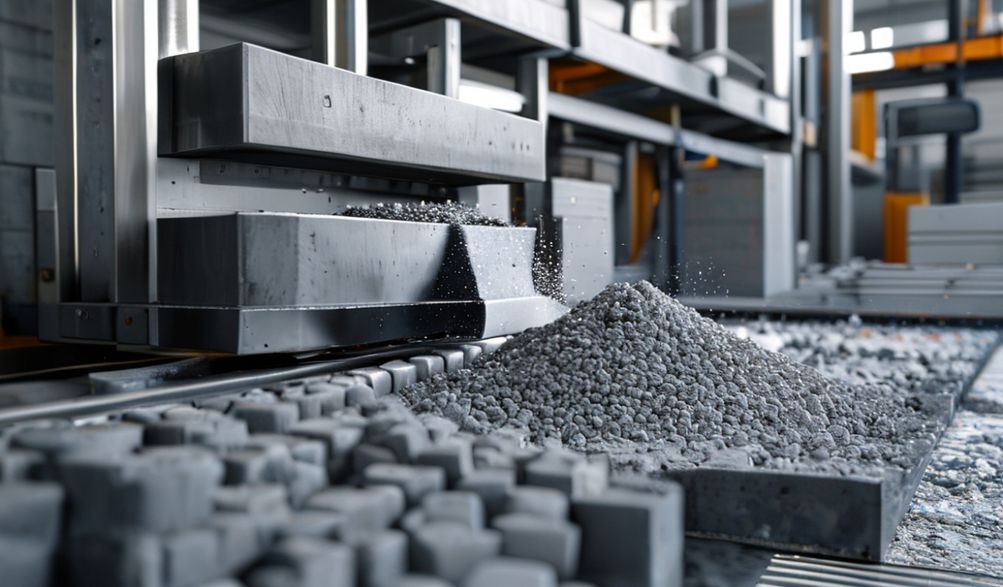
An ecological brick machine is a specialized press that manufactures construction blocks through a process of high-pressure compaction, bypassing the need for energy-intensive kiln firing. It represents a paradigm shift from resource extraction to resource recovery, creating valuable building materials from what was once considered waste.
Inkoranyamafoto n'Ingamba z'Umurimo
The magic of an ecological brick machine lies in its precise, powerful process. Unlike traditional brick-making, there is no burning, only binding.
- Kurya no Guhuza: Pre-processed raw materials (like fly ash or crushed concrete) are combined with a small percentage of cement and water in a precise ratio. This mixture is fed automatically into the machine’s hopper.
- Gukora na Gukora Imikorere: An automated system meters a specific volume of this mix into a mold cavity (die) on a vibrating table.
- Gukanyaga: This is the heart of the process. A high-tonnage iporosesi ya hydroliki applies immense pressure (often hundreds of tons) to the mixture in the mold. Simultaneous vibration removes air pockets, ensuring maximum density and homogeneity.
- Guhomora & Gukora: The newly formed, solid block is ejected onto a pallet. These “green” blocks are then stacked and cured naturally or with steam acceleration, where they gain strength through a chemical hydration process, not fire.
Ibikoresho by'ibanze: Kuvanga Ibishyushye Kugera Kubikoresho
The true environmental genius of this technology is its feedstock. Ecological brick machines consume materials that burden landfills and ecosystems.
- Ibikomoka mu bukungu: Umwanda w’inkwi (from coal power plants), Slag (from steel production), and Quarry Dust.
- Construction & Demolition (C&D) Waste: Crushed concrete, bricks, and ceramic waste.
- Ibirindiro: A small percentage of cement or lime is typically used as an activator, though advanced mixes can minimize this.
This process not only creates a product but solves a disposal problem, turning linear waste streams into a circular model of resource efficiency.
End Product: Types of Ecological Bricks and Blocks
The versatility in molds allows for a wide range of high-performance construction products:
- Amabuye Y'urugomero N'ayo Y'umwobo:Kuri rusangi zikoreshwa mu gutwara ibintu n’izitabigira icyo bitwara.
- Amabuye yo gusasa n'ibyatsi by'umurongo. For durable, permeable driveways and walkways.
- Ibiraro by'ibyumba: For retaining walls and construction requiring minimal mortar.
- Curbstones & Landscape Products.
These blocks are known for their excellent dimensional accuracy, consistent strength, and superior surface finish compared to traditional fired clay bricks.
Why Choose an Ecological Brick Machine? The Compelling Advantages
Adopting ecological brick technology isn’t just an environmental statement; it’s a strategic business decision with multifaceted returns.
Environmental & Sustainability Benefits
- Drastic Carbon Reduction: Eliminating the fossil-fuel-fired kiln can reduce the carbon footprint of brick production by over 80%.
- Conservation of Resources: Preserves fertile topsoil and reduces the mining of clay and sand.
- Kuzamura Imyanda: Actively contributes to zero-landfill goals and the principles of a circular economy, often qualifying for green credits.
Economic & Operational Benefits for Your Business
- Low-Cost Raw Materials: Feedstock is often inexpensive or even free (waste disposal fees turned into input savings).
- Incentives & Certification: Products can contribute directly to points in green building standards like LEED or BREEAM, offering a market advantage.
- High Automation & Efficiency: Modern machines like FUDA’s offer high output with minimal labor, ensuring consistent quality and lower per-unit cost.
- Localized Production: Reduces transportation costs and supply chain fragility by enabling production close to both material source and construction site.
Superior Product Performance
Ecological bricks are not “alternative” in a compromising sense; they often outperform their traditional counterparts.
- Ubushobozi Bwinshi Bwo Gukandagira: Ranging from 7 MPa to over 15 MPa, suitable for multi-story construction.
- Excellent Durability: High density provides better resistance to water penetration, frost, and weathering.
- Ubuhumekero bw’Ubushyuhe n’Amajwi: Improved thermal mass and insulation properties lead to energy-efficient buildings.
- Kumirwa Umuriro: Non-combustible material with high fire ratings.
Inside the FUDA Block Making Factory: A Legacy of Expertise
Our reputation is built on more than just selling machines; it’s founded on engineering excellence and a partnership-based approach.
Our Engineering Philosophy and Manufacturing Standards
At FUDA, every machine is a testament to robust design and precision manufacturing. We invest heavily in R&D to optimize vibration patterns, hydraulic systems, and control logic. Our machines are constructed with:
* Heavy-duty structural steel frames for longevity.
* Premium Sisteme za hydraulic from global leaders for reliable, powerful compression.
* Advanced control systems featuring Siemens or Schneider Electric PLCs for flawless automation and ease of operation.
* High-wear components made from specially hardened alloys to withstand constant use.
The FUDA Machine Range: Models to Match Every Need
We offer scalable solutions to empower businesses of all sizes.
- Imiyoboro Yikora Yuzuye Itunganya: For large-scale, high-volume output (e.g., 10,000 – 30,000 blocks per 8-hour shift). Features robotic pallet handling, automatic stacking, and central control.
- Imitungo Imigendeshwa n'ikiremwamuntu: The ideal balance of output and investment for medium-scale operations, requiring minimal manual intervention for pallet feeding.
- Imashini z'ibikoresho bya Mobile Block: For on-site production, eliminating transport costs for large projects.
Beyond the Machine: The FUDA Partnership
We provide the complete ecosystem for your success.
Comprehensive Installation & Commissioning
Our engineers supervise installation, conduct thorough testing, and provide hands-on training for your operators and maintenance team on-site.
Dedicated Technical Support & Spare Parts
With a global network, we offer remote diagnostics and guaranteed access to genuine spare parts to minimize your downtime.
Customized Solutions
There is no one-size-fits-all. We analyze your local raw materials and production goals to tailor the machine configuration, mix design, and even the entire plant layout for optimal results.
Critical Factors Before You Invest: A Buyer’s Checklist
A successful project requires careful forethought. Consider these key aspects:
Assessing Your Raw Material Availability and Quality
- Action: Conduct a lab test on your local waste materials (fly ash, crushed concrete) to analyze their chemical composition and particle size distribution.
- Insight ya FUDA: We can often provide mix design guidance based on material samples to ensure block quality.
Determining Your Production Capacity Requirements
- Ask: What is your current project demand? What are your growth plans in 3-5 years?
- Guidance: It’s often prudent to invest in a machine with 20-30% more capacity than your immediate need to accommodate growth without a costly upgrade.
Understanding Total Cost of Ownership
Look beyond the initial machine price. Factor in:
* Energy consumption of the press and mixer.
* Expected maintenance schedules and part replacement costs.
* The machine’s build quality—a cheaper, lighter machine may have a higher long-term cost due to frequent breakdowns and shorter lifespan.
Site Requirements and Plant Layout Planning
Ensure you have:
* Adequate Space: For the production line, raw material storage, curing area, and finished product inventory.
* Ubutumwa bw'ingufu: Sufficient electrical capacity for the full system.
* Logistics: Clear access for raw material delivery and block shipment.
FAQ: Your Questions on Ecological Brick Machines Answered
Q1: What is the typical strength of ecological bricks?
A: Compressive strength typically ranges from 7.5 MPa to 15 MPa (and higher for specialized mixes), making them fully suitable for load-bearing walls in residential and commercial construction, as per ASTM or ISO standards.
Q2: How does setup cost compare to a traditional clay brick plant?
A: While the initial investment for a high-automation ecological plant can be significant, it often offers a faster ROI. This is due to drastically lower fuel costs (no kiln), cheaper raw materials, and higher production efficiency. The economic model is fundamentally different and more favorable in the medium to long term.
Q3: Can I use 100% waste material, or is cement always required?
A: A small binder percentage (usually cement or lime) is typically required as an activator for the pozzolanic reaction that gives the blocks strength. However, advanced mix designs can utilize up to 85-90% waste content, minimizing cement use. Our engineers can optimize the formula for your specific materials.
Q4: What is the lead time and process for purchasing a machine from FUDA?
A: The process begins with a detailed consultation to understand your needs. Following a quote and order, standard model production lead time is typically 30-45 days. This is followed by shipping, installation, and commissioning by our technical team. Custom solutions may have different timelines.
Q5: Do you provide guidance on market development for the bricks produced?
A: Absolutely. We provide technical data sheets, strength test reports, and guidance on certifying your products to local building codes. This documentation is essential for you to confidently market your ecological blocks to contractors, architects, and government bodies seeking sustainable building solutions.
Ibyo byose
The ecological brick machine is more than a piece of equipment; it’s a gateway to a more profitable, sustainable, and resilient future in construction. It addresses critical environmental challenges while unlocking compelling economic advantages through efficient, automated production.
The journey from concept to successful production, however, hinges on your choice of partner. It requires not just a machine, but the deep engineering expertise, reliable support, and proven technology that ensures your investment delivers its promised return.
FUDA Block Making Factory stands ready as that partner. Our legacy is built on empowering businesses worldwide to turn waste into worth and to build a greener future, one block at a time.
Ready to build your sustainable future?
Primary CTA: Contact FUDA’s engineering team today for a free, no-obligation consultation and project assessment.
Secondary CTA: Download our detailed technical catalog to explore our full range of ecological block making machines.
Dedicated to advancing sustainable construction technology worldwide,
The FUDA Engineering Team