
The Ultimate Guide to Red Brick Making Machines in India (2026)
Intangamarara
For centuries, the rich, earthy hue of red bricks has been the backbone of Indian construction, from ancient forts to modern skyscrapers. Today, propelled by unprecedented infrastructure development, housing projects, and urban expansion, the demand for these classic building blocks is soaring. However, the traditional method of brick-making—reliant on manual labor, clamps, and kilns—is fraught with challenges: it’s labor-intensive, yields inconsistent quality, and faces increasing scrutiny over environmental and regulatory concerns.
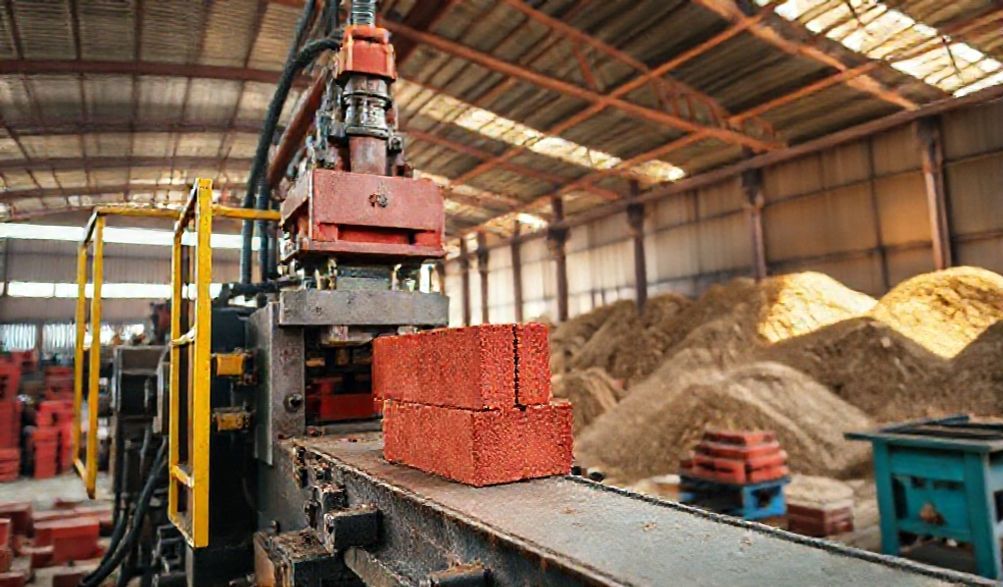
Injira mu by'ubukungured brick making machine in India—a technological leap that transforms raw soil into precision bricks with efficiency, scale, and remarkable profitability. For entrepreneurs, construction companies, and MSMEs, this machinery represents not just a tool, but a strategic business solution.
This comprehensive guide is designed to be your definitive resource. We will cut through the market noise to provide a data-driven, impartial look at everything you need to know: from how the machines work and the types available, to price benchmarks, top manufacturers, and key selection criteria. Our goal is to equip you with the expert knowledge required to make a confident and informed investment decision in this vibrant sector.
Understanding Red Brick Making Machines
Before diving into purchase decisions, it’s crucial to understand the core technology. A brick making machine automates and standardizes the age-old process, ensuring each brick meets specific strength and dimensional standards.
Umusi w’amatafari ukora ute? (Uburyo busanzwe)
The process is a systematic cycle, often condensed into a single, flowing production line:
- Gukomatanya: Raw materials (primarily soil/earth, with possible additives like cement or fly ash) are fed into a mixer. Water is added to achieve the perfect consistency for molding.
- Kuvuga The homogenous mixture is transferred via a conveyor belt or feeding system to the molding chamber.
- Gukora no Gufumbata: This is the heart of the process. The mixture is fed into a mold (die) of the desired brick shape. A hydraulic system or mechanical press applies immense pressure (measured in tons) to compact the material, removing air pockets and creating a dense, strong brick.
- Guhagarika The newly formed, “green” brick is automatically ejected from the mold onto a pallet or conveyor.
- Gukora: The green bricks are stacked and left to cure, gaining strength through chemical hydration (if cement is used) or are dried for firing in a kiln for traditional clay bricks.
Ingingo Ngenderwaho z’Imashini Isanzwe
- Mixer/Pan Mixer: Creates a uniform blend of raw materials.
- Sisitemu yo gutwara ibintu: Transports material between stages.
- Mold (Gufa): The interchangeable component that defines the brick’s shape and size (e.g., 9″x4″x3″).
- Hydraulic Power Pack/Pressure System: Provides the force needed for high-density compaction. The core of the machine’s power.
- Paneli yo Gucunga: Houses the electrical controls, from simple switches in manual machines to programmable logic controllers (PLCs) in fully automatic ones.
- Vibrating Table (common in stationary plants): Ensures even distribution of material in the mold before compaction.
Types of Bricks Produced: Beyond Standard Reds
Modern machines are versatile. By changing the mold and adjusting the raw material mix, you can produce:
* Solid Red Bricks: The standard, load-bearing bricks.
* Amatafari Y'umwobo: Lighter, offering better thermal insulation and material savings.
* Paver Blocks & Tiles: For landscaping, driveways, and flooring.
* Amatafari y’ubucucu bw’amakara: An eco-friendly alternative using thermal power plant waste, often stronger than traditional clay bricks.
Types of Red Brick Making Machines Available in India
The Indian market caters to every scale of operation, from village-level enterprises to industrial plants.
Manual Brick Making Machines: Cost-Effective Start for Small Scale
- Ibyakozwe: Entirely human-powered. The operator manually fills the mold, engages a lever to apply pressure, and removes the brick.
- Ibisohoka: Low (100-500 bricks per day).
- Byiza Kuri: Micro-entrepreneurs, very small-scale projects, or supplemental production.
- Inziza: Lowest capital investment, no power required, simple maintenance.
- Ibibi: Labor-intensive, low output, inconsistent quality if not operated carefully.
Semi-Automatic Brick Making Machines: The Sweet Spot for Balance
- Ibyakozwe: Mechanizes the critical compaction process (usually via hydraulic power) but requires manual feeding of raw material and removal of bricks.
- Ibisohoka: Medium (800 to 2,500+ bricks per hour).
- Byiza Kuri: Small to medium businesses (SMBs) looking for a significant productivity jump without the full cost of automation. This is often the most recommended starting point for serious ventures.
- Inziza: Excellent balance of price and output, consistent brick quality, lower labor dependency than manual machines.
- Ibibi: Still requires a steady labor force for feeding and brick handling.
Fully Automatic Brick Making Machines: For High-Volume Production
- Ibyakozwe: The entire process—from feeding raw material to mixing, molding, compaction, and brick stacking—is automated via PLC controls and conveyor systems.
- Ibisohoka: High (2,500 to 10,000+ bricks per hour).
- Byiza Kuri: Large-scale manufacturers, construction companies supplying major projects, and businesses focused on maximum output with minimal manual labor.
- Inziza: Highest production capacity, minimal labor costs, unparalleled consistency, and efficiency.
- Ibibi: High initial investment, significant power consumption, complex maintenance requiring technical skill.
Mobile Brick Making Machines: On-Site Production Flexibility
- Feature: Mounted on a trailer for easy transportation.
- Byiza Kuri: Construction companies that want to produce bricks directly at the project site, eliminating transport costs for bricks. Ideal for remote locations or large, singular projects.
- Icyitonderwa: These can be manual, semi-, or fully-automatic in their operation.
Stationary Brick Making Plants: For Large-Scale Industrial Output
- Feature: These are fixed installations with extensive infrastructure, including automated material handling systems, multiple presses, and sophisticated curing chambers or tunnel kilns.
- Ibisohoka: Industrial-scale (10,000+ bricks per hour).
- Byiza Kuri: Dedicated, large brick manufacturing companies supplying regionally or nationally.
Ibyo Ukwiriye Gukuraho Mbere yo Kugura
Choosing the right machine is a strategic decision. Here’s a practical checklist to guide you.
Assessing Your Production Capacity Needs (Bricks Per Hour/Day)
This is the first and most critical question. Are you supplying a local market, a specific project, or aiming for wholesale? A machine producing 1,000 bricks per hour (BpH) operates 8 hours can yield 8,000 bricks daily—enough for many small businesses. Overestimating leads to idle capacity; underestimating leaves money on the table.
Power Requirements: Electric, Diesel, or Hybrid?
- Umuriro w'amashanyarazi Clean, quiet, and efficient for areas with reliable grid power. Most common for semi- and fully-automatic machines.
- Diesel: Essential for locations with frequent power cuts or no grid access. Offers mobility (for mobile units) but has higher fuel costs and emissions.
- Hybrid: Offers the flexibility to switch between power sources, providing excellent operational continuity.
Brick Size and Type Flexibility
Does your business plan require producing only standard bricks, or will you need to make hollow blocks or pavers later? Invest in a machine that allows for easy mold changes or offers multi-purpose molds to future-proof your investment.
Automation Level: Manual vs. Semi-Auto vs. Fully Auto
Align this with your budget, labor availability, and scale. For an output of 2,000 BpH, a robust semi-automatic machine is often the most cost-effective and manageable choice for a new entrant.
Raw Material Compatibility (Soil Type, Fly Ash, Cement Proportion)
Not all soil is equal. Have your primary raw material (local soil, fly ash) tested. Discuss its composition (clay/sand ratio) with the manufacturer to ensure the machine’s mixing and compaction system is optimized for it. Some machines are specifically designed for fly ash brick production.
After-Sales Service and Availability of Spare Parts
A machine is a long-term asset. A reputable supplier should offer:
* Installation and commissioning guidance.
* Operator training.
* A clear warranty (typically 1 year on critical parts).
* Ready availability of wear-and-tear parts like molds, liners, and hydraulic seals. Always ask for a list of nearby service centers or reference customers.
Price Range of Brick Making Machines in India
Transparency on cost is vital for planning. Prices are indicative and can vary based on brand, location, and specifications.
Cost Breakdown by Machine Type
- Imashini z’ubukorikori bwa Burengerazuba z’ubwubatsi. ₹ 50,000 to ₹ 2,00,000.
- Imashini zikora amatafari zigikoresho cya mashanyarazi: ₹ 3,00,000 to ₹ 15,00,000. (A standard 2,000 BpH model often falls in the ₹ 5-8 lakh range).
- Imashini Zikora Amatafari ku buryo Bwikora: ₹ 15,00,000 to ₹ 50,00,000 and above, depending on capacity and automation level.
- Mobile and Stationary Plants: Cost is highly project-specific and can run into crores.
What Influences the Price?
- Brand & Origin: Established brands and machines with imported components (e.g., German hydraulics, Japanese PLCs) command a premium.
- Automation & Capacity: Higher output and more automation directly increase cost.
- Ubwiza bwo Kubaka Thicker steel frames, higher-grade hydraulic cylinders, and better motors ensure durability but add to the initial price.
- Additional Features: Features like automatic color mixing or robotic brick stackers add cost.
Understanding the Total Investment
The machine cost is only part of the equation. Factor in:
* Installation & Foundation: Especially for large stationary machines.
* Land & Shed: For setup and curing.
* Raw Material Inventory: Initial stockpile of soil, fly ash, or cement.
* Power Connection: Possible need for a commercial/industrial connection or DG set.
* Umurimo: For operation and handling.
Top Manufacturers and Suppliers in India
The market has a mix of well-established domestic manufacturers and regional players.
Established Indian Brands
- Aimix Group: Known for a wide range of construction machinery, offering stationary and mobile brick making plants.
- Reva Engineering Enterprises: A prominent manufacturer of semi- and fully-automatic brick and block making machines.
- Everon Impex: Specializes in concrete block and brick making machines, with a strong presence.
- Santhosh Engineering Works: A key player in hydraulic brick and block making machines.
- Global Impex: Coimbatore-based manufacturer of a variety of brick making machines.
(Note: This is not an exhaustive list, and inclusion does not constitute an endorsement. Always conduct independent due diligence.)
What to Look for in a Reliable Supplier
- Industry Experience: How long have they been manufacturing?
- Ubufasha bwa tekiniki Do they have qualified engineers?
- Spare Parts Policy: Is there a guaranteed supply chain?
- Customer Portfolio: Can they provide references from businesses similar to yours?
- Compliance: Do their machines or the bricks produced adhere to relevant BIS (Bureau of Indian Standards) standards?
The Importance of Factory Visits and Machine Trials
If feasible, visit the manufacturer’s facility. See the build quality firsthand. Even more critical, request a live production trial using a raw material sample similar to yours. This demonstrates the machine’s actual capability and output quality.
The Business Potential: Profitability and ROI
Investing in a brick making machine is fundamentally a business decision.
Market Demand for Red Bricks in India
The demand is driven by:
* Government initiatives (Housing for All, Smart Cities Mission).
* Private real estate and commercial construction.
* Rural housing and infrastructure development.
This creates a steady, high-volume market with significant local opportunities.
Calculating Operational Costs and Profit Margins
A simplified example for a semi-automatic machine:
* Cost per Brick: Includes raw material (soil, small % cement), power, labor, and machine depreciation. This can range from ₹ 3 to ₹ 5 per brick.
* Selling Price: Varies by region and quality, but can be between ₹ 6 to ₹ 10 per brick for standard red bricks.
* Margin: This leaves a gross margin of ₹ 1 to ₹ 5 per brick. At a scale of 5,000 bricks per day, the daily gross profit potential is clear.
Government Schemes and Subsidies for MSMEs
Explore state and central government schemes for MSMEs, which may offer:
* Capital investment subsidies.
* Interest rate concessions on loans.
* Support for technology upgradation.
Check with your local District Industries Centre (DIC) or MSME Development Institute for applicable schemes.
Maintenance and Operational Best Practices
Proper care ensures longevity, consistent output, and safety.
Urutonde rw'Ibyo Bikurikiranwa mu Kubungabunga buri munsi no buri cyumweru
- Buri munsi: Clean the machine thoroughly after shutdown. Check hydraulic oil levels and for leaks. Lubricate all moving parts as per manual.
- Buri cyumweru: Tighten bolts and nuts. Inspect molds for wear. Check electrical connections.
Ibibazo Byakunze Kuboneka mu Gukora no Kugenzura
- Bricks Breaking Easily: Often due to incorrect raw material mix (too sandy or too clayey) or insufficient compaction pressure.
- Machine Jamming: Usually caused by over-filling the mold or foreign objects in the raw material.
- Uneven Brick Height: Can indicate an uneven feeding of material or a worn-out mold.
Tips for Ensuring Consistent Brick Quality
- Standardize Your Raw Material: Source soil from a consistent location and have it tested periodically.
- Monitor the Mix: Use measured quantities of water and additives every time.
- Proper Curing: Follow the recommended curing time (for cement-stabilized bricks) or drying period (for kiln-fired bricks) meticulously.
Bibazo Byinshi Byibazwa (FAQ)
Q1: What is the average price of a small-scale red brick making machine in India?
For a small-scale operation, a semi-automatic machine producing 800-1500 bricks per hour typically ranges from ₹ 3 lakh to ₹ 8 lakh, depending on configuration and brand.
Q2: Can one machine produce different types and sizes of bricks?
Yes, most machines are designed with interchangeable molds. By swapping the mold/die, you can produce solid, hollow, or paver bricks of different dimensions. Confirm this flexibility with the supplier before purchase.
Q3: What is the typical payback period for a brick making machine investment?
For a well-run unit with steady demand, the payback period can range from 12 to 24 months. This depends heavily on factors like machine utilization, local market prices, and operational efficiency.
Q4: Are there eco-friendly options, like fly ash brick making machines?
Absolutely. Many machines are specifically designed or can be easily adapted to use fly ash as a primary raw material, often mixed with cement and lime. Fly ash bricks are not only eco-friendly but also offer superior strength and dimensional accuracy.
Q5: How much space (land) is required to set up a brick manufacturing unit?
A small to medium unit, including space for the machine, raw material storage, brick drying/curing, and finished stock, typically requires 5,000 to 20,000 square feet of land.
Q6: What are the major challenges in the brick making business?
Key challenges include securing consistent quality raw material, managing seasonal demand fluctuations (e.g., monsoon), navigating local regulations and pollution control norms, and handling the initial working capital requirements for inventory and labor.
Ibyo byose
Gutanga amafaranga mured brick making machine in India is more than a purchase; it’s a step towards modernizing a timeless industry and building a scalable, profitable enterprise. The right machine can transform challenges of labor and quality into opportunities for efficiency and growth.
This guide underscores that success lies not in finding the cheapest machine, but in identifying the one that perfectly aligns with your production goals, raw materials, and business vision. Thorough research, direct engagement with manufacturers, and a clear understanding of your own operational capacity are non-negotiable.
Use the information here as your checklist. Contact multiple reputable suppliers, ask for detailed quotations and customer references, and never hesitate to ask the technical questions that matter. Armed with this knowledge, you are now equipped to navigate the market confidently and lay a solid foundation for your brick manufacturing venture.
<