
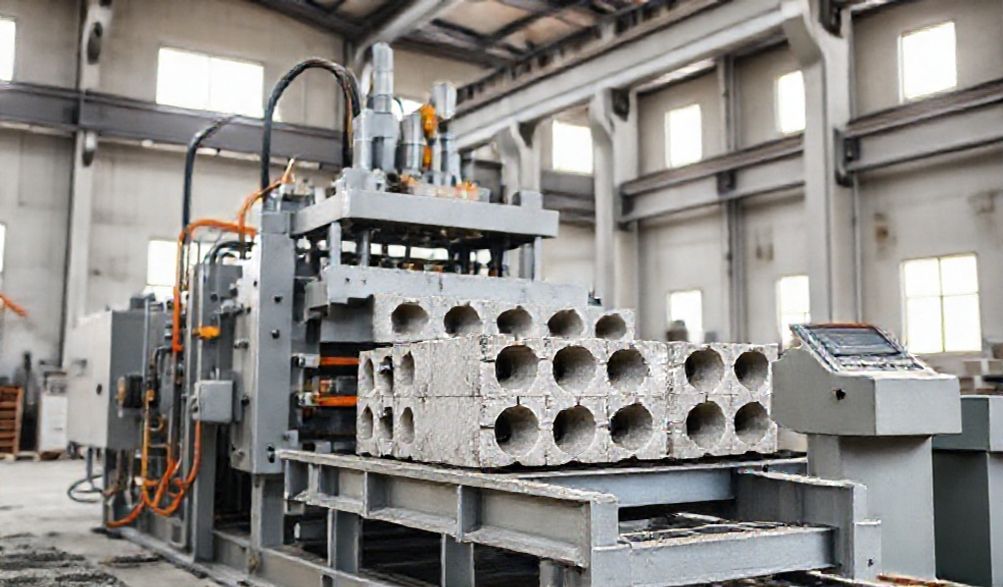
Your Guide to Factory Price Block Machines: Maximize Value & Minimize Cost
Intangamarara
You have the land, the project plan, and the drive to build a profitable venture. But there it is—the daunting upfront cost of industrial equipment threatening to derail your budget before you even begin. For entrepreneurs, construction firms, and developers, the decision to invest in a block-making machine is pivotal. The wrong choice can lock you into a cycle of downtime, repair costs, and missed opportunities. The market is flooded with promises of “factory direct” prices, but what does that truly mean, and how can you be sure you’re getting real value?
With over 15 years in construction machinery manufacturing and commissioning plants across three continents, I’ve seen the full spectrum of outcomes—from seamless, profitable operations to costly mistakes born from unclear pricing. This guide is designed to cut through the marketing noise. Our goal is to demystify the term “factory price” and equip you with the knowledge to source reliable, high-quality block-making machinery at truly competitive costs.
Byakurikira iyi ngingo, uzasobanukirwa:
* The true meaning and potential pitfalls of “factory price” quotes.
* The key technical factors that determine a machine’s real value and long-term cost.
* A step-by-step, actionable process for sourcing and vetting manufacturers.
* How to calculate the Total Cost of Ownership (TCO) to make a truly savvy investment.
An informed buyer doesn’t just save money at the point of purchase; they build a foundation for lasting profitability. Let’s begin.
What Does “Factory Price” Really Mean in Block Machinery?
The term “factory price” is a powerful magnet in industrial purchasing. It promises transparency, savings, and a direct line to the source. But to leverage it effectively, you must understand what it does—and does not—guarantee.
Beyond the Marketing Tagline
At its core, “factory price” signifies a transaction that bypasses intermediaries. You are buying directly from the entity that designs and assembles the machine, eliminating the markups added by domestic distributors, regional agents, or trading companies.
However, a critical distinction must be made:
* Factory Price is the most direct price for a given level of quality. It is not a synonym for the “cheapest possible price.” A manufacturer using premium-grade steel and branded components will have a higher “factory price” than one using inferior materials. The value lies in the direct relationship and the elimination of unnecessary supply chain layers.
The True Cost Components of a Block Machine
To understand any quote, you must know what you’re paying for. A manufacturer’s price is built from the ground up:
- Ibikoresho by'ibanze: The grade and thickness of steel used for the frame, mold, and pallets. This is often the first place cheaper manufacturers cut corners.
- Ingingo Shingiro: The cost of the hydraulic system (pumps, valves, cylinders), vibration motors, PLC controller, and electrical panels. Brands like Siemens, Schneider, or Rexroth command a premium over generic parts.
- Ubushakashatsi n'iterambere (R&D): Costs for engineering robust designs, efficient vibration patterns, and user-friendly control systems.
- Manufacturing & Labor: Precision welding, machining, assembly, and painting.
- Factory Overhead: Facility costs, quality control processes, and administration.
- Profit Margin: The manufacturer’s legitimate return on their expertise and investment.
In contrast, a distributor’s price layers on additional costs: their own procurement, international logistics, warehousing, local marketing, sales commissions, and the cost of providing preliminary local support.
When “Factory Price” Can Be Misleading
A low headline “factory price” can sometimes be a red flag. Be wary of:
- Outdated or Inferior Specifications: The quote may be for a model with weaker motors, thinner steel, or a basic PLC.
- “Bait-and-Switch” Tactics: The advertised price may be for a bare-bones configuration, with essential accessories (extra molds, pallet feeder, stacker) priced exorbitantly as add-ons.
- Hidden Costs: The price may be FOB (Kuri Bugenewe), meaning it only covers getting the machine onto a ship at a Chinese port. You, the buyer, are responsible for the often-significant costs of sea freight, insurance, import duties, and final delivery to your site.
- Lack of Certification: Machines without CE, ISO, or other relevant certifications may be cheaper but could pose safety risks and be illegal to operate in many regions.
Always request a detailed, itemized quotation (Proforma Invoice) that specifies every component, accessory, and trade term.
Key Factors Determining a Block Machine’s Price & Value
Moving beyond the tagline, the price is a direct reflection of the machine’s capabilities, durability, and sophistication. Evaluating these factors is how you assess true value.
Ubwoko bw'Imashini na Urwego rw'Imikorere y'Imashini
The degree of automation is the primary price driver, as it directly impacts labor requirements and output consistency.
- Imashini z'Abantu & z'Igikoresho cya Gahunda: Lower initial investment. Operators manually feed materials, remove blocks, and control cycles. Suitable for very small-scale or start-up projects. Price range: $3,000 – $15,000.
- Amashini Y'imodoka Y'imodoka Y'imodoka: The core of most commercial operations. Fully automated from batching to block ejection and stacking. Require 1-3 operators. Offer high, consistent output. Price range: $25,000 – $150,000+.
- Imashini z'ibikoresho bya Mobile Block: Offer flexibility to produce blocks directly on-site, eliminating transport costs for the blocks themselves. Vary in automation. Price range: $15,000 – $50,000.
Ubushobozi bwo Gukora n'Ibipimo byo Gukora
Capacity is not a vague promise; it’s a function of specific, measurable metrics.
- Block Size & Mold Type: A machine that produces standard hollow blocks will differ in price from one designed for interlocking pavers, curbstones, or large solid blocks. Multi-mold versatility adds cost.
- Cycles Per Hour & Daily Output: This is the heart of your ROI calculation. A “8-second cycle time” machine will produce far more blocks per day than a “20-second cycle time” machine, justifying a higher price.
| Model Tier | Typical Cycle Time | Blocks Per Cycle | Estimated Daily Output (8hrs) | Primary Use Case |
| :— | :— | :— | :— | :— |
| Basic Semi-Auto | 20-30 seconds | 3-5 | 3,000 – 6,000 | Small projects, start-ups |
| Standard Fully-Auto | 10-15 seconds | 5-10 | 10,000 – 25,000 | Commercial block supply |
| High-Capacity Plant | 8-10 seconds | 10-15+ | 30,000 – 50,000+ | Large construction firms, export |
Core Components: Where Quality Dictates Cost
This is where the adage “you get what you pay for” becomes critically true. The quality of these systems determines uptime, maintenance cost, and machine lifespan.
- Sisitemu ya Hydraulique: The heart of the machine. Look for brand names (Rexroth, Yuken, Parker) and stable, high-pressure systems. Cheap hydraulics lead to leaks, inconsistent block density, and frequent failures.
- Sisitemu yo Gutengurwa: Responsible for block compaction and strength. Powerful, frequency-convertible motors mounted on a robust vibration table are essential for high-density blocks.
- Sisteme yo Gucunga A reputable PLC (e.g., Siemens, Mitsubishi, Delta) with a clear touchscreen interface ensures reliable, repeatable operation and easier troubleshooting.
- Frame & Construction: Heavy-duty, welded steel frames with adequate reinforcement resist the immense stresses of constant vibration, preventing cracks and misalignment over time.
Investing in quality components might raise the initial “factory price,” but it drastically lowers your long-term operating and maintenance costs.
Brand Reputation and After-Sales Service
An established brand with a decade-long track history commands a price premium for a reason: proven reliability and reduced risk. However, even with a newer manufacturer, the inclusion of after-sales service in the “factory price” is non-negotiable and a key element of trust.
- Warranty: What is covered (parts, labor, shipping for parts?) and for how long?
- Ubufasha bwa tekiniki Is 24/7 remote support via WhatsApp/TeamViewer available?
- Ibigabanyabugenamashini: Are parts readily available? Will they provide a parts list with codes and prices?
- Training & Documentation: Are clear manuals (preferably with video) and basic operational training included?
How to Source the Best Factory Price Block Machine: A Step-by-Step Guide
Armed with technical knowledge, you can now navigate the sourcing process with confidence. This is where practical experience separates successful buyers from the rest.
Step 1: Define Your Precise Business Needs
You cannot source effectively if you don’t know what you need. Answer these questions first:
* Target Market: What blocks are in demand? (Hollow, solid, pavers?)
* Daily Production Volume: Based on your sales projections.
* Ibikoresho by'ibanze: What is the composition of your local aggregate, sand, and cement?
* Site Constraints: Available space, power supply (3-phase?), and labor skill level.
Step 2: Research and Shortlist Reputable Manufacturers
- Use B2B Platforms Strategically: Alibaba and Made-in-China are starting points, not finish lines. Filter for “Verified Suppliers,” “Gold Suppliers,” and those with 10+ years in business. Look for suppliers who are listed as “Manufacturers,” not “Trading Companies.”
- Seek Evidence of Authority: A professional website with detailed engineering information, plant photos, and video testimonials is a good sign. Industry certifications (CE, ISO 9001) are mandatory filters—they demonstrate a commitment to standardized quality and safety.
Step 3: The Art of Inquiry and Quotation Analysis
A vague inquiry gets a vague quote. Be professional and specific. Your inquiry should request:
* Detailed technical specifications for a model matching your needs.
* Brand names of key components (PLC, hydraulic parts).
* A complete list of what is included in the price (how many molds? pallets?).
* Clear trade terms: FOB Port or CIF Your Nearest Port?
* Warranty terms and after-sales service details.
* An estimated lead time.
When quotes arrive, create a comparison spreadsheet. Compare not just the bottom-line price, but every specification and inclusion side-by-side.
Step 4: Verification and Due Diligence
This step protects your investment.
1. Request a Live Video Tour: Ask for a real-time video call to see the factory floor, assembly of machines, and—critically—a live test run of a machine. This verifies the factory’s existence and capability.
2. Ask for References: Request contact information for 2-3 previous customers in a region similar to yours. Follow up with them.
3. Consider a Third-Party Inspection: For orders over $20,000, hiring an inspection company (like SGS, BV, or Intertek) for a Pre-Shipment Inspection (PSI) is a wise investment. They will check the machine against your order specifications, perform a test run, and verify packaging.
4. Use Secure Payment Terms: Standard terms are 30% deposit, 70% before shipment. Never use 100% upfront payment. Consider using Alibaba’s Trade Assurance for an extra layer of protection.
Maximizing Your Investment: Beyond the Purchase Price
The smartest buyers think in terms of Total Cost of Ownership (TCO), not just purchase price.
Calculating Total Cost of Ownership (TCO)
TCO = Initial Price + Shipping & Insurance + Import Duties + Installation & Commissioning + Training + Energy Consumption + Routine Maintenance + Spare Parts over 5-7 years.
A robust machine with a 10% higher initial price but 30% lower energy use and 50% fewer breakdowns will have a significantly lower TCO than a cheap, inefficient machine.
Essential After-Sales Support to Insist On
Your relationship with the factory nyuma payment is what ensures success. Contractually insist on:
* Inyandikorwa ryuzuye Electronic and physical manuals with parts diagrams.
* Remote Troubleshooting Guide: A step-by-step guide for common issues.
* Spare Parts Catalog: With item codes and prices, guaranteeing future part availability.
* Installation & Commissioning Support: Either detailed video guidance or an optional on-site engineer service.
Tips for Efficient Operation and Maintenance
- Follow the Manual: Adhere strictly to the recommended mix design and curing process.
- Daily Checks: Lubricate moving parts, check hydraulic oil levels and for leaks, clean the mold and pallets.
- Scheduled Maintenance: Replace wear parts like seal kits and vibration motor bearings as per the schedule, mbere they fail.
- Train Your Operators: Ensure they understand the machine’s functions and basic troubleshooting.
Frequently Asked Questions (FAQ) About Factory Price Block Machines
Q1: Is buying a block machine directly from a factory always cheaper than from a local dealer?
A: Not necessarily in the short-term, out-of-pocket sense. The unit price is often lower, but you absorb the cost, risk, and hassle of international logistics, customs, and local installation. A local dealer bundles these services and provides immediate local support. The decision should be based on a Igiciro Cyose Cy'Umwihariko (TCO) comparison for both scenarios over 3-5 years.
Q2: What hidden costs should I look out for when getting a “factory price” quote?
A: The biggest hidden costs are in logistics and compliance. Always clarify if the quote is FOB or CIF. Key hidden costs can include: sea freight fluctuations, marine insurance, destination port charges, customs clearance agent fees, import duties and taxes, inland trucking to your site, and costs for foundation preparation and electrical hookup. Ask the supplier for a “Landed Cost Estimate” to your nearest port.
Q3: How can I verify the quality of a machine before paying, especially when buying overseas?
A: A three-step verification process is standard:
1. Live Video Demonstration: Insist on a real-time video call to see your specific machine or an identical model running.
2. Test Report: Ask for a test production report/video using a raw material mix similar to what you’ll use.
3. Third-Party Inspection: For significant orders, hire an independent inspection company to conduct a Pre-Shipment Inspection (PSI). They act as your eyes on the ground, verifying quality and specifications.
Q4: What is a standard warranty for a block making machine, and what does it cover?
A: A standard warranty is typically 12-18 months for the main frame and 6-12 months for electrical and hydraulic components, starting from the date of shipment or successful commissioning. It covers defects in material and workmanship under normal operating conditions. Crucially, the warranty is only as good as the contract it’s written in. Ensure all terms—including who pays for return shipping of defective parts—are explicitly detailed in your sales contract.
Ibyo byose
Securing a genuine “factory price” for your block machine is not about finding the cheapest listing online. It is a process of diligent research, technical understanding, and relationship building with a credible manufacturer. It requires looking beyond the sticker price to evaluate the Total Cost of Ownership, where quality, reliability, and support ultimately determine your return on investment.
At its heart, this purchase is not merely an expense for equipment; it is a strategic investment in the productive capacity and profitability of your business. By prioritizing value over the lowest initial cost, you invest in the very foundation of your success—reliable, efficient production that meets market demand day after day, year after year.
Ready to move forward with confidence? To ensure you don’t miss a critical question during your supplier negotiations, download our free, comprehensive Block Machine Specification & Supplier Checklist. This detailed tool will guide you through every technical and commercial point, empowering you to secure the best possible deal for your needs.
This guide was compiled by Alex Chen, a mechanical engineer with over 15 years of experience in the design and manufacturing of construction machinery. He has personally overseen the commissioning of block production plants in 12 countries across Africa, Southeast Asia, and South America, and is dedicated to providing transparent, practical advice to industry professionals and entrepreneurs.
<