
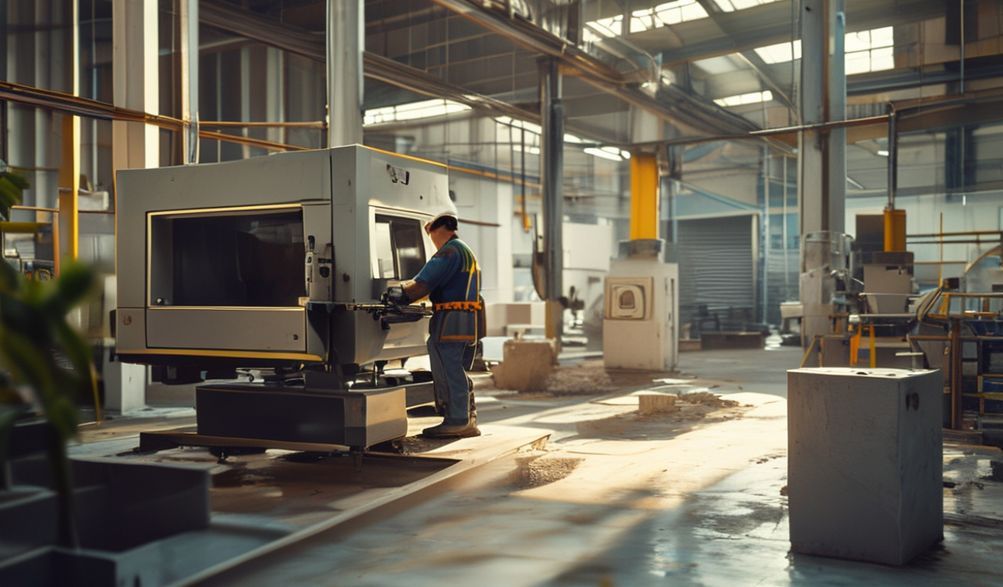
Your Ultimate Guide to Hollow Blocks Machines in the Philippines: Price, Types & How to Choose (2026)
Intangamarara
Are you looking to build your dream home, expand your construction firm, or start a profitable business at the heart of the Philippines’ booming building industry? The journey often begins with a single, fundamental component: the concrete hollow block (CHB). As the ubiquitous building block of the nation, CHBs form the walls of our homes, businesses, and infrastructure.
But behind every reliable block is the machine that made it. Choosing the right hollow blocks machine is more than a purchase; it’s a strategic investment in quality, efficiency, and your bottom line. With options ranging from simple manual presses to fully automated plants, navigating the market can be daunting. How much should you budget? Which type fits your scale? And how do you avoid costly mistakes?
This comprehensive guide, crafted with insights from construction equipment professionals, is your trusted roadmap. We’ll demystify the types of machines, provide a clear 2026 price guide for the Philippine market, and walk you through the critical steps to choose, operate, and maintain your equipment for long-term success. Let’s build a solid foundation for your venture.
Understanding Hollow Blocks and Their Role in Philippine Construction
Before investing in a machine, it’s crucial to understand the product it creates and its market. Hollow blocks are not just a material; they are a cultural and economic staple in Philippine building.
Why Hollow Blocks are the Backbone of Building in the Philippines
Concrete hollow blocks reign supreme in local construction for compelling reasons:
- Ubushobozi bwo gukoresha amafaranga neza: Compared to fired bricks or poured concrete walls, CHBs offer an excellent balance of material cost and structural performance.
- Adaptability to Climate: Their hollow cores provide natural thermal insulation, helping to keep interiors cooler—a vital feature in the tropical heat.
- Structural Efficiency: When properly reinforced with vertical bars and filled with concrete, CHB walls provide significant strength and stability, complying with the National Structural Code of the Philippines.
- Ubwirakabiri bwo Kubaka: Their uniform size allows for faster laying than many alternative materials, accelerating project timelines.
- Localized Production: The ability to produce blocks near construction sites reduces transport costs and supports local economies.
The Business Case: Manual Labor vs. Machine Production
Many startups consider manual molding to save on initial cost. Let’s compare:
Manual Production:
* Inziza: Very low startup capital.
* Ibibi: Extremely labor-intensive, low output (100-200 blocks/day), inconsistent quality, physically demanding, difficult to scale.
Machine Production:
* Inziza: High, consistent output (from 500 to 10,000+ blocks/day), superior and uniform block quality, significant labor savings, easily scalable business.
* Ibibi: Higher initial investment, requires power source, basic technical knowledge.
Verdict: For any venture aiming for profitability, reliability, or growth, a machine is not just an advantage—it’s a necessity. The return on investment (ROI) from increased production and consistent quality quickly outweighs the initial cost.
Types of Hollow Blocks Machines Available in the Philippines
The market offers a spectrum of automation to match every budget and business plan.
Manual Hollow Blocks Machines
These are mechanical lever-operated presses.
* Ibyakozwe: Workers manually fill the mold, press the lever to compact the concrete, and then strip the block.
* Byiza Kuri: Absolute beginners, very small-scale personal projects (e.g., building a single home), remote areas with no electricity, or as a proof-of-concept before upgrading.
* Ibyago: Output is low and physically taxing. Block quality heavily depends on operator skill.
Semi-Automatic Hollow Blocks Machines
The most popular choice for small and medium enterprises (SMEs) in the Philippines. They use hydraulic or mechanical systems to automate the pressing and molding.
* Ibyakozwe: An operator feeds the mixed concrete into the hopper, and the machine handles compaction, vibration, and ejection. Pallet handling may be manual.
* Byiza Kuri: Growing businesses, local suppliers, and construction companies supplying their own projects. They offer a fantastic balance of affordability, output (1,000 to 5,000 blocks/day), and automation.
* Key Feature: Often customizable with different molds for various block sizes and types (e.g., solid, paving stones).
Fully Automatic Hollow Blocks Making Plants
These are complete production lines designed for industrial-scale output.
* Ibyakozwe: Computer-controlled systems handle batching, mixing, conveying, molding, curing, and stacking with minimal human intervention.
* Byiza Kuri: Large block manufacturing plants supplying cities or regions, major construction conglomerates, and high-volume export operations.
* Key Feature: Maximum output (8,000 to 20,000+ blocks/day) with consistent, precision quality and the lowest labor cost per block.
Mobile vs. Stationary Block Machines
- Imashini z'ibikoresho bya Mobile Block: Mounted on a trailer. Perfect for contractors who need to produce blocks directly at different job sites, eliminating transport costs for the finished blocks.
- Imashini z'ibikoresho byo gusiga amabuye Set up in a fixed location (a factory or yard). Suitable for established businesses supplying a local market. They are typically more robust and can be part of a larger, optimized production layout.
Key Factors to Consider Before Buying a Hollow Blocks Machine
Making an informed decision requires honest assessment of your needs.
Assessing Your Production Needs: Capacity is Key
Don’t just guess. Calculate:
1. Isoko ry’ubucuruzi: How many blocks can you sell per day in your area?
2. Project Requirements: If for personal use, estimate total blocks needed for your project divided by your timeline.
3. Machine Cycle Time: Ask suppliers: “How many blocks per hour can this machine produce under normal conditions?” A machine rated for 500 blocks/8-hour day may not meet a 1,000-block demand.
Power Source: Electric, Diesel, or Hybrid?
- Umuriro w'amashanyarazi Cleaner, quieter, and cheaper to operate if you have stable grid power. Common for stationary setups in urban/industrial areas.
- Diesel: Essential for areas with frequent power outages or for mobile units on remote sites. Higher fuel cost but offers independence.
- Hybrid (Electric/Diesel): Offers flexibility. Can run on electricity primarily but switch to a diesel generator during brownouts.
Machine Specifications and Block Sizes
- Ubushobozi bwo Gukora Imiterere Ibyahinduka: Can the machine produce standard 4″, 5″, and 6″ hollow blocks? Can it also make interlocking blocks, paving stones, or curbs? Versatility future-proofs your business.
- Block Strength: The machine’s vibration and compaction pressure determine the final block’s density and strength (measured in psi). Ensure it can produce blocks meeting DPWH or ASTM standards.
Quality of Build: Durability for the Long Haul
A cheap machine that breaks down is the most expensive purchase you can make.
* Frame & Mold: Look for high-grade steel (e.g., ST-52) with robust welding. Molds should be precision-machined from hardened steel.
* Sisitemu ya Hydraulique: Check the brand of pumps and cylinders. Reputable brands (e.g., Yuken, Rexroth) ensure reliability.
* Sisitemu yo Gutengurwa: Powerful, isolated vibration motors are crucial for well-compacted blocks.
* Overall Craftsmanship: Inspect the finish, wiring, and assembly. It reflects the manufacturer’s attention to detail.
Hollow Blocks Machine Price Guide in the Philippines (2026)
Disclaimer: Prices are estimates based on market research and are subject to change due to brand, specifications, features, and foreign exchange rates. Always get official quotations from multiple suppliers.
Price Range Breakdown by Machine Type
-
Manual Hollow Blocks Machines:
- Igiciro: ₱15,000 – ₱80,000
- What you get: A basic, mechanical press. Price varies with build quality and number of mold cavities.
-
Semi-Automatic Hollow Blocks Machines:
- Igiciro: ₱150,000 – ₱1,500,000
- What you get: The core of most SME businesses. The wide range accounts for capacity (block output per day), level of automation (e.g., automatic pallet feeder), and brand origin (locally made vs. imported).
-
Imashini zikora amabuye y’ubatswe mu buryo bwikora:
- Igiciro: ₱2,000,000 – ₱10,000,000+
- What you get: A complete, turnkey solution including the block maker, mixer, conveyor, stacker, and sometimes a curing system. Price scales dramatically with automation level and output capacity.
Beyond the Sticker Price: Total Cost of Ownership
Budget for these additional expenses:
* Installation & Foundation: A solid, level concrete foundation is mandatory.
* Raw Materials Stockpile: Initial inventory of cement, sand, and gravel.
* Power Connection/Generator: Electrical setup or purchase of a diesel genset.
* Spare Parts Kit: Essential wear parts like mold liners, springs, and hydraulic seals.
* Umurimo: Wages for at least one operator and helpers for material handling.
* Transport: Delivery cost of the machine to your site.
How to Choose a Reputable Supplier in the Philippines
Your supplier is your long-term partner. Due diligence is critical.
Local Manufacturer vs. Importer/Distributor
- Local Manufacturer: Advantages include easier communication, faster and cheaper spare parts, and machines potentially better adapted to local materials and conditions.
- Importer/Distributor: May offer advanced international technology. Crucially, assess their local warehouse for parts and the expertise of their technical team.
Essential Supplier Checks
- Visit Their Showroom/Factory: See the machines in person. Assess build quality.
- Request Client References: Talk to existing customers about machine performance and after-sales service.
- Ask for Working Videos: See the machine you’re interested in actually producing blocks.
- Get a Detailed Service Agreement: What does the warranty cover (parts, labor, duration)? Is technical support by phone or on-site? Is operator training included?
Red Flags to Avoid
- Prices drastically lower than the market average.
- No physical business address or showroom (“online-only” sellers).
- Unwillingness to provide references or service details.
- High-pressure sales tactics urging immediate payment.
- Lack of documentation (manuals, warranty cards, invoices).
Operating and Maintaining Your Machine for Maximum Profit
Your machine’s productivity determines your profitability.
Basic Operational Guide and Safety
- Gukomatanya: Achieve a consistent, semi-dry concrete mix. Too wet weakens the block; too dry causes poor compaction.
- Kurisha: Ensure the hopper is fed consistently to avoid empty cycles.
- Gukanyaga: Let the vibration cycle complete fully for dense, strong blocks.
- Gukora: Freshly ejected blocks must be kept moist and allowed to cure for at least 7-14 days to gain strength. Do not sell or use green blocks.
- Safety: Always wear safety glasses and gloves. Never clear jams or perform maintenance while the machine is powered on. Lock out/tag out procedures are essential.
Routine Maintenance Checklist
- Buri munsi: Clean the machine thoroughly after use. Check hydraulic oil levels and for leaks. Inspect molds for wear or concrete buildup.
- Buri cyumweru: Grease all moving joints and bearings. Tighten any loose bolts and nuts.
- Monthly: Check vibration motor mounts. Inspect hydraulic hoses for cracks. Change hydraulic oil and filters as per the manufacturer’s schedule (often every 500-1000 hours).
Sourcing Raw Materials: The Mix Design
Block quality starts with the mix. A standard starting ratio is 1 part cement : 6 parts aggregates (a mix of sand and gravel). However, this must be adjusted based on:
* Cement Type: Use Portland cement (Type 1 or 1P).
* Sand Quality: Use clean, sharp sand (not river silt).
* Ingano y'Umubare w'Abantu: Use 3/8″ or 1/2″ gravel for good compaction.
* Amazi: Add just enough for a cohesive, semi-dry mix that holds its shape when squeezed.
Inshingano Iboneye: Have your sand and aggregates tested. Invest in a small concrete mixer for consistent batching.
Bibazo Byinshi Byibazwa (FAQ)
Q: What is the most affordable hollow blocks machine for a beginner?
A: A manual block press is the most affordable entry point, suitable for testing the market or completing a very small personal project with a flexible timeline.
Q: Can I get a loan or financing for a hollow blocks machine?
A: Yes. Many equipment suppliers offer in-house installment plans. Additionally, small businesses can explore financing programs from the Department of Trade and Industry (DTI), Small Business Corporation (SB Corp), or local banks under their MSME loan programs.
Q: How much profit can I make from a hollow blocks business?
A: Profitability varies widely. As a simplified example: If your total cost to produce a standard 6″ block is ₱25 (materials, power, labor, depreciation) and you sell it for ₱35, your gross profit is ₱10 per block. A semi-automatic machine producing 2,000 blocks/day can thus generate significant monthly revenue. Market demand and operational efficiency are key.
Q: What are the best brands of hollow blocks machines in the Philippines?
A: Focus less on a “best” brand and more on the best umushoramari. Look for companies with a strong local presence, a verifiable track record of successful installations, and a commitment to after-sales service. Research online forums and ask for referrals from established block makers in your region.
Q: Do suppliers provide installation and training?
A: Reputable suppliers absolutely should. Before purchasing, confirm in writing what is included: machine installation, commissioning (test run with your materials), and comprehensive hands-on training for your operators. This is non-negotiable.
Ibyo byose
Investing in a hollow blocks machine in the Philippines is a powerful step toward building wealth and contributing to the nation’s infrastructure. It moves you from being a consumer to a producer. The journey requires careful planning—from honestly assessing your production needs and budget to meticulously choosing a supplier who will be a true partner.
Use this guide as your foundational blueprint. Remember, the goal is not just to buy a machine, but to invest in a system that will deliver consistent quality, efficiency, and profit for years to come. Conduct your due diligence, ask the hard questions, and take that confident next step. The market is building. Make sure you have the tools to build with it.
This guide was researched and compiled by our team of construction equipment specialists with decades of combined experience in the Philippine market. Last Updated: October 2026. Always verify machine specifications, pricing, and financing terms directly with your chosen supplier before finalizing any purchase.
<