
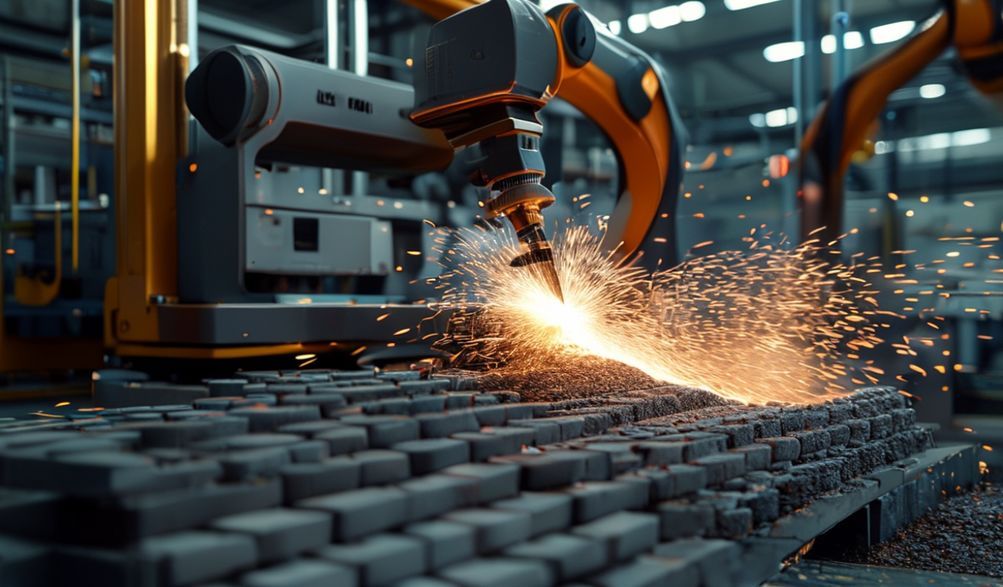
The Complete Guide to Hollow Brick Machines: Types, Benefits & How to Choose
Hordhac
The global construction industry is at a crossroads. With soaring demand for affordable housing and infrastructure, coupled with an urgent need for sustainable practices, builders and entrepreneurs are seeking smarter solutions. Traditional, kiln-fired clay bricks, while familiar, come with significant baggage: high energy consumption, substantial labor costs, and a considerable environmental footprint. There is a pressing need for a building material that is cost-effective, robust, and kinder to our planet.
Enter the hollow brick—a modern engineering marvel that offers superior insulation, lighter weight, and excellent structural properties. But the real hero behind this revolution is the hollow brick machine. This sophisticated equipment transforms raw, often eco-friendly materials into precise, high-quality building blocks with remarkable efficiency. It represents the intelligent fusion of engineering and practicality for the modern age.
This comprehensive guide is built on industry expertise, engineering principles, and real-world operational insights. Whether you are a contractor looking to streamline on-site production, an entrepreneur eyeing a lucrative manufacturing business, or a project manager aiming for better cost control, this resource is designed to empower you. Our goal is to provide trustworthy, actionable information to help you make a perfectly informed decision about investing in a hollow brick machine.
Halkan waxaad ku baran doontaa:
* The fundamental workings and components of a hollow brick machine.
* The different types available and how to match them to your specific needs.
* The compelling financial and operational benefits of ownership.
* A detailed, step-by-step checklist for selecting the best machine.
* Essential tips for operation and a look at the future of brick making.
Waa maxay Mashinka Lebiska Dhexdhexaad ah iyo Sidee ay u Shaqeysaa?
Core Definition and Output
A hollow brick machine is a specialized piece of industrial equipment designed to manufacture bricks and concrete blocks that contain hollow cavities or cores. Unlike solid blocks, this intentional hollow design is a key feature, not a flaw. It serves multiple critical purposes:
* Khafif: Reduces the overall dead load of a structure, allowing for lighter foundations and easier, faster handling on-site.
* Qalabka Kul iyo Dhawaanka: The air pockets within the bricks act as a barrier, significantly improving a building’s energy efficiency and soundproofing.
* Qeybinta Alaabta Si Fiican U Isticmaalka: Uses less raw concrete per brick, lowering material costs and reducing the environmental impact of production.
Aasaaska Hawlgal ee Shaqada
The production process is a cycle of precision, often automated to a high degree. Here’s a simplified breakdown:
1. Qalabka Xoolaha La Cuno: Pre-measured quantities of raw materials—typically cement, sand, fly ash (an industrial by-product), and aggregates (like crushed stone)—are fed into the system.
2. Isku-dhafka: These materials are thoroughly blended with a precise amount of water in a mixer to form a homogeneous, semi-dry concrete mix.
3. Qalabka & Isku-dhafka: The mix is transferred into a mold (or “mold box”) that defines the brick’s shape and hollow cores. Here, the core action happens: either a baabbi'id hidroolik applies immense pressure or a vibration tableisku buuxiyaa isku darka, oo ka saara hawo-booiyaha oo hubiya cufnaanta.
4. Loo-qaadista & La-dhammaystirka: The freshly formed, green brick is ejected from the mold onto a pallet or conveyor. It then enters a curing chamber or area, where it gains strength over time through controlled hydration, often aided by steam.
5. Final Product: After curing, the bricks are stable, strong, and ready for use in construction.
Qaybaha Muhiimka ah ee Mashinka
Fahamka qaybaha ugu muhiimsan ayaa qarsoomiyada hawlgalka mashiinka ka saara.
* Mikser: The heart of material preparation, ensuring a consistent blend.
* Hopper & Conveyor: The hopper stores the mixed material, and the conveyor system feeds it to the molding area.
* Qolof (Dhismaha): The defining component. Interchangeable molds allow one machine to produce different brick sizes, shapes, and patterns (e.g., hollow, solid, paving).
* Nidaamka Dhismaha Either a Hydraulic Power Pack (for press machines) generating immense force through cylinders, or a Vibration Motor/Table that uses high-frequency vibration for compaction.
* Qaybta Maamulka: The brain of the operation, especially in semi- and fully-automatic models. It allows operators to set parameters, control the cycle, and monitor performance.
Types of Hollow Brick Machines: Finding the Right Fit
Choosing the right type is the most critical step. Your choice hinges on your required output, budget, and labor availability.
By Operation: Manual, Semi-Automatic, and Fully Automatic
-
Manual Hollow Brick Machines:
- Sida ay u shaqeeyaan: Every step—feeding, compacting (via lever), and demolding—is performed by hand.
- Faaiidooyinka: Lowest capital cost, simple mechanics, easy to repair.
- Laba. Very low output (100-500 bricks/day), high physical labor, inconsistent quality.
- Ugu Fiican: Extremely small-scale projects, remote locations with no power, community-led initiatives, or as a starter unit for testing a market.
-
Semi-Automatic Hollow Brick Machines:
- Sida ay u shaqeeyaan: Key processes like mixing, compaction, and vibration are powered (electrically/hydraulically). Operators manually feed molds and remove finished bricks.
- Faaiidooyinka: Excellent balance of cost, output (1,000-5,000 bricks/day), and quality. Offers good control with reduced physical strain.
- Laba. Still requires a steady labor crew for operation.
- Ugu Fiican: Small to medium-sized block manufacturing yards, contractors undertaking specific projects, and entrepreneurs starting a business with moderate investment.
-
Fully Automatic Hollow Brick Machines:
- Sida ay u shaqeeyaan: The entire process from batching to mixing, molding, compaction, curing, and stacking is automated via programmable logic controllers (PLCs). Minimal human intervention is needed.
- Faaiidooyinka: Maximum output (10,000-20,000+ bricks/day), exceptional consistency, minimal labor costs, and high efficiency.
- Laba. Highest initial investment, requires more space and infrastructure (like a curing rack system).
- Ugu Fiican: Large-scale commercial block plants supplying cities or major construction projects, where high volume and uniform quality are non-negotiable.
By Production Method: Hydraulic Press vs. Vibration
-
Makiinada Tijaabinta Hydraulic: These machines use a powerful hydraulic ram to apply extreme pressure (measured in tons) to the concrete mix in the mold.
- Output Characteristic: Produces very dense, high-compressive-strength bricks with a smooth finish.
- Wanaagsan: Manufacturing load-bearing blocks for multi-story buildings, pavers, and kerbstones where maximum strength is critical.
-
Vibration Machines: These machines use high-frequency vibration to settle and compact the concrete mix within the mold, often combined with some pressure.
- Output Characteristic: Generally faster cycle times. Can handle a wider variety of mix designs, including those with larger aggregates.
- Wanaagsan: Producing standard hollow and solid blocks for partition walls, fences, and general construction. Excellent for high-volume production of common block types.
By Mobility: Stationary vs. Mobile Block Making Machines
- Waxyaabaha Joogtada ah ee Dhirta: These are fixed installations designed for maximum output in a dedicated location. They form the core of a block manufacturing business.
- Mashiinada Mobilka: Mounted on a trailer, these machines can be towed directly to a construction site. They produce blocks on-demand, eliminating the cost and breakage associated with transporting finished blocks over long distances. A game-changer for large, remote projects.
Top Benefits of Investing in a Hollow Brick Machine
Significant Cost Reduction
Ownership directly attacks the largest cost centers in construction:
* Material Savings: Hollow design uses less concrete. You can incorporate low-cost, locally available materials like fly ash, quarry dust, or recycled aggregates.
* Hanaanka Shaqada Automation drastically reduces the number of workers needed compared to traditional brick-making or even manual block laying.
* Wax-ka-beddelka Hawlaha: Producing on-site or on-demand slashes transportation and logistics costs for finished bricks.
Wax-soo-saarka aan la mid ahayn iyo Joogteynta
- Wax soo saar sare: Machines produce hundreds or thousands of bricks per shift, ensuring you meet project deadlines.
- Uniform Quality: Every brick is identical in size, shape, and density. This consistency simplifies construction, reduces mortar use, and results in stronger, better-looking walls.
Strength and Durability of Hollow Bricks
Modern machines produce bricks with compressive strengths that meet or exceed international building standards (e.g., IS, ASTM, BS). Properly cured hollow bricks are:
* Structurally Sound: Suitable for both load-bearing and non-load-bearing walls.
* Weather-Resistant: Highly durable against weathering, erosion, and fire compared to traditional clay bricks.
* Versatile: Can be produced in various strengths to suit different applications, from single-story homes to industrial buildings.
Environmental Sustainability
This is a major driver in the industry’s shift towards hollow brick machines:
* Utilizes Industrial By-Products: Fly ash, a waste product from coal plants, is a prime raw material, reducing landfill waste.
* Low Energy Footprint: The production process consumes far less energy than firing clay bricks in a kiln for days.
* Eco-Friendly Mixes: Facilitates the use of recycled materials and requires no topsoil excavation, preserving agricultural land.
How to Choose the Best Hollow Brick Machine: A Buyer’s Checklist
1. Assess Your Production Requirements
- Wax soo saarka Maalinlaha/Todobaadlaha ah: Calculate your current and projected brick needs. Be realistic.
- Qalabka Lebiga: What sizes, types (hollow, solid, paving), and strengths do you need to produce? Ensure the machine offers compatible molds.
- Mashruuca Miisaanka: Are you supplying a single project, starting a local business, or aiming for large-scale commercial supply?
2. Evaluate Machine Specifications
Don’t just look at the price tag. Compare these key specs:
* Waqtiga Wareegga: How many seconds/minutes per brick? This directly determines output.
* Pressure/Compaction Force: Measured in tons or vibration frequency. Higher force generally means stronger bricks.
* Awoodda Mootorka: Indicates the machine’s capability and energy consumption.
* Heerka Automationka: Match this to your labor strategy and budget.
* Kala duwanaanta Qaabka Can you easily change molds to produce different products?
3. Consider Quality and Durability of Build
Inspect (or request detailed photos/videos of):
* Qaabka It should be made of heavy-duty, reinforced steel.
* Nidaamka Hydraulic: Look for reputable brand pumps and valves. Ask about oil cooling systems.
* Qaybaha Korontada Are PLCs, motors, and sensors from known manufacturers?
* General Workmanship: Welds should be clean and robust; parts should align precisely.
4. Total Cost of Ownership (TCO) Analysis
The cheapest machine can be the most expensive in the long run. Factor in:
* Purchase Price
* Isku-dhajinta & Ka-qaybgalka: Will the supplier provide an engineer?
* Training: Is comprehensive operator training included?
* Kharashyada Dayactirka: Availability and cost of spare parts (wear parts like molds, liners, hydraulic seals).
* Isticmaalka Tamarta Get an estimate of power usage.
* Taageerada Ka Dib Iibka: This is paramount. A trustworthy supplier will offer:
* A clear warranty (typically 1-2 years on core parts).
* A readily available stock of spare parts.
* Access to technical support via phone, email, or video.
* Positive customer testimonials and references you can contact.
Operational Tips and Maintenance for Longevity
Proper Raw Material Preparation
The machine is only as good as the mix you feed it.
* Aggregate Size: Should be well-graded and typically under 10mm for hollow blocks. Sharp, clean aggregates provide better bonding.
* Qaddaca Qoyaanka The mix should be semi-dry—holding its shape when squeezed but crumbling apart. Too wet causes sticking; too dry leads to weak bricks.
* Mix Ratio: Follow a proven recipe (e.g., 1 part cement : 6 parts aggregate blend). Consistency is key.
Routine Daily and Weekly Maintenance
Preventative care prevents costly downtime.
* Daily: Clean the machine thoroughly after each shift. Check for loose bolts or nuts. Visually inspect hydraulic hoses for leaks.
* Weekly: Lubricate all moving parts as per the manual. Check hydraulic oil levels and cleanliness. Inspect mold liners for wear.
Troubleshooting Common Issues
- Bricks Breaking Easily: Likely causes: improper mix (too dry, insufficient cement), inadequate compaction pressure, or improper curing.
- Poor Surface Finish: Could be due to a worn-out mold, incorrect moisture content, or contamination in the mix.
- Machine Jamming: Often caused by overfilling the mold, foreign objects in the mix, or a misaligned component. Always lock out power before investigating.
The Future of Brick Making: Automation and Smart Technology
The evolution of the hollow brick machine is accelerating towards greater intelligence and sustainability.
- Integration with PLC and IoT Systems: Future machines will offer full remote monitoring. Imagine tracking production output, machine health, and energy consumption in real-time from your phone, receiving alerts for predictive maintenance before a breakdown occurs.
- Advancements in Sustainable Materials: Machines will be engineered to handle next-generation geopolymer binders (which eliminate Portland cement) and higher percentages of recycled plastics or industrial waste, pushing the boundaries of green construction.
- Enhanced Safety and Ergonomic Features: Expect to see more automated safety guards, improved noise reduction, and intuitive touch-screen interfaces that reduce operator error and fatigue.
Frequently Asked Questions (FAQ) About Hollow Brick Machines
Q1: What is the average production capacity of a standard hollow brick machine?
A: Capacity varies enormously. A small manual machine may produce 1,000 bricks per 8-hour shift, while a large fully automatic line can produce over 20,000. The key factors are the machine’s cycle time, level of automation, and the size of the brick being produced.
Q2: Can I use a hollow brick machine to produce other types of blocks?
A: Absolutely. Most machines are designed for versatility. By simply changing the mold, you can produce solid concrete blocks, paving stones, interlocking blocks, curb stones, and even garden landscaping products. This flexibility maximizes your return on investment.
Q3: What kind of after-sales support should I expect from a reliable supplier?
A: A reputable supplier provides a comprehensive support package: detailed installation guidance or on-site commissioning, thorough operator training, a clear machine manual, a substantive warranty (1-2 years), a readily available catalog of spare parts, and prompt technical support via multiple channels.
Q4: How much space is required to set up a hollow brick production plant?
A: Space needs depend on scale. A small semi-automatic operation might need 500-1,000 sqm for the machine, raw material storage, a curing area, and finished product stock. A large automated plant with rack curing systems can require 2,000-5,000 sqm or more.
Q5: Are the bricks produced strong enough for multi-story construction?
A: Yes. Machines, particularly high-pressure hydraulic models, can produce load-bearing hollow blocks with compressive strengths exceeding 7.5 N/mm² or higher, which are suitable for multi-story buildings. However, you must always follow a certified mix design and adhere to the specific structural requirements and building codes of your region.
Gabagabo
Thehollow brick machine is more than just a piece of factory equipment; it is a strategic asset that aligns with the core demands of 21st-century construction: efficiency, economy, quality, and sustainability. It empowers builders to take control of their material supply, enables entrepreneurs to build profitable businesses, and contributes to a greener building ecosystem.
Your journey should begin with a thorough analysis of your own needs and a clear-eyed evaluation of the market. Remember, this is a long-term investment. Prioritize build quality, supplier reputation, and comprehensive after-sales support over the allure of a superficially low price. The right machine will pay for itself many times over through reliable performance and consistent output.
Ready to explore specific models and get a customized quote? Contact our expert team today for a consultation based on your project requirements.
Download our free comprehensive buyer’s checklist to take with you as you evaluate different hollow brick machine suppliers.
We are committed to providing the expert, trustworthy information you need to make confident decisions that build a stronger future.
<