
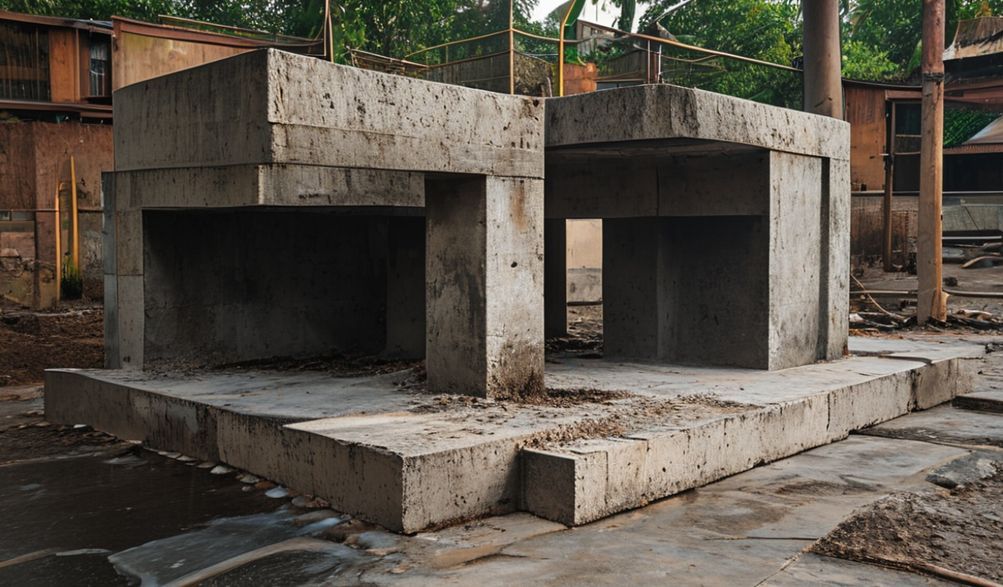
The Ultimate Guide to Concrete Hollow Block Making Machines in Bangladesh (2026)
Hordhac
Look around Dhaka, Chittagong, or any of Bangladesh’s burgeoning urban centers. The skyline is a forest of cranes, and the air hums with the sound of construction. This unprecedented infrastructure and housing boom is fueled by a critical need: reliable, cost-effective, and modern building materials. At the heart of this transformation is the humble concrete hollow block, a superior alternative to traditional bricks. But for entrepreneurs, builders, and developers, a significant challenge remains—navigating the complex market to source a quality, efficient, and affordable concrete hollow block making machine in Bangladesh.
Choosing the wrong machine can lead to crippling downtime, substandard block quality, and a failed business venture. Misinformation and a wide range of options, from local fabricators to international imports, make the decision daunting.
This guide is your definitive resource. Compiled from industry data, direct manufacturer specifications, and, most importantly, the practical, on-ground experiences of construction professionals and plant owners across Bangladesh, it cuts through the noise. We provide the expert insights and locally-relevant analysis you need to make a confident, informed investment.
Halkan, waxaad baran doontaa:
* The technical workings of block machines and why hollow blocks are revolutionizing Bangladeshi construction.
* A detailed breakdown of all machine types available, from manual to fully automatic.
* A crucial buyer’s checklist tailored to the Bangladeshi context.
* An honest market overview of prices, brands, and suppliers.
* The real business potential and steps to start your own block plant.
* Essential operational and maintenance tips for long-term success.
Understanding Concrete Hollow Block Machines & Their Importance in Bangladesh
Waa maxay Makiinada Sameynta Boodhka Dhexdhexaadka ah ee Laamiga?
A concrete hollow block making machine is a specialized piece of equipment designed to manufacture hollow concrete blocks by compacting a mixture of cement, sand, and aggregates (stone chips) into a mold under pressure and vibration. The core principle involves four key stages:
- Isku-dhafka: Raw materials are combined with water to form a semi-dry concrete mix.
- Qaab-dhismeedka: This mix is fed into a mold cavity, which shapes the block and creates the characteristic hollow cores.
- Daboolid: A combination of hydraulic pressure and high-frequency vibration compresses the mix, removing air pockets and ensuring dense, strong blocks.
- Daweynta: The freshly molded blocks are ejected and left to gain strength over time through proper curing, often with water.
The final product is a precisely dimensioned, lightweight block with hollow cavities. These cavities reduce weight, improve thermal and acoustic insulation, and allow for reinforcing steel and concrete grout to be added, creating incredibly strong walls.
Why Hollow Blocks are Dominating Bangladesh’s Construction Scene
The shift from traditional burnt clay bricks to concrete hollow blocks is not a trend; it’s a structural evolution driven by undeniable benefits:
- Qiimaha La Iibiyo ee Hagaagsan: Hollow blocks use less concrete material due to the voids. They are larger in size, leading to faster construction with less mortar, significantly reducing labor and material costs per square foot of wall.
- Superior Structural Benefits: They offer excellent compressive strength, making them suitable for multi-story buildings. Their lighter weight reduces the dead load on the structure, a crucial factor for seismic resistance. The thermal insulation properties also help reduce cooling costs—a major advantage in Bangladesh’s climate.
- Policy and Code Trends:TheBangladesh National Building Code (BNBC) increasingly recognizes and promotes the use of modern, engineered masonry units. Government infrastructure projects and savvy private developers are setting a precedent by specifying hollow blocks.
- Saameynta Deegaanka: Hollow block production has a lower carbon footprint than fired bricks. Crucially, the mix design can incorporate industrial by-products like fly ash from local power plants, turning waste into a valuable resource and promoting greener construction.
Types of Concrete Hollow Block Machines Available in Bangladesh
Your choice of machine defines your business scale, output, and operational model. Here’s a breakdown tailored to the Bangladeshi market.
Manual / Hand-Operated Block Making Machines
- Wanaagsan: Absolute beginners, very small-scale projects (e.g., building one’s own house), rural construction, or as a secondary, low-output production line.
- Fa'idooyinka iyo Dhibaatooyinka:
- Faaiidooyinka: Lowest upfront cost (typically BDT 25,000 – 80,000), simple operation with minimal technical knowledge, no electricity required for basic models.
- Laba. Very low output (100-400 blocks per day), highly labor-intensive, inconsistent block quality due to reliance on manual compaction, physically demanding work.
- Market Note: Numerous small workshops in Dhaka’s BangsaliyoPostogola areas fabricate these. Quality of welding and materials varies greatly, so physical inspection is a must.
Makiinada Dhismo Block-ka oo Nus-awtomaatig ah
- Wanaagsan: Small to medium-scale block manufacturing businesses, dedicated block suppliers for local markets, and construction firms undertaking multiple projects.
- Astaamaha Muhiimsan: These machines are the workhorses of the local industry. They feature an electric motor driving a nidaamka gariirka (often with a hydraulic press) to compact the mix. While feeding and block removal are manual, the core compaction is mechanized.
- Output & Context: A standard single-mold semi-automatic machine can produce 300-800 blocks per 8-hour shift, depending on operator skill and cycle time. This capacity aligns well with the demand of several small housing projects or a steady supply business. Prices range from BDT 2.5 Lakh to 8 Lakh+, depending on size and configuration.
Makiinada Buug Block Oo Si Toos ah U Sawirta
- Wanaagsan: Large-scale industrial plants, major block suppliers to city-wide markets, real estate developers with in-house production, and high-volume government contract suppliers.
- Geediga Awoodda Otomaatiga: These are complete production lines. They automate batching, mixing, conveying, molding, compaction, curing, and even stacking/palletizing. A single control panel manages the entire process.
- Critical Considerations for Bangladesh: The investment is significant (BDT 25 Lakh to several Crores). ROI depends on securing large, consistent contracts. The absolute necessity of reliable after-sales service and technical support cannot be overstated. Power supply stability (requiring 3-phase connections and often generators) and a larger operational footprint are also key factors.
Mashiinada Sameynta Buulada Mobilka
- Faaiidooyinka: These are essentially semi-automatic or small automatic plants mounted on a trailer. Their prime advantage is on-site production.
- Perfect Use-Case: For a developer building a large apartment complex or a contractor working on a remote road project, a mobile plant eliminates block transportation costs and damage. Production happens exactly where the blocks are needed.
Key Considerations Before Buying: A Buyer’s Checklist for Bangladesh
This is where due diligence separates successful ventures from costly mistakes.
Assessing Your Production Needs & Budget
- Xisaabi Baahida Dhabta Ah Are you supplying your own construction project? Estimate total blocks needed and divide by your project timeline. Starting a business? Research local demand—talk to masons, contractors, and hardware shops. A machine producing 1,000-2,000 blocks per day is a common starting point for a serious small business.
- Total Investment Breakdown: The machine price is just one part.
- Machine Cost: 40-60% of initial capex.
- Land & Shed: Secure, level land with a simple roofed shed.
- Raw Material Stock: Initial inventory of cement, sand, and stone chips.
- Shaqo: Operators and helpers.
- Power & Utilities: Connection costs and monthly bills.
- Miscellaneous: Molds for different block sizes, pallets, curing equipment.
Machine Specifications to Scrutinize
- Output per Hour: Don’t just look at “theoretical” maximums. Ask for the practical cycle time (e.g., blocks per hour with standard 4″ or 5″ blocks) under normal working conditions.
- La midka ah Qalabka Qalabka: Ensure the machine can produce the most marketable sizes in Bangladesh: 4-inch, 5-inch, 6-inch, and 8-inch hollow blocks. Check the cost and lead time for additional molds.
- Motor Power & Voltage: Match the motor (e.g., 5 HP, 10 HP) to your expected load. Verify voltage compatibility (220V/380V/440V) with your local supply. Three-phase motors are common for semi-auto and above.
- Qaybta Qaab-dhismeedka Inspect the vibration table thickness, the frame’s steel grade, and the quality of welding. A heavier, robust machine will withstand the constant vibration far better than a lightweight, poorly fabricated one.
The Critical Role of After-Sales Service & Parts Availability
This is arguably the most important factor for long-term success in Bangladesh.
- Local Support is Non-Negotiable: Prioritize suppliers who have a physical service center or dedicated technicians in Dhaka, Chittagong, or your region. A machine breaking down without local support can halt your business for weeks.
- The Verification Checklist:
- Warranty: Get a clear, written warranty (typically 1 year on major parts).
- Training: Does the price include on-site training for your operators?
- Spare Parts Inventory: Ask to see their local spare parts stocklist. Common wear parts like springs, vibration motors, and hydraulic seals should be readily available.
Market Overview: Prices, Brands, and Suppliers in Bangladesh
Price Range of Block Making Machines in Bangladesh (BDT & USD)
- Makiinada Gacanta: BDT 25,000 – 80,000 (~$230 – $730 USD).
- Makiinnada Yar-otoomaatig ah: BDT 250,000 – 800,000+ (~$2,300 – $7,300+ USD). A good quality standard model typically starts around BDT 400,000.
- Makiinadaha Tooska ah ee Si Fudud: BDT 2,500,000 – 10,000,000+ (~$22,800 – $91,000+ USD). Price scales dramatically with automation level and output.
- Variation Factors: Brand reputation, origin (imported vs. local), level of automation, build quality, and the supplier’s margin all affect the final price.
Popular Local and International Brands
- Local Manufacturers/Brands: Bangladesh has skilled fabricators who build robust machines, often adapting designs to local conditions. Brands (often named after the workshop or engineer) are prevalent. Their key advantage is lower cost and easier access to service and customization. Quality must be verified on a case-by-case basis.
- Brandyo la soo dejiyay:
- Chinese: Dominant in the import segment due to competitive pricing. Brands like Hongfa, Quangong, and Wangda are common. The spectrum is wide—from low-cost, basic models to high-end, reliable ones. The critical differentiator is the importer’s commitment to after-sales service.
- Indian: Known for good mechanical engineering, often offering a balance between price and durability.
- European (e.g., German): Represent the premium tier (e.g., Zenith (waxaa loo tarjumaa "culays" ama "sare")). Unmatched quality and automation but at a price point often prohibitive for the average Bangladeshi entrepreneur, unless for very large-scale projects.
Where to Find Reliable Suppliers
- Industrial Hubs: The traditional machinery markets of Bangsal, Postogola, and Dholaikhal in Dhaka are the first stops for many buyers. Chittagong also has significant machinery markets.
- The Demonstration Imperative: Never buy based on a brochure or website alone. Insist on a live demonstration using a concrete mix. Observe the machine’s operation, noise, vibration, and the quality of the produced block.
- Verify Legitimacy: Ask for the supplier’s Trade License, check if they are a member of relevant trade bodies, and if possible, visit their workshop/factory. Ask for and contact references from their previous customers.
The Business Potential: Starting a Hollow Block Plant in Bangladesh
Feasibility and Initial Investment
Starting a block plant is a viable manufacturing business. A basic semi-automatic plant setup can be initiated with a total investment of BDT 8-15 Lakh, covering machine, shed, initial raw materials, and working capital for the first few months. Land can be leased initially to reduce cost.
Raw Material Sourcing in Bangladesh
- Availability: Cement is readily available from multiple brands. Coarse sand (baalu) and stone chips (boulder chips) are sourced from rivers and quarries; establish relationships with reliable suppliers for consistent quality and price.
- Fly Ash Opportunity: Sourcing fly ash from power plants can reduce cement content by 10-20%, lowering costs and creating an “eco-block” marketing angle.
- Tayaynta Tayo Test sand for silt content and aggregates for size and strength. Inconsistent raw materials are a primary cause of poor block quality.
Profitability Analysis and Market Strategy
- Cost vs. Selling Price: As of 2026, the production cost for a standard 5″ hollow block can range from BDT 22-28, depending on material costs and efficiency. The selling price typically ranges from BDT 30-38 at the plant gate, offering a clear per-unit margin.
- Identifying Customers: Your primary targets are local masons, small-to-medium contractors, hardware stores (as stockists), and real estate developers. For individual homeowners, partner with local masonry teams.
- Marketing Tips: Offer free sample blocks to contractors. Ensure your blocks have a clean, sharp finish and consistent color. Use social media (Facebook) to showcase your plant and projects. Word-of-mouth from satisfied masons is your most powerful marketing tool.
Operational Guide and Maintenance Tips
Best Practices for Machine Operation
- Mix Design: A common starting ratio is 1 part cement : 4 parts sand : 4 parts stone chips (1:4:4). Use just enough water for a semi-dry, cohesive mix that holds its shape when squeezed. Field reports suggest adjusting based on sand moisture and desired block strength.
- Habka Daweynta: Do not skip proper curing! Freshly molded blocks must be kept moist for at least 7-14 days. This can be done by covering them with damp gunny sacks and sprinkling water regularly. Proper curing can double the block’s final strength.
Routine Maintenance Schedule to Avoid Downtime
- Daily: Clean the machine thoroughly after each shift. Check for loose bolts and nuts. Lubricate all moving parts as per the manual.
- Weekly: Inspect the vibration motor mounts. Check hydraulic oil levels and look for leaks. Examine molds for wear or damage.
- Monthly: Tighten all major structural bolts. Check electrical connections. Perform a more thorough inspection of wear parts.
- Common Issues: Blocks breaking during ejection (often due to improper mix or worn molds), weak vibration (check motor mounts or voltage), and hydraulic leaks. A well-maintained machine and a trained operator can solve most common problems.
FAQ Section
Q1: What is the average price of a small concrete block making machine in Bangladesh?
A small, new semi-automatic machine suitable for a startup business typically starts around BDT 400,000 to 600,000. A basic manual machine can be found for under BDT 80,000.
Q2: Which is better for a beginner: a manual or a semi-automatic machine?
For anyone serious about a commercial venture, a mashinka dheeri ah oo otomaatig ah is almost always the better choice. The higher initial investment is quickly justified by superior output, consistent quality, and lower long-term physical strain, leading to faster business growth.
Q3: How much profit can I make from a small block making plant?
A well-run small plant with a single semi-automatic machine can produce 2,000-3,000 blocks per day. With a conservative net profit of BDT 5-8 per block, daily net profits can range from BDT 10,000 to 24,000, depending on operational efficiency, material costs, and sales volume.
Q4: Are there any government loans or subsidies for starting this business?
Yes, schemes from Bangladesh Bank (through commercial banks) and institutions like the Bangladesh Small and Cottage Industries Corporation (BSCIC) often offer concessional loans for small manufacturing enterprises, including block plants. Consult with your local bank or BSCIC office for current programs.
Q5: What are the most common problems with block machines in Bangladesh, and how can I fix them?
Common issues include vibration motor failure (ensure proper voltage and mounting), worn-out molds causing block sticking (repair or replace molds), and hydraulic oil leaks (replace seals). Preventive maintenance and keeping critical spare parts on hand are the best solutions.
Q6: How do I choose between a Chinese machine and a local one?
Evaluate based on support, not just origin. A reputable local fabricator with excellent service may be better than a cheap Chinese import with no local support. Conversely, a Chinese machine imported by a well-established Bangladeshi company with a full service department can be an excellent choice. Always prioritize the supplier’s service reputation.
Q7: What is the typical lead time to receive a machine after ordering?
For locally fabricated machines, lead time can be 1-4 weeks. For imported machines (especially Chinese), factor in 8-12 weeks for manufacturing, shipping, and customs clearance. Get a written delivery timeline in your purchase agreement.
Gabagabo
Choosing the right concrete hollow block making machine in Bangladesh is a strategic decision that hinges on a clear understanding of your needs, a meticulous evaluation of the machine and its supplier, and a solid business plan. We’ve walked through the importance of hollow blocks, the types of machinery available, and the critical local factors like after-sales service and raw material sourcing.
The key takeaway is this: conduct relentless due diligence. Never skip the factory visit or live demonstration. Prioritize the supplier’s service commitment over a marginally lower price. Your machine is the core asset of your business; its reliability directly determines your profitability.
The future for block manufacturing in Bangladesh is exceptionally bright, driven by continuous urbanization and a shift towards modern construction. By making an informed investment today, you position yourself not just as a buyer of machinery, but as a stakeholder in building the future of Bangladesh.
Call to Action: Use this guide as your foundational checklist. Now, take the next step: shortlist 3-5 suppliers, schedule visits and demonstrations, and start conversations with their existing customers. Your journey to becoming a successful block manufacturer starts with informed action.
<