1. Hordhac
Qaabaynta makiinada sameynta leegooyinka isku-xirnaanta waa aasaaska waxqabadkeeda, aaminimadeeda, iyo tartanka suuqa. Kuwa qaybiya, iibiya, iyo iibsada oo ka shaqeeya silsiladda wax soo saarka qalabka dhismaha, fahamka qoto dheer ee qaabaynta makiinada ma ahan oo keliya baahida farsamo—waa faa'iido istaraatiiji ah. Qaabaynta la qorsheeyey si fiican waxay si toos ah u saameysaa wax soo saarka wax soo saarka, tayada leegooyinka, kharashyada hawlgalka, shuruudaha dayactirka, iyo ugu dambaynta, faa'iidada isticmaalaha ugu dambeeya.
2. Jirka
2.1 Mabaadi'da Asaasiga ah ee Qaabeynta Makiinadaha Dhismo Isku-xidhka
Qaabaynta makiinadaha sameynta lebbiska isku xirnaanta waxaa hagaya afar mabda' oo guud oo u dhiganta waxqabadka farsamada, sahlanaanta isticmaalka, hagaajinta qiimaha, iyo is-beddelka. Mabda'ahan waxay u shaqeeyaan khariidad dhismaha injineerrada, waxayna si toos ah u saameynaan awoodda makiinada inay daboolaan baahiyaha labada dhinac ee qaybiyeyaasha iyo isticmaalayaasha ugu dambeeya.
2.1.1 Waxtarka Hawlaha: Kor u Qaadista Soo Saarka iyadoo La Isticmaalayo Wax Yar oo La Bixiyo
Waxqabadka waxtarka leh waa xarigga aasaasiga ah ee naqshadeynta makiinada, iyadoo la diiradda saarayo hagaajinta wareegga wax soo saarka si loo soo saaro doolyo tayo sare leh iyadoo la yaraadin tamarta, shaqada, iyo baahiyaha qalabka. Naqshadeeyayaashu waxay gaaraan tan iyagoo adeegsanaya saddex qaabood muhiim ah:
- Cycle Time Optimization: The design of the feeding, compaction, and demolding sequence is streamlined to minimize idle time. For example, dual-hopper systems allow one hopper to load raw materials while the other is in compaction, reducing wait times by 20-30%. Similarly, parallel demolding mechanisms—where multiple bricks are released simultaneously—cut down on per-unit production time, especially in high-capacity machines.
- Energy Transfer Efficiency: The transmission system (gears, belts, hydraulic lines) is engineered to minimize energy loss. Direct-drive motors eliminate belt slippage, while hydraulic systems with variable displacement pumps adjust pressure based on load, reducing energy consumption by 15-25% compared to fixed-displacement designs. For distributors targeting cost-sensitive markets, this translates to a key selling point: lower operational costs for end-users.
- Material Utilization: The mold cavity and feeding system are designed to ensure uniform material distribution, reducing brick weight variation to ±2%. This not only improves brick quality but also minimizes raw material waste—critical for purchasers operating in regions with high material costs or limited resource availability.
2.1.2 Structural Integrity: Durability for Long-Term Operations
Interlock brick making machines operate under high pressure (up to 100 MPa) and repeated cyclic loads, making structural integrity a non-negotiable design principle. A robust structure ensures the machine can withstand continuous use, reducing maintenance costs and extending operational lifespan—two factors that significantly influence a purchaser’s decision.
- Frame Design: The main frame is typically constructed from high-tensile steel (e.g., Q355B) with a box-section structure, which provides superior rigidity and vibration damping. Engineers use finite element analysis (FEA) to optimize the frame’s load-bearing points, ensuring stress is distributed evenly and preventing deformation over time. For portable machines, the frame is lightweight yet durable, with reinforced joints to withstand transportation and on-site handling.
- Compaction Unit Reinforcement: The compaction plate and mold holder are made from hardened steel (HRC 55-60) to resist wear from abrasive raw materials. Some designs incorporate replaceable wear plates, allowing end-users to extend component life without replacing the entire unit—a cost-saving feature that distributors can highlight to attract budget-conscious purchasers.
- Vibration Isolation: High-pressure compaction generates significant vibrations, which can damage components and reduce precision. Advanced designs integrate rubber or hydraulic vibration isolators between the frame and compaction unit, reducing vibration transmission by 40-50%. This not only protects the machine but also improves brick dimensional accuracy, as vibrations are a common cause of mold misalignment.
2.1.3 Adaptability: Catering to Diverse Market Needs
The ability of a machine to adapt to different raw materials, brick specifications, and production scales is a key design advantage in today’s global market. Distributors serving multiple customer segments—from small-scale workshops to large industrial facilities—require machines that can be customized without extensive modifications.
- Modular Mold Systems: The mold assembly is designed as a modular component, allowing end-users to switch between different brick sizes, shapes, and interlocking patterns in 15-30 minutes. Molds are secured with quick-release clamps, eliminating the need for specialized tools. This modularity is particularly valuable for distributors operating in regions with varied construction standards, as a single machine can produce bricks for residential, commercial, and infrastructure projects.
- Adjustable Compaction Pressure: The compaction system features adjustable pressure settings (ranging from 10 MPa to 100 MPa), enabling the machine to process soft materials (e.g., clay-sand mixtures) and hard aggregates (e.g., crushed stone) alike. For example, a machine set to 20 MPa can produce non-load-bearing landscaping bricks, while increasing pressure to 80 MPa yields high-strength bricks for highway pavements. This flexibility allows purchasers to expand their product offerings without investing in multiple machines.
- Scalable Production Capacity: Designers use a “building block” approach, where machines can be upgraded with additional components (e.g., extra hoppers, automated stacking systems) to increase production capacity by 50-100%. Small-scale machines (500-2,000 bph) can be retrofitted with conveyor belts and automatic mold changers to handle medium-scale production (2,000-5,000 bph), providing a path for end-users to grow their businesses—a compelling selling point for distributors targeting ambitious entrepreneurs.
2.1.4 Ergonomics & Safety: Enhancing User Experience and Compliance
Ergonomic and safety design is no longer an afterthought; it’s a critical factor for purchasers, as it reduces labor costs, minimizes accidents, and ensures compliance with occupational health and safety regulations. A machine that is easy to operate and safe to use improves end-user satisfaction and reduces after-sales support requests—benefits that directly impact a distributor’s reputation.
- Operator-Centric Control Layout: The control panel is positioned at a height of 1.2-1.5 meters, with large, intuitive buttons and a digital display that shows key parameters (pressure, cycle time, production count). For automated machines, touchscreen interfaces with graphical menus simplify parameter adjustment, while emergency stop buttons are prominently placed and accessible from all operating positions.
- Reduced Physical Strain: Manual tasks (e.g., mold cleaning, brick stacking) are minimized through design innovations such as self-cleaning molds (with air-blast systems) and automated stacking conveyors. For semi-automatic machines, the feeding hopper is equipped with a hydraulic lift, eliminating the need for operators to lift heavy material bags—reducing the risk of musculoskeletal injuries.
- Compliance with Safety Standards: Designers integrate features to meet international safety standards (e.g., CE, OSHA, ISO 12100), including safety guards for moving parts, pressure relief valves to prevent hydraulic system overpressure, and thermal protection for motors. Some machines also feature interlock systems that prevent operation if safety guards are removed, ensuring compliance and reducing liability for both purchasers and distributors.
2.2 Key Design Components: Engineering for Performance and Reliability
Every component of an interlock brick making machine is designed to contribute to its overall performance. Below is a detailed analysis of the critical design elements that distributors and purchasers should evaluate, along with their impact on machine functionality and end-user value.
2.2.1 Mold Design: The Heart of Interlock Brick Quality
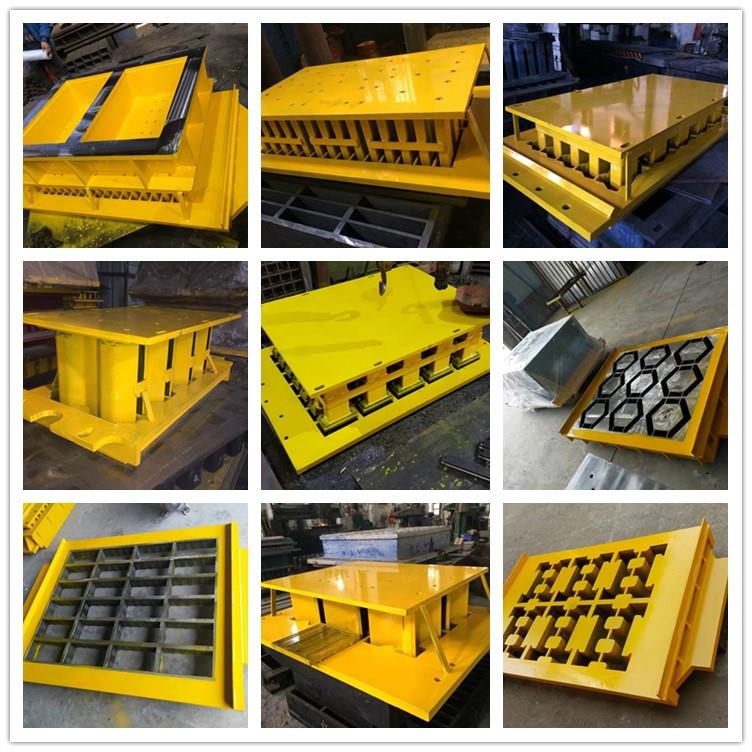
The mold is the most critical component in determining the shape, size, interlocking mechanism, and surface finish of the brick. A well-designed mold ensures consistency, durability, and versatility—factors that directly influence the end-user’s ability to sell high-quality bricks.
- Mold Material Selection: Molds are typically made from either tool steel (A2, D2) or cast iron (HT250), with tool steel offering superior wear resistance (lasting up to 100,000 cycles) and cast iron providing a cost-effective alternative (lasting 50,000-70,000 cycles). Some high-end designs use carbide inserts in high-wear areas (e.g., interlocking teeth) to extend mold life by 30-40%. Distributors should educate purchasers on the trade-off between mold material cost and longevity, as a higher initial investment in tool steel molds can reduce long-term replacement costs.
- Interlocking Feature Engineering: The interlocking mechanism (tongue-and-groove, zigzag, puzzle) is designed using 3D modeling software to ensure a tight fit between bricks while maintaining structural integrity. Engineers simulate load distribution to prevent stress concentration in the interlocking joints, which can cause bricks to crack during installation. For example, a tongue-and-groove design with rounded edges distributes pressure more evenly than sharp-edged designs, reducing breakage rates by 25%.
- Ventilation and Ejection Design: Molds are equipped with micro-vent holes (0.5-1 mm diameter) to release air trapped during compaction, preventing air pockets that weaken bricks. The ejection system—typically hydraulic or mechanical—uses multiple ejector pins positioned to apply uniform force, ensuring the brick is released without deformation. Some molds feature a non-stick coating (e.g., Teflon) to reduce friction, further improving demolding efficiency and brick surface quality.
2.2.2 Compaction System Design: Balancing Pressure and Precision
The compaction system is responsible for transforming loose raw materials into dense, high-strength bricks. Its design determines the machine’s ability to produce consistent quality bricks at scale, making it a key differentiator for distributors.
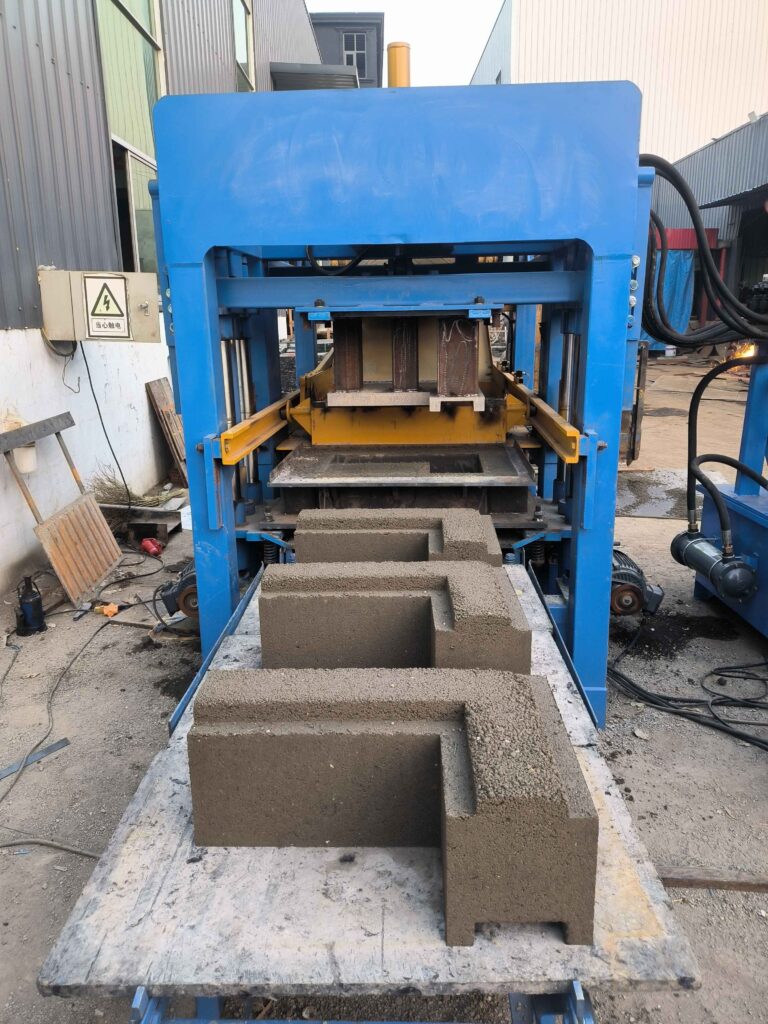
- Hydraulic vs. Mechanical Compaction Design: Hydraulic systems are designed with multiple cylinders (2-4) to apply uniform pressure across the mold surface, ensuring brick density variation is less than 3%. They feature pressure sensors that provide real-time feedback, allowing the control system to adjust pressure dynamically—critical for processing variable-quality raw materials. Mechanical systems, on the other hand, use crankshafts or eccentric shafts to generate pressure, with a simpler design that is easier to maintain. For distributors, hydraulic systems are ideal for high-end markets requiring premium bricks, while mechanical systems appeal to price-sensitive purchasers with small-scale operations.
- Compaction Plate Design: The compaction plate is engineered to match the mold’s shape, with a surface that is either smooth or textured (for non-slip brick surfaces). It is mounted on a rigid arm with minimal deflection, ensuring pressure is applied evenly. Some designs incorporate vibration into the compaction plate (50-100 Hz), which helps settle raw materials and reduce the required pressure, saving energy while improving brick density.
- Pressure Regulation Mechanisms: Advanced machines feature proportional pressure control valves that allow operators to adjust pressure in 1 MPa increments, providing precise control over brick strength. For example, producing a 5 MPa brick for residential walls requires 30 MPa of compaction pressure, while a 15 MPa brick for industrial floors needs 70 MPa. This precision ensures end-users can meet specific project requirements without wasting energy or material.
2.2.3 Feeding System Design: Ensuring Uniform Material Distribution
A poorly designed feeding system leads to inconsistent brick density, reduced strength, and material waste. The best designs prioritize uniform distribution, ease of adjustment, and compatibility with diverse raw materials.
- Hopper and Conveyor Design: Hoppers are shaped with a steep angle (60-70 degrees) to prevent material bridging (clogging), with a vibrator attachment to ensure smooth flow. The conveyor system—either screw or belt—delivers a precise volume of material to the mold, with a variable speed drive that allows adjustment based on production rate. For example, a belt conveyor with a speed range of 0.5-2 m/s can feed 5-20 kg of material per cycle, accommodating different brick sizes.
- Material Level Sensors: To ensure the mold is filled to the correct height, feeding systems are equipped with optical or ultrasonic sensors that detect material level. If the mold is underfilled, the sensor triggers the conveyor to supply more material; if overfilled, it stops feeding and activates a scrapers to remove excess—reducing waste by 10-15%. This automation is particularly valuable for end-users with unskilled labor, as it minimizes human error.
- Dust Control Features: Dust generated during feeding can be a health hazard and equipment nuisance. Designers address this with enclosed hoppers and conveyor systems, along with dust collection ports that can be connected to industrial vacuums. Some machines integrate a water misting system to dampen dust, which also helps control material moisture content—improving compaction efficiency.
2.2.4 Control System Design: From Manual to Smart Operations
The control system is the brain of the machine, governing all functions from feeding and compaction to demolding and stacking. Its design ranges from basic manual controls to advanced smart systems, catering to different user needs and market segments.
- Manual and Semi-Automatic Controls: Entry-level machines feature manual controls (levers, buttons) for small-scale operations, with simple gauges to monitor pressure and cycle time. Semi-automatic models add basic automation, such as automatic feeding after compaction, reducing operator input while maintaining flexibility. These designs are ideal for purchasers with limited technical expertise or low production volumes.
- PLC and HMI Integration: Mid-range to high-end machines use Programmable Logic Controllers (PLCs) to automate the production cycle, with Human-Machine Interfaces (HMIs) that display real-time data and allow parameter programming. Operators can store up to 50 different brick recipes (pressure, cycle time, feeding volume) in the PLC, enabling quick switching between products. For distributors, this feature is a major selling point for large-scale brick manufacturers who produce multiple brick types.
- Smart and IoT-Enabled Designs: Cutting-edge machines integrate IoT (Internet of Things) technology, allowing remote monitoring and control via smartphones or computers. Sensors track key metrics (production count, energy consumption, component temperature) and send alerts for maintenance needs (e.g., low oil levels, mold wear). Some designs use AI algorithms to optimize production parameters based on raw material quality, improving efficiency by 8-12%. For purchasers operating multiple machines or remote sites, this connectivity reduces downtime and improves operational visibility—making it a valuable investment for growing businesses.
2.3 Design Trends Reshaping the Future of Interlock Brick Making Machines
The interlock brick making machine industry is evolving rapidly, driven by technological advancements, sustainability goals, and changing market demands. Distributors and purchasers who stay ahead of these design trends can gain a competitive edge by offering or investing in machines that meet future needs.
2.3.1 Sustainable Design: Reducing Environmental Impact
Sustainability is no longer a niche concern—it’s a mainstream requirement for construction equipment. Designers are integrating eco-friendly features that reduce energy consumption, waste, and carbon footprint, aligning with global green building initiatives.
- Energy-Efficient Components: Motors with IE3 or IE4 efficiency ratings reduce energy consumption by 10-15% compared to standard motors. Variable frequency drives (VFDs) adjust motor speed based on load, further cutting energy use during low-production periods. For example, a machine with an IE4 motor and VFD consumes 5-8 kWh per 1,000 bricks, compared to 8-12 kWh for conventional models.
- Recycled Material Compatibility: Designs are optimized to process a higher proportion of recycled materials (e.g., crushed concrete, plastic waste) without compromising brick quality. Modified mold geometries and compaction systems handle the variable properties of recycled aggregates, while additive systems (e.g., cement admixtures) improve binding. For distributors targeting markets with strict waste reduction regulations, this feature is a key differentiator.
- Low-Carbon Production: Some machines are designed to use alternative fuels (e.g., biodiesel for diesel-powered models) or integrate solar panels for auxiliary power (e.g., for control systems, lighting). Additionally, the use of lightweight, high-strength materials (e.g., aluminum alloys for non-load-bearing components) reduces the machine’s carbon footprint during manufacturing.
2.3.2 Miniaturization and Portability: Catering to Small-Scale and Remote Markets
There is a growing demand for compact, portable interlock brick making machines, especially in emerging markets and remote areas where large-scale equipment is impractical. Designers are reducing machine size and weight while maintaining performance, opening up new market opportunities.
- Compact Footprint: Small-scale machines are being designed with a footprint of less than 2 m², making them suitable for small workshops or on-site production. Foldable or detachable components (e.g., hoppers, conveyors) allow for easy transportation in pickup trucks or small vans, reducing logistics costs for distributors and end-users.
- Lightweight yet Durable Materials: The use of high-strength aluminum and composite materials reduces machine weight by 20-30% without sacrificing structural integrity. For example, a portable machine that previously weighed 1,500 kg now weighs 1,100 kg, making it easier to move and install—critical for remote construction sites in regions like Africa, Southeast Asia, and Latin America.
- Battery-Powered Designs: Battery-powered portable machines are emerging as a sustainable alternative to diesel or electric models, offering zero emissions and quiet operation. These machines use lithium-ion batteries that provide 4-6 hours of continuous operation, with fast-charging capabilities. They are ideal for off-grid projects (e.g., rural housing, disaster relief) and urban areas with noise restrictions—expanding the market for distributors beyond traditional construction sectors.
2.3.3 Automation and Robotics: Streamlining Production
Full automation is becoming increasingly accessible, even for medium-scale operations, as design innovations reduce costs and complexity. Robotic integrations are transforming the production line, from raw material handling to brick stacking, improving efficiency and reducing labor dependence.
- Robotic Feeding and Stacking: Robotic arms are being integrated into machine designs to handle feeding (from bulk material piles) and stacking (into pallets), eliminating the need for manual labor. These robots can work 24/7, increasing production efficiency by 30-40% and reducing labor costs by 50% or more. For purchasers in regions with labor shortages (e.g., Europe, North America), this is a game-changing feature.
- Vision Systems for Quality Control: Some advanced machines incorporate vision cameras that inspect each brick for dimensional accuracy, surface defects, and interlocking fit. Bricks that fail inspection are automatically rejected, ensuring only high-quality products reach the market. This reduces waste and improves the end-user’s reputation—benefits that distributors can emphasize to attract quality-focused purchasers.
- Integration with Production Management Software: Machine designs now include compatibility with enterprise resource planning (ERP) and production management software, allowing end-users to track inventory, schedule production, and analyze performance data. This integration streamlines operations, making it easier for brick manufacturers to scale their businesses and meet customer demand—an attractive feature for distributors targeting growing enterprises.
2.3.4 Customization and Modularity: Adapting to Niche Markets
As construction trends diversify, there is a growing demand for specialized interlock bricks (e.g., permeable bricks for stormwater management, decorative bricks for landscaping). Machine designers are responding with highly modular and customizable designs that allow end-users to tailor production to niche markets.
- Quick-Change Mold Systems: Advanced modular molds can be changed in less than 10 minutes, with a tool-less design that requires no technical expertise. Some manufacturers offer mold libraries with hundreds of designs, from standard rectangular bricks to complex decorative patterns. For distributors, this allows them to offer a wide range of brick types without stocking multiple machines.
- Add-On Modules: Machines are designed to accept add-on modules that enhance functionality, such as:
- Coloring Modules: Integrate pigment dispensers to produce colored bricks, expanding product offerings for residential and landscaping projects.
- Permeability Modules: Modify the mold and compaction system to produce permeable bricks, which are in high demand for sustainable urban development.
- Insulation Modules: Add layers of insulation material during production to create energy-efficient bricks for low-carbon buildings.
- Custom Engineering Services: Some manufacturers offer custom design services, allowing purchasers to request machines tailored to specific raw materials, brick specifications, or production environments. For example, a distributor serving a region with abundant volcanic ash can collaborate with engineers to design a machine optimized for processing this material—creating a unique selling proposition in the market.
2.4 Evaluating Machine Design: Key Questions for Distributors and Purchasers
When assessing interlock brick making machine designs, distributors and purchasers should ask targeted questions to ensure the machine meets technical, business, and market requirements. Below is a framework for evaluating design quality and relevance:
2.4.1 Technical Performance Evaluation
- Does the machine’s compaction system design deliver consistent pressure across the mold surface? (Look for pressure variation data <3%.)
- How durable is the mold design, and what is the expected lifespan (cycles) of the mold? (Tool steel molds should last ≥80,000 cycles.)
- Does the feeding system design prevent material bridging and ensure uniform filling? (Ask for material distribution variation data <2%.)
- What is the machine’s energy efficiency rating, and how does it compare to industry standards? (IE3/IE4 motors and VFDs are preferred.)
2.4.2 Business and Operational Evaluation
- How easy is it to maintain the machine’s design? (Look for accessible components, replaceable wear parts, and minimal maintenance requirements.)
- Does the design allow for scalability? (Can the machine be upgraded with additional modules to increase capacity or functionality?)
- What is the expected downtime for mold changes and maintenance? (Ideal mold change time <15 minutes, maintenance downtime <2 hours per week.)
- Does the design comply with local safety and environmental regulations? (CE, OSHA, ISO certifications are essential.)
2.4.3 Market Relevance Evaluation
- Does the machine’s design cater to the raw materials available in the target market? (Ensure compatibility with local aggregates, recycled materials, etc.)
- Can the design produce the brick types in demand (e.g., load-bearing, permeable, decorative)?
- Is the machine’s size and portability suitable for the target market (e.g., compact designs for small workshops, portable designs for remote areas)?
- Does the design include features that appeal to end-user pain points (e.g., labor savings, energy efficiency, quality control)?
By focusing on these questions, distributors and purchasers can move beyond surface-level evaluations and assess whether a machine’s design aligns with their long-term business goals. A well-designed machine is not just a piece of equipment—it’s a partner in driving profitability, customer satisfaction, and market growth.
3. Conclusion
The design of an interlock brick making machine is a critical determinant of its success in the market, directly impacting performance, reliability, cost-effectiveness, and adaptability. For distributors, distributors, and purchasers, understanding the nuances of design—from core principles like functional efficiency and structural integrity to advanced trends like sustainability and automation—provides a strategic advantage in a competitive industry. A machine with a thoughtful design not only meets the immediate needs of end-users (e.g., high production, quality bricks) but also adapts to future trends (e.g., green construction, niche markets), ensuring long-term value.
When evaluating machines, it’s essential to look beyond specifications and consider how design choices translate to real-world benefits: reduced operational costs, minimized downtime, expanded product offerings, and compliance with regulations. Distributors who prioritize well-designed machines can differentiate their portfolios, attract loyal customers, and build a reputation for quality. Purchasers who invest in thoughtful design can improve their profitability, scale their businesses, and stay ahead of industry changes.
As the construction industry continues to evolve, the importance of machine design will only grow. By focusing on innovation, sustainability, and user-centricity, interlock brick making machine designs are set to play a key role in shaping the future of construction—offering distributors and purchasers endless opportunities to thrive in a dynamic market.
4. FAQ
4.1 How does mold design affect the quality of interlock bricks?
Mold design directly impacts brick dimensional accuracy, interlocking fit, surface finish, and durability. A well-engineered mold ensures consistent brick size (variation <±2%), a tight interlocking mechanism that distributes loads evenly, and a smooth surface free of defects. Mold material (tool steel vs. cast iron) determines wear resistance—tool steel molds last 80,000+ cycles, while cast iron molds last 50,000-70,000 cycles. Additionally, features like ventilation holes and non-stick coatings prevent air pockets and deformation during demolding, further improving brick quality.
4.2 What is the difference between hydraulic and mechanical compaction system designs?
Hydraulic compaction systems use multiple cylinders to apply uniform pressure (30-100 MPa) across the mold, ideal for high-strength bricks and large-scale production. They offer precise pressure adjustment and energy efficiency but have higher initial costs. Mechanical systems use crankshafts/eccentric shafts to generate pressure (10-30 MPa), with a simpler design that is easier to maintain and more affordable. They are suitable for small-scale operations and non-load-bearing bricks. The choice depends on the end-user’s production volume, brick strength requirements, and budget.
4.3 How does machine design impact maintenance requirements?
Design choices like modular components, accessible wear parts, and self-cleaning features reduce maintenance time and costs. Machines with quick-release molds, replaceable wear plates, and centralized lubrication systems minimize downtime (maintenance downtime <2 hours/week). Conversely, machines with integrated, non-modular components are harder to service, leading to longer downtime. Distributors should prioritize designs with clear maintenance manuals and readily available spare parts to support end-users.
4.4 Can a machine’s design be customized for specific raw materials?
Yes, many machine designs are customizable to handle specific raw materials (e.g., recycled aggregates, volcanic ash, clay-sand mixtures). Customizations may include adjusting the compaction pressure range, modifying the feeding system to prevent bridging, or redesigning the mold to accommodate material properties. Some manufacturers offer custom engineering services to optimize the machine for local raw materials, ensuring consistent brick quality and efficiency.
4.5 What safety features should a well-designed interlock brick making machine include?
A safe design includes emergency stop buttons (accessible from all operating positions), safety guards for moving parts (e.g., conveyor belts, compaction plates), pressure relief valves for hydraulic systems, thermal/motor overload protection, and interlock systems that prevent operation if guards are removed. Compliance with international standards (CE, OSHA, ISO 12100) is essential. Additionally, ergonomic features like adjustable control panels and reduced physical strain minimize operator fatigue and injury risk.
4.6 How does modular design benefit distributors and purchasers?
Modular design allows for quick mold changes (10-30 minutes), enabling end-users to produce multiple brick types with one machine—reducing the need for multiple machines. Add-on modules (coloring, permeability, insulation) expand functionality, allowing purchasers to target niche markets. For distributors, modularity reduces inventory costs (stock one base machine + multiple molds/modules) and increases market versatility, as the same machine can cater to residential, commercial, and infrastructure customers.
4.7 What is the role of IoT in modern interlock brick making machine design?
IoT-enabled designs integrate sensors to track production metrics (count, energy use, component temperature) and send maintenance alerts (e.g., low oil, mold wear). Remote monitoring via smartphones/computers allows end-users to manage machines from anywhere, reducing downtime. Some designs use AI to optimize production parameters based on raw material quality, improving efficiency by 8-12%. For purchasers with multiple machines or remote sites, IoT connectivity enhances operational visibility and scalability.
4.8 How does sustainable design impact the total cost of ownership?
Sustainable design features (energy-efficient motors, VFDs, recycled material compatibility) reduce operational costs: energy consumption by 10-25%, raw material costs by 10-15% (via recycled inputs), and waste disposal costs. While initial purchase prices may be 5-10% higher, the savings in energy and materials typically offset this within 12-18 months. Additionally, sustainable machines may qualify for government incentives or green building certifications, further improving ROI for purchasers.