
Hagaha Ugu Wanaagsan ee Makiinadaha Boodhka Madow: Noocyada, Qiimaha, iyo Sida Loo Xulo
Hordhac
Investing in a hollow block machine is a pivotal decision for construction businesses and large-scale projects. The right equipment can become the engine of your profitability, while the wrong choice can lead to operational headaches and financial strain. This comprehensive guide is crafted for construction professionals, entrepreneurs, and project managers who need clear, authoritative information.
Drawing on extensive industry experience and technical analysis, this post provides trustworthy insights to navigate your purchase. We’ll demystify how these machines work, break down the different types and their costs, and provide a practical checklist for selection. Whether you’re launching a block-making venture or equipping a site for self-sufficiency, this guide will help you find the optimal solution for your output goals and budget.
What is a Hollow Block Machine? Core Principles and Applications
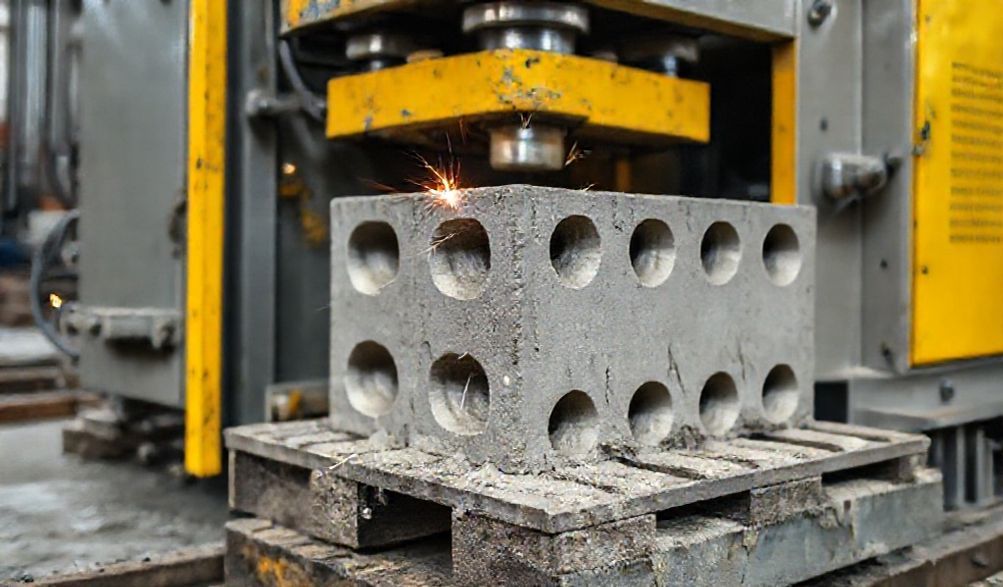
A hollow block machine is a specialized piece of equipment designed to manufacture concrete masonry units (CMUs) with hollow cavities. It automates the process of molding a concrete mix into precise, high-strength blocks through a combination of mechanical pressure and vibration. This machinery is fundamental to modern construction, enabling the efficient, standardized production of one of the world’s most common building materials.
Understanding Hollow Blocks and Their Advantages
Hollow blocks are precast concrete units containing one or more hollow cores. These cores reduce the overall weight of the block and provide several key benefits:
- Khafif: Easier and faster to handle and install than solid concrete blocks, reducing labor time and costs.
- Insulayshiyada Kul iyo Codka. The air pockets within the blocks create natural barriers against heat and sound, improving building energy efficiency.
- Cost-Effective Material Use: Less concrete is required per block, lowering material costs without significantly compromising strength.
- Functional Utility: The hollow cores provide convenient channels for running electrical conduits, plumbing pipes, and reinforcement bars.
These blocks are ubiquitous in:
* Dhisidda Guryaha For load-bearing and partition walls in houses and apartments.
* Commercial Buildings: Offices, schools, and retail structures.
* Industrial Facilities: Factories and warehouses.
* Mashruucyada Isku-dhismeedka: Retaining walls and boundary fences.
How a Hollow Block Machine Works: The Production Process
The production of hollow blocks follows a systematic cycle, with the level of automation defining the machine type. The core process involves:
- Isku-dhafka: Raw materials (cement, sand, aggregate, water) are combined in the correct ratio using a pan or planetary mixer to form a semi-dry concrete mix.
- Cunto-siin: The mix is fed into the machine’s hopper. In automatic systems, conveyors handle this; in manual machines, it’s done with shovels.
- Qalabka & Gariirka: The mix is dropped into a mold (the “mold box”) on a steel pallet. The machine’s key action begins: powerful vibrators, often combined with hydraulic pressure, compact the mix. This vibration removes air pockets and ensures the concrete fills every part of the mold, which is critical for achieving structural strength and a smooth finish.
- Laaminta/Qaadista: The compacted block is raised or stripped from the mold, leaving the freshly formed block on the pallet.
- Daweynta: The pallet with the green (uncured) block is transferred to a curing area. Proper curing—maintaining moisture and temperature for days—allows the cement to fully hydrate, reaching its design strength.
- Pallet Return: The empty pallet is cleaned and returned to the start of the cycle.
Stationary plants perform this process at a fixed location, with blocks transported to site. Mobile machines are compact units on wheels that can be towed to a construction site, producing blocks directly where they are needed, slashing transport costs.
Types of Hollow Block Machines: A Detailed Comparison
Selecting the correct machine type is the first major step. Your choice will directly determine your production capacity, labor needs, and capital investment.
Qalabka Gacanta, Qayb ahaaneed iyo Si Buuxda Ugaashaysan
-
Makiinadaha Gadaal ee La Gacmo Maro: These are mechanical or hydraulic presses with minimal automation.
- Hawlgalka: All steps—feeding, compaction (often via a lever), demolding, and pallet handling—are performed by the operator.
- Soo saar Low, typically 500-1,500 blocks per 8-hour shift.
- Wanaagsan: Startups, very small-scale projects, or regions with very low labor costs. They are the most affordable entry point.
-
Makiinada Block-ka Semi-Awtomaatig ah: This category offers a balance, automating the critical vibration and compaction process.
- Hawlgalka: The machine handles vibration and molding hydraulically. Operators typically handle feeding the hopper and moving pallets with blocks to the curing area.
- Soo saar Medium, ranging from 2,000 to 6,000 blocks per day.
- Wanaagsan: Small to medium-sized businesses (SMEs) looking for a good balance between output, quality consistency, and investment.
-
Makiinadaha Block-ka oo Toos ah: These are complete production lines with minimal human intervention.
- Hawlgalka: Fully integrated systems with automatic mix feeders, conveyor belts, robotic pallet handlers, and block stackers. Controlled by a Programmable Logic Controller (PLC).
- Soo saar High-volume, from 10,000 to over 30,000 blocks per day.
- Wanaagsan: Large block manufacturing plants and major construction companies requiring mass production with consistent quality and low per-unit labor cost.
Stationary vs. Mobile Block Making Plants
-
Waxyaabaha Joogtada ah ee Dhirta: These are fixed installations, often housed in a factory or dedicated shed.
- Faaiidooyinka: Higher capacity, easier integration with ancillary equipment (curing racks, forklifts), better suited for full automation.
- Laba. High initial setup cost, blocks must be transported to construction sites.
-
Mashinooyinka Block-ka Mobilada: Compact, integrated units mounted on a trailer chassis.
- Faaiidooyinka: Ultimate flexibility; produce blocks directly on the project site, eliminating transport costs for finished blocks. Faster project startup.
- Laba. Generally lower output than large stationary plants, may have fewer automation options.
Specialized Machines: Paver, Interlock, and Curbstone Machines
The core technology of a hollow block machine is often adapted to produce other concrete products. Many manufacturers offer machines that can produce multiple items by simply changing the mold:
* Paver Block Machines: For producing interlocking concrete paving stones.
* Interlock Block Machines: For creating special wall blocks that lock together without mortar.
* Curbstone Machines: For producing landscape and road edging.
Key Factors Influencing Hollow Block Machine Price
The price of a hollow block machine is not a single number but a spectrum influenced by several interconnected factors.
Machine Capacity and Automation Level
This is the primary cost driver. A basic manual machine may cost a few thousand dollars, while a high-output, fully automatic production line can reach several hundred thousand dollars. The increase in price reflects the sophisticated hydraulics, electronics, and structural engineering required for higher speed and reliability.
Build Quality, Brand, and Technical Specifications
- Qaybta Qaab-dhismeedka A machine with a heavy-duty, reinforced steel frame will withstand constant vibration far longer than a lightweight frame. The quality of the vibrator motors (frequency and amplitude) and hydraulic pumps/cylinders is paramount.
- Brand Reputation: Established manufacturers with a long track record often command a premium, justified by proven reliability, better R&D, and resale value. Newer or lesser-known brands may offer lower prices but require more diligent vetting.
- Specifications: Motor power (HP/KW), the sophistication of the control system (basic relay vs. touchscreen PLC), and the precision of the mold box all factor into the cost.
Additional Costs: Molds, Raw Material Handling, and Ancillary Equipment
The machine itself is often just the centerpiece of a larger system. Your total investment must include:
* Qorraxda: Each block size or design requires a specific mold. A standard hollow block mold might cost several hundred dollars, while complex designs cost more. You’ll likely need multiple molds.
* Ancillary Equipment: A concrete mixer, conveyor belts, a forklift or block clamp for handling, and curing racks or a curing chamber are often essential.
* Rakibaad & Tababar: Factor in costs for foundation work (for stationary plants), electrical hookup, and operator training provided by the supplier.
* Maintenance & Spare Parts: Budget for routine maintenance and a stock of common wear parts like hydraulic seals, vibrator mounts, and mold liners.
How to Choose the Right Hollow Block Machine: A Buyer’s Checklist
Making an informed choice requires honest assessment and technical scrutiny. Use this checklist to guide your evaluation.
Assessing Your Project Requirements and Business Goals
Bilow by ka jawaabista su'aalaha aasaasiga ah:
* What is my required daily or monthly output? (Be realistic about current needs and near-term growth).
* What specific block types, sizes, and designs do I need to produce? (This dictates mold requirements).
* What is my total available budget for the entire setup, including machine, molds, ancillaries, and installation?
* What is my labor situation? Can I afford/do I want a labor-intensive manual process, or should I invest in automation to reduce long-term labor costs?
* Where will production happen? In a fixed factory or on various job sites? This decides between stationary and mobile.
Critical Technical Features to Inspect
When evaluating specific machines, prioritize these features:
* Nidaamka Gariirka: Look for a dual vibration system (both a table vibrator and a mold vibrator) for superior compaction and strength. Ask about the frequency and amplitude.
* Nidaamka Hydraulic: Check the pressure rating (PSI/Bar) and cylinder quality. A robust system ensures consistent pressure and faster cycle times.
* Ease of Maintenance & Mold Changeover: Can you access key components easily? How long does it take to change a mold? Quick changeover systems boost flexibility.
* Build Materials: Inspect the thickness of the steel frame and the quality of welding.
* Safety & Compliance: Ensure the machine has proper guards, emergency stops, and complies with relevant local or international safety standards.
Supplier Evaluation and After-Sales Support
The supplier is as important as the machine. A cheap machine with no support can become a very expensive paperweight.
* Verify Credentials: How long have they been in business? Can they provide a list of client references?
* Warranty & Spare Parts: What is the warranty period and what does it cover? Is there a local stock of spare parts, or what is the lead time for ordering?
* Taageerada Tekniko Do they offer installation supervision, training, and troubleshooting support? Is it available remotely or on-site?
* Site Visit: If possible, visit an existing installation to see the machine running and speak to the owner about their experience.
Operating, Maintaining, and Maximizing Your Investment
Your machine’s performance and lifespan depend heavily on how you operate and care for it.
Best Practices for Efficient Operation
- Concrete Mix Design: This is critical. Use a consistent, semi-dry mix. A common starting ratio is 1 part cement, 3 parts sand, and 2 parts coarse aggregate (6-10mm), but this must be tested and optimized for your local materials and machine. Too much water causes blocks to slump; too little prevents proper compaction.
- Proper Curing: Never skip curing. Keep the blocks moist and covered with plastic sheeting for at least 7 days to achieve maximum strength. Steam curing chambers can accelerate this process.
- Operator Training: Ensure operators understand the entire process, from mix control to machine safety protocols.
Essential Maintenance Schedule for Longevity
Preventive maintenance prevents costly downtime.
* Daily: Clean the machine thoroughly after each shift, especially the mold box and pallets. Check hydraulic fluid levels and for any leaks.
* Weekly: Inspect and tighten all bolts and nuts that may loosen from vibration. Check the tension of drive belts.
* Monthly: Grease all bearings and moving parts. Inspect mold liners and vibrator mounts for wear. Check hydraulic filters.
* Common Wear Parts: Plan to replace mold liners, vibrator rubber mounts, hydraulic seals, and feeder wiper blades periodically based on your production volume.
Frequently Asked Questions (FAQ) About Hollow Block Machines
Q1: What is the average price range for a hollow block machine?
A: Prices vary dramatically. A small manual machine can start from $3,000 – $8,000. A semi-automatic machine may range from $15,000 – $50,000. Fully automatic production lines can range from $70,000 to over $300,000, depending on capacity and sophistication.
Q2: What is the production capacity I can expect?
A: Capacities are typically measured in blocks per 8-hour shift or per day. A manual machine may produce 800-1,500 blocks/day. A semi-automatic can produce 2,000-6,000 blocks/day. A fully automatic line can easily produce 10,000-30,000+ blocks/day.
Q3: Can one machine produce different block sizes and types?
A: Yes, absolutely. This is done by changing the mold in the machine. The key is to choose a machine that allows for relatively quick and easy mold changeover. Each new mold is an additional purchase.
Q4: What raw materials are needed, and what is the ideal mix ratio?
A: The primary materials are Portland cement, sand (fine aggregate), gravel or crushed stone (coarse aggregate, 6-12mm), and water. A standard starting mix ratio is 1 (Cement) : 3 (Sand) : 2 (Stone Chips) by volume, with just enough water to form a ball that crumbles slightly. The “ideal” ratio must be determined by testing your local materials.
Q5: What are the most common problems and how can I avoid them?
A:
* Low Block Strength: Caused by incorrect water-cement ratio or insufficient vibration. Optimize your mix and ensure your machine’s vibrators are functioning at full power.
* Surface Cracks: Often due to improper curing (drying out too quickly). Maintain moisture during the initial curing period.
* Machine Jams or Poor Demolding: Usually due to a poor concrete mix (too wet/sticky) or lack of regular cleaning and maintenance of the mold and pallets.
Gabagabo
Selecting the ideal hollow block machine is a strategic decision that balances immediate needs with long-term vision. From the hands-on control of a manual press to the streamlined efficiency of a fully automated plant, each option serves a specific market segment. Remember, you are investing in more than metal and motors; you are investing in the reliability of your supply chain, the quality of your product, and the foundation of your profitability.
Prioritize robust construction, transparent supplier support, and a clear understanding of your total cost of ownership. Conduct thorough research, insist on equipment demonstrations, and speak to existing customers. Armed with the knowledge from this guide, you are now equipped to make a confident, informed investment that will produce high-quality building materials and a solid return for years to come.
<