
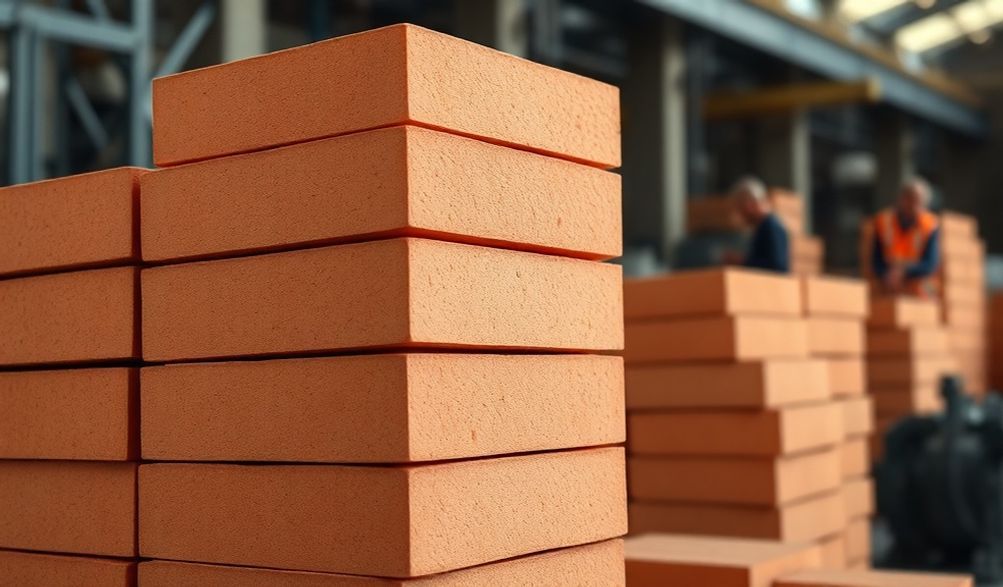
Makiinada Dhagaxa Dhagaxa: Hage Modern oo Ku Saabsan Wax-soo-saarka, Faa'iidooyinka, iyo Codsiyada
Qarniyo badan, dhagaxa la dhiso ee hooseeya ayaa ahaa aasaaska horumarka. Laga bilaabo dhagaxyada dhoobo ee qorraxdu qabowday ee Meesoopotaamiya qadiimiga ah ilaa qaybaha dhoobo ee gacanta lagu sameeyay ee Kacdoonka Warshadeed, baaritaanka dhagax dhiso oo ka wanaagsan ayaa sii socday. Maanta, dhismooyinka waxay u baahan yihiin xawaare, xoog, iyo sax ah oo heer aan hore loo arag. Marka, maxaa ka dhigay dhismaha casriga ah si dhakhso leh, xoog leh, iyo isku mid ah? Jawaabtu badanaa waxay ku jirtaa isbeddel aasaasi ah oo ka socda farsamada qalabka loo yaqaan ilaa warshadeynta injineernimada:Makiinada Dhagaxa Dhagaxa.
Brikta Mashinka Miisaanka waa waxa magaceeda tilmaamayo: unug dhismo oo loo sameeyo iyadoo la adeegsanayo miisaan mashineed—caadi ahaan mid hidroolik ah ama makaniki—taas oo ku khasbata xoog weyn si loo adkeeyo qalabka asalka ah si loo sameeyo qaab adag oo sax ah. Ka duwan hababka dhaqameed ee ugu waaweyn ee ku tiirsan gubid ama qaab-dhismeed fudud, aasaaska aasaasiga ah ee brikan waxaa lagu sameeyaa xoogag tiro badan oo kala duwan. Habkani waxuu u beddelaa qalabka sida dhoobo, koonkareet, ama wax soo saarka warshadeed si loo sameeyo dhismo joogto ah oo tayo sare leh.
Halkan waa hagahaaga oo dhamaystiran. Waxaan si cad uga hadlaynaa farsamada aasaasiga ah, waxaan ku soconeynaa habka warshadeynta casriga ah, waxaanna si faahfaahsan u sharaxaynaa faa'iidooyinka xoogga leh ee ka dhigaya dhagaxyada la dhaliyay mashiinka doorashada ugu fiican. Waxaan baadhi doonnaa noocyada iyo isticmaalada kala duwan, waxaanana bixi doonnaa qaab waxtar leh oo loo xusho dhagaxa saxda ah ee mashruucaaga. Ku salaysan heerarka warshadeynta iyo habraacyada ugu fiican ee dhismaha, warqaddan waxaa loo habeeyay in ay siisay aqoon awood leh dhismayaasha, dhisayaasha, horumariyayaasha, iyo guryaha xog ogaal ah.
Waa maxay Dhagaxa Mashinka La Taabtay? Fahamka Teknolojiyada Aasaasiga ah
Qalbigeed, birigta baarista makiinadu waxay matalaa adeegsiga saxnaanta warshadeed ee hal ka mid ah qalabka dhismaha ee ugu da'da weyn adduunka. Waxaa lagu qeexay ma aha waxyaabaha la isticmaalo ee asalka ah, ee waa habka ay u sameysmayso: isku dhufashada cadaadis sare.
Aasaaska Aasaasiga ah: Cadaadis Kor ugu Dhacidda Dabka
Astaanta ugu muhiimsan waa habka isku-dhafka cadaadis sare. Halka doolyada dhoobo ee dhaqameed ay helaan adkaysigooda iyadoo lagu jiro dhalaalka heerkul sare, iyo qaar ka mid ah buloogada simento oo ku tiirsan daaweynta kiimikadeed, doolka la dhalaaliyo ayaa uga helaa cufka iyo xoogga ugu weyn isku-dhafka kartiyeed ee la adeegsado inta lagu jiro sameynta.
- Is barbarinta Dhirta:Ka duwan lebiska la saaro, oo lagu riixo dhuunta sida baasta, lebiska la cabbiro ayaa la sameeyaa qolka la xidhay oo ku jira cadaadis sare, taas oo keenta geesaha afiif iyo dhegaha yar.
- Isu Eegga Dhagax-Dhagaxa Jilicsan:Marka loo barbardhigo hababka dhoobada jilicsan ama gacanta laga sameeyo, habka saarista wuxuu tirtiraa kala duwanaanshooyinka, waxaana soo saara cutubyada isku mid ah oo qiyaastooda iyo miisaankoodu isku mid yihiin.
Alaabta Laamiga ah ee Caadiga ahaan La Isticmaalo
Tikniikadda tirakoobka waa mid kala duwan, waxaana lagu dabaqi karaa isku-darka qalab kala duwan.
- Dhoobo Used for high-quality facing bricks and pavers. The pressed clay is later fired in a kiln.
- Cement & Aggregate: The most common mix for concrete press bricks (e.g., Cement Solid Blocks or Dense Concrete Blocks).
- Dabka Duufaanta: An eco-friendly variant where fly ash—a by-product of coal combustion—is combined with lime, gypsum, and water.
- Lime & Sand: The base for Calcium Silicate (Sand Lime) bricks, which are cured using steam in an autoclave.
Key Characteristics of Pressed Bricks
This manufacturing method imparts several distinctive physical properties:
- High Dimensional Accuracy and Uniformity: Each brick is a near-perfect replica of the last, ensuring consistent mortar joints and alignment.
- Smooth, Sharp Edges and Faces: The metal molds produce clean lines, ideal for neat masonry work and aesthetic finishes.
- Qodobka Xoogga Culeyska sare. The compaction process forces particles together, eliminating voids and creating a dense microstructure capable of bearing significant loads.
- Nuugista Biyaha oo Hoosaysa: For many types, especially concrete and sand lime, the low porosity leads to better resistance to moisture ingress and frost damage.
The Machine Press Brick Manufacturing Process: A Step-by-Step Look
The journey from raw material to finished brick is a symphony of automated precision. Here’s a breakdown of the typical stages.
Stage 1: Raw Material Preparation and Mixing
Quality begins with the blend. Raw materials are carefully selected and processed.
- Crushing & Screening: Aggregates or clay are crushed and screened to achieve a consistent, optimal particle size distribution.
- Proportional Mixing: Materials are batched by weight or volume into a mixer. Water is added precisely to achieve the correct moisture content for compaction, known as the “optimum moisture content.”
Stage 2: The Pressing Operation – Heart of the Process
This is where the magic happens. The prepared mix is fed into the press machine.
- The Press Machine: Two main types are used. Hydraulic Presses use fluid power to apply smooth, controllable high pressure. Mechanical Presses use a flywheel and crank mechanism for high-speed operation.
- Mold & Pressure: The mix is filled into a rigid steel mold cavity. A ram then applies extreme pressure—often ranging from 10 MPa to over 40 MPa (1,450 PSI to 5,800 PSI or higher)—compacting the material into its final shape in a matter of seconds.
- Ku bixid: The newly formed, “green” brick is then automatically ejected from the mold onto a pallet or conveyor.
Stage 3: Curing, Drying, or Firing
The treatment post-pressing depends on the brick’s chemistry.
- For Concrete/Fly Ash Bricks: They are moved to a curing chamber where controlled temperature and humidity allow the cementitious reactions to occur, gaining strength over 7-28 days.
- For Clay Bricks: The “green” bricks are first dried slowly to remove moisture, then fired in a kiln at temperatures up to 1100°C to achieve permanent hardness.
- For Sand Lime Bricks: They are placed in an autoclave (a high-pressure steam vessel) for several hours, where a chemical reaction between lime and sand forms calcium silicate hydrate.
Stage 4: Quality Control and Packaging
Before dispatch, batches undergo rigorous testing.
- Standard Tests: These include compressive strength tests, water absorption tests, dimensional checks, and density measurements.
- Consistency is Key: This stage ensures every batch meets the declared standards (like ASTM, IS, or EN), providing reliability for the builder. Bricks are then stacked and packaged for shipping.
Advantages and Benefits of Using Machine Press Bricks
Choosing machine press bricks isn’t just a manufacturing preference; it delivers tangible benefits from the foundation to the finish.
Superior Strength and Structural Integrity
The high-pressure compaction creates an incredibly dense matrix.
- This directly translates to higher compressive strength, making them the default choice for load-bearing walls in multi-story buildings and heavy-duty infrastructure.
Exceptional Durability and Weather Resistance
Density is the enemy of porosity.
- Lower water absorption means less moisture penetrates the brick, drastically reducing the risk of freeze-thaw damage in cold climates and efflorescence (salt deposits) in all climates. This leads to a longer-lasting structure with lower maintenance.
Precision and Construction Efficiency
Uniformity streamlines the building process.
- Faster Laying: Masons work more quickly with consistent brick sizes.
- Less Mortar: Uniform joints require less mortar, saving material cost and labor time.
- Smoother Finishes: The even surfaces provide an excellent base for plaster, reducing the amount of finishing material needed.
Aesthetic Versatility
Modern presses offer more than just plain blocks.
- Bricks can be produced with integral pigments for consistent color, textured faces for architectural interest, or even special finishes that mimic natural stone. This reduces the need for additional cladding or paint.
Environmental and Economic Benefits
The advantages extend beyond the site.
- Material Use: Fly ash bricks utilize industrial waste. The precision manufacturing process also minimizes material waste.
- Lifecycle Cost: While sometimes higher in initial cost, their durability, energy efficiency (due to mass), and reduced maintenance lead to significant long-term savings.
Common Types and Applications of Pressed Bricks
The press technology adapts to create bricks for nearly every construction need.
Clay Pressed Bricks (Wire-Cut or Pressed)
- Dabeecadaha: Often considered premium facing bricks. Can be engineered for very low absorption (engineering bricks).
- Applications: Exterior facing walls, pavers, landscaping, and architectural features where aesthetics and durability are paramount.
Concrete Pressed Blocks (Solid, Hollow, or Paver)
- Dabeecadaha: The workhorse of modern construction. Available in various densities and compressive strength classes.
- Applications:
- Goobooyaan Adag: For load-bearing structural walls, foundations (where specified), and sound barriers.
- Qeybaha Dusha sare ee Dhismaha (Hollow Blocks): For partition walls, infill walls in framed structures, and as a lighter-weight option.
- Furaha: For high-strength driveways, walkways, and industrial flooring.
Fly Ash Pressed Bricks
- Dabeecadaha: Lighter than clay bricks, with good thermal insulation properties. A sustainable choice.
- Applications: General wall construction in residential, commercial, and industrial projects, especially where green building certifications are targeted.
Calcium Silicate (Sand Lime) Bricks
- Dabeecadaha: Known for their light grey/white color, smooth finish, and excellent dimensional accuracy. They are free from efflorescence.
- Applications: Both interior and exterior walls where a clean, light-colored finish is desired, often used without plaster.
How to Choose the Right Machine Press Brick for Your Project
Selecting the correct brick is a technical decision. Use this framework to guide your specification.
Assessing Project Requirements: Load-Bearing vs. Non-Load-Bearing
This is the first and most critical filter.
- Dibistaaha Xambaarsan. Require bricks with a high compressive strength class (e.g., Class A or >7 MPa). Consult structural calculations.
- Non-Load-Bearing/Partition Walls: Can use lower-strength, often lighter-weight or hollow blocks.
Climate and Environmental Exposure Considerations
Match the brick’s properties to its environment.
- High Rainfall/Freeze-Thaw Zones: Specify bricks with very low water absorption (e.g., <7% for severe exposure).
- Coastal Areas: Consider bricks with high resistance to sulfate attack.
Aesthetic and Finish Requirements
Decide on the final look early.
- Will the brick be plastered, painted, or left exposed?
- For exposed work, request large samples to check color consistency and texture under natural light.
- Consider jointing style (e.g., recessed, flush) as it interacts with the brick’s face.
Supplier and Quality Checks
This is where due diligence is non-negotiable. Always prioritize verifiable data over marketing claims.
- Request Test Certificates: Ask for recent third-party lab reports against relevant standards (ASTM C90 for concrete block, IS 1077 for clay brick, etc.). Check for consistency in compressive strength and absorption values.
- Visit the Plant: If possible, inspect the manufacturing facility. A well-organized plant with quality control checks at each stage is a good sign.
- Check Certifications: Look for suppliers with industry-recognized quality management certifications (like ISO 9001).
Frequently Asked Questions (FAQ) About Machine Press Bricks
Q1: Are machine press bricks stronger than traditional handmade bricks?
Typically, yes. The high-pressure compaction creates a denser, more uniform microstructure with fewer voids, generally resulting in higher and more consistent compressive strength compared to traditional handmade bricks.
Q2: What is the typical compressive strength range of a machine press brick?
It varies significantly by material and class. For example, standard concrete press bricks often range from 4 MPa (~580 PSI) to over 15 MPa (~2175 PSI). High-strength engineering clay bricks can exceed 50 MPa (~7250 PSI). Always refer to the manufacturer’s technical data sheet for the specific product.
Q3: Can machine press bricks be used for foundation work?
Specific types designed for high strength and very low water absorption can be used. Solid, dense concrete blocks or Class A engineering bricks are sometimes specified. This decision must involve a structural engineer and comply with local building codes, as foundations have the most stringent requirements for durability and load capacity.
Q4: How do I calculate the number of bricks needed for a wall?
Use this basic formula: (Wall Area in sq ft or sq m) / (Face Area of a Single Brick) + Wastage Allowance (5-10%). The precision of machine press bricks makes this calculation more reliable, as mortar joint thickness can be planned more accurately.
Q5: Are fly ash press bricks a sustainable choice?
Yes, they are widely considered an eco-friendly building material. They utilize fly ash, an industrial by-product that would otherwise occupy landfill space. This process conserves topsoil (used in clay bricks) and reduces the carbon footprint associated with cement production in concrete blocks.
Gabagabo
The machine press brick stands as a testament to how innovation can refine a fundamental material. By replacing variable manual processes with controlled, high-pressure compaction, this technology delivers bricks of exceptional strength, durability, and precision. From the structural core of a skyscraper to the aesthetic facade of a home, they offer a solution that balances performance, efficiency, and increasingly, environmental responsibility.
For any modern construction project demanding reliability and cost-effectiveness over the long term, machine press bricks present a superior and logical choice. The final step is to apply the technical criteria outlined here—focusing on strength requirements, environmental exposure, and aesthetic goals—to select the optimal type.
Arm yourself with the knowledge from this guide to engage in informed discussions with architects, engineers, and builders. A trustworthy specification is built on asking the right questions and demanding verified quality data from your supplier.
Ready to specify bricks for your project? Use the criteria above to evaluate suppliers, or consult with a construction professional to determine the optimal machine press brick for your specific structural and design needs.
<