
Your Trusted China Concrete Block Making Machine Supplier: Inside FUDA Block Making Machine Factory
Hordhac
Navigating the global market for construction machinery is a high-stakes endeavor. Your choice of a concrete block making machine supplier directly impacts your project’s timeline, budget, and long-term profitability. In an industry where equipment durability and operational efficiency are non-negotiable, partnering with the right factory is the cornerstone of success.
This search often leads discerning buyers to China, the undisputed epicenter of manufacturing. Yet, within this vast landscape, identifying a partner that transcends the role of a mere vendor to become a true extension of your operational team is the real challenge.
This post provides an authoritative, behind-the-scenes look at what defines a premier supplier. We will use Warshada Makiinada Sameynta Balaastarada FUDA as a benchmark—a name synonymous with expertise in China’s construction machinery sector. Our goal is to equip you with the insights needed to make an informed, confident decision for your business.
Why Source from a Specialized Concrete Block Machine Factory in China?
Choosing to source your machinery from China is a strategic decision, not just a financial one. Understanding the broader context reveals why this market dominates and how to tap into its value effectively.
The Global Hub of Manufacturing: China’s Role in Construction Machinery
China’s position is built on decades of focused industrial development.
* Scale and Integration: The country hosts the world’s most complete supply chain for heavy machinery. From steel production to precision component manufacturing and advanced hydraulic systems, everything is integrated. This ecosystem drives competitive pricing and remarkable production speed.
* Technological Evolution: Far from being just a low-cost producer, China’s leading factories are at the forefront of adopting and innovating technology. Continuous investment in R&D has resulted in machines that rival, and often surpass, global standards in automation, energy efficiency, and smart control systems.
* Market Maturity: With decades of experience serving both domestic and international markets, top Chinese suppliers understand diverse climatic conditions, material variations, and regulatory requirements across continents.
Beyond Price: The Real Value of a Factory-Direct Partnership
The initial invoice price is a single line in a much larger equation. The true value of a direct factory partnership lies in the total cost of ownership.
* Habaynta: A factory can modify machine specifications, molds, and control systems to fit your exact raw materials and product designs. A middleman or trader typically cannot offer this flexibility.
* Direct Technical Communication: When you have an issue or a question, you can speak directly with the engineers who designed and built your machine. This eliminates miscommunication and speeds up problem-solving exponentially.
* Long-Term Support: Your relationship with the factory determines your access to genuine spare parts, updated software, and operational training for years to come.
Key Indicators of a Premier Supplier (Like FUDA)
When evaluating potential partners, look for these concrete indicators:
* Proven Production Capability: Physical factory size, number of production lines, and annual output capacity.
* Tangible R&D Investment: A dedicated engineering team, patent portfolios, and a pipeline of new model developments.
* Recognized Quality Certifications: International standards like ISO (quality management systems) and CE (safety for the European market) are not just stickers; they represent a documented commitment to processes.
* Global After-Sales Network: Evidence of technical support agents, spare parts depots, or service partners in key regions.
A Deep Dive into FUDA Block Making Machine Factory’s Capabilities
Let’s apply the above framework. A closer examination of FUDA’s operations provides a clear picture of what a top-tier supplier brings to the table.
Manufacturing Expertise and Production Facilities
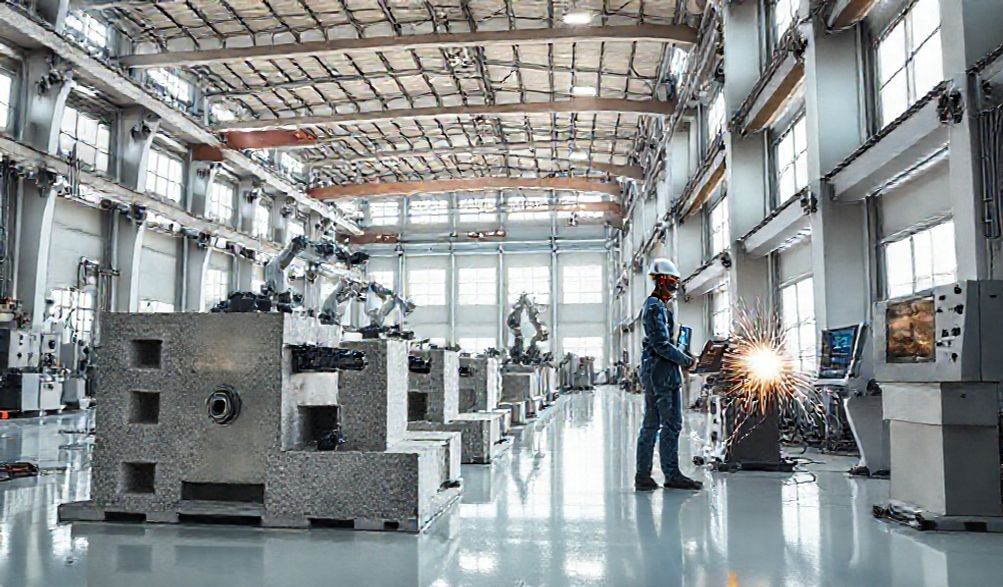
FUDA operates from a sizable, modern manufacturing complex designed for vertical integration. Key features include:
* Advanced Fabrication: Robotic welding arms ensure consistent, high-strength welds on machine frames and chambers.
* Machigaadinta Qumman: CNC (Computer Numerical Control) machining centers are used for critical components like mold boxes, pallet feeders, and vibration shafts, guaranteeing micron-level accuracy and interchangeability.
* Rigorous Quality Control: In-house labs conduct material hardness tests, hydraulic pressure tests, and electrical system checks at every stage of assembly. Each machine undergoes a final, comprehensive Factory Acceptance Test (FAT).
Core Product Range and Technological Innovation
FUDA’s portfolio is built to serve a spectrum of business needs, from small-scale workshops to fully automated industrial plants.
* Noocyada Alaabta:
* Makiinadaha Balaastariga ee Si Toos ah u Shaqeeya: High-output lines with automatic pallet return, stackers, and PLC control for minimal manual intervention.
* Semi-Automatic & Mobile Machines: Ideal for on-site production or lower-volume requirements, offering flexibility and a lower entry cost.
* Makiinad Gaar ah: Equipment for producing hollow blocks, solid blocks, paving stones, interlocking bricks, and curbstone.
* Proprietary Technologies:
* High-Efficiency Vibration Systems: Designed for optimal compaction with lower energy consumption, leading to denser, stronger blocks.
* Intelligent PLC Control Panels: User-friendly interfaces that allow operators to monitor production data, diagnose faults, and adjust parameters for different block recipes.
* Durable Mold Designs: Utilizing high-chromium alloy steel and specialized heat treatment, FUDA molds are engineered for hundreds of thousands of cycles, reducing long-term replacement costs.
Commitment to Quality: Certifications and Standards
Certifications are FUDA’s promise, validated by third parties.
* ISO 9001: This certification confirms that FUDA has a systematic, process-driven approach to quality management across all operations, from design to delivery.
* Calaamadda CE: For machines destined for the European Economic Area, the CE mark indicates compliance with EU health, safety, and environmental protection directives. This involves rigorous testing of electrical safety, noise levels, and machine guarding.
* SGS Inspection: Many clients opt for pre-shipment inspection by SGS or similar agencies. FUDA’s familiarity with this process ensures smooth and successful audits.
The FUDA Process: From Inquiry to Installation
Transparency in process builds immense trust. A typical customer journey with a professional supplier follows these stages:
1. Consultation & Design: You share your project requirements (output, block types, raw materials). FUDA’s technical team proposes a machine configuration and may provide block sample drawings.
2. Quotation & Contract: A detailed commercial and technical proposal is provided, outlining specifications, delivery terms, and payment schedules.
3. Production & Client Updates: During manufacturing, clients receive progress photos and videos. This is the time to confirm any customizations.
4. Factory Acceptance Test (FAT): Before shipping, you are invited (in-person or virtually) to witness the machine running under full load, producing sample blocks with your specified materials.
5. Shipping & Documentation: The factory handles professional export packing, customs clearance, and provides all necessary documents (invoice, packing list, certificate of origin, manual).
6. Installation Guidance & Training: Detailed installation manuals, foundation drawings, and wiring diagrams are provided. FUDA supports via video call for commissioning and offers comprehensive operational and maintenance training.
Evaluating Any China-Based Block Making Machine Supplier
Armed with an understanding of best practices, you can critically assess any supplier.
Essential Questions to Ask Before Placing an Order
- Can you provide a detailed technical specification sheet for the proposed model?
- What is the exact warranty period and what does it cover (parts, labor, shipping)?
- Is there a list of recommended spare parts for the first two years of operation, and what are their costs?
- What are the standard payment terms? (e.g., 30% deposit, 70% before shipment is common).
- Can the electrical control system be customized for our local voltage and frequency?
How to Verify Factory Credentials and Past Performance
- Business License: Request a copy of their official business license.
- Client References: Ask for contact information for 2-3 previous clients in a region similar to yours. Follow up with them.
- Factory Visit/Virtual Tour: A physical visit is ideal. If not possible, insist on a live video tour of the production floor, not just a pre-recorded video.
- Case Studies: Review detailed project reports or videos showing their machines in operation at client sites.
Red Flags and Green Flags in Supplier Communication
| Red Flags | Green Flags |
| :— | :— |
| Vague, non-technical answers to specific questions. | Willingness to engage in deep technical discussion. |
| Inability or refusal to provide a live factory video tour. | Proactively sends videos of machines on the production floor. |
| Pressure to pay 100% upfront. | Offers standard, secure trade terms (T/T, L/C). |
| No clear warranty or after-sales policy. | Provides a written warranty document and spare parts catalog. |
| “One-size-fits-all” solution with no customization options. | Asks detailed questions about your raw materials and project goals. |
Maximizing Your Investment with the Right Machine
The right supplier helps you choose the right machine. Here’s how to align your needs with your investment.
Matching the Machine to Your Project Needs and Output Goals
- Xisaabi Wax Soo Saar Dhab Ah Don’t just consider peak capacity. Factor in shift patterns, maintenance downtime, and raw material feeding speed. A machine rated for 5,000 blocks per hour in ideal conditions may sustainably produce 3,500-4,000.
- Define Your Product Mix: List all block types you plan to produce now and in the next 5 years. Ensure the machine and available mold options can accommodate this range.
- Analyze Raw Materials: Provide your local mix (cement, sand, aggregate, fly ash, etc.) to the supplier. The machine’s vibration force, pressure, and mix feed system may need fine-tuning for optimal results.
Understanding Total Cost of Ownership: Beyond the Invoice
| Cost Component | Details to Consider |
| :— | :— |
| Machine Price | The base FOB or CIF price. |
| Shipping & Insurance | Sea freight, insurance, and port handling fees. |
| Import Duties & Taxes | Vary by destination country. Must be researched locally. |
| Installation & Foundation | Cost of concrete foundation, power connection, and assembly labor. |
| Initial Spare Parts Kit | A recommended inventory of wear parts (seals, springs, filter elements). |
| Operator Training | Factor in the time and cost of training your team. |
| Ongoing Maintenance | Regular lubrication, part replacements, and potential service contracts. |
Planning for Success: Site Preparation and Operational Training
- Foundation: The factory will provide precise foundation drawings with bolt positions and load requirements. This must be prepared by a qualified civil engineer hore the machine arrives.
- Utilities: Confirm power requirements (voltage, phase, amperage) and ensure a stable power supply. Plan for compressed air and water lines if needed.
- Training is Non-Negotiable: The most common cause of early breakdowns is operator error. Insist on thorough training for machine operation, daily maintenance routines, and basic troubleshooting. Documented training materials are essential.
FAQ Section
Q1: What is the typical lead time for an order from a Chinese supplier like FUDA?
A: Lead times vary significantly based on machine complexity and customization. For a standard model, expect 30-45 days after order confirmation. For fully automated lines or heavily customized machines, 60-90 days is common. Always get a confirmed production and shipping schedule in your contract.
Q2: How does FUDA ensure machine quality before shipment?
A: Every machine undergoes a mandatory Factory Acceptance Test (FAT). This is a formal, documented process where the completed machine is run for an extended period, producing blocks to confirm it meets all performance specifications. Clients are strongly encouraged to attend or receive a detailed video record of this test.
Q3: What after-sales support can I expect from a reputable factory?
A: Comprehensive support includes: detailed English manuals and diagrams, remote support via WhatsApp/WeChat/Skype for troubleshooting, access to an online parts catalog, and the dispatch of engineers for on-site service (typically at the client’s cost for travel and labor, but often with no fee for the diagnosis). The key is the availabilityiyoresponsiveness of support.
Q4: Are the machines compatible with our local voltage and standards?
A: Yes, professional suppliers like FUDA build machines to order. You must specify your local standard (e.g., 415V/3Phase/50Hz). They will configure all motors, the control panel, wiring, and safety components to comply. This is a fundamental part of the pre-order consultation.
Q5: Can the machine be customized for specific block designs or raw materials?
A: Absolutely. Customization of molds for unique block designs is a standard service. Furthermore, the vibration system, pressure settings, and mix feeding mechanism can be adjusted during the design phase to optimally process your specific local raw materials (like porous clay or certain industrial waste aggregates).
Gabagabo
Selecting your concrete block making machine supplier in China is a pivotal decision that extends far beyond a simple purchase. It is the foundation upon which your production efficiency, product quality, and business growth are built. As we’ve explored, this choice hinges on verifiable expertise, transparent manufacturing processes, and a genuine commitment to long-term partnership.
Factories like Warshada Makiinada Sameynta Balaastarada FUDA exemplify the standards you should seek: a blend of scale, continuous innovation, rigorous quality control, and a customer-centric support ethos. They represent the evolution of Chinese manufacturing from a cost advantage to a value partnership.
Your next step is to move from research to informed conversation. Prepare a clear outline of your project specifications, output goals, and material profile. Then, engage directly with potential suppliers. Ask the detailed questions outlined here, request verifiable evidence of their capabilities, and assess their willingness to become a true partner in your success. The right factory will not just sell you a machine; they will help you build a more profitable and sustainable future.
<