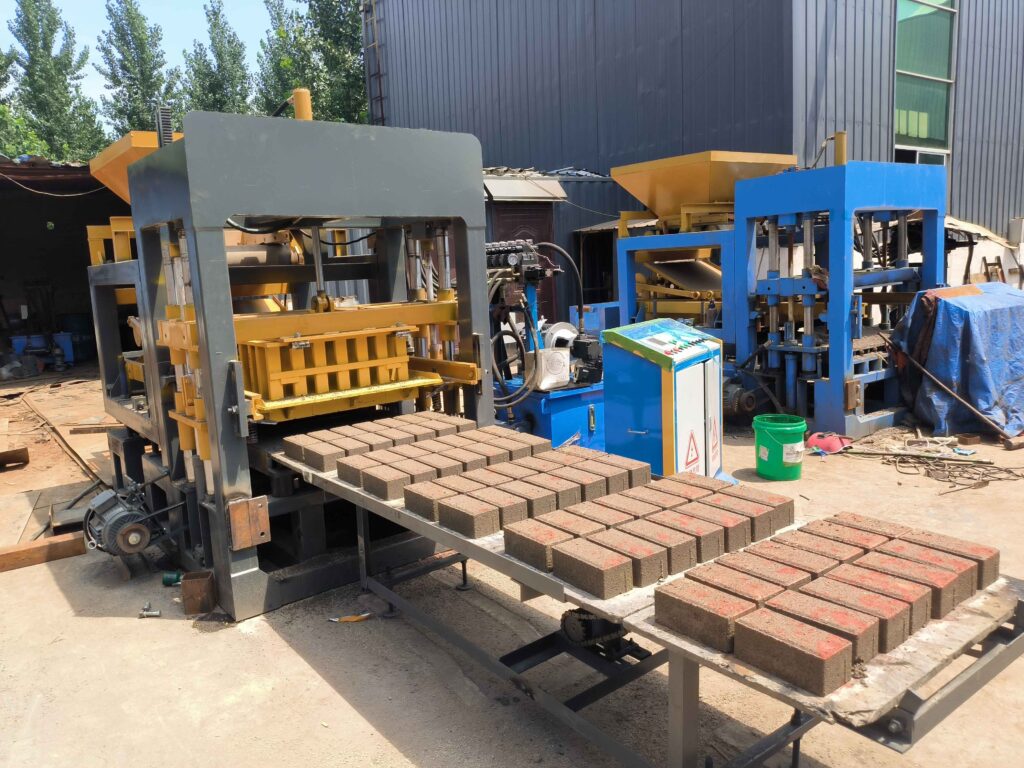
Mabda'iyada Aasaasiga ah ee Makiinadaha Qalabka Casriga ah ee Dhismaha Lebi
Guud ahaan, makiinada libaaxa waxay ku dhaqaaqdaa xoog macluumaad leh oo ku habboon si ay u sameeyso qayb leh qaab iyo cufnaan la go'aamiyay. Isbeddelka ka soo jeeda qaabka gacanta ah ilaa nidaamyada si toos ah u shaqeeya wuxuu ku lug leeyahay horumarinta saddexaad ee asaasiga ah.Cadaadis, Isku Xirnaanta, iyo Xakameynta.
- Doorinta Ku Saabsan Saamaynta Cadaadiska ee Ku Dheellitirka
- Isticmaalka cadaadis sare waa ficilka lagu qeexayo sameynta libaaxa casriga ah. Waxa uu ku dhufteeyaa alaabta asalka ah—gaar ahaan isku-dhafka carrada, simeent, dhooxa duumada, ama kuwo kale oo dheeliye—iyadoo hoos loo dhigiayo si weyn maraakibta u dhexeeya xubnaha. Tani cufnaanta waa muhiim u ah gaarista qaab dhismeedka alaabta kama dambaysa. Cufnaanta sare si toos ah ayay ugu xirantahay xoogga kala qaybsiga, koritaanka adkaysiga dhacdooyinka cimilada, hoos u dhaca biyaha la qabsado, iyo sifooyinka kul iyo dhawaq ee la xoojiyay. Makiinadaha inta badan waxaa loo kala saaraa cadaadiska ugu badan ee ay gaari karaan (loo cabiro ton ama mega-Pascals), taas oo u adeegta calaamad ugu horeysa ee kala duwanaanshaha tayada libaaxa ay soo saari karaan.
- Hubinta Isku-dhismada iyo Isku-midka Kala-duwanaanshaha
- Makiinadu waxay noqon kartaa oo kaliya sidii qalabka ay shaqeysanaayeen. Isku midka ah ee isku-darka qalabka asalka ah—oo ku saabsan heerka dareeraha, qaybinta baaxadda xabbadaha, iyo saamiga dheecaanka—waa shuruudda ugu muhiimsan ee loo baahan yahay si loo gaaro hawlgalka wax ku oolka ah iyo tayada wax soo saarka. Isku-darka aan isku mid ahayn waxay keenaan makiinada inay jameecdo, cufnaanta lebiska aan siman ahayn, heerka dhimista sare, iyo xoogga dambe ee tabar yar. Nidaamyada casriga ah waxay ku darsadaan qalabyada hore ee loo yaqaan 'pre-processing' sida jariyayaasha, shaandhaynta, iyo isku dhegganaanshaha si loo hubiyo cunto isku mid ah. Maamulaha qaybsiga, fahanka habkan nidaamka waa muhiim; iibinta makiinada tiraysa iyadoo aan la xallinayn diyaarinta isku-darka waa iibin xal aan dhammaystirnayn.
- Isbeddelka Muhiimka ah ee Laga Qaado Kontoroolka Gacanta una Gudbo Kontoroolka Awtomaatiga ah
- Mashiinadaha casriga ah ayaa ka gudbay ficillada fudud ee lever-ka ama biyaha. Kontaroolayaasha Barnaamijka Lagama Maarmaanka ah (PLCs) iyo Is-dhexgalka Aadamiga-shaashadda (HMIs) ayaa hadda maamula wareegga wax soo saarka. Otomaatigganu wuxuu hubinayaa kontarool sax ah oo ku saabsan cabbirada kasta: wakhtiga iyo qaabka cadaadiska lagu dabaqo, inta jeer ee ruxitaanka qaabka, taxanaha soo saarista, iyo wareegga saanduuqa. Heerkan kontaroolku wuxuu dammaanad qaadayaa in unug kasta oo gaar ah uu buuxiyo heerar isku mid ah, xilli kasta oo soo saarista ah. Khabiirrada soo iibsiga, tani waxay u turjuntaa kalsooni macaamiishooda iyo cabashooyin yar oo la xiriira kala duwanaanta.
Qaybaha Koowaad iyo Hababka Shaqada
Mashiinnada wax soo saarka birijka waxaa si guud loo kala saari karaa iyadoo loo eegayo tignoolajiyada isku-dhufashada ee asaasiga ah iyo heerka otomaatiga ah. Nooc kasta wuxuu u adeegaa qayb gaar ah oo suuqa ah iyo cabbirka mashruuca.
- Mashiinada Cadaadiska Hydraulic: Heerka Sare ee Cufnaanta iyo Kala-duwanaanta
- Mashiinadahan waxay isticmaalaan dhululubooyin haaydroolig ah si ay u soo saaraan xoog badan oo la maamuli karo.
- Mabda'a Shaqada:Matoor-biyood ayaa dareere u kaxeeya dhululubooyinka ku shaqeeya madaxa isku-buufinta. Cadaadiska si sax ah ayaa loo xakameyn karaa loona hayn karaa muddo cayiman, taas oo u oggolaanaysa in si wanaagsan loogu xiro walxaha.
- Typical Outputs: They excel in producing high-quality solid, hollow, and interlocking bricks, as well as paving stones and curbs. The ability to easily change molds makes them highly versatile.
- Market Positioning: Ideal for medium to large-scale production runs where strength, variety, and dimensional accuracy are paramount. They form the backbone of most commercial block yards and standalone brick plants.
- Mashiinadahan waxay isticmaalaan dhululubooyin haaydroolig ah si ay u soo saaraan xoog badan oo la maamuli karo.
- Vibration-Compaction Machines: Efficiency for Cementitious Products
- These units combine vibration with applied pressure to compact concrete or cement-stabilized mixes.
- Mabda'a Shaqada: A mold filled with material is subjected to high-frequency vibration while a compaction head applies pressure from above. This dual action fluidizes the mix, allowing it to flow evenly into all corners of the mold and release entrapped air, resulting in a very dense and well-formed product.
- Typical Outputs: Best suited for concrete hollow blocks, solid blocks, and insulated masonry units where a fluid concrete mix is used.
- Market Positioning: The dominant technology for high-volume production of standard concrete masonry units (CMUs). They offer faster cycle times for specific product types compared to pure hydraulic presses.
- Mechanical Leverage (Fly Press) Machines: Entry-Level and Niche Application
- Relying on mechanical advantage through gears and levers, these are simpler, often manually operated or semi-automatic units.
- Mabda'a Shaqada: The operator uses a lever to drive a ram or piston into the mold cavity. They require significant human effort and offer less consistent pressure application.
- Typical Outputs: Lower-density soil-cement or clay bricks, suitable for certain non-load-bearing applications or small-scale, low-budget projects.
- Market Positioning: Serve the very low-end of the market, DIY projects, or communities with severe capital constraints. Their value proposition is low initial cost, but they offer limited scalability and quality assurance.
Critical Considerations for Machine Selection and Investment
Selecting the appropriate machinery for a target clientele requires a nuanced analysis that goes beyond catalog data.
- Assessing Raw Material Compatibility
- The first and most critical step is matching the machine to the locally available and economically viable raw materials. Can it efficiently process local clay, volcanic soil, fly ash, quarry dust, or crushed aggregate? The machine’s design, especially its feeding system and compression chamber, must be suited to the material’s abrasiveness, moisture content, and plasticity. A mismatch here is the leading cause of project failure.
- Analyzing Production Capacity and Scalability
- Capacity is not just about “bricks per hour.” It involves understanding the complete cycle time, including loading, compaction, curing, and handling. Key questions include: Does the client need a standalone machine or a fully integrated production line with automated material handling and pallet return systems? Can the machine’s output be scaled up by adding shifts, or would it require a complete line upgrade? Offering modular solutions that can grow with the client’s business builds long-term partnerships.
- Evaluating Energy Consumption and Operational Costs
- The total cost of ownership is a decisive factor. High-pressure hydraulic systems may have different power requirements than vibration-based systems. Energy-efficient motors, well-designed hydraulic circuits, and overall machine robustness directly impact the client’s operational expenditure (OPEX) and profitability. Distributors should be equipped to provide realistic estimates of power, labor, and maintenance costs.
- Prioritizing After-Sales Support and Service Infrastructure
- For the business-to-business (B2B) audience, machine uptime is directly linked to revenue. The availability of spare parts, comprehensive training for operators and maintenance staff, and access to timely technical support are not afterthoughts—they are primary purchase criteria. A distributor’s capability to provide this support network often outweighs a marginal difference in initial machine price. Demonstrating a clear, localized service plan is a powerful competitive advantage.
The Integral Role of Auxiliary and Support Equipment
A brick manufacturing plant is a system, and the press is its heart. However, the system cannot function without its supporting organs.
- Material Preparation Units: Crushers, graders (screens), and mixers are essential for achieving the consistent feed material required for quality production. The mixer type—pan, planetary, or drum—must be selected based on the material mix.
- Handling and Transportation Systems: Belt conveyors, forklifts, and pallet stackers/des tackers dramatically reduce labor costs, minimize product damage, and optimize plant layout and flow.
- Curing and Drying Solutions: The strength of cement-stabilized or concrete bricks develops during curing. Proper curing racks, sheets, and controlled environments (like steam curing chambers) are necessary for achieving specified strengths and reducing the curing cycle time, which frees up production pallets.
- Packaging and Palletizing: Automated packaging systems protect the final product, present it professionally, and expedite loading for dispatch.
Gabagabo
For the astute distributor or procurement professional, success in the brick machinery sector hinges on a consultative approach rooted in deep technical understanding. It is not merely about selling a machine, but about providing a viable production solution tailored to specific market conditions, raw material constraints, and end-product requirements. The most profitable and sustainable partnerships are built by aligning the technical capabilities of hydraulic or vibration-based compaction systems with the client’s business goals, while ensuring robust after-sales support. By mastering the principles outlined in this guide—from the physics of densification to the economics of total cost of ownership—you position yourself as a trusted advisor. This expertise enables you to capitalize on the growing global demand for automated, efficient, and sustainable construction material production, driving growth for your clients and your own business alike.
Su'aalaha Inta Badan La Is Weydiiyo (FAQ)
Q1: What is the single most important factor to consider before recommending a specific type of brick machine to a client?
A: The locally available and intended raw materials are the paramount factor. The machine’s design must be compatible with the physical and chemical properties of the soil, aggregate, or binder mix. A machine perfect for cement-stabilized fly ash may perform poorly with high-clay-content soil, and vice-versa. Always start with a material analysis.
Q2: How do I objectively compare the output capacity of different machines from various manufacturers?
A: Look beyond the “theoretical maximum” bricks per hour. Request data on the standard production cycle time for a specific, common product (e.g., a solid block) under normal operating conditions. Inquire about the machine’s uptime percentage and required daily maintenance windows. A machine with a slightly lower peak output but higher reliability and faster mold changeovers often delivers greater actual monthly production.
Q3: What are the key maintenance differentiators between hydraulic and vibration-based compaction systems?
A: Hydraulic systems require vigilant monitoring of hydraulic fluid quality, filter changes, and seal integrity to prevent leaks and pressure loss. Vibration systems place more stress on mechanical components like vibrator motors, springs, and bearing assemblies, requiring regular checks for wear and tightness. The maintenance schedule and skill set needed differ, impacting long-term service planning.
Q4: For a client new to brick manufacturing, what is a common oversight in planning a full production setup?
A: New clients often underestimate the space, time, and infrastructure required for the habka daaweynta. Bricks gain strength over days, requiring substantial sheltered space (curing racks or yards). They also frequently overlook the need for consistent, clean water supply for mixing and curing, and the cost of pallets or boards on which the bricks are formed and transported through the plant.
Q5: Can automation be integrated into existing semi-automatic production lines?
A: Yes, in many cases, lines can be upgraded modularly. Common retrofits include adding automatic feeders or mixers, integrating pallet circulation systems, or installing robotic stackers. The feasibility depends on the existing machine’s control system compatibility and structural capacity. A phased approach to automation can be a compelling sales strategy for clients looking to scale gradually.