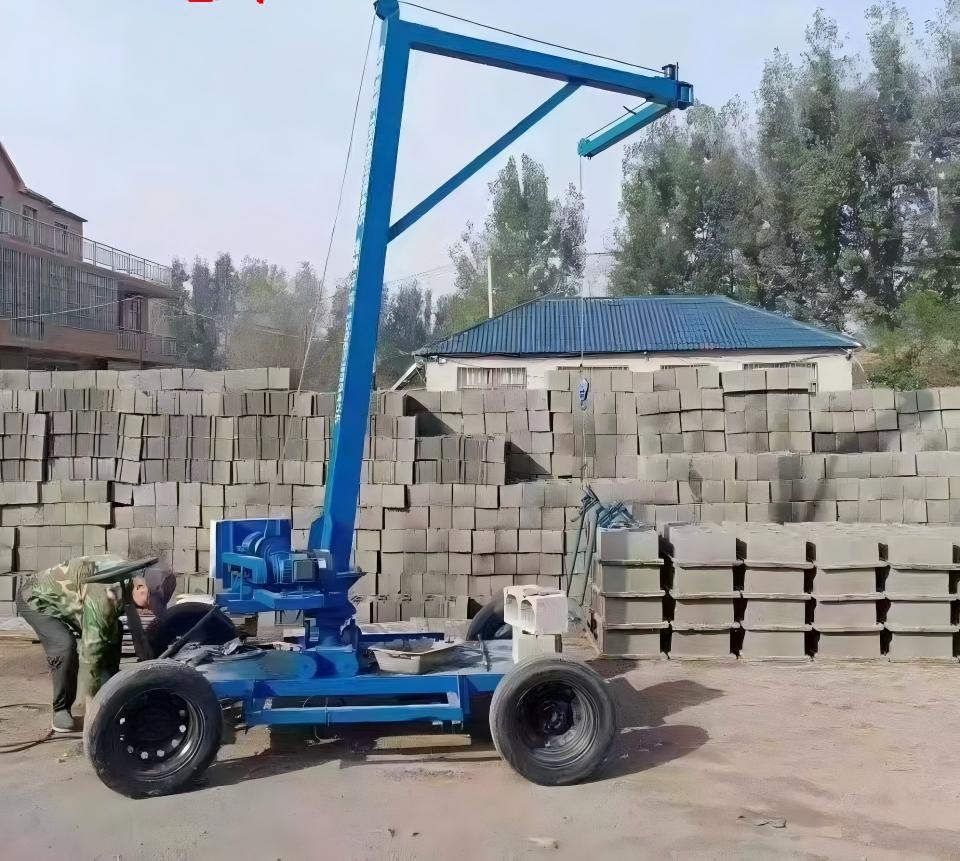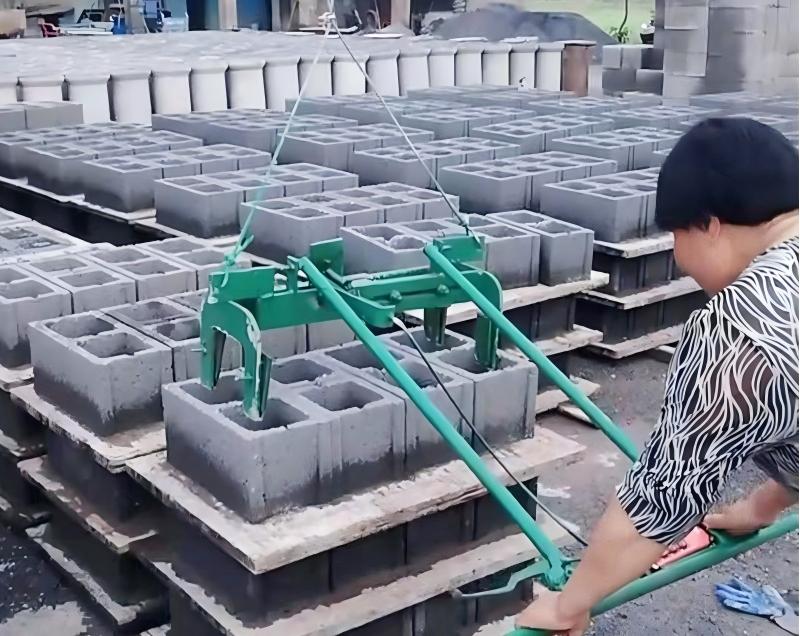
Hawlgalka Farsamada iyo Qaybaha Muhiimka Ah
Mabaadi'da Shaqada Aasaasiga ah
Qaab dhismeedkeeda, mashiinkani wuxuu otomaatig u gawracaa qaadista, raritaanka, iyo dhigista saxda ah ee baloogyada dhismaha ee habaysan. Hawshu waxay ku bilowdaa mashiinka isu hagaajinta culeyska saaran sanduuqa, inta badan isagoo isticmaalaya hababka leysarka la hagayo ama tilmaamayaasha jirka. Iyadoo la adeegsanayo qabashadeeda gaarka ah, waxay si ammaan ah u qabsataa xirmada oo dhan. Kadibna culeyska waa la qaadaa, inta badan iyadoo la isticmaalayo wiish farsamaysan ama nidaam gacan-haydarooleed, oo waa la dejiyaa safarka. Kadib mashiinku wuu dhaqaaqaa—ama waxaa hagaya shaqaale ama waxaa socodsiinaya amarrada horay loo qeexay noocyada horumarsan—ilaa meesha culeyska loo dhigayo. Halkan, dhigista waxaa loo sameeyaa si sax ah oo milimitir ah, iyadoo la hubinayo in cutub kasta si sax ah loo dhigay si loogu diyaariyo dhismaha dhagax-dhigista ama isku-darka. Wareeggu wuxuu ku dhammaadaa iyadoo mashiinku u soo laabto meeshii uu ka bilaabay, isagoo diyaar u ah culeyska xiga. Hawshani oo soo noqnoqota oo sax ah waxay meesha ka saartaa isbeddelka iyo daalinta ku xidhan gacanta.
Qaybaha Muhiimka ah iyo Shaqooyinkooda
Hufnaanta iyo waxqabadka qalabkani waxay ku xiran yihiin dhowr nidaam-hoosaad oo isku dhafan.
- Jidka iyo Qaab-dhismeedka GuuritaankaTani waa laf-dhabarta mashiinka, oo loo qaabeeyay si uu u xasilo culeyska buuxa. Xulashooyinka waxaa ka mid ah noocyada raadraaca ee loogu talagalay jiidashada sare ee dhulka adag ee aan diyaarsnayn iyo moodooyinka taayirada leh ee loogu talagalay dhaq-dhaqaaqa siman ee dhulka adag. Xulashada hoosta qaybtu waxay si toos ah u saameysaa u-isticmaalka mashiinka ee xaaladaha goobta ee kala duwan.
- Kacdoonka iyo Qaabka Wax-isu-dhaafinta:Kani waa udub-dhexaadka shaqada mashiinka. Nidaamyadu waxay u dhexeeyaan weero qaab-xarigo fudud oo qaabka forklift-ka ah ilaa madaxo ciddiyo badan oo casri ah oo qaabi kara cabbirro iyo qaabab dhagax oo kala duwan. Awoodda qaadista waxaa bixiya nidaamyo hydraulic ah, oo caan ku ah xoogga sare iyo xakameynta siman, ama hawlgaliyeyaasha electromechanical-ka ah ee moodooyinka cusub ee hiigsanaya tamar waxtar badan.
- Kontoroolka iyo Hanuuninta Interface:Noogu qaabka shaqeeyaha wuxuu u dhexeeyaa leefyada jireed iyo god-qaadayaasha moodellada aasaasiga ah ilaa qalabka taabashada ee dhijitaalka ah oo dhamaystiran. Nidaamyada horumarsan waxay ku daraan software u oggolaanaya barnaamijka qaababka dhigista ee soo noqnoqda, kaydinta cabbirada shaqada ee caadiga ah, iyo jawaab celinta cilladaha. Qaar ka mid ah qaybaha heerka sare waxay leeyihiin hagitaan qayb-nidaamsan, oo raaca waddooyinka horay loo qorsheeyay ama hagaha siliga ah.
- Nidaamka Korontada iyo Kicinta:Matoorada naafta waxay bixiyaan awood sare oo dhaqameed iyo cimri dheer oo loogu talagalay hawlgalka maalinta oo dhan goobaha fog. Moodooyinka matoor koronto ku shaqeeya, oo ay wataan baytari ballaaran, ayaa caan ku noqonaya isticmaalka gudaha, qiiqa gudaha eber, iyo buuqa hawlgalka hooseeya, taasoo la jaanqaadaysa hindisaha dhismaha cagaaran.
- Qalabka Badbaadada iyo Xasilinta:Qaybaha muhiimka ah waxaa ka mid ah cagaha daminta ama lugaha taageerada kuwaas oo soo baxa si looga hortago gadsiga inta lagu guda jiro hawlaha kor u qaadista. Dareemayaashu waxay si joogto ah u kormeeraan culeyska xamuulka, cadaadiska hydraulic, iyo dheelitirka mashiinka. Astaamaha dab-daminta otomaatiga ah ayaa hawl gala haddii cabbirada ay ka gudbaan xadka badbaadada, iyaga oo ilaalinaya mashiinka iyo shaqaalaha.
Market Segmentation and Equipment Varieties
Classification by Mobility and Scale
The market offers differentiated products tailored to specific operational scales and environments.
- Compact and Mid-Range Units: These are highly maneuverable machines ideal for residential projects, smaller commercial builds, and retrofitting jobs. They are often trailer-mounted for easy transport between sites. Their focus is on agility and speed for frequent, smaller loads.
- High-Capacity Industrial Systems: Designed for large-scale industrial, commercial, and infrastructure projects, these units feature greater load capacity, extended reach, and often more sophisticated controls. They are built for durability and continuous operation, handling the vast material requirements of major construction sites.
- Specialized Attachment-Based Solutions: This category consists of modular attachments that can be fitted to existing carrier vehicles like telehandlers or mini-excavators. This offers a cost-effective entry point for contractors who already own compatible base machines, providing functional versatility.
Advanced Features and Technological Integration
Modern iterations are increasingly defined by their technological enhancements. Telematics systems allow fleet managers and dealers to monitor machine location, fuel levels, operational hours, and maintenance alerts remotely. This data is invaluable for preventive maintenance scheduling and optimizing machine utilization. Furthermore, integration with Building Information Modeling (BIM) represents the cutting edge. Machine controls can theoretically import data from a project’s BIM model, automating the placement pattern directly from the digital blueprint, thereby reducing layout errors and further accelerating the construction process.
Strategic Advantages for the Supply Chain and End-Users
Quantifiable Economic and Operational Benefits
The adoption of this machinery delivers a compelling return on investment through multiple channels. The most direct impact is the dramatic reduction in labor costs; a single machine and operator can replace a crew of several manual laborers, completing tasks in a fraction of the time. This translates directly to shorter project timelines, allowing contractors to take on more projects per year. Material waste due to handling damage is minimized, as the consistent, mechanical movement prevents chipping and breakage common in manual throws and carries. Furthermore, the precision placement reduces the need for subsequent adjustments, allowing masons or assemblers to begin their work immediately and more efficiently.
Enhancing Safety and Ergonomic Standards
Beyond economics, the safety imperative is profound. Manual handling of heavy, dense building materials is a leading cause of musculoskeletal injuries, including chronic back problems and strains. By assuming this physically demanding task, the machinery drastically lowers the incidence of such injuries. It also reduces foot traffic and congestion in the primary material drop zones, minimizing the risk of struck-by incidents. This creates a safer, more organized worksite, which can lead to lower insurance premiums and improved regulatory compliance for the end-user.
Sustainability and Industry Alignment
The efficiency gains have a direct positive environmental impact. Faster project completion reduces the overall duration of site disturbance and energy consumption on-site. Electric models, in particular, contribute to quieter, emission-free operation, which is crucial for urban projects with strict noise and pollution ordinances. By promoting a solution that aligns with goals for faster, safer, and cleaner construction, distributors align themselves with the broader trends shaping the future of the industry.
Conclusion: Positioning for a Productive Future
The transition towards automated material handling in construction is not a speculative trend but a demonstrable shift towards greater rationality and productivity. For dealers, distributors, and procurement professionals, this equipment category represents a high-value portfolio segment that addresses fundamental client pain points: cost, time, safety, and precision. Success in this market requires a deep technical understanding of the product variations, a clear communication of the total cost of ownership and ROI, and the ability to provide robust after-sales support and parts service. By becoming knowledgeable advocates for these solutions, supply chain partners do more than sell machinery; they enable their clients to build better, faster, and safer. The competitive advantage offered by this technology makes it an indispensable consideration for any forward-looking business servicing the modern construction landscape.
Su'aalaha Inta Badan La Is Weydiiyo (FAQ)
Q1: What is the typical range of load capacity for these machines?
A: Load capacities vary significantly to suit different projects. Compact models may handle stacks weighing between 500 to 1,500 kg, while heavy-duty industrial machines can lift and transport palletized loads exceeding 3,000 kg. It is crucial to match the machine’s capacity with the most common pallet weights used by your clientele.
Q2: How does the training process work for operators, and is it complex?
A: Operator training is generally straightforward, especially for standard models. Most manufacturers provide comprehensive onsite training covering basic operations, safety protocols, and routine maintenance. For machines with advanced software or BIM integration, more in-depth training is provided. The intuitive nature of the controls allows skilled equipment operators to become proficient relatively quickly.
Q3: What are the primary considerations for choosing between a tracked and wheeled model?
A: The choice depends on anticipated ground conditions. Tracked models offer superior ground pressure distribution, making them ideal for soft, muddy, or uneven terrain as they are less likely to sink or cause damage. Wheeled models provide higher travel speeds and are better suited for hard, level surfaces like prepared pads or factory floors. They also tend to be easier to transport on trailers.
Q4: Can these machines handle other materials besides standard construction blocks?
A: Yes, with the appropriate attachments, many models can be adapted to handle a variety of palletized or bundled materials common on construction sites. This includes bags of mortar mix, landscaping blocks, certain types of paving stones, and dimensional lumber packs. This versatility enhances the machine’s utility and ROI for the end-user.
Q5: What does the maintenance schedule look like, and what is the parts availability like?
A: Maintenance is similar to other mobile construction equipment, involving regular checks of hydraulic systems, filters, structural components, and (in diesel models) the engine. Electric models have fewer moving parts and require less routine maintenance. Reputable manufacturers support their products with readily available spare parts networks and detailed service manuals. For distributors, establishing access to this parts supply chain is a critical component of customer support.
Q6: How do we effectively demonstrate the ROI to a skeptical contractor?
A: The most effective demonstration is a concrete cost-benefit analysis. Focus on direct labor savings: calculate the hours and crew size required to manually move a set quantity of material versus the machine’s cycle time. Add in quantifiable savings from reduced breakage, lower insurance costs (due to improved safety), and the potential for increased project throughput. Offering a live demonstration on the contractor’s own site, using their materials, is often the most persuasive tool.