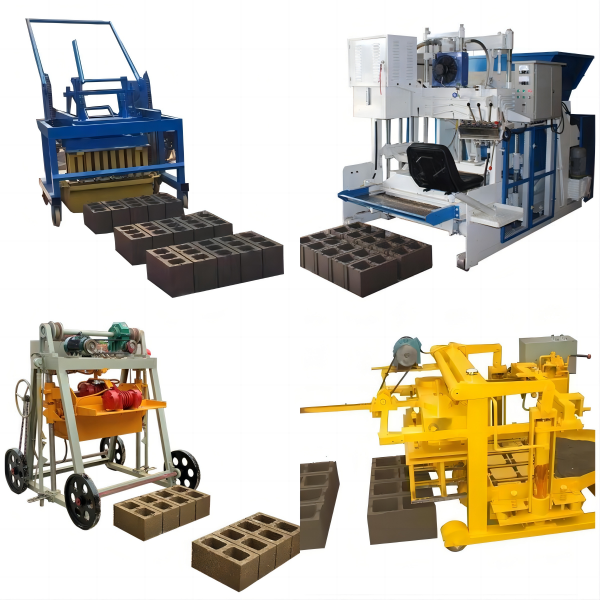
The Rental Market Landscape: Types and Structures
The availability and structure of brick machine rentals vary significantly based on equipment type, market sophistication, and regional business practices.
- Short-Term Event-Based Rentals
- This model typically applies to small-scale, manually-operated or basic semi-automatic machines. It serves specific, time-bound needs such as:
- Community self-build projects with defined timelines.
- Disaster recovery and humanitarian construction efforts where rapid deployment is crucial.
- Pilot projects or product testing before committing to a major purchase.
- Supplemental capacity to handle peak demand periods for an existing manufacturer.
- These arrangements are often transactional, with daily or weekly rates, and minimal support beyond basic operational guidance.
- This model typically applies to small-scale, manually-operated or basic semi-automatic machines. It serves specific, time-bound needs such as:
- Medium to Long-Term Operational Leases
- This is a more sophisticated financial instrument, often applicable to semi-automatic and fully automatic systems. It functions as a long-term rental with operational characteristics of ownership. Key features include:
- Duration: Leases typically span 12 to 60 months, aligning with a specific construction project or business development phase.
- Full-Service Leasing: This model may bundle the machine rental with critical services: routine maintenance, supply of wear parts (excluding consumables like molds), and even on-call technical support. The monthly payment covers both equipment use and service assurance.
- Finance Lease: Structured as a pathway to ownership, where lease payments build equity. At the term’s end, the lessee often has the option to purchase the machine at a predetermined residual value (often $1).
- This is a more sophisticated financial instrument, often applicable to semi-automatic and fully automatic systems. It functions as a long-term rental with operational characteristics of ownership. Key features include:
- Dealer-Facilitated “Try-Before-You-Buy” Programs
- Forward-thinking distributors may offer a short-term rental-to-own trial. This allows a serious prospective buyer to operate the machine on their site, with their materials, for a period (e.g., 30-90 days). A portion of the rental fees may be credited toward a subsequent purchase. This model de-risks the buyer’s investment and demonstrates the machine’s capabilities in real-world conditions.
Financial Analysis: The Rental vs. Purchase Decision Matrix
The choice between renting and purchasing is fundamentally a financial and strategic calculation.
- The Capital Preservation Argument for Renting
- Renting conserves working capital. The significant upfront capital expenditure (CapEx) required for a new machine—which can range from tens to hundreds of thousands of dollars—is transformed into a predictable operational expense (OpEx). This capital can be redirected toward other critical needs: land development, raw material inventory, marketing, or workforce training.
- Cash Flow Management and Project Alignment
- For a contractor undertaking a specific, large project with a defined end date, renting aligns equipment costs directly with project revenue. There is no concern about asset utilization or resale after project completion. Payments are matched to income, simplifying cash flow management and reducing financial risk.
- Total Cost of Ownership (TCO) Comparison
- While renting avoids a large lump sum, the cumulative rental payments over an extended period will almost always exceed the outright purchase price of the machine. However, a proper TCO comparison must include:
- Cost of Capital: The interest or opportunity cost of the tied-up capital if purchased.
- Maintenance and Downtime Costs: In a full-service lease, these are the lessor’s responsibility, transferring risk.
- Depreciation and Obsolescence Risk: The lessor bears the risk of the machine’s value decline or technological obsolescence.
- Tax Treatment: In many jurisdictions, lease payments are fully deductible as business expenses, whereas purchased equipment is capitalized and depreciated over time.
- While renting avoids a large lump sum, the cumulative rental payments over an extended period will almost always exceed the outright purchase price of the machine. However, a proper TCO comparison must include:
Operational and Strategic Implications
Beyond finance, the rental decision impacts daily operations and business strategy.
- Access to Technology and Reduced Commitment Risk
- Renting provides access to newer, more efficient technology without the long-term commitment. This is particularly valuable in a rapidly evolving market or for testing a new product line. If the business model proves unsuccessful, the lessee can simply return the equipment at the lease term’s end without the burden of selling a used asset.
- Maintenance and Expertise Transfer
- A quality rental agreement, especially a full-service lease, includes professional maintenance. This ensures the machine is serviced according to manufacturer specifications, maximizing uptime and product quality. For a client lacking in-house technical expertise, this service component is invaluable and reduces the operational learning curve.
- Limitations and Control Constraints
- Renting implies limited control. Modifications to the machine are typically prohibited. There may be usage caps (maximum operating hours) or penalties for excessive wear and tear. The lessee is also subject to the lessor’s availability for urgent repairs. Furthermore, the business builds no equity in the equipment, and the ongoing rental expense persists indefinitely unless a purchase option is executed.
The Distributor’s Perspective: Risks and Opportunities as a Lessor
For a distributor considering offering rental services, the model presents distinct challenges and rewards.
- Revenue Stream Diversification and Market Penetration
- A rental fleet creates a recurring revenue stream that can stabilize business cycles. It also lowers the entry barrier for clients, allowing the distributor to serve a broader market segment that cannot afford immediate purchase, thereby building relationships that may lead to future sales.
- Asset Management and Depreciation Risk
- The distributor assumes all risks of ownership: capital depreciation, damage, theft, and technological obsolescence. Effective asset management requires rigorous maintenance protocols, careful lessee vetting, and a robust insurance framework. The residual value of the equipment at the end of its rental life is a critical variable in the business model’s profitability.
- The Critical Role of Contractual Frameworks
- The rental or lease agreement is the primary risk mitigation tool. It must be meticulously detailed, covering:
- Clear definitions of acceptable use and prohibited activities.
- Comprehensive maintenance responsibilities and schedules.
- Precise terms for wear-and-tear versus damage.
- Insurance requirements and liability clauses.
- Termination conditions and buyout options.
- The rental or lease agreement is the primary risk mitigation tool. It must be meticulously detailed, covering:
Gabagabo
The feasibility of renting a brick machine is not a simple yes or no; it is a strategic business decision with profound financial and operational consequences. For the end-user, renting offers flexibility, capital preservation, and risk mitigation, but at a higher long-term cost and with less control. For the distributor, developing a rental arm can unlock new markets and revenue streams but requires significant capital investment, sophisticated asset management, and robust legal safeguards.
The most astute industry professionals will position rental not as a competing alternative to sales, but as a complementary tool within a broader solution portfolio. By accurately assessing a client’s project scope, financial health, technical capability, and long-term ambitions, a distributor can advise whether a rental model provides a strategic bridge to eventual ownership, a perfect fit for a one-off project, or an unnecessary expense compared to a decisive purchase. In a market driven by project timelines and capital efficiency, the ability to structure and offer intelligent equipment rental solutions marks a distributor as a sophisticated, client-centric partner in the building materials supply chain.
Su'aalaha Inta Badan La Is Weydiiyo (FAQ)
Q1: What is typically included in a “full-service” lease for a brick machine?
A: A comprehensive full-service lease generally covers:
- The machine itself and its core components.
- Scheduled preventative maintenance performed at defined intervals.
- Replacement of normal wear parts (e.g., hydraulic seals, standard hoses, common sensors, conveyor belts). It typically EXCLUDES consumable wear items directly impacting the product, such as mold liners, core rods, and mixing blades, as these wear rates are heavily influenced by operator practice and raw material abrasiveness.
- Emergency repair services (labor), though parts may be billed separately if not covered under wear-and-tear.
- Limited operational training for the lessee’s staff.
Q2: Who is responsible if the rented machine breaks down and causes production delays?
A: This is a core contractual issue. In most standard agreements, the lessor’s responsibility is typically limited to repairing the machine within a reasonable timeframe, as per the service level agreement (SLA). The lessor is almost never liable for consequential damages such as lost production, missed project deadlines, or penalty clauses incurred by the lessee. This risk remains with the renting business. Lessees are strongly advised to ensure their business interruption insurance is adequate.
Q3: Can I rent a machine to produce bricks for commercial sale?
A: Absolutely. This is a common use case. The rental agreement will be structured as a commercial/industrial lease. The lessor will likely conduct more stringent due diligence on your business plan and financials. The agreement will explicitly state that the equipment is for commercial production, and all standard terms regarding output, maintenance, and insurance will apply.
Q4: How are rental rates for brick machines usually determined?
A: Rates are calculated based on several factors:
- Machine Value and Depreciation: A percentage of the machine’s capital cost.
- Lease Term: Longer terms usually command lower monthly rates.
- Included Services: A full-service lease is more expensive per month than a bare rental.
- Market Demand and Location.
- Lessee’s Creditworthiness.
Rates can be structured as a fixed monthly fee, a fee based on production output (e.g., per thousand bricks), or a combination of a base fee plus a production premium.
Q5: What happens to the machine at the end of a long-term lease?
A: This depends on the lease structure:
- Operating Lease: The machine is returned to the lessor, who is responsible for remarketing or re-leasing it. The lessee walks away.
- Finance Lease / Lease-Purchase: The lessee usually has a contractual option to purchase the machine for a pre-agreed “bargain purchase” price (often nominal, like $1 or 10% of original value) at the end of the term. This is effectively a financed purchase with a balloon payment.
The end-of-term conditions, including requirements for machine condition upon return, must be explicitly detailed in the original contract.