
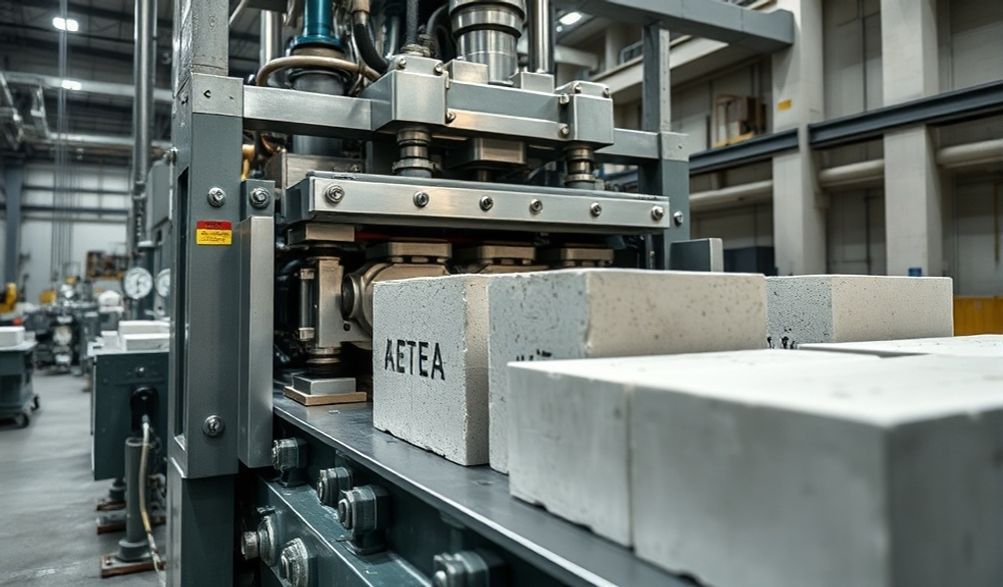
The Ultimate Guide to Choosing a Block Machine Making Manufacturer
Hordhac
In the world of construction and manufacturing, progress is literally built block by block. The quest for reliable, efficient, and cost-effective equipment is a universal challenge that can make or break a project’s timeline, budget, and final quality. At the heart of modern building material production lies a critical piece of equipment: the block making machine. But the machine itself is only as good as the company behind it.
Choosing the wrong block machine making manufacturer can lead to a cascade of operational nightmares: costly downtime due to breakdowns, inconsistent and poor-quality block output, a frustrating lack of technical support, and hidden long-term costs that dwarf any initial savings. It’s a decision that impacts your bottom line for years to come.
This comprehensive guide is designed to cut through the noise and empower you with the knowledge to make an informed, strategic choice. We will move beyond just comparing price tags and delve into the critical factors that separate industry leaders from the rest. The insights here are built upon a foundation of industry standards, deep technical specifications, and years of observational analysis of the manufacturing sector, ensuring you receive advice grounded in real-world expertise and experience.
What is a Block Machine Making Manufacturer?
A block machine making manufacturer is far more than just a factory that sells machinery. It is a specialized engineering firm dedicated to the design, fabrication, assembly, and lifelong support of equipment used to produce concrete masonry units (CMUs). These are the companies that transform raw steel, hydraulics, and electronics into the robust systems that create the building blocks of our infrastructure—literally.
Core Business & Product Range
These manufacturers operate at the intersection of mechanical engineering, civil engineering, and industrial automation. Their core business involves:
* Engineering & Design: Creating machines that apply precise vibration, pressure, and sometimes heat to form raw concrete mix into solid, uniform shapes.
* Fabrication & Assembly: Machining, cutting, and welding high-strength materials to build the machine’s frame, molds, and components.
* System Integration: Combining hydraulic power packs, programmable logic controllers (PLCs), conveyor systems, and sometimes robotic handling into a cohesive production line.
A reputable manufacturer typically offers a comprehensive product range to serve different market segments:
* Warshadaha Balaadhinta Block-ka ee Si Toos ah u Shaqeeya: High-output systems with robotic pallet handling and centralized PLC control.
* Makiinnada Yar-otoomaatig ah: A balance of automation and manual intervention, ideal for medium-scale production.
* Mashinooyinka Block-ka Mobilada: Compact, portable units perfect for on-site production of bricks or blocks.
* Supporting Equipment: Concrete mixers, batching plants, forklifts, and curing racks to create a complete production ecosystem.
The Impact of a Quality Manufacturer on Your Business
Your choice of manufacturer has a direct and profound impact on every aspect of your block production business:
* Tayada Soo-saarka Precision-engineered molds and consistent vibration systems produce blocks with sharp edges, uniform dimensions, and high compressive strength, which are critical for structural integrity.
* Wax-soo-saarka Faa'iidooyinka A reliable machine with high uptime and fast cycle times maximizes your output per shift, allowing you to meet larger orders and tighter deadlines.
* Kharashyada Hawl-galka: An energy-efficient, durable machine with low maintenance requirements reduces your cost per block, directly improving profit margins.
* Business Reputation & Growth: Consistently delivering high-quality blocks on time builds your reputation, leading to repeat business and expansion opportunities.
In short, the manufacturer is a long-term partner in your profitability.
Key Factors to Evaluate a Block Machine Manufacturer
When vetting potential partners, you must look beyond glossy brochures and sales pitches. Focus on these tangible, critical factors.
Technical Expertise & Engineering Prowess
The soul of a great machine is its design. Investigate the manufacturer’s engineering capabilities.
* Dhexdhexaadka R&D: Do they have a dedicated engineering team actively innovating? This shows a commitment to improving efficiency, durability, and ease of use.
* Doorashada Qalabka: The machine’s skeleton matters. Inquire about the grade of steel used for the frame and molds. Core components like hydraulic pumps, valves, and PLCs should be from reputable, industrial-grade brands (e.g., Siemens, Bosch Rexroth, Schneider).
* Fikradda Cusub ee Diyaarinta: Look for advancements in key areas like high-frequency vibration systems for better compaction, energy-saving modes, and user-friendly human-machine interface (HMI) panels.
Qaabeynta Warshadaha & Tifaftirka Tayo
A great design is worthless without impeccable execution. Quality control is non-negotiable.
* Shahaadada: International standards like ISO 9001 for quality management systems are a strong indicator of a structured, process-driven approach to manufacturing.
* Process Control: The best manufacturers have QC checkpoints at every stage: from inspecting incoming raw materials, to precision machining of parts, to the quality of welds (which should be clean, strong, and consistent), and final assembly.
* Testing: Before shipment, the machine should undergo a comprehensive factory acceptance test (FAT) under load to simulate real production conditions.
Machine Performance & Specifications
These are the hard numbers that will define your production capacity.
* Wax Soo Saarka Understand the output (blocks per hour or per 8-hour shift) for the specific block types you need. Be wary of theoretical maximums; ask for realistic, sustainable production rates.
* Kala duwanaan. Can the machine easily switch between producing solid blocks, hollow blocks, pavers, and curbstone by changing molds? Mold changeover time is a key efficiency metric.
* Heerka Automationka: Match the automation to your labor availability and scale. A fully automatic plant may have a higher initial cost but much lower labor costs per block.
* Waarta iyo Nolosha: Ask about the expected service life of the machine with proper maintenance. A quality machine should operate reliably for 15-20 years or more.
After-Sales Support & Service Network
This is arguably the most critical differentiator. The true test of a manufacturer begins after the sale.
* Rakibaad & Tababar: Do they provide engineers to supervise installation, commission the machine, and conduct thorough on-site operator training? This is crucial for optimal setup.
* Warranty: Scrutinize the warranty terms. What is covered (parts, labor)? For how long? What are the response time commitments?
* Qaybaha Geynta: A strong manufacturer maintains a comprehensive, readily available spare parts inventory. Ask about their logistics network for delivering critical parts to your location.
* Taageerada Tekniko Is support accessible via phone, email, and remote diagnostics? What is their protocol for handling issues that require an on-site service visit?
A manufacturer’s unwavering commitment to long-term support is the ultimate signal of their awoodnimada and confidence in their own product.
Types of Block Making Machines and Their Manufacturers
Different projects demand different solutions. Understanding the machine types will help you match a manufacturer’s specialty to your needs.
Fully Automatic Block Making Plants
- Wanaagsan: Large-scale factories, high-volume commercial block suppliers, and major infrastructure projects requiring massive, consistent output.
- Astaamaha Muhiimsan: Fully integrated production lines with automatic material batching, mixing, conveying, molding, curing, and stacking. Often feature robotic pallet handling and sophisticated PLC control systems.
- Manufacturer Focus: Look for manufacturers with a proven track record in heavy industrial equipment and full-system integration. They should have the engineering depth to design the entire workflow, not just the block machine.
Semi-Automatic and Stationary Machines
- Wanaagsan: Medium-scale businesses, block yards supplying regional construction, and entrepreneurs looking to scale up from manual production.
- Astaamaha Muhiimsan: The core molding process is mechanized (vibration, compression), but tasks like feeding raw material or removing finished blocks may involve manual labor. They offer an excellent balance of output, affordability, and flexibility.
- Manufacturer Focus: Seek manufacturers that excel in robust, simple-to-operate design. Their strength should be in building dependable workhorse machines that are easy to maintain locally.
Mobile and Small-Scale Block Machines
- Wanaagsan: On-site production for specific construction projects, small businesses, or startups in emerging markets with lower initial investment capital.
- Astaamaha Muhiimsan: Emphasis on portability (often on a trailer), ease of setup, and operation with minimal training. Output is lower but highly flexible.
- Manufacturer Focus: The best manufacturers in this category prioritize simplicity, durability, and ease of maintenance. They understand their customers need a “plug-and-produce” solution with minimal complexity.
The Selection Process: A Step-by-Step Guide
Follow this structured approach to navigate your decision with confidence.
Step 1: Define Your Project Requirements
Start with a clear internal brief. Document:
* Output Needs: Target blocks per day/month.
* Noocyada Blookada List all products you plan to make (e.g., 4″, 6″, 8″ hollow blocks, paving stones).
* Budget: Have a realistic capital expenditure (CAPEX) range, but be prepared to think in terms of Total Cost of Ownership.
* Site Conditions: Available space, power supply (voltage, phase), and local availability of raw materials (aggregate size, cement type).
Step 2: Research and Shortlist Manufacturers
- Where to Look: Utilize industry-specific B2B platforms (e.g., Alibaba, Made-in-China with verified supplier checks), attend major trade shows like BAUMA or CONEXPO, and search for manufacturers with strong, content-rich websites and technical documentation.
- Check History: Investigate their company background. How long have they been in business? A long track record often suggests stability and accumulated experience.
Step 3: Due Diligence and Verification
- Detailed Quotation: Request a formal, itemized quotation specifying every component brand, material grade, and warranty detail. Ambiguity here is a red flag.
- Customer References: Ask for contact information for 3-5 clients in a similar region or business scale. Actually call or email them. Ask about machine performance, reliability, and quality of support.
- Factory Visit (If Possible): Nothing beats seeing the manufacturing process firsthand. You can assess their facility, quality controls, and professionalism directly.
- Review Documentation: Ask for technical drawings, maintenance manuals, and copies of their quality certifications.
Step 4: Final Evaluation and Decision
- Compare TCO (Total Cost of Ownership): Calculate: Initial Price + Estimated Maintenance + Energy Consumption + Expected Downtime Cost – Resale Value. The cheapest machine often has the highest TCO.
- Assess Communication: Were they responsive, transparent, and professional throughout your inquiries? This behavior is indicative of their future support attitude.
This thorough, process-oriented evaluation demonstrates a practical khibrad-based approach to a major capital investment.
Common Pitfalls to Avoid When Choosing a Manufacturer
- The Price Trap: Sacrificing quality, durability, and support for the lowest upfront cost is the most common and costly mistake.
- Ignoring Local Service: A manufacturer with no service agents or spare parts network in your region can leave you stranded for weeks. Prioritize those with local or regional support.
- Taking Claims at Face Value: Always verify performance metrics (output, energy use) with independent customer references or, ideally, a live demonstration.
- Overlooking Raw Material Compatibility: The machine must be suited to your locally available cement, aggregates, and sand. A good manufacturer will ask for samples to test or provide guidance on mix design.
Su'aalaha Inta Badan La Is Weydiiyo (FAQ)
Q1: What is the average lead time for a block making machine from order to delivery?
A: Lead times vary significantly based on machine complexity and the manufacturer’s order book. For a standard model, expect 30-60 days. For large, fully customized automatic plants, 90-120 days is common. Always get a written delivery schedule in your contract.
Q2: Can a manufacturer customize a machine for my specific block design?
A: Yes, most reputable manufacturers offer complete mold customization. You provide the block drawing or sample, and they engineer the mold. This process can add 2-4 weeks to the lead time and incurs an additional cost for the custom mold tooling.
Q3: How important is it for the manufacturer to provide on-site training?
A: It is absolutely crucial. Proper training ensures the machine is calibrated correctly, operators use it safely and efficiently, and you achieve the advertised output and block quality from the very first day. Never waive this requirement.
Q4: What are the most critical spare parts I should keep in stock?
A: Maintain a small inventory of high-wear items to minimize downtime: vibration motor bearings, hydraulic seals and hoses, mold liners (for the specific blocks you produce), and conveyor belts. Your manufacturer should provide a recommended spare parts list.
Q5: How do I assess the durability of a block making machine before purchasing?
A: Focus on construction: inspect weld quality (should be uniform and clean), material thickness (especially in the press head and mold table), and the brands of core components (hydraulics, PLC, motors). Most importantly, ask existing clients about their maintenance frequency and any major repairs.
Gabagabo
Selecting a block machine making manufacturer is not a simple procurement task; it is the foundation of a strategic, long-term partnership that will directly influence your business’s productivity, reputation, and profitability for over a decade. The right partner provides not just a machine, but a pillar of reliability and growth.
Our final recommendation is to invest your time as diligently as you invest your capital. Let thorough research, a focus on demonstrable technical strength, proven quality control, and unwavering after-sales support be your guiding principles—not short-term price savings that often lead to long-term regret.
Call to Action: Use this guide to create your own evaluation checklist. Approach manufacturers not as a novice, but as an informed buyer with specific, probing questions. Your due diligence today is the most effective block you can lay for a successful tomorrow.
<