
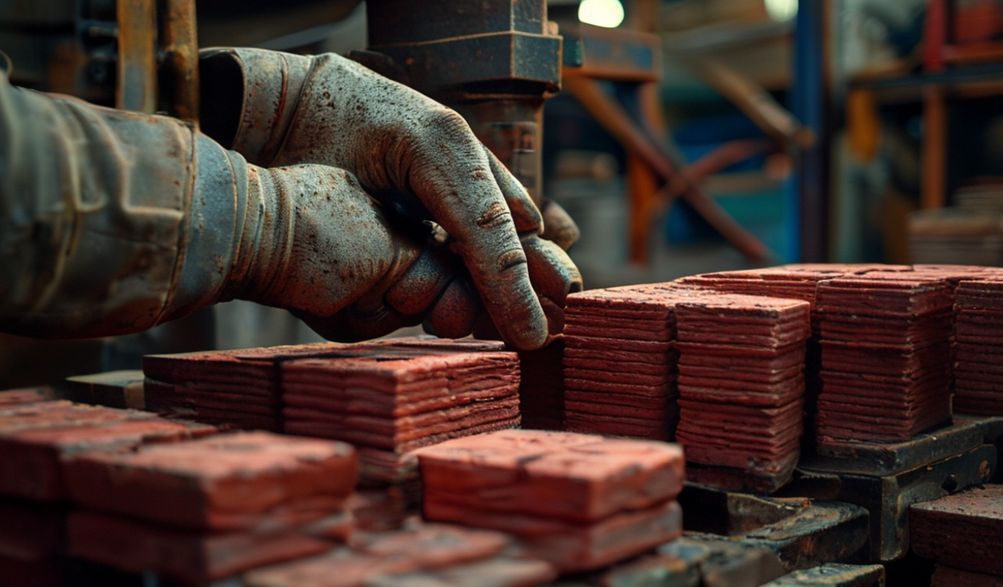
Hagaha Ugu Wanaagsan ee Makiinadaha Lebi: Gudaha Warshadda Lebista FUDA
Hordhac
Adduunka oo dhan, baahida loo qabo qalab dhismo oo qiimo jaban, adag, oo waara ayaa hadda ka daran mar kasta. Dhexdooda farsamada dhismaha casriga ah, dhagaxa yar ee la dhiso guryaha ayaa weli ah xarunteed horumar, oo la qiimeeyo sababtoo ah miisaanka kulka, cimriga dheer, iyo helitaanka deegaanka. Si kastaba ha ahaatee, qiimaha sare iyo saameynta karbaanka ee soo saarista dhagaxa warshadeed ayaa noqon kara xannibaad. Halkan ayaa farsamo cusub oo la gaari karo ay soo galayso.
Mashiinka dhagaxa gacanta ayaa soo baxaya sidii xal muhiim ah, si fiican u wada dhex dhigaya xirfadihii waqtiga la soo dhaafay iyo wax-soo-saarka makiinad ee casriga ah. Wuxuu awood u siinayaa ganacsatada yaryar, mashruucyada bulshada, iyo bilowgayaasha dhismaha inay soo saaraan dhagaxyo tayo sare oo goobta lagu sameeyo, iyagoo jabanaya kharashka iyo kor u qaadaya iskuxidhka. Laakiin guusha waxay ku xidhan tahay hal sabab oo muhiim ah: tayada iyo adkeysiga mashiinka laftiisa.
Gali Warshadda Dhismo Brikadka FUDA. Iyadoo ay leedahay khibrad sanado badan oo uu ku takhasusay, FUDA waxay ku darsatay inay tahay soo saare ka mid ah kuwa ugu sarreeya ee makiinadaha dhismo brikadka oo adag oo wax ku ool ah. Diiraddooda ku saabsan injineernimada makiinadaha gacanta ee brikadka ee adag iyo mid fudud oo loo isticmaalo ayaa ka dhigay shariik la isku hallayn karo dhismayaasha adduunka oo dhan.
Halkan waa hagahaaga oo dhan. Waxaan ku siin doonaa fahamka aasaasiga ah ee teknolojiyada, waxaan ku baari doonaa faa'iidooyinka waaweyn ee ay leedahay, waxaana ku geysan doonaa gudahaWarshada Qorista Lebiska FUDAqaababka tayo-sare leh, oo siinna talooyin waxtar leh oo ku saabsan xulashada iyo maamulka qalabkaaga. Ujeeddadeena waa inaan bixino eegis khabiir, cad oo ku saabsan sida qalabka saxda ah umashiinka lebi can turn raw materials into opportunity.
What is a Hand Brick Machine? Understanding the Technology
At its core, a hand brick machine is a manually or semi-automatically operated press designed to compress raw materials into dense, uniform bricks. It replaces the slow, inconsistent process of hand-molding with a lever- or flywheel-driven system that delivers consistent pressure, brick after brick.
Qaybta Ugu Muhiimsan iyo Hawlgalinta
The operation is elegantly simple but highly effective. Prepared raw material—such as soil, clay, or a cement mixture—is fed into a hopper. The operator then activates a mechanical system, which drives a ram to compress the material with significant force into a precision mold. After compression, the newly formed brick is ejected, ready for drying and curing. This process merges human control with mechanical advantage.
Qaybaha Muhiimka ah iyo Doorkooda
The reliability of a brick press depends on the strength of its components. Here’s what makes up a quality machine:
- Qaabka The backbone of the machine. Heavy-duty steel frames (like those used by FUDA) resist the immense operational stresses, preventing warping and ensuring alignment over years of use.
- Qalabka Qaabista/Die: This interchangeable cavity defines the brick’s shape and size (solid, hollow, interlocking). Precision machining is vital for smooth brick release and consistent dimensions.
- Habka Cabbirka La Yareeyo: This is the heart of the machine. It can be a direct lever system, a flywheel for increased force, or a hydraulic jack. The mechanism translates manual effort into the high pressure needed for a strong brick.
- Hopper: The chamber that holds and guides the raw material into the mold. Its design affects feeding efficiency and material flow.
Ideal Raw Materials for Manual Brick Pressing
Not all soil is created equal. The right material mix is crucial for producing strong, durable bricks.
- Soil Types: A mix containing 25-30% clay and 70-75% sand/silt typically works well. The clay acts as a binder, while the sand reduces shrinkage and cracking.
- Stabilized Mixes: Adding a small percentage (3-10%) of cement or lime to soil creates “stabilized compressed earth blocks,” which gain significant strength and water resistance.
- Material Prep: Soil should be sieved (to under 5mm) and mixed at optimal moisture content (often called “the plastic state”)—damp enough to bind, but not wet. This ensures maximum compaction in the press.
Why Choose a Hand Brick Machine? Advantages and Applications
In an age of automation, the manual brick press holds its ground with unique, compelling benefits that make it the smart choice for a wide range of scenarios.
Qiimaha aan la gudbin karin ee Mashruuca Yaryar & Ganacsiga Waaweyn
For new entrepreneurs or small construction firms, capital is key. Hand brick machines offer a compelling financial proposition.
- Lacag Hore Oo Yar. They cost a fraction of a fully automatic brick plant, dramatically lowering the barrier to entry.
- Kharashyada Maamulka ee Ugu Yar. Requiring no electricity or fossil fuels, the primary running cost is labor. This makes production costs predictable and manageable.
Flexibility and Portability
These machines are the epitome of adaptable, on-demand production.
- Site Independence: Operate anywhere—a remote village, a backyard, or an urban plot. All you need is a level ground and raw materials.
- Product Flexibility: By simply swapping out the mold, a single machine can produce different brick sizes, styles, or even paving slabs to meet specific project demands.
Sustainable and Community-Focused Building
The hand brick machine aligns perfectly with modern sustainable and social development goals.
- Low-Carbon Footprint: It enables the use of locally sourced, often on-site materials, virtually eliminating the transport emissions associated with purchased bricks.
- Economic Empowerment: It creates local jobs and fosters entrepreneurship, allowing communities to build their own homes, schools, and businesses using local resources and labor.
Inside the FUDA Brick Making Factory: A Commitment to Quality
Choosing a machine isn’t just about specs; it’s about trusting the manufacturer behind it. Let’s explore what sets the Warshada Qorista Lebiska FUDA apart.
FUDA’s Manufacturing Expertise and Experience
FUDA isn’t a generic machinery supplier. They are specialists with a deep, practical understanding of brick production. With years of focused operation, their expertise is baked into every machine. Their factory is equipped with dedicated production lines for manual presses, implementing strict quality control at each stage—from steel cutting to final assembly and testing. This dedicated R&D focus leads to continuous improvements in lever geometry, mold design, and user ergonomics.
The FUDA Hand Brick Machine Product Line
FUDA offers a range of machines designed for different outputs and materials. Common models include:
- Manual Clay Brick Presses: Designed for high-pressure compression of soil and clay mixes, producing solid, load-bearing bricks.
- Concrete Block Makers: Heavier-duty models capable of producing both solid and hollow concrete blocks with the addition of a vibrator.
Key features that define FUDA machines include reinforced box-section steel frames, precision-machined and heat-treated molds for longevity, and ergonomic designs that reduce operator fatigue, thereby increasing daily output potential.
From Factory to Site: FUDA’s Support System
FUDA’s relationship with a customer doesn’t end at the sale. They ensure the machine reaches you ready to work.
- Global Logistics: Machines are securely packaged and shipped worldwide, with documentation support for smooth customs clearance.
- Comprehensive Support: Buyers receive detailed operation manuals, instructional videos, and clear diagrams. Crucially, FUDA maintains an inventory of standard spare parts—like molds, wear plates, and pins—ensuring you can maintain your machine for its entire lifespan.
How to Select the Right Hand Brick Machine for Your Project
Making an informed choice requires a clear assessment of your needs and a careful evaluation of your options.
Qiimaynta Baahiyada Wax-soo-saarkaaga
Start by answering these key questions:
- What is your target output (bricks per day or hour)?
- What type and size of brick do you need to produce?
- How many operators will be available?
- Where will the machine be located, and what are the material sources?
Critical Machine Specifications to Compare
When comparing models, focus on these technical details:
- Xoogga Cadaadiska: Measured in tons or MPa. Higher pressure generally yields stronger, denser bricks.
- Waqtiga Wareegga: How long it takes to produce one brick. This directly impacts potential daily output.
- La midka ah Qalabka Qalabka: Check what standard and custom mold sizes are available.
- Machine Weight & Footprint: Determines portability and the space needed for operation.
Quality Indicators: What to Look For in a Supplier
Halkan ayaaE-E-A-T (Experience, Expertise, Authoritativeness, Trustworthiness) becomes critical. Use FUDA as a benchmark:
- Reputation & Longevity: Prefer established manufacturers with a track record.
- Transparency: A trustworthy supplier will readily provide factory photos, product test videos, and material certifications.
- Evidence of Expertise: Look for detailed technical documentation, case studies, or customer testimonials.
- After-Sales Commitment: The willingness to provide spare parts lists, manuals, and support contact information is a strong trust signal.
Maximizing Your Investment: Operation, Maintenance, and Profitability
A quality machine is the foundation, but proper operation and care determine your long-term success.
Best Practices for Efficient Operation
Follow this streamlined workflow for optimal results:
- Diyaarinta Qalabka: Sieve soil to remove stones and debris. Mix stabilizer (if used) thoroughly and achieve optimal moisture content.
- Cunista & Miisaanka: Fill the hopper consistently. Operate the lever or flywheel with a steady, full stroke to ensure uniform pressure.
- Ejection & Handling: Place ejected bricks carefully on pallets for curing. Avoid stacking them until they have gained initial strength.
- Daweynta: Keep bricks moist (by covering with plastic sheeting) for several days to allow cementitious reactions to complete, dramatically increasing final strength.
Simple Maintenance Routine for Longevity
A few minutes of care prevents days of downtime.
- Daily: Clean excess material from the mold, hopper, and ram. Check for loose bolts.
- Weekly: Apply grease to all moving pivot points and lubrication points as per the manual.
- Periodically: Inspect the mold for wear and check the frame for any signs of stress.
Business Considerations: Cost Analysis and ROI
Understanding your numbers is key to profitability.
- Cost per Brick: Calculate: (Cost of Raw Materials + Labor Cost per Day) / (Bricks Produced per Day). The machine cost is amortized over its lifetime.
- Profit Margin: Subtract your cost per brick from your local selling price. Even a small margin, multiplied by high volume, creates a viable business.
- Key Profit Drivers: Sourcing low-cost or free local materials, training efficient operators, and producing a consistent, high-quality product that commands a good market price.
Su'aalaha Inta Badan La Is Weydiiyo (FAQ)
Q1: How many bricks can a manual hand brick machine produce in a day?
A: Output varies by model, operator skill, and workflow organization. A single-operator machine like those from FUDA can typically produce between 800 to 2,500 solid bricks in an 8-hour workday. With a well-organized team handling material prep and brick handling, output can reach the higher end of this range.
Q2: Can I use a hand brick machine for concrete hollow blocks?
A: Standard manual presses are optimized for solid bricks. However, specific semi-automatic models from manufacturers like FUDA incorporate vibration and higher pressure, making them suitable for producing high-quality hollow concrete blocks. It’s essential to choose the machine designed for your desired product.
Q3: What is the lead time and how does shipping from the FUDA factory work?
A: For standard models, FUDA often has ready stock or a short production lead time. Shipping is typically arranged via sea freight for cost-effectiveness, with machines securely packed in wooden crates. The exact timeline and cost depend on the destination port. Contacting the FUDA sales team directly will get you a precise quote and estimated schedule.
Q4: Are spare parts readily available?
A: This is a crucial consideration. Reputable manufacturers like FUDA design their machines with standard, replaceable components. They maintain an inventory of common wear parts such as mold liners, compression rams, and pins, ensuring you can perform maintenance and avoid prolonged downtime.
Q5: What training is required to operate the machine?
A: The operation is fundamentally simple and designed for intuitive use. Comprehensive instruction manuals and video guides are provided. The core training involves learning the correct material mix, mastering the compression stroke rhythm, and understanding the curing process—all of which FUDA’s resources clearly explain.
Gabagabo
The hand brick machine stands as a powerful testament to appropriate technology—simple, affordable, and profoundly impactful. It democratizes brick production, turning local resources into building blocks for homes, businesses, and community development. As we’ve explored, the success of such a venture hinges not just on the concept, but on the engineered quality and reliability of the equipment you choose.
Investing in a well-designed machine from an experienced and trustworthy manufacturer like the Warshada Qorista Lebiska FUDA is the definitive first step. It mitigates risk, ensures consistent product quality, and provides the peace of mind that comes with professional support and available spare parts. This foundation allows you to focus on what matters: building your project and growing your business.
Ready to turn your vision into reality? Take the next step with confidence. Contact the expert team at the Warshada Qalabka Loo Sameeyo Lebi FUDA today for a personalized consultation, detailed machine specifications, and a transparent quote tailored to your specific project needs and location.
<