Nidaamyada Soo-saarka Dhagaxa Dhulka La Cadaadiyay
Hordhac
Wa qarniga si isa soo taraysa loogu garto horumar waara iyo hufnaanta kheyraadka, mashiinka balastarada dhulka la isku rijiyo (CEB) waa tignoolajiyad muhiim ah oo isku xidha xikmadda dhismaha soo jireenka ah iyo injineernimada casriga ah. Iyada oo loo eego qaybiyeyaasha iyo khabiirrada iibsiga ee beegsanaya dhismaha deegaanka, guryaha la awoodi karo, iyo suuqyada is-dhismaha, qaybtan qalabku waxay bixisaa qiimo gaar ah oo diiradda saaraya agabka maxalliga ah, tamarta jirta oo hooseysa, iyo kala duwanaanshaha naqshadeed. Si ka duwan mashiinnada ku tiirsan xirmooyinka la warshadeeyay sida sibidhka, qalabka CEB wuxuu isticmaalaa awoodda isku-xidhka ah ee carrada si habboon loo diyaariyey, oo la isku rijiyo cadaadis sare si loo abuuro unugyo dhisme oo waara, oo culeyska qaadi kara.
Mabaadi'da Aasaasiga ah iyo Falsafadda Maadiga
Mashiinka dhagaxa dhulka la isku riixo waa mashiin farsamo ama haaydaroolig ah oo loogu talagalay in lagu soo saaro dhagaxyo dhisme oo laga sameeyo maaddooyinka carrada hoose ee aan la hagaajin—intaa badnaa waa isku dhafka dhoobada, dambas, ciidda, iyo mararka qaarkood wax yar oo xasiliye ah—iyadoo la adeegsanayo isku-riixid cadaadis sare leh oo ah habka asaasiga ah ee isku xidhka. Falsafadeeda asaasiga ah waa mid ku habboon oo yar oo habayn ah.
- Cilmiga Xasilinta Makaanikada
- Xoogga isku xidha ee CEB tayo sare leh ma aha mid kiimiko ah (sida qoyaanka sibidhka) laakiin waa mid farsamo iyo kiimiko koronto ah. Cadaadis aad u sarreeya (oo inta badan u dhexeeya 5 ilaa 20 MPa), lakabyada dhoobada ee ku jira isku darka carrada waxaa lagu qasbayaa inay iswaafajiyaan si siman, taasoo si weyn u kordhineysa taabashada bedka dushiisa. Tan, oo ay weheliso ka saarista hawada iyo yaraynta godadka, waxay abuurtaa shabag cufan oo isku xidhan, halkaas oo qaybaha yaryar ee dhoobada ay si dabiici ah u "xidhaan" qaybaha waaweyn ee ciidda iyo dhoobada iyada oo loo marayo xoogag dabiici ah oo isku xidha iyo xoogag dhiiqo ah. Natiijadu waa block leh "xoog cagaaran" oo muhiim ah isla marka la soo saaro kadib.
- Doorka Xasiliyeyaasha: Kobcinta Waxqabadka
- While pure soil compression can yield stable blocks, modern practice often incorporates low-percentage stabilizers (typically 3-10%) to enhance durability, particularly against water erosion. The most common are:
- Sementiga Portland: Provides chemical bonding and improves wet strength.
- Laymi: Reacts with certain types of clay in a pozzolanic reaction over time.
- Bitumen or Natural Polymers: For water repellency.
The machine must be capable of thoroughly mixing these stabilizers with the soil, but its primary function remains the application of compression.
- While pure soil compression can yield stable blocks, modern practice often incorporates low-percentage stabilizers (typically 3-10%) to enhance durability, particularly against water erosion. The most common are:
- Contrast with Fired Clay and Concrete Block Technologies
- CEB technology fundamentally diverges from fired brick production by eliminating the energy-intensive kiln-firing process, thereby reducing CO2 emissions by up to 90%. Compared to concrete block machines, it drastically reduces or eliminates the need for manufactured cement, focusing instead on in-situ or locally won earth. The resulting blocks are “breathable,” regulating indoor humidity and temperature, and are often fully recyclable back into the landscape.
System Archetypes and Functional Mechanics
CEB machines vary significantly in scale and automation, from manually operated presses to fully hydraulic, mobile production systems. Their design is dictated by the need to handle moist, cohesive soil mixes.
- Manual Lever and Cinva-Ram Style Presses
- These are human-powered machines using a long lever to drive a piston into a soil-filled mold box. They represent the entry point of the technology, offering very low cost, portability, and independence from power sources. Ideal for community-led projects, disaster recovery, or very small-scale production, their output is limited and labor-intensive, but they powerfully demonstrate the core compression principle.
- Mobile Mechanical or Hydraulic Presses
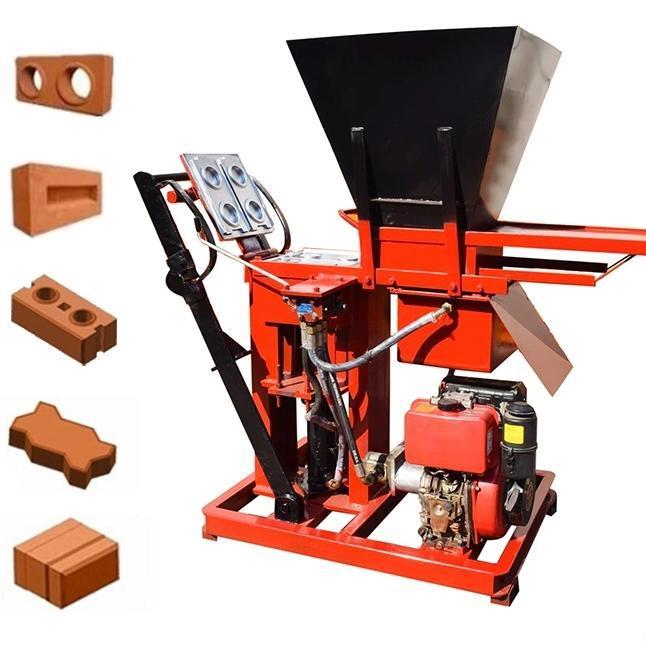
- This is a highly practical category for small to medium enterprises (SMEs). Often trailer-mounted and powered by a tractor’s PTO (Power Take-Off) or a dedicated diesel engine, these machines can be driven directly to a building site or soil source. They feature a hydraulic system that applies consistent, high pressure. A key component is a continuous feeder or hopper that allows for semi-continuous production, significantly increasing output over manual presses. Their mobility eliminates soil transport costs, a major economic advantage.
- Stationary Industrial CEB Production Lines
- For commercial block yards, larger stationary systems exist. These integrate a soil crusher and screener, a pan or paddle mixer for blending soil with stabilizers and moisture, a conveyor-fed hydraulic press, and often an automated block palletizer. They offer the highest output and product consistency, applying the greatest and most controlled pressures. These systems are capital-intensive but position a producer to supply large housing projects or commercial developments.
- The Critical Importance of the Mold and Ejection System
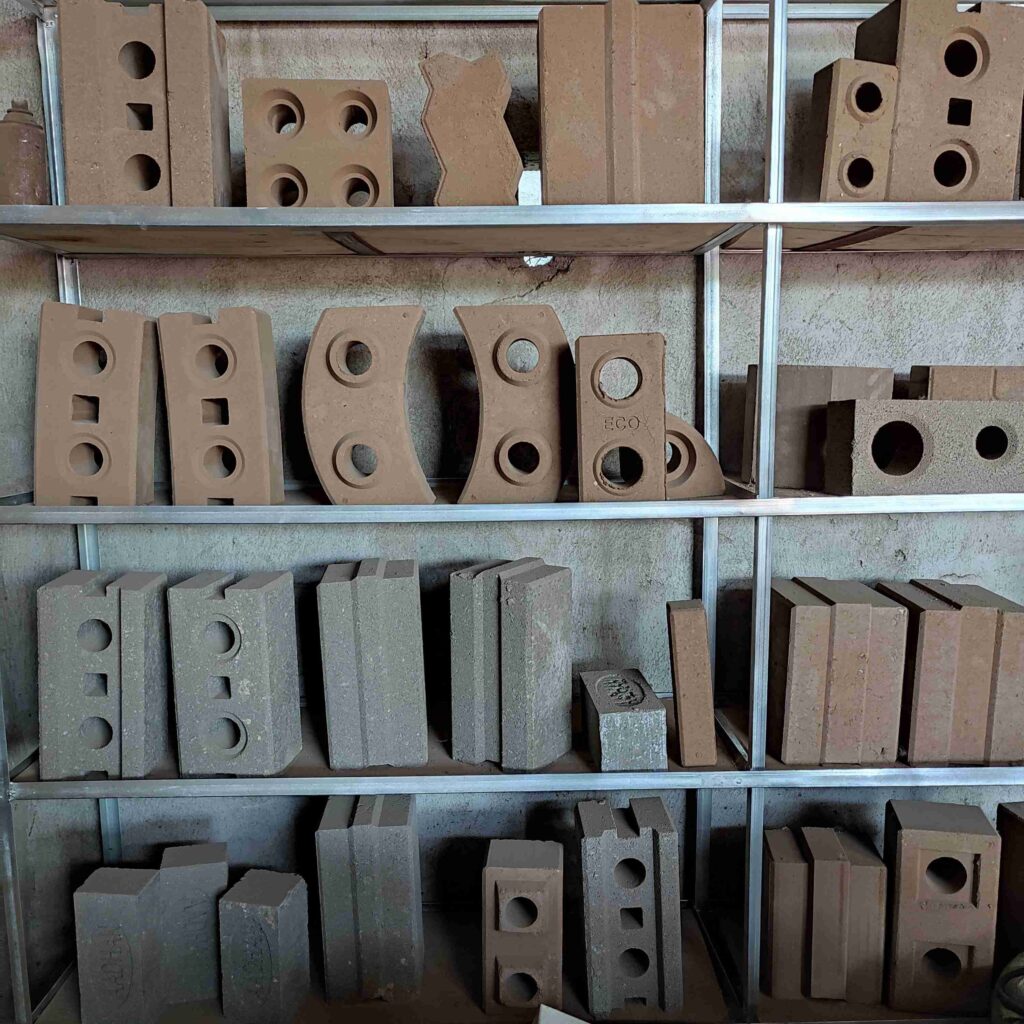
- The mold design for CEBs must account for the sticky, plastic nature of moist earth. Blocks are typically extruded upward out of the mold box (vertical ejection) to maintain their shape, rather than being dropped out. Interlocking mold designs are very common, creating blocks with patented tongue-and-groove profiles that allow for dry-stacking (minimal mortar) and improved seismic resistance through mechanical interlock. The mold’s internal finish is crucial to prevent soil adhesion.
Product Characteristics and Performance Profile
Blocks produced by this technology possess a distinct set of physical and environmental properties.
- Structural and Thermal Performance
- Properly made CEBs can achieve compressive strengths between 2 and 10 MPa, more than adequate for one to three-story load-bearing construction. Their high thermal mass provides excellent thermal inertia, slowly absorbing heat during the day and releasing it at night, naturally regulating indoor temperatures and reducing reliance on mechanical heating and cooling—a key benefit in both hot and temperate climates.
- Environmental and Hygroscopic Qualities
- The blocks have a very low embodied energy. They are vapor-permeable, which helps prevent condensation and promotes healthier indoor air quality. When unstabilized or lime-stabilized, they are completely non-toxic and can return to the earth without pollution at the end of the building’s life.
- Aesthetic Versatility
- CEBs offer a distinctive, natural aesthetic. The soil’s natural color variations create warm, earthy hues. Blocks can be left exposed for a rustic finish, plastered, or treated with natural sealants. Different mold faces can produce smooth, textured, or patterned blocks.
Strategic Market Positioning and Implementation Considerations
For distributors, successfully placing CEB machinery requires a holistic understanding of the project ecosystem.
- The Centrality of Soil Testing and Siting
- The number one determinant of success is suitable soil. A basic field test (proportion of clay, silt, sand) is mandatory. The ideal machine sale is often accompanied by a service offering soil analysis or partnerships with local laboratories. Positioning the machine’s mobility as a solution to “move the factory to the soil” is a powerful selling point.
- Economic Model: Low-Cost Capital vs. Operational Nuance
- The value proposition is compelling: extremely low material costs, reduced energy costs, and potential for labor-intensive but locally sourced employment. However, clients must understand that labor and skill are shifted from purchasing industrial materials to managing a raw material (soil) supply chain and mastering the moisture-content precision critical for compaction. The business model is one of low variable cost but higher skilled labor input.
- Alignment with Green Building and Policy Initiatives
- This technology aligns perfectly with global trends: circular economy principles, net-zero carbon goals, and biophilic design. It is highly relevant for government-sponsored affordable housing programs, eco-resorts, educational facilities, and humanitarian construction projects where sustainability, cost, and local empowerment are key drivers.
Gabagabo
The compressed earth block machine is more than a piece of construction equipment; it is an enabler of a sustainable and context-sensitive building philosophy. It democratizes construction by turning a ubiquitous local resource—earth—into a high-performance building material through the intelligent application of force. For the forward-thinking distributor, this technology opens doors to non-traditional markets focused on resilience, ecology, and cultural authenticity.
Success requires a shift from a purely technical sales approach to a consultative partnership. Distributors must be prepared to guide clients through soil science basics, project logistics, and the economic nuances of earth-based construction. By providing not just the press, but the knowledge framework for its successful application, distributors position themselves as leaders in the growing sustainable construction materials sector. In a world seeking to build more with less, the CEB machine stands as a proven, pragmatic, and profoundly sustainable solution for creating durable shelter and community infrastructure.
Su'aalaha Inta Badan La Is Weydiiyo (FAQ)
Q1: Are compressed earth blocks strong enough and durable for permanent housing in wet climates?
A: Yes, with proper design and stabilization. In wet climates, cement stabilization (5-8%) is highly recommended to improve resistance to surface erosion from driving rain. Critical construction details are equally important: a high, protruding stem wall to protect the base from splash-back, wide roof overhangs (at least 600mm), and a breathable yet protective exterior finish like a lime-based plaster. Correctly detailed, CEB walls have centuries of proven durability worldwide.
Q2: How does the production speed and output of a CEB machine compare to a concrete block machine?
A: Industrial stationary CEB lines can approach the output of small to medium concrete block machines. However, mobile or manual CEB presses generally have a lower hourly output. The trade-off is not in pure speed, but in system cost and logistics. A mobile CEB press producing blocks directly on-site from excavated soil can outpace a concrete block plant when you factor in the time, cost, and carbon footprint of transporting raw materials (aggregates, cement) to a plant and finished blocks to the site.
Q3: What is the learning curve for operating a CEB machine effectively?
A: The mechanical operation is relatively simple to learn. The true learning curve lies in material mastery. Operators must become experts in judging and adjusting soil composition and, most critically, moisture content. This is a tactile skill developed through experience. Optimal moisture (often around 10-12% for many soils) is vital; a few percentage points too wet or dry will result in poor compaction and weak blocks. Quality training from the distributor should heavily emphasize this hands-on material science.
Q4: Can you produce interlocking blocks with a CEB machine, and what are the advantages?
A: Absolutely. Many CEB presses are specifically designed for interlocking block molds. The advantages are significant:
- Dry-Stacking: Allows for mortar-less construction, saving cost and time.
- Improved Seismic Resistance: The interlocking profile provides enhanced shear resistance against lateral forces (earthquakes, wind).
- Ease of Alignment: The blocks self-align, making construction easier for less experienced masons.
- Integrated Conduit Spaces: Some profiles include chases for electrical wiring.
Q5: What are the primary maintenance concerns for a CEB machine, given the abrasive nature of soil?
A: Abrasion is the key challenge. Maintenance focuses on:
- Qalabka Qalabka iyo Qaybaha La Xiriira Dharka: These will require periodic replacement or re-surfacing. Hardened steel is essential.
- Nidaamka Hydraulic: Seals and hoses must be protected from dust ingress. Regular filter changes are crucial.
- Nadiifin The machine must be thoroughly cleaned after each use to prevent soil from hardening in the feed system or on the compression ram, which can cause significant damage. A well-maintained machine in this environment demands disciplined daily cleaning routines.