
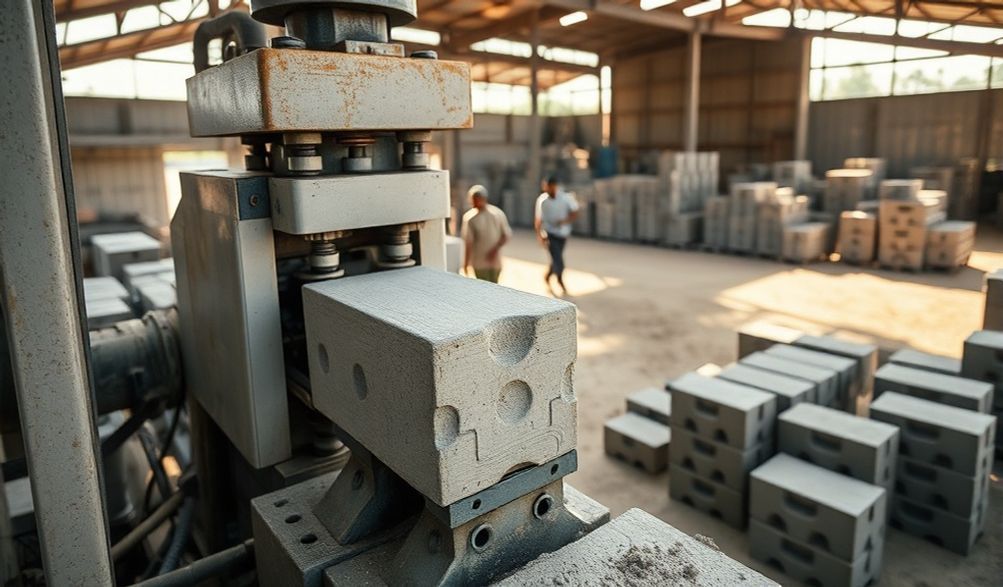
Your Complete Guide to Block Factory Machines in Ghana: Types, Costs & Top Suppliers (2024)
Hordhac
Ghana’s skyline is transforming. From bustling Accra to growing regional capitals, a construction boom is underway, fueled by urbanization, infrastructure development, and a rising demand for housing. At the very foundation of every one of these structures—from family homes to commercial complexes—lies a critical component: the concrete block. Yet, the quality and supply of this fundamental building material can make or break a project’s timeline, budget, and structural integrity.
For too long, many small-scale builders and entrepreneurs have relied on manual block production. This method is plagued by inconsistency, extreme physical labor, and painfully low output. The result? Project delays, unpredictable costs, and blocks that may not meet the strength standards required for safe, durable buildings. This challenge hampers both construction progress and the growth potential of local businesses.
The solution is clear: mechanization. A block factory machine is not just a piece of equipment; it’s a transformative investment in efficiency, quality, and profitability. This comprehensive guide is designed to cut through the noise. We provide expert, trustworthy, and actionable information tailored specifically to the Ghanaian market. Our insights are built on a deep understanding of local industry practices, machinery specifications, and the practical realities of running a business in Ghana.
Halkan waxaad ku baran doontaa:
* The fundamental types of block-making machines available and which is right for your operation.
* A transparent 2024 cost analysis, from purchase price to operational expenses.
* How to identify and select a reliable supplier with crucial after-sales support.
* Practical tips for setting up and maintaining a successful block production factory.
Let’s build a solid foundation for your success.
Understanding Block Production and Machine Fundamentals
Before investing, it’s essential to understand the basic process and the technical terms that define a machine’s capability. This knowledge is your first defense against making a poor purchase decision.
The Core Process: From Raw Material to Finished Block
Block making, at its heart, is a process of precision and pressure. It involves:
1. Isku-dhafka: Combining cement, sand, and aggregate (like quarry dust or gravel) with water to form a homogeneous, semi-dry concrete mix.
2. Qaab-dhismeedka: Feeding this mix into a mold cavity of a specific shape (e.g., 5-inch or 6-inch hollow block).
3. Ku Dhufasho & Gariir: This is the critical step where a machine proves its worth. High-frequency vibration forces the mix to settle densely into every corner of the mold, eliminating air pockets.
4. Daweynta: The freshly ejected “green” blocks are stored in a moist environment for several days to allow the cement to hydrate properly and gain strength.
Why machine precision is vital: Proper compaction via vibration is non-negotiable for achieving the required compressive strength (measured in psi). A well-compacted block ensures uniform density, leading to better load-bearing capacity, water resistance, and overall durability for safer buildings.
Key Machine Specifications to Understand
When comparing machines, you’ll encounter these key terms. Understanding them is crucial:
- Wax Soo Saarka Stated as blocks per hour (e.g., 500-1000 blocks/hr). This is a theoretical maximum under ideal conditions; realistic output is often 60-70% of this figure.
- Waqtiga Wareegga: The time it takes to complete one molding cycle (fill, vibrate, eject). Shorter cycles mean higher output.
- Awoodda Mootorka: Measured in Horsepower (HP) or Kilowatts (KW). This indicates the power of the vibration motor. More power typically means better compaction for stronger blocks.
- Hopper Capacity: The volume of mixed concrete the machine can hold for continuous production. A larger hopper reduces downtime for refilling.
- Nidaamka Gariirka: The heart of the machine. Look for systems with multiple vibrators (under the mold table and on the mold head) for optimal compaction.
- Heerka Automationka: Defines how much manual labor is involved in the process, directly impacting your labor costs and output consistency.
Types of Block Factory Machines Available in Ghana
The Ghanaian market offers a range of machines to suit different budgets and business scales. Here’s a detailed breakdown.
Manual Block Making Machines (The Entry-Level Option)
These are simple, lever-operated machines where all force is applied by human labor.
- Sida ay u shaqeeyaan: Workers fill the mold by hand, then use a long lever to compress the mix. The block is then manually ejected.
- Faaiidooyinka:
- Qiimaha ugu hooseeya ee la bixinayo marka hore.
- No electricity required, ideal for remote sites.
- Simple mechanics, easy to repair.
- Laba.
- Very high labor intensity and slow output.
- Inconsistent block quality and strength due to variable human pressure.
- Physically demanding, leading to quick worker fatigue.
- Ideal ah: Individuals producing blocks for a single personal project, or micro-enterprises in areas with highly unreliable power, operating on a razor-thin capital budget.
Semi-Automatic Block Making Machines (The Best-Seller for SMEs)
This category represents the sweet spot for most new and growing businesses in Ghana. They automate the critical compaction process while keeping feeding and block removal manual.
- Sida ay u shaqeeyaan: An electric motor powers a high-frequency vibration system. Workers feed the mix into the hopper and manually remove the freshly molded blocks for curing.
- Faaiidooyinka:
- Excellent balance of affordability and productivity.
- Produces consistent, high-quality blocks with reliable strength.
- Significantly less physically demanding than manual machines.
- Relatively easier to maintain and operate.
- Laba.
- Requires a stable electricity supply or a generator.
- Output is limited by the speed of manual feeding and block removal.
- Ideal ah: Small-to-medium block manufacturing businesses, growing construction firms looking to produce in-house, and entrepreneurs making a serious entry into the block supply market.
Fully Automatic Block Making Machines (The High-Volume Powerhouse)
These are complete production lines designed for maximum output with minimal manual intervention.
- Sida ay u shaqeeyaan: They feature automated material feeding (often via conveyor from a mixer), automated molding, and automatic stacking or palletizing of finished blocks. Some models can even include robotic arms.
- Faaiidooyinka:
- Maximum output with a very small labor crew (often just 1-2 supervisors).
- Unmatched consistency and quality control.
- Can be configured with multiple molds to produce various products (solid, hollow, paving bricks, interlocking stones) simultaneously.
- Laba.
- Lacag dhalin gelin bilow ah oo aad u sarreysa.
- Requires significant factory space and a robust, three-phase electrical connection.
- Needs more skilled operation and technical maintenance.
- Ideal ah: Large-scale block factories supplying major government or private construction projects, established businesses looking to dominate regional supply, and industrial-scale operations.
Mobile Block Machines (The On-Site Solution)
While less common for fixed factories, these are worth noting. They are mounted on trailers and can be towed directly to large construction sites. This eliminates the cost and breakage associated with transporting blocks over long distances, producing them right where they are needed.
Cost Analysis: Investing in a Block Machine in Ghana
A smart investment requires looking beyond the initial price tag. Let’s break down the financials for 2024.
Machine Price Ranges (2024 Estimates)
Prices vary dramatically based on brand, capacity, configuration, and the supplier’s location (Accra, Kumasi, Tema). The following are estimated ranges in Ghana Cedis (GHS) for planning purposes. Crucially, these are estimates. Prices are subject to change, and you must always get current, detailed quotations from suppliers.
| Machine Type | Estimated Price Range (GHS) | Key Determinants |
| :— | :— | :— |
| Qoraal | GHS 3,000 – GHS 8,000 | Brand, build quality, number of blocks per cycle. |
| Nus-awtomaatig ah | GHS 25,000 – GHS 120,000 | Production capacity, motor power, brand, level of features. |
| Oo Dhammeeyad Ah | GHS 200,000 – GHS 1,000,000+ | Degree of automation, output capacity, number of mold stations, brand origin. |
Beyond the Sticker Price: Total Cost of Ownership
Your total startup cost includes several other essential items:
- Ancillary Equipment: A concrete mixer (pan or drum type), wheelbarrows, block pallets (wooden or steel), curing racks, and possibly a conveyor belt.
- Kharashyada Hawl-galka:
- Awood Electricity costs or diesel for a generator.
- Qalabka Asalka: Bulk purchase of cement, sand, and aggregates. This is your largest recurring cost.
- Shaqo: Wages for your operators and laborers.
- Maintenance & Spares: Budget for routine servicing and replacement parts like molds, vibration motors, and liners.
Calculating Your ROI (Return on Investment)
A simplified framework can guide your planning:
1. Estimate Daily Production: (Machine Capacity x Realistic Efficiency x Operating Hours).
2. Calculate Daily Revenue: (Daily Production x Selling Price per Block).
3. Calculate Daily Operational Cost: (Raw Material Cost for that output + Labor + Utilities + Misc.).
4. Daily Gross Profit: Daily Revenue – Daily Operational Cost.
This daily profit figure, projected over months, will show you how long it will take to recoup your machine investment. A detailed business plan that includes market research, competitor pricing, and sales channels is absolutely essential before you buy.
How to Choose a Reliable Supplier in Ghana
This is perhaps the most critical decision you will make. The right supplier is a partner; the wrong one is a source of endless headache and lost income.
Red Flags vs. Green Flags in a Supplier
| Red Flags 🚩 | Green Flags ✅ |
| :— | :— |
| No physical office, showroom, or workshop you can visit. | Has an established, accessible showroom or workshop where you can see machines. |
| Vague or evasive about providing contactable references from past customers. | Willingly provides a list of previous customers (with location) for you to verify. |
| Talks only about price and avoids discussions on warranty, service, or training. | Has a clear, written warranty policy (typically 6-12 months) and emphasizes after-sales support. |
| Prices are suspiciously low compared to the general market. Often a sign of substandard materials, used machines sold as new, or outright scams. | Offers fair, market-competitive pricing and can justify it with quality components (e.g., name-brand motors). |
| Cannot arrange or refuses a live demonstration of the machine making blocks. | Insists on a live demonstration and may even arrange a visit to a client’s working factory. |
Essential Questions to Ask Before You Buy
- “What is the exact warranty period, and what components are covered (motor, frame, electricals)?”
- “Do you provide free installation and on-site training for my workers?”
- “How readily available are spare parts? Do you stock common parts like molds, vibrator motors, and liners locally?”
- “Can I speak to 2-3 of your existing customers who have run this model for at least one year?”
- “What is your response time for technical support, and do you have service technicians?”
The Importance of After-Sales Service & Local Support
A machine will eventually need maintenance or repair. A breakdown without support means zero production and lost income. A supplier with a strong local technical team who can provide prompt service and supply genuine spare parts is worth a premium over a cheaper, “here-today-gone-tomorrow” importer. This local expertise is invaluable for your business’s long-term health.
Setting Up and Running a Successful Block Factory
Site Requirements and Factory Layout Tips
- Goobta: You need dedicated areas for: raw material storage, production floor, curing area (the largest section), and storage for finished blocks. A minimum of 5,000 – 10,000 sq. ft is a good start for a small semi-automatic operation.
- Floor: The production floor must be a level, solid concrete slab to handle the machine’s vibration and weight.
- Access: Ensure easy access for tipper trucks delivering sand/gravel and for customers’ trucks picking up blocks.
Sourcing Quality Raw Materials in Ghana
- Simento: Stick to reputable brands (GHACEM, Diamond, etc.) for consistent quality.
- Sand & Aggregates: Source from reliable quarries. The sand should be clean, coarse, and well-graded. Test your mix ratios to find the optimal blend for strength and cost-effectiveness. Impure sand (with clay or silt) will produce weak blocks.
Basic Maintenance Checklist for Longevity
- Daily: Clean the machine thoroughly after use, especially the mold and hopper. Check for any loose bolts or nuts.
- Weekly: Lubricate all moving parts as per the manual. Inspect the vibration motors for unusual noise or heat.
- Monthly: Check the tightness of all major bolts and the condition of mold liners. Inspect electrical connections.
Su'aalaha Inta Badan La Is Weydiiyo (FAQ)
Q1: What is the most popular type of block machine for starting a business in Ghana?
A: For most new entrepreneurs, a mashinka dheeri ah oo otomaatig ah is the undisputed best choice. It provides the crucial leap in quality and output from manual methods, without the daunting capital and infrastructure requirements of a fully automatic plant. It allows you to build your market and reinvest profits for future expansion.
Q2: Can I get a loan or financing to buy a block making machine in Ghana?
A: Yes. Several financial institutions, including the National Investment Bank (NIB), ADB Bank, and some rural banks, offer asset financing for productive equipment. A compelling business plan, some collateral, and a good credit history are typically required. Some established machinery suppliers also have direct partnerships with leasing companies.
Q3: How many workers do I need to operate a semi-automatic machine?
A: An efficient team for one semi-automatic machine consists of 3-4 people: one person managing the mixer and feeding the hopper, two people dedicated to removing and carefully transporting the green blocks to the curing area, and one person for material handling and quality control.
Q4: What is the strength difference between machine-made and hand-made blocks?
A: The difference is substantial. Machine-made blocks, through controlled vibration, achieve uniform, high compaction. This results in consistent compressive strength that can reliably meet the Ghana Standard GS 719 requirements for load-bearing walls. Hand-made blocks often have voids and inconsistent density, leading to lower, variable strength and reduced structural safety.
Q5: Besides hollow blocks, what else can these machines produce?
A: With interchangeable molds, your business can diversify significantly. You can produce:
* Solid concrete blocks.
* Various paving stones (interlocking, rectangular).
* Kerbstones.
* Decorative bricks.
* Concrete fence posts.
This diversification allows you to tap into landscaping, road construction, and decorative markets, boosting your profitability.
Gabagabo
Investing in a block factory machine is a strategic decision that paves the way for growth, quality, and profitability in Ghana’s vibrant construction sector. Success hinges on a clear understanding of your production needs, a realistic budget that accounts for total costs, and, most importantly, partnering with a supplier renowned for quality machinery and unwavering after-sales support.
Use this guide as your roadmap. Move from research to action by visiting the workshops of shortlisted suppliers in Accra, Kumasi, or Tema. Ask the tough questions, demand demonstrations, and speak to their existing customers. With the right equipment and sound business practices, your block manufacturing venture can become a cornerstone of your community’s development.
Ready to build your future? Start by contacting reputable local suppliers today for a detailed consultation and quotation.
<