
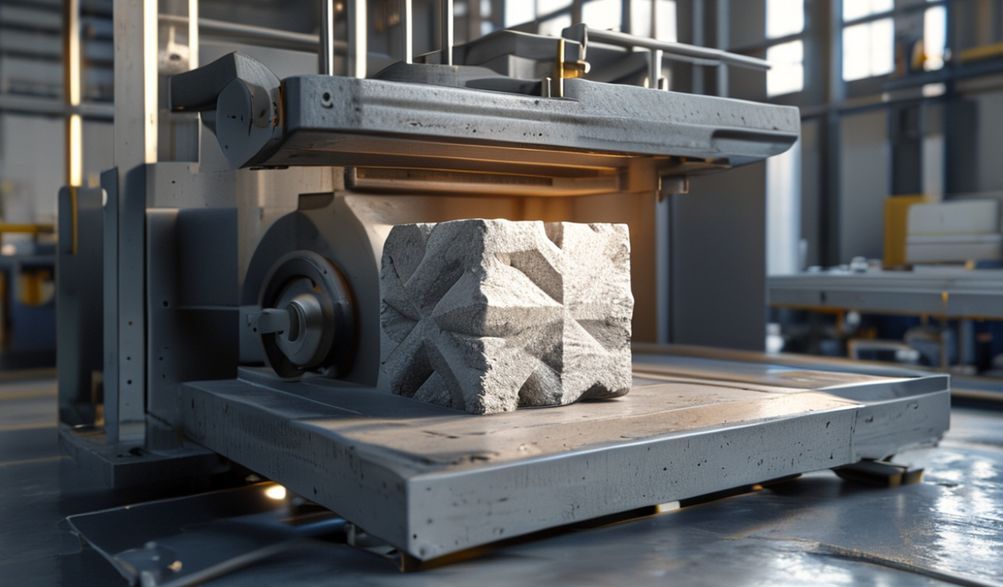
Hagahaaga Ugu Wanaagsan ee Makiinadaha Sameynta Buugaagga Gaarka ah: Kordhi Waxsoosaarka & Faaiidada
Hordhac
Dunida tartamiga ah ee dhismaha iyo warshadeynta, habka hal-cabbirku wuxuu inta badan keenaa xaddidaad niyad-jab leh. Ma ku dhiban tahay iska-haynta qalabka marka cabbiradda caadiga ah ee laamiyada aan si fiican ugu haboonayn qorshayaashaaga? Laga yaabee inaad ku sii baxayso fursado suuq oo faa'iido leh sababtoo ah aadan awoodin inaad soo saarto qaab-dhismeedka qaangaarka ah ee macaamiishu doonayaan. Waa laga yaabaa in taxanaha soo saarkaaga aanu wax ku oolin, oo ku xaddidan makiinadaha aan awoodin inay ku habboonaadaan qalabkaaga gaarka ah ee la xiriira ama ujeeddada soo saarka.
Furista ugu wanaagsan ee xalinta dhibaatooyinkan caanka ah ma aha in la ka shaqeeyo si adag oo agabka caadiga ah, balse waa in la ka shaqeeyo si caqli leh oo agab loogu qalay ujeeddo gaar ah:makiinada sameynta boolooyinka la qalabaysanTani ma iib kaliye; waa maalgelin qorsheysan oo loogu talagalay saxnaanta, dabacsanaanta, iyo faa'iidada muddada dheer. Ka bixitaanka qaababka la iibiyo, makiinad gaar ah ayaa loo sameeyay si ay si fiican ugu habboonaan aragtidaada gaarka ah ee alaabta iyo habkaaga shaqeyn ee.
Hagahan guud oo buuxda waxaa loo qorsheeyay inay ka saarto shidaalka. Waxaa la dhisay aqoon ganacsi iyo aqoon ammaan ah, hadafkaagu waa inaan ku siinno khariidad cad oo xoog leh. Waxaad baran doonaa faa'iidooyinka qoto dheer iyo codsiyada kala duwan ee mashiinnada gaarka ah, sidoo kale waxaad heli doontaa qaab faahfaahsan oo talaabo talaabo ah ee doorashada shuraakada saxda ah iyo kor u qaadista soo celinta maalgelintaada. Aynu u baadhno sida habka la qalajiyay ee soo saarista blookada uu noqon karo faa'iidadaada tartan ee ugu xoogga badan.
Waa maxay Makiinada Sameynta Boolooyinka Gaarka ah? Ka Bixinta Soo-saarka Caadiga ah
Guud ahaan, makiinada sameynta blookyada waxay u dhowdahay inay otomaatig u tahay habka loo sameeyo birikado, blookyado, ama labada dhinac ee simenti.gaar loo qeexaynuqulka mashiinkaan wuxuu ka dhigayaa qalab guud oo loo isticmaalo qalab gaar ah oo lagu kordhiyo doorka warshadeyntaada.
Qeexidda Aasaasiga ah: Injineernimada Saxda ah ee loogu Talagalay Tilmaamo Gaar ah
Makiinada gaarka ah ee sameynta bulookada waa nidaam loo qorsheeyay, loo habeeyay, ama loo beddelay si ay u soo saaraan alaabta simenti ee qeexitaannada gaarka ah, aan caadiga ahayn. Tani waxay ka sii badan tahay isbeddellada midabka oo kaliya. Waxay ku jirtaa:
- Qiyaasaha:Dhererka, ballaca, iyo jooga ee ka baxsan heerarka caadiga ah ee warshadaha.
- Qaabab:Qaab-geesoodka isku dhafan, naqshadeynta isku xiran, ama fasaadiyada miimaaradeed.
- Qaabka & Faahfaahinta:Qaabab gaar ah oo dhalaalaya, laga bilaabo wajiga kala qaybsan iyo kuwa la dhacay ilaa calaamadaha ama qaababka la sawiray.
- Qaybaha Alaabta:Hababka loogu habboon in lagu maareeyo isku dhalabyada gaarka ah, oo ay ku jiraan xoogaa cufan, qaybaha la soo celiyay ee heer sare, ama xoogaynta gaarka ah ee fiber-ka.
Waa injineernimo sax ah oo loo adeegsaday soo saarista warshadeed ee koonkariinta, iyadoo lagu hubinayo in halbeeg walba si joogto ah u buuxiyo shuruudaha aad qeexday.
Kala duwanaanta Muhiimka ah: Makiinadaha Gaarka ah iyo Kuwa Caadiga ah
Fahamka farqiga aasaasiga ah ayaa caddeeya qiimaha bixinta.
| Astaanta | Makiinada Caadiga ah | Makiinada La Qalabaysan |
| :— | :— | :— |
| Qaabka Dhismaha Isbeddelka | Limited to commonly available, standard molds. | Designed around your proprietary mold; mold changeover can be optimized. |
| Control & Programming | Fixed cycles for standard products. | Programmable logic tailored for your product’s specific vibration, pressure, and cure time. |
| Output & Adaptability | High volume of a few product types. | Optimized volume for your specific product, with potential for flexible families of related shapes. |
| Plant Integration | May require workflow adjustments. | Can be designed to fit seamlessly into your existing layout and batching system. |
| Lacagta Bilowga | Lower upfront cost. | Higher initial investment focused on long-term strategic value. |
| Long-Term Value | Generic output, commodity competition. | Unique products, niche market control, and optimized operational efficiency. |
Key Benefits of Investing in a Customized Block Making Solution
The decision to invest in customization is driven by tangible returns that impact your bottom line and market position.
Unmatched Design Flexibility & Product Innovation
This is the most significant advantage. A custom machine liberates you from catalog constraints, allowing you to:
- Create signature architectural blocks for distinctive building facades.
- Produce branded pavers for landscaping projects or commercial developments.
- Develop specialized shapes like permeable pavers for sustainable drainage, intricate interlocking retaining wall systems, or custom-sized blocks for restoration projects.
- This innovation allows you to capture niche markets, respond directly to client requests, and become a solution provider rather than just a supplier.
Optimized Material Usage & Cost Reduction
Customization drives efficiency at the material level.
- La'aanta la yareeyay. A mold built for your exact dimensions uses the precise volume of concrete needed, eliminating the waste associated with trimming or filling standard-sized blocks.
- Mix Optimization: The machine can be tuned for the specific properties of your locally sourced raw materials (e.g., a particular sand or aggregate gradation), ensuring optimal compaction and strength while potentially reducing cement content.
- Design Efficiency: Engineered designs can sometimes achieve required structural performance with less material, directly lowering your cost per unit.
Enhanced Production Efficiency for Specific Workflows
A machine tailored to your operation eliminates friction points.
- Layout Integration: The machine’s footprint, conveyor heights, and pallet return systems can be designed to plug directly into your existing factory layout.
- Output Calibration: Production speed (cycles per hour) is balanced with your quality requirements and curing space, preventing bottlenecks.
- Heerka Automationka: You pay for the automation you need—whether it’s basic semi-automatic operation or a fully robotic line with automatic pallet handling and stacking—ensuring no investment is wasted on unnecessary complexity.
Strengthened Market Competitiveness and Brand Identity
In a crowded market, differentiation is key. Custom block production allows you to:
- Command premium pricing for unique, value-added products.
- Secure client-specific contracts for large projects that require proprietary shapes.
- Build a brand identity as an innovator and technical expert, attracting higher-value business and setting a barrier to entry for competitors reliant on standard goods.
Critical Applications & Industries for Custom Block Machines
The versatility of customized machinery serves a wide array of advanced sectors.
Architectural & Decorative Concrete
This is a primary driver for customization. Machines here produce:
* Unique facade blocks and cladding elements.
* Custom landscaping pavers, edging, and stepping stones.
* Decorative wall blocks with intricate textures or patterns for high-end residential and commercial projects.
Specialized Infrastructure Projects
Public works and civil engineering often require non-standard solutions.
* Erosion Control: Precisely sized and shaped riprap blocks.
* Acoustic Barriers: Blocks designed for mass and specific sound-dampening properties.
* Retaining Walls: Engineered systems with unique interlocking geometries for increased structural integrity.
Sustainable & Green Building
The push for eco-friendly construction creates demand for specialized products.
* Insulated Concrete Forms (ICFs): High-volume production of precise, interlocking ICF blocks.
* Permeable Pavers: Blocks designed to maximize water infiltration for sustainable urban drainage.
* Rainwater Harvesting & Green Roof Components: Specialized hollow blocks or modules.
Industrial Component Manufacturing
Beyond construction, custom concrete blocks serve functional roles in industry.
* Machinery Bases: Vibration-dampening blocks sized for specific equipment.
* Testing Weights: Precisely calibrated blocks for laboratories and facilities.
* Ballast and Counterweights: Custom-shaped blocks for logistics, marine, or lifting applications.
How to Choose the Right Customized Block Making Machine: A Buyer’s Checklist
Navigating the customization process requires a structured approach. This checklist will guide you toward a successful partnership and investment.
Step 1: Precisely Define Your Product Specifications
Clarity here is non-negotiable. Before speaking to a manufacturer, document:
* Dimensional Drawings: Detailed CAD drawings with all critical dimensions and tolerances (± mm).
* Performance Specs: Required compressive strength, density, absorption rate, and surface finish.
* Production Volume: Realistic daily, weekly, and annual output targets.
* Material Parameters: The specific mix design you intend to use (cement type, aggregate size, admixtures).
Step 2: Evaluate Core Machine Components for Customization
Not all machine frames are equal. Ensure the base machine is robust enough for your needs.
* Qaabka & Qaabka Dhismaha Must provide unwavering stability under the load and vibration forces of your specific product.
* Nidaamka Gariirka: Should be adjustable (frequency, amplitude, duration) to ensure perfect compaction in your custom mold’s cavities.
* Nidaamka Hydraulic: The power pack must deliver consistent, reliable pressure for the mold’s filling and ejection cycles.
* Mold Carriage & Press Head: Must accommodate the size, weight, and locking mechanism of your custom mold.
Step 3: Understand Mold Design & Fabrication Options
The mold is the heart of your custom operation. Discuss these options with your supplier:
* Qalabka:
* Hardened Steel: Excellent for long production runs, precise tolerances, and abrasive mixes. Higher cost.
* Polyurethane/Liners: Ideal for complex textures and details, gentler on block edges. May have a shorter lifespan than steel.
* Design for Manufacturability: A good engineering partner will help refine your design to ensure it can be reliably demolded and produced at scale.
Step 4: Assess Control Systems & Automation Levels
The control system is the brain. Match its capability to your operational goals.
* PLC with Touchscreen HMI: Essential for storing recipes for different products, monitoring machine health, and adjusting cycle parameters.
* Automation Integration: Options may include automated pallet feeders, in-line curing systems, and robotic stackers. Define what level is necessary for your target efficiency.
Step 5: Vet the Manufacturer’s Expertise & Support
Your choice of partner is as critical as the machine specs.
* Portfolio: Demand case studies and examples of past custom projects similar to yours.
* Enjineeriga Gudaha: Do they design and fabricate in-house, or outsource? In-house control typically means better quality and support.
* Adeegy Ka Dib Iibka: Clarify training programs, warranty terms, parts availability, and technical support response times. A machine is a long-term asset; the relationship should be too.
Operational Insights: Maximizing Your Custom Machine’s Performance
Success extends beyond the installation day. These insights ensure longevity and consistent quality.
Best Practices for Mold Maintenance and Longevity
Your custom mold is a valuable asset. Protect your investment:
* Daily Cleaning: Remove all concrete residue immediately after production using non-abrasive tools and water.
* Proper Storage: Apply a protective oil or coating and store in a dry, temperature-controlled environment, off the floor.
* Regular Inspection: Schedule weekly checks for wear, warping, or damage to liners and seals. Catching issues early prevents defective products.
Optimizing Raw Material Mix Design for Custom Shapes
The perfect mold requires the perfect mix. Collaborate with your machine supplier:
* Aggregate Gradation: Finer or coarser aggregates may be needed to ensure the mix flows into all details of a complex mold.
* Water/Cement Ratio & Admixtures: Use plasticizers or superplasticizers to achieve workability without compromising strength, ensuring a sharp, detailed product.
* Trial Batches: Never skip this step. Produce small batches to test the mix in the actual mold before full-scale production begins.
Training Your Team for Specialized Operations
A custom machine requires custom operational knowledge.
* Insist on comprehensive on-site training from the manufacturer for all operators and maintenance staff.
* Develop clear Standard Operating Procedures (SOPs) for machine setup, mold changeover (if applicable), and daily startup/shutdown.
* Empower a key staff member as the primary technical liaison with the manufacturer for ongoing support.
Frequently Asked Questions (FAQ) About Customized Block Making Machines
Q1: How much more does a customized machine cost compared to a standard model?
A: There’s no single multiplier, as cost depends entirely on the complexity of your product and the level of automation required. While the initial investment is always higher than a standard machine, it should be evaluated against the long-term ROI. This return comes from reduced waste, premium product pricing, operational efficiencies, and captured market share that a standard machine could never access.
Q2: What is the typical lead time for designing and delivering a custom machine?
A: A realistic timeline ranges from 12 to 24 weeks, or sometimes longer for highly complex systems. This encompasses key phases: engineering design and approval (2-4 weeks), component sourcing and manufacturing (8-16 weeks), factory assembly and testing (2-4 weeks), and final shipping. A reputable manufacturer will provide a detailed project schedule.
Q3: Can an existing standard block machine be modified or retrofitted for customization?
A: Sometimes, yes. The feasibility depends on the base machine’s structural capacity, control system flexibility, and the scope of the desired modification (e.g., a new mold vs. a new vibration table). Retrofitting can be a cost-effective path, but a thorough assessment by an experienced engineer is crucial to ensure the modified machine will perform reliably and not void existing warranties.
Q4: How do I ensure the consistency and quality of blocks from a custom machine?
A: Consistency is a result of system stability. It is ensured by: 1) A well-calibrated machine with locked-in cycle parameters, 2) Using consistent, quality-controlled raw materials, 3) Adhering to a strict preventive maintenance schedule, and 4) Implementing a rigorous QC process with regular checks of block dimensions, weight, and periodic compressive strength testing.
Gabagabo
A customized block making machine represents a strategic pivot from competing on price to competing on innovation, precision, and efficiency. It is the key to breaking free from the constraints of standard production, allowing you to optimize your material usage, streamline your workflow, and unlock entirely new revenue streams through unique product offerings.
The journey to successful customization begins with a clear vision of your end product and is realized through a partnership with a reputable, experienced manufacturer. By following the detailed framework outlined in this guide—from defining precise specifications to vetting manufacturer expertise—you can make an informed decision with confidence.
The transformative potential of the right equipment, backed by meticulous planning and expert partnership, can redefine your business’s future in the marketplace. Ready to translate your unique block concept into a profitable production reality?
Ready to explore the specifications for your custom block making project? Contact our engineering team for a confidential consultation based on your unique production goals.
<