
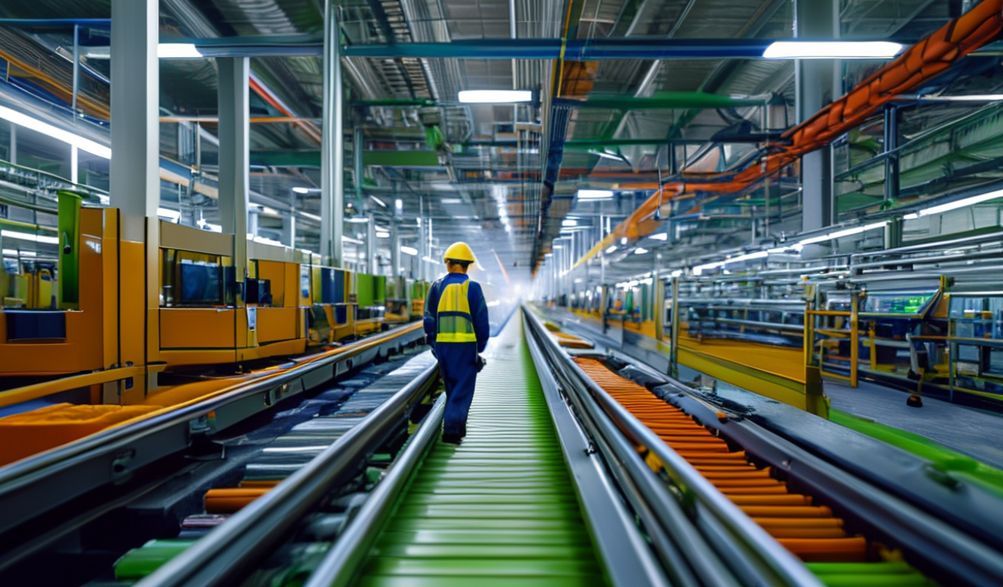
Your Ultimate Guide to Fly Ash Bricks Machine Manufacturers: Inside the FUDA Block Making Factory
Муқаддима
The construction industry stands at a crossroads. As the world urgently seeks sustainable building solutions, one innovation has risen from the ashes—quite literally. Fly ash bricks, crafted from a thermal power plant byproduct, are revolutionizing how we build, turning industrial waste into walls of strength.
Yet, for entrepreneurs and construction firms, a significant challenge emerges: sourcing the right machinery. The market is flooded with options, but finding reliable, efficient, and cost-effective equipment from credible fly ash bricks machine manufacturers can be a daunting task. The wrong choice can lead to production bottlenecks, inferior product quality, and a struggling business.
This guide serves as your expert, transparent resource. We will demystify the machinery landscape, using the operational excellence of the Фабрикаи истеҳсоли блокҳои ФУДА as a benchmark. You will gain a clear understanding of machine types, key selection criteria, and the integrated processes that separate leading manufacturers from the rest. Let’s build a foundation of knowledge for your sustainable venture.
Why Fly Ash Bricks? The Sustainable Construction Revolution
Before investing in machinery, it’s crucial to understand the product’s value. Fly ash bricks are not just an alternative; they represent a fundamental shift toward responsible construction.
Environmental Benefits: Reducing Carbon and Landfill Waste
The primary driver is environmental stewardship. Traditional clay brick manufacturing is energy-intensive, requiring kiln firing that releases significant CO2 and consumes topsoil.
* Истифодаи партов: Fly ash bricks consume millions of tons of fly ash annually, diverting this fine powder from landfills and ash ponds.
* Lower Carbon Footprint: Their production process, especially when using cold bonding techniques, eliminates the need for firing, reducing greenhouse gas emissions by up to 90% compared to clay bricks.
* Conservation of Resources: They preserve fertile topsoil and reduce the mining of raw clay.
Economic Advantages: Cost-Effectiveness for Builders and Manufacturers
Sustainability also makes financial sense.
* Lower Production Cost: Fly ash is often a low-cost or free raw material. The manufacturing process can be more energy-efficient.
* Ҳимояҳои ҳукуматӣ: Many governments promote their use through policies and tax benefits for green building projects.
* For Builders: Lighter weight reduces structural load and can lower steel and cement consumption in a building. Their uniform shape also speeds up construction and reduces mortar use.
Superior Material Properties: Strength, Durability, and Thermal Insulation
These bricks outperform their clay counterparts in several key areas:
* Муқовимати баланди фишорӣ: They consistently achieve high strength (often 75-100 kg/cm² and above), making them suitable for multi-story buildings.
* Excellent Durability: They exhibit low water absorption, leading to better resistance to weathering, frost, and efflorescence.
* Изолятсияи ҳароратии олӣ: Their composition provides better thermal insulation, keeping buildings cooler in summer and warmer in winter, which reduces energy costs.
Understanding Fly Ash Bricks Machinery: Core Types and Technologies
The heart of your plant is the block making machine. Choosing the right type depends on your target production volume, investment capacity, and automation needs.
Fully Automatic Block Making Machines: High-Volume Production
These are the workhorses of large-scale plants and established manufacturers like the FUDA block making factory.
* Workflow: The entire process—from feeding the raw material mix to compaction, vibration, ejection, and pallet transfer—is automated via PLC (Programmable Logic Controller) systems.
* Қисмҳои асосӣ: High-pressure hydraulic systems, robust vibration tables, automated feeder systems, and conveyor belts for moving pallets and bricks.
* Натиҷа: Can produce thousands of bricks per hour (e.g., 4,000-10,000 bricks per 8-hour shift) with minimal manual intervention, ensuring consistent quality and high efficiency.
Semi-Automatic and Manual Machines: Ideal for Startups and SMEs
These models offer a lower entry point into the business.
* Ним-автоматӣ: Key processes like mixing and feeding may be manual, but the core compaction and vibration are machine-powered. Operators handle brick removal and pallet changes. They offer a good balance of output and cost.
* Дастгоҳҳои дастӣ: Lever-operated or simple hydraulic machines where most operations are manual. They have the lowest output but are highly affordable and perfect for small, localized production or market testing.
* Cost-Benefit: Lower initial investment and simpler maintenance, but higher labor costs and lower production volumes.
Essential Auxiliary Equipment: Mixers, Conveyors, and Curing Systems
A machine alone does not make a plant. A complete production line includes:
* Pan Mixer or Concrete Mixer: For homogeneously blending fly ash, sand, lime, gypsum, and water. A consistent mix is critical for brick quality.
* Belt Conveyors: Transport raw material to the mixer and the prepared mix to the block machine hopper, streamlining material flow.
* Системаи шифо This is where bricks gain strength. Systems range from simple covered stacks (water sprinkling) to sophisticated steam curing chambers that accelerate the strength gain process in hours.
* Brick Stacking/Pallet Handling: Equipment to move and stack green (fresh) and cured bricks efficiently.
Inside a Leading Facility: The FUDA Block Making Factory Model
To understand what excellence looks like, we examine the standards set by a leading manufacturer’s operational model.
A Benchmark for Modern Manufacturing
TheФабрикаи истеҳсоли блокҳои ФУДА exemplifies industry authority. With years of operation and a global clientele, it has built a reputation on a foundation of robust engineering and consistent quality. Such manufacturers often hold relevant ISO certifications and their machinery complies with international standards, establishing deep-seated Маъмурияти ҳокимият in the field. Their factory isn’t just a production unit; it’s a live R&D and testing center.
Production Line Walkthrough: From Raw Material to Finished Brick
A seamless, integrated process is key. Here’s a typical workflow in a top-tier setup:
1. Raw Material Silos & Batching: Fly ash, sand, and other aggregates are stored and precisely batched by weight.
2. Омехта кардан Materials move to a high-efficiency mixer for a uniform, consistent blend.
3. Automatic Feeding & Compaction: The mix is conveyed to the fully automatic block machine. It’s fed into molds, subjected to high-frequency vibration and immense hydraulic pressure (often 100+ tons) for dense compaction.
4. Ejection & Pallet Transfer: The freshly formed “green” bricks are ejected onto pallets, which are automatically transferred to a stacker.
5. Шифо додан: Brick stacks are moved to a controlled curing area—often a steam curing chamber for rapid strength development within 24 hours.
6. Testing & Dispatch: Samples from each batch undergo rigorous testing before the cured bricks are sorted and prepared for dispatch.
Quality Control and Testing Protocols at FUDA
Trust is earned through verifiable quality. Reputable manufacturers embed rigorous QC at every stage.
* Incoming Material Check: Testing fly ash fineness and chemical composition.
* In-Process Control: Monitoring mix consistency, moisture content, and brick dimensions right after molding.
* Final Product Testing: This is non-negotiable. A dedicated lab performs:
* Compression Strength Test: Using a compression testing machine to verify bricks meet or exceed required standards (e.g., IS 12894, ASTM C90).
* Water Absorption Test: To ensure durability and weather resistance.
* Dimensional Accuracy Check: Using gauges to ensure uniform size for easy construction.
This unwavering commitment to protocol is the cornerstone of Trustworthiness and Expertise.
Key Criteria for Choosing Fly Ash Bricks Machine Manufacturers
Selecting a partner is a strategic decision. Look beyond the brochure and evaluate these critical factors.
Technical Specifications: Production Capacity, Automation Level, and Power
- Capacity: Match the machine’s output (bricks per hour/shift) to your market demand and growth plans.
- Автоматсозӣ: Decide between fully automatic, semi-automatic, or manual based on your labor availability and capital.
- Талабҳои барқ: Ensure your facility can support the machine’s electrical and hydraulic power needs.
Build Quality and Durability: The Importance of Robust Design and Components
The machine must withstand years of high-pressure operation.
* Фрейм ва сохтор Look for heavy-duty steel fabrication.
* Системаи гидравликӣ: Reputable brands of pumps, valves, and cylinders are a must for reliability.
* Системаи Ларзишӣ: High-frequency, dual-sided vibration motors ensure proper compaction and brick density.
After-Sales Support: Installation, Training, and Spare Parts Availability
Ин ҷо он ҷоестТаҷриба in customer success becomes tangible. The best manufacturers offer:
* On-site Installation & Commissioning: Sending engineers to set up the machine and line.
* Таълими ҳамаҷониба Hands-on training for your operators on machine use, maintenance, and basic troubleshooting.
* Ready Spare Parts Inventory: Guaranteeing the availability of critical spare parts to minimize downtime. Ask about the warranty period and service network.
Cost Analysis: Understanding ROI and Total Cost of Ownership
The cheapest machine is often the most expensive in the long run.
* Initial Investment vs. Long-Term Value: Consider durability, energy efficiency, and output consistency.
* Calculate ROI: Factor in production cost per brick, labor savings from automation, and expected maintenance costs.
* Арзиши умумии моликият: Include installation, training, and potential downtime costs from unreliable equipment.
Beyond the Machine: What Top Manufacturers Like FUDA Offer
Leading fly ash bricks machine manufacturers differentiate themselves by being solution partners, not just equipment sellers.
Customization for Specific Project Needs
They can modify machine molds to produce a variety of products: solid blocks, hollow blocks, paving blocks, interlocking bricks, and more, in different sizes and shapes.
Raw Material Sourcing Guidance and Mix Design Formulas
This is a critical display of Маҳорат. They provide proven, optimized mix design formulas (ratios of fly ash, sand, lime, etc.) for different strength grades and guide you on sourcing consistent-quality raw materials locally.
Plant Layout and Setup Consulting Services
They offer expert advice on the optimal layout for your factory floor to ensure a smooth, efficient material flow from raw material storage to finished product dispatch, maximizing productivity and safety.
Frequently Asked Questions (FAQ) About Fly Ash Brick Machines
Q1: What is the average cost of setting up a fly ash brick plant with machinery from a manufacturer like FUDA?
Costs vary widely based on scale and automation. A small semi-automatic plant can start from $30,000 – $50,000, while a fully automatic, high-capacity production line can range from $100,000 to $300,000 or more, excluding land and shed costs. Reputable manufacturers provide detailed project reports with breakups.
Q2: How much maintenance do these machines require, and is training provided?
Daily cleaning and weekly checks (hydraulic oil, vibrations) are essential. Major servicing is typically annual. Yes, comprehensive on-site training for operation and maintenance is a standard offering from established manufacturers to ensure your team is self-sufficient.
Q3: What is the typical production output (bricks per hour) of a standard automatic machine?
A standard fully automatic machine can produce between 1,500 to 3,000 bricks per hour, depending on the block size and machine model. For example, a machine making 4-block molds per cycle with a 15-second cycle time can produce ~960 bricks per hour.
Q4: Can the machines produce different types and sizes of blocks?
Absolutely. By changing the mold in the machine, the same press can produce solid bricks, hollow blocks (for load-bearing and partition walls), pavers, and even interlocking blocks for landscaping. Discuss your product portfolio with the manufacturer.
Q5: How do I ensure the quality of fly ash bricks produced meets industry standards?
Partner with a manufacturer whose machines are designed for consistent output. Then, establish an in-house lab for daily testing of compression strength and water absorption as per relevant standards like IS 12894 in India or ASTM C90. Reputable manufacturers will help you set up these quality control protocols.
Conclusion
Embarking on a fly ash brick manufacturing venture is a strategic move toward a profitable and sustainable future. The cornerstone of this success lies in partnering with reputable fly ash bricks machine manufacturers who offer more than just equipment—they provide proven technology, integrated solutions, and unwavering support.
By understanding the rigorous processes and high standards embodied by a leading Фабрикаи истеҳсоли блокҳои ФУДА, you gain a clear model for what to seek: operational efficiency, embedded quality control, and deep technical expertise. Prioritize manufacturers who demonstrate this holistic Таҷриба, Ихтисос, Эътибор ва Эътимодноки (E-E-A-T).
Your Next Step: Ready to translate this knowledge into action? Contact a trusted manufacturer today to request a detailed plant proposal, discuss your specific needs, and schedule a visit to their factory to see excellence in motion.
<