
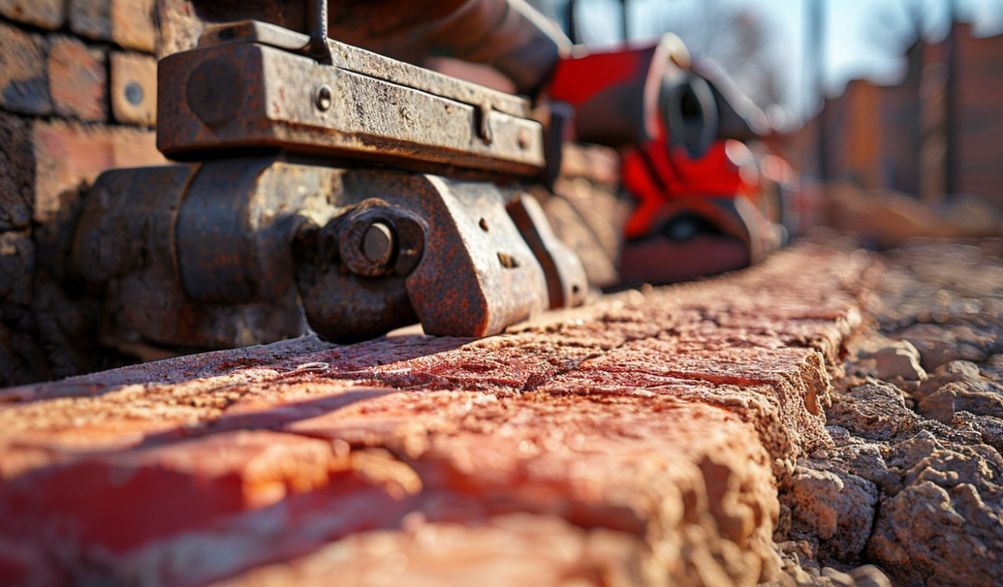
The Complete Guide to Manual Brick Laying Machines: Efficiency Meets Craftsmanship
For generations, the rhythm of masonry has been set by the trowel: the scoop of mortar, the placement of the brick, the tap into alignment, and the scrape of excess. It’s a skilled craft, but one that takes a profound physical toll. If you’re a mason, builder, or contractor, you know the reality all too well—the aching back at the end of a long day, the challenge of maintaining perfect consistency over a long wall, and the constant pressure to complete projects faster without sacrificing quality. You’ve likely seen the futuristic, fully automated robotic bricklayers, but their astronomical price tags and complexity make them a fantasy for most job sites.
There is a middle ground. Enter the manual brick laying machine, an innovative tool that brilliantly bridges the gap between traditional hand tools and unattainable automation. It’s not a robot that replaces you; it’s a mechanical partner that empowers you.
This definitive guide synthesizes insights from seasoned masonry professionals, hands-on equipment reviews, and practical operational knowledge. We’ll cut through the marketing hype to give you a clear, trustworthy look at what manual brick laying machines are, how they work, and whether they’re the right investment to enhance productivity, quality, and well-being on your projects.
What is a Manual Brick Laying Machine? (Understanding the Tool)
At its core, a manual brick laying machine is a mechanical aid designed to assist a mason in the precise and rapid placement of bricks or blocks. It systematizes the most repetitive and physically demanding parts of the process, allowing human skill to be directed more effectively.
Core Definition and How It Differs from Full Automation
Think of it as a sophisticated, precision jig or guide, not an autonomous robot. The key distinction lies in human involvement:
- Manual Machine: The operator is in full control. You apply the mortar, load the bricks into the machine, and activate a lever or mechanism. The machine then ensures the brick is placed at the exact height and alignment every time. You move the machine along the wall as you work.
- Fully Automated Robotic System (e.g., SAM100, Hadrian X): These are computer-programmed, self-contained units that can mix mortar, pick bricks from a pallet, and lay them according to a digital blueprint with minimal human intervention. They represent a massive capital investment and are suited for large-scale commercial projects.
The manual machine is the practical, accessible innovation for the everyday professional.
Принципи асосии корӣ
Most manual bricklaying machines operate on a familiar “clamp and guide” principle:
- Setup: A straight guide rail or track is positioned and leveled along the line of the wall to be built.
- Истифодаи Морт: The mason spreads a bed of mortar on the course below, often using a notched trowel or a dedicated mortar board accessory for perfect consistency.
- Боркунӣ: A brick is placed into a clamping mechanism on the machine.
- Ҷойгиркунӣ: The operator pulls a lever. The machine lowers the brick directly onto the mortar bed, ensuring a perfectly level position with a consistent joint thickness (typically controlled by adjustable gauges).
- Release & Advance: The clamp releases, and the machine is slid forward along the guide rail to the next position.
The human provides the mortar, the bricks, and the motive force. The machine provides unerring precision and eliminates the constant measuring and adjusting.
Key Advantages of Using a Manual Bricklaying Machine
Adopting this tool isn’t about cutting corners; it’s about working smarter. The benefits directly address the core challenges of traditional bricklaying.
Dramatically Increased Laying Speed
By eliminating the minute adjustments for each brick, the process becomes a rapid, repeatable cycle.
* Quantifiable Gains: While dependent on the operator and conditions, productivity increases of 30-50% are commonly reported. A skilled crew can transition from laying 300-500 bricks per day manually to 500-800 or more with a machine.
* Flow State: The reduced decision-making and physical adjustment for each brick allows masons to find a sustainable, efficient rhythm, significantly accelerating project timelines.
Enhanced Precision and Structural Integrity
Consistency is the bedrock of quality masonry, and this is where the machine excels.
* Perfect Joints: Every bed joint is uniform in thickness, which is critical for even load distribution and wall strength.
* Flawless Alignment: The guide system ensures every brick is laid perfectly straight and plumb, resulting in a professional finish that requires less remedial work.
* Less Waste: Precise mortar application reduces squeeze-out and waste, saving on material costs.
Reduced Physical Strain and Labor Fatigue
This is a major benefit for workforce health and longevity.
* Ergonomic Design: The machine eliminates the constant, deep bending to place and tap each brick. The working height is more controlled.
* Reduced Repetitive Stress: It minimizes the strain on wrists, shoulders, and the lower back, helping to prevent chronic injuries common in the trade.
* Sustainable Workforce: By making the job less physically punishing, you help retain skilled masons and maintain a higher level of energy and focus throughout the workday.
Cost-Effectiveness for Small to Medium Projects
The value proposition is compelling for most contracting businesses.
* Дастрасии осон ба воридшавӣ: Compared to six- or seven-figure automated robots, manual machines are a fraction of the cost, often comparable to a set of high-quality power tools.
* Fast ROI: The investment can be recouped quickly on a single sizable project through labor hour savings and earlier completion.
* Minimal Operating Cost: They require no software, programming, or specialized fuel—just basic maintenance.
Limitations and Considerations
A manual brick laying machine is a powerful tool, not a magic wand. Understanding its constraints is key to successful adoption.
Not a “Set and Forget” Solution: The Skill Factor
The machine amplifies skill; it does not create it.
* Mortar Mastery is Key: The operator must still mix mortar to the perfect, workable consistency. Too dry and it won’t bond; too wet and it will slump or stick to the mechanism.
* Setup is Critical: Accurate installation and leveling of the guide rails are paramount. A mistake in setup leads to a mistake in the entire wall run.
* The Mason is Still in Charge: Judgment calls on site conditions, cutting bricks for ends, and finishing work remain entirely in the hands of the craftsman.
Project Suitability and Design Constraints
These machines have a “sweet spot.”
* Идеалӣ барои: Long, straight runs of standard-sized brick or block. Think foundation walls, partition walls, boundary walls, and straightforward residential exteriors.
* Challenging For: Complex curves, very short wall segments, intricate patterns (like herringbone), or stone veneers. Corners and pillars usually require manual finishing, though some systems offer accessory jigs.
Initial Learning Curve and Setup Time
There is an adaptation period.
* Crew Training: Your team will need time to learn the new workflow, from setup to operation. The first day with the machine may not be faster than traditional methods.
* Setup Investment: Properly aligning the system takes time at the start of a wall. This time is paid back over the length of the run, making it less efficient for very short walls.
How to Choose the Right Manual Brick Laying Machine
Selecting the right tool requires matching it to your specific needs. Here’s a framework for your decision.
Assessing Your Project Needs: Scale, Brick Type, and Frequency
Худ пурсед:
* Масштаби Лоиҳа: Are you primarily doing residential extensions, commercial blockwork, or garden walls?
* Мавод What is the standard brick or block size you use most often?
* Frequency: Will this be used daily, weekly, or only on a few projects a year? This affects your durability needs and budget.
Critical Features to Compare
When evaluating models, pay close attention to these aspects:
Adjustability (for different brick dimensions and joint thickness)
- The best machines offer easy, tool-free adjustments to accommodate different brick heights, lengths, and to set your desired mortar joint thickness (e.g., 10mm, 12mm).
Build Quality and Durability (materials, weld quality)
- Look for robust steel construction, clean welds, and hardened components at wear points. This is a tool that will be exposed to mortar, moisture, and job-site handling.
Portability and Ease of Setup
- Consider the total weight and whether it breaks down into manageable components. A system that’s too cumbersome to move around a site will be left in the truck.
Compatibility with Accessories
- Check for available add-ons like mortar boards for perfect mortar beds, extension rails for longer runs, or corner guides. A good ecosystem of accessories adds long-term value.
Top Brands and Models Overview (A Neutral Comparison)
While models evolve, several brands have established reputations. Here’s a neutral overview:
| Brand / Model Example | Key Features | Ideal Use Case |
| :— | :— | :— |
| Tiger Brand | Known for robust, simple designs. Often praised for durability and straightforward operation. | High-frequency use on standard brick and block work. Suits contractors who need a reliable workhorse. |
| EZ Brick | Often emphasizes user-friendly adjustments and portability. Some models feature compact designs. | Residential builders and masons who need a tool that is easy to transport and set up on varied job sites. |
| Similar Regional Brands | Many countries have local manufacturers. They may offer good value and local parts/service support. | For those prioritizing local availability and support over international brand recognition. |
Always seek recent user reviews and, if possible, a live demonstration before purchasing.
Best Practices for Operation and Maintenance
To get the most from your investment, proper operation and care are essential.
Step-by-Step Setup and Operation Guide
- Site Prep: Ensure a clean, stable, and level base for your guide rails.
- Guide Alignment: Securely position and level the guide rail system along the entire planned run of the wall. Double-check for straightness and plumb.
- Mortar Mixing: Mix mortar to a consistent, plastic state—it should hold its shape but be easily workable.
- Machine Setup: Adjust the machine’s clamps and depth gauges for your specific brick and joint size. Perform a test lay on a dummy section.
- The Laying Cycle: Establish a rhythm: apply mortar to the course, load brick into clamp, activate placement lever, release, slide forward, repeat. A helper supplying bricks and mortar is highly recommended.
Essential Maintenance for Longevity
- Daily Cleaning: This is non-negotiable. At the end of each workday, thoroughly clean all mortar from the clamps, guides, and adjustment mechanisms before it hardens. Use water and a brush.
- Молидани равған Regularly apply a light machine oil or dry lubricant (like silicone spray) to all moving pivot points and sliding surfaces to prevent rust and ensure smooth operation.
- Inspection: Periodically check for loose bolts, worn clamps, or bent components.
- Storage: Store the machine and rails in a dry place, off the ground.
Common Troubleshooting Tips
- Bricks Misaligned: Re-check the level and straightness of your guide rail. Ensure the mortar bed is consistent.
- Mortar Sticking to Mechanism: Your mortar is likely too wet. Adjust mix. Clean the mechanism more frequently during work.
- Difficulty Releasing Brick: Ensure the release mechanism is clean and lubricated. Check for mortar buildup in the clamp jaws.
Frequently Asked Questions (FAQ)
Q: Can one person operate a manual brick laying machine?
A: Yes, most are designed for single-operator use. However, efficiency is maximized with a two-person crew: one operating the machine and another supplying mortar and bricks.
Q: What is the actual production rate I can expect?
A: It varies widely by operator skill, wall complexity, and conditions. A realistic range for a skilled operator is 500-800 standard bricks per day, compared to a traditional rate of 300-500.
Q: Is special mortar required?
A: No, standard site-mixed mortar is used. The critical factor is consistency—it must be well-mixed and of a stable, plastic texture to work correctly with the machine.
Q: Can it be used for corners and pillars?
A: Most standard machines are optimized for straight runs. Corners, pillars, and complex junctions are typically started and finished manually. Some systems offer specialized corner accessories or jigs.
Q: Where can I get training on using one?
A: Start with the manufacturer’s instructional videos and manual. Many equipment suppliers offer in-person demonstrations. Masonry trade associations or vocational schools may also host workshops on innovative tools and techniques.
Conclusion
The manual brick laying machine stands as a testament to smart innovation in a timeless trade. It doesn’t render skill obsolete; it liberates that skill from the burdens of extreme repetition and physical strain. For contractors, masons, and builders facing repetitive straight-wall projects, this tool offers a compelling value proposition: significantly boosted speed, guaranteed precision, improved worksite ergonomics, and a cost-effective path to greater profitability.
The pragmatic approach is to see it as a strategic investment. Consider renting a model for a trial project to gauge its impact on your specific workflow. Consult directly with equipment suppliers and talk to fellow masons who have adopted the technology. This guide, rooted in practical expertise and professional insight, aims to equip you with the knowledge to make that informed decision.
Embrace the tools that enhance the craft. By integrating the precision of engineering with the enduring skill of the mason, you’re not just building walls faster—you’re building a stronger, more sustainable future for your business and your team.
<