
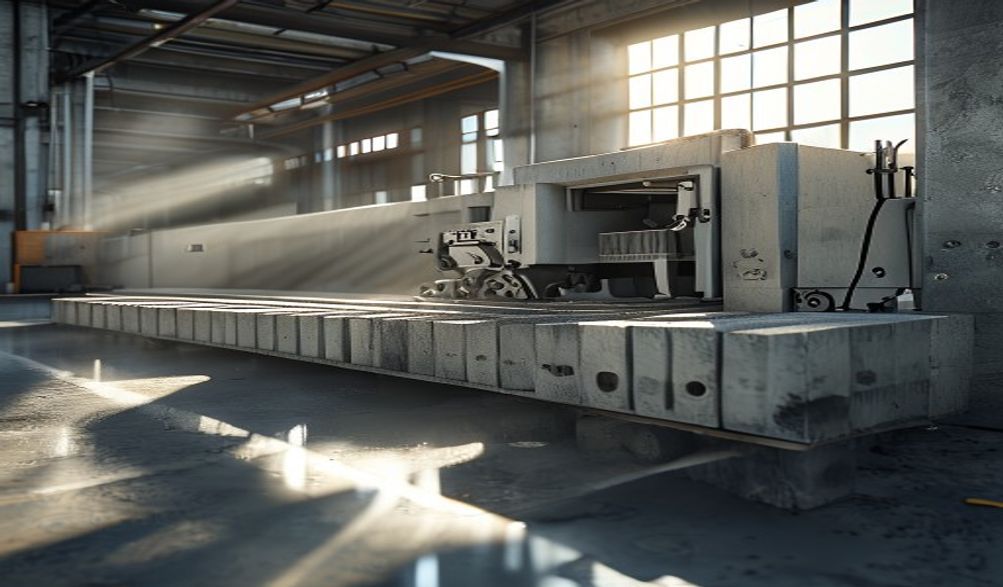
Роҳнамои харидории комил барои интихоби мошини хишт ва блоксозӣ
Муқаддима
Муваффақияти ҳар як лоиҳаи сохтмонӣ ё корхонаи истеҳсолӣ аксар вақт аз як қарори муҳим, ки хеле пеш аз гузоштани хишти аввал гирифта мешавад, вобаста аст: интихоби мошини дуруст. Интихоби мошини идеалии хишт ва блок на танҳо харидорӣ аст; ин сармоягузорӣ ба сифати лоиҳа, даромаднокии тиҷорат ва самаранокии амалиётии шумо барои солҳои оянда мебошад. Интихоби нодуруст метавонад ба маҳсулоти пастсифат, бозистии харобкунанда ва фишори молиявӣ оварда расонад.
Ин роҳнамоии мукаммал аз таҷрибаҳои беҳтарини соҳавӣ, таҳлили амиқи техникӣ ва бинишҳое, ки дар тӯли солҳо дар соҳаи таҷҳизоти сохтмон ва истеҳсолот ҷамъ оварда шудаанд, гирифта шудааст. Ҳадафи мо табдил додани қарори мураккаб ва эҳтимолан душвор ба раванди равшан, мантиқӣ ва қадам-ба-қадам мебошад.
То охири ин дастурамал, новобаста аз он ки шумо як сохтмончии хурд, мудири ширкати сохтмонии миёна ё соҳибкоре ҳастед, ки тиҷорати истеҳсоли блокҳоро оғоз мекунед, шумо омилҳои асосиро – аз ҳаҷми лоиҳа ва намуди мошинҳо то сатҳи автоматӣ ва санҷиши таъминкунандагон – дарк хоҳед кард, то сармоягузории бовариноку огоҳона анҷом диҳед.
Фаҳмидани Талаботи Лоиҳаи Шумо: Асоси Интихоби Шумо
Шумо наметавонед асбоби дурустро интихоб кунед, бе он ки аввал корро муайян кунед. Гузаштан аз ин қадами асосӣ хатои маъмултарин ва пурхароҷотест, ки харидорон мекунанд. Ниёзҳои мушаххаси лоиҳаи шумо ҳар як интихоби баъдиро муайян мекунанд.
Арзёбии ҳаҷми истеҳсолот ва андозаи он
Талаботи шумо омили асосии намуди мошин, андоза ва арзиши он мебошад. Дар арзёбии худ бераҳмона воқеъбин бошед.
- Миқёси хурд/Истифодаи шахсӣ:Барои сохтани хонаи худ, иншооти хурди хоҷагӣ ё лоиҳаҳои гурӯҳии гоҳ-гоҳе. Истеҳсол метавонад дар як рӯз 500-1500 блок бошад. Дастрасии қувваи корӣ ва арзиши ками сармоя аксар вақт нисбат ба суръати холис афзалият доранд.
- Medium-Scale / Commercial Supply: For a business supplying local builders, contractors, or retailers. Daily output targets typically range from 2,000 to 10,000 blocks. Here, consistency, reliability, and a balance between automation and cost become critical.
- Истеҳсоли васеъ / саноатӣ: For supplying major construction projects or operating a large factory. Output can exceed 15,000 blocks per day. The focus shifts to maximum automation, minimal labor dependency, and integration with batching plants and handling systems.
муайян кардани маҷмӯи маҳсулоти худ
What will you actually produce? The machine must be capable of forming your desired products to the required standard.
- Навъҳои блокҳо: Hollow blocks (for reduced weight and material cost), solid blocks (for strength), paving slabs (for landscaping), and specialized interlocking blocks (for dry-stack walls).
- Навъҳои хишт: Concrete bricks, clay bricks (requiring kilns), or environmentally friendly fly ash bricks.
- Dimensions & Shapes: Standard sizes (e.g., 4″, 6″, 8″) or custom dimensions? Will you need to frequently change molds to produce a variety of products for different clients?
Таҳлили дастрасии маводи хом
The machine is only one part of the equation. The raw materials you have access to will determine the mix design and the machine’s required capabilities.
- Local Compatibility: What is the quality and gradation of your local sand, aggregates, and soil? Is fly ash or slag readily available? The machine must be able to effectively compact the specific mix you will use.
- The Critical Step of Testing: Never assume compatibility. Always test your raw material mix with a proposed machine’s settings (either via manufacturer data or, ideally, a live demonstration) to ensure it produces a block with the required compressive strength, finish, and density.
Навъҳои асосии машинаҳои сохтани хишт ва блок
Machines fall into three broad categories defined by their level of automation. Choosing the right category is your second major decision.
Manual or Hand-Operated Machines
These are simple, mechanical presses where all operations—filling, compacting, and ejecting—are performed by hand.
- Истифодаи Идеалӣ: Extremely low-budget startups, remote locations with no reliable power, or projects with very sporadic, low-volume needs.
- Муҳоҷизот: Very low initial investment, simple to understand and repair, no power required.
- Манфӣҳо Very high labor intensity, low and inconsistent output, product quality heavily dependent on operator skill, physically demanding.
Машинаҳои ним-автоматӣ
This category represents the optimal balance for most small-to-medium enterprises (SMEs). The core compaction and ejection process is powered (usually by an electric motor and hydraulic system), but tasks like feeding raw material and removing finished blocks are manual.
- Нуқтаи Ширин: Offers a significant productivity boost over manual machines without the massive capital leap to full automation. Perfect for businesses with steady, predictable demand.
- Амалиёт: Operators feed the mix into the hopper, and the machine automatically vibrates, compacts, and ejects the block onto a pallet or the ground. The blocks are then moved manually for curing.
- Тавозун Provides excellent flexibility for mold changes, manageable operational costs, and a good foundation for growth.
Мошинҳои комилан автоматӣ
These are integrated production lines designed for maximum output with minimal manual intervention.
- For High-Volume Consistency: Essential for large-scale projects or factories where labor costs and production consistency are paramount.
- Қисмҳои асосӣ: Include automatic mix feeders, conveyor belts, pallet circulation systems, and block stackers. The entire process from raw material input to stacked, cured blocks is mechanized.
- Мулоҳизаҳо Requires a substantially higher initial investment, consistent raw material feed, reliable high-capacity power, and more spacious infrastructure. The return comes from unparalleled output and lower per-unit labor costs.
Key Technical Specifications and Features to Evaluate
Once you’ve narrowed the type, dive into the technical details. These specs directly impact performance, cost, and suitability.
Machine Capacity and Output
Beware of misleading claims. Scrutinize the terminology.
- Cycles per Hour vs. Blocks per Hour: A machine may perform 1,000 cycles per hour, but if its mold only produces 3 blocks per cycle, its output is 3,000 blocks per hour. Always calculate the blocks per hour figure.
- Mold Size & Configuration: How many blocks does the mold produce in one cycle? Can the mold be easily changed to a different configuration? The versatility of the mold system is a key feature.
Pressure and Compaction Force
This is the heart of block quality. Proper compaction ensures density, strength, and a good surface finish.
- Vibration & Pressure: Machines use vibration to settle the mix and hydraulic pressure to compress it. The required force (measured in kN or tons) depends on your block type.
- Material Dictates Force: Lightweight aerated or fly ash blocks require different compaction strategies than dense, heavy aggregate blocks. Ensure the machine’s system is designed for your specific mix.
Power Source and Consumption
Power affects where you can operate and your ongoing running costs.
- Моделҳои барқӣ: Most common for semi and fully automatic machines. Clean, efficient, but require a stable grid connection.
- Моделҳои дизелӣ: Offer mobility and independence from the electrical grid, crucial for remote site work. However, they have higher fuel costs, require ventilation, and need more maintenance.
- Моделҳои ҳибридӣ: Some offer electric power with a diesel backup. Calculate operational costs based on your local electricity and diesel prices over an estimated annual runtime.
Mobility and Footprint
Consider your site constraints.
- Дастгоҳҳои Сокин Typically higher-capacity units fixed in a factory setting. They form the core of a permanent production line.
- Машинаҳои сохтмонии блокҳои мобилӣ: Mounted on a trailer, these can be towed directly to a construction site to produce blocks on-location, saving massively on transport costs for large projects.
- Space Planning: Account for more than just the machine’s footprint. You need ample space for material storage, the production area, and a dedicated curing yard where blocks can gain strength for 7-14 days.
Beyond the Machine: Essential Supporting Factors
The machine itself is only part of the ecosystem. Ignoring these factors risks your entire investment.
The Importance of Mold Quality and Design
The mold is the interface that shapes your product. A poor mold will ruin the output of the best machine.
- Steel Grade & Hardness: Molds must be made from high-grade, hardened steel to resist the abrasive concrete mix. Look for precision machining for sharp corners and smooth finishes.
- Replacement & Cost: Molds are wear items. Inquire about the cost, availability, and lead time for replacement molds. A cheap machine with prohibitively expensive molds is a false economy.
After-Sales Support and Service
Ин ҳарҷигузорӣ нест. A machine without support is a future scrap metal.
- Дастрасии қисмҳои эҳтиётӣ: Is there a local parts depot or a guaranteed shipping time for critical spares? Can you get a spare parts list and price catalog?
- Дастгирии техникӣ: Does the supplier provide clear manuals (in your language), wiring diagrams, and access to technical support by phone or video?
- Warranty: Read the warranty terms carefully. What is covered (parts, labor)? For how long? What are the conditions (must use their technician for installation?).
Supplier Reputation and Vetting
You are buying from a company, not just a machine.
- Research: Investigate the manufacturer’s history, years in business, and client testimonials. Search for independent reviews or forum mentions.
- Request References: Ask the supplier for contact information of 2-3 clients in a similar business who have used the machine for at least a year. Call them.
- Сертификатҳо: Look for evidence of quality management and safety standards, such as CE marking (for the European market), which indicates compliance with essential health and safety requirements.
Financial Considerations and Total Cost of Ownership
Look beyond the sticker price to understand the true cost of ownership.
Initial Investment vs. Long-Term Value
The purchase price is just the beginning.
* Total Cost Includes: Machine price, shipping, insurance, import duties (if applicable), installation, commissioning, and initial operator training.
* Value Over Price: A slightly more expensive machine from a reputable supplier with better efficiency and support will almost always provide greater long-term value than the cheapest option.
Operational and Maintenance Costs
These are your recurring expenses that determine profitability.
* Key Cost Drivers: Labor wages, electricity/fuel consumption, routine maintenance (greasing, filter changes), and planned replacement of wear parts (mold liners, hydraulic seals, vibrator motors).
Calculating Return on Investment (ROI)
Create a simple financial projection.
1. Estimate your annual production volume (blocks/year).
2. Determine your average selling price per block in your local market.
3. Calculate your total annual revenue (Volume x Price).
4. Subtract your total annual costs (Raw Materials + Labor + Power + Maintenance + Depreciation).
5. The profit can be used to calculate your payback period (Machine Total Cost / Annual Profit).
This exercise forces you to model your business realistically and justifies the investment.
FAQ Section
Q1: What is the average cost range for a brick making machine?
A: The range is vast, from around $1,000 for a basic manual pressба$100,000+ for a sophisticated fully automatic production line. Semi-automatic machines, the most popular for SMEs, typically range from $10,000 to $50,000, heavily dependent on capacity, features, and brand. Your specific project needs will dictate where you fall on this spectrum.
Q2: Can one machine produce different types of blocks and bricks?
A: Yes, absolutely. This is achieved by changing the mold. The ease of this process varies: manual machines have simple mold swaps, while semi-automatic machines may require a more involved but manageable changeover. Fully automatic lines can have automated mold changers, but these are complex and expensive. Always ask about the cost and lead time for additional molds.
Q3: How much space do I need to operate a block-making machine?
A: You need two types of space. First, the production shed for the machine itself, material storage, and a mixing area—this could be as small as 500 sq. ft. for a semi-auto machine. Second, and often larger, is the curing yard, where blocks are stored for 2+ weeks to gain strength. For a medium-scale operation, a total area of 5,000-10,000 sq. ft. is a common starting point.
Q4: What is the most common reason for machine failure or poor block quality?
A: The root cause is almost always improper raw material mix (wrong ratios, wet/dry inconsistency, oversized aggregate) or inconsistent maintenance (failure to lubricate, clean, or tighten components). The machine is a precision tool; it requires correct input and regular care to perform optimally.
Q5: How do I choose between a new and a used machine?
A: A used machine can offer significant upfront savings. However, weigh the pros (lower cost) against the cons: unknown service history, potential hidden wear, likely expired or non-existent warranty, and difficulty obtaining parts or support. We recommend buying used only if you can have it inspected by an independent mechanic, purchase it from a very reputable dealer, and ensure spare parts are still available.
Conclusion
Choosing the right brick and block making machine is a systematic journey: Define Your Needs → Select the Machine Type → Scrutinize Technical Specs & Supplier → Analyze the True Costs. This guide serves as your roadmap.
As your final step before purchasing, insist on a live product demonstration using a raw material mix similar to yours. Obtain detailed, written quotations that break down all costs. Most importantly, never compromise on after-sales service and support; it is the safety net for your investment.
Use this guide as a checklist when evaluating your options. The right machine is more than equipment; it’s a long-term partner in building quality structures and a sustainable, profitable business. Make your choice with clarity and confidence.
<