
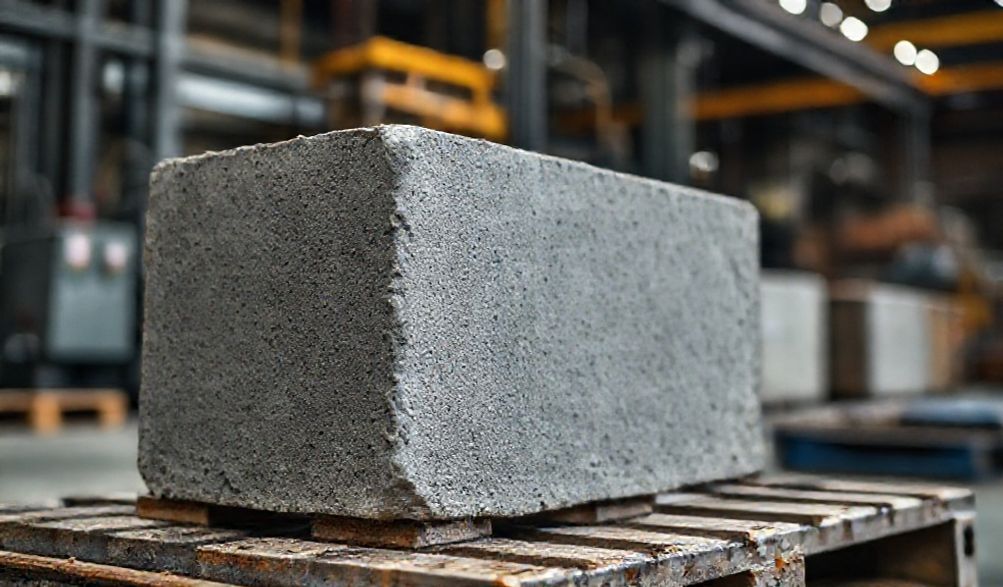
How Are Concrete Blocks Made? A Step-by-Step Guide to Modern Manufacturing
Look around any city or town, and you’ll see them forming the bones of our built environment. From the foundations of our homes to the soaring walls of commercial buildings, concrete blocks—technically known as Concrete Masonry Units (CMUs)—are a fundamental component of modern construction. They seem simple, almost rudimentary. Yet, the journey from raw, quarried materials to a precision-engineered building block is a fascinating blend of material science, mechanical engineering, and rigorous quality control.
This isn’t a haphazard process of mixing and drying. Modern block manufacturing is a highly calibrated operation designed to produce units of consistent strength, dimension, and durability. Understanding how concrete blocks are made reveals why they are such a trusted material for creating safe, resilient, and lasting structures. This guide will demystify that process, drawing on established industry standards from organizations like ASTM International and the National Concrete Masonry Association (NCMA) to provide an authoritative, step-by-step walkthrough.
The Core Ingredients: What Goes Into a Concrete Block?
Before the first block is formed, it begins with raw materials. The specific recipe determines the block’s final weight, strength, insulation properties, and appearance. A high-quality block is the product of high-quality, properly proportioned ingredients.
Cement: The Binding Agent
Portland cement is the essential glue that holds a concrete block together. It’s a fine powder, manufactured from limestone, clay, and other minerals heated in a kiln.
- When mixed with water, it undergoes a chemical reaction called ободшавӣ, forming a crystalline matrix that binds the aggregates into a solid mass.
- For block production, specific types of Portland cement (like Type I or Type II) are used, chosen for their reliable setting time and final strength characteristics.
- In many modern mixes, supplementary cementitious materials (SCMs) like fly ash or slag cement are used to replace a portion of the Portland cement. This enhances durability, improves workability, and reduces the environmental footprint of the block.
Aggregates: The Bulk and Strength
Aggregates make up roughly 60-75% of a block’s volume, providing bulk, dimensional stability, and compressive strength.
- Primary Aggregates: These include natural materials like sand, gravel, and crushed stone. They are selected for hardness, cleanliness (free of clay or organic matter), and proper gradation—a mix of particle sizes that packs together densely.
- Lightweight Aggregates: For blocks where weight or thermal insulation is a priority, manufacturers use expanded shale, clay, or slate. These aggregates are kiln-fired until they “pop” like popcorn, creating tiny, sealed air pockets within the aggregate itself, resulting in a lighter, more insulating block.
Water: The Essential Reactant
Water is far more than just a mixing agent; it’s the catalyst for the hydration reaction.
- Thewater-cement ratio is a critical factor. Too little water, and the cement cannot fully hydrate, leading to weak, dusty blocks. Too much water makes the mix too soupy to hold its molded shape.
- Water quality matters. It must be clean and free of excessive impurities, oils, or acids that could interfere with the curing process or corrode the steel machinery.
Optional Admixtures & Additives
To achieve specific performance or aesthetic goals, manufacturers integrate small doses of specialized chemicals:
- Color Pigments: Integral color, typically from iron oxide pigments, is added to the mix for consistent, fade-resistant hues in architectural blocks.
- Air-Entraining Agents: These create microscopic, stable air bubbles within the concrete, dramatically improving resistance to freeze-thaw cycles in cold climates.
- Water-Reducers/Plasticizers: These allow for a lower water content while maintaining workability, resulting in a denser, stronger block.
The Concrete Block Manufacturing Process: A Detailed Walkthrough
The transformation from dry powder and rock to a finished block is a continuous, highly automated sequence. Here’s how it happens in a modern plant.
Step 1: Batching and Mixing
Precision starts here. Raw materials are stored in large silos and bins. Computer-controlled scales batch out exact proportions of cement, aggregates, and any additives into a mixer.
- The goal is a “no-slump” or “zero-slump” concrete. Unlike the pourable concrete used for slabs, block mix is very dry and crumbly. It must hold its molded shape the instant it’s formed.
- High-speed, pan-type or paddle mixers blend the materials with a precise amount of water for 6-8 minutes, achieving a uniform, homogeneous mix that resembles damp gravel.
Step 2: Molding and Compaction
This is the heart of the operation. The mixed concrete is fed into a large, automated block machine.
- The no-slump mix is conveyed into a hopper above the machine.
- The mix drops into multiple steel molds (or boxes) on a moving pallet. The mold’s interior shape defines the block’s size and whether it will be solid or hollow.
- In a matter of seconds, two critical actions happen simultaneously:
- Ларзиши Баланд-Басират: The mold is vibrated intensely, causing the concrete particles to settle and eliminate air gaps.
- Фарсудан: A hydraulic press or “head” comes down and applies substantial pressure (hundreds of pounds per square inch) to the mix, further densifying it.
- This combination of vibration and pressure is what gives the block its initial “green strength” and dense, durable final structure.
Step 3: Curing: Where Strength Develops
Freshly molded blocks, now called “green” blocks, are too fragile to handle. Curing is the controlled process that gives them their engineered strength.
- Low-Pressure Steam Curing (Kiln Curing): This is the most common method. Pallets of green blocks are automatically moved into a large, humidity-controlled curing chamber or kiln.
- Steam is introduced, raising the temperature to about 140-180°F (60-80°C) in a saturated environment.
- This warm, moist environment accelerates the hydration process dramatically. Blocks achieve sufficient handling strength in 12 to 24 hours, compared to the weeks it would take to air-cure.
- High-Pressure Steam Curing (Autoclaving): Used for aerated concrete or some specialty blocks, this process uses pressurized steam vessels (autoclaves) at higher temperatures to create specific chemical properties.
Step 4: Cubing and Packaging
Once cured, the blocks are de-molded and ready for finishing.
- They are automatically stacked onto large wooden or steel pallets, a process called cubing.
- The cubes are wrapped with plastic or steel straps for stability.
- They are then moved to the storage yard, where they continue to hydrate and gain strength over the next 28 days before being shipped to construction sites.
Types of Concrete Blocks and Their Specific Manufacturing Twists
The basic process adapts to create a wide variety of block types for different applications.
Hollow vs. Solid Load-Bearing Blocks
- The hollow cores are created by mold inserts—steel shapes in the mold that leave empty spaces.
- These cores reduce weight, improve insulation, and provide a continuous vertical channel for placing steel rebar and grout in reinforced masonry walls.
- Solid blocks are simply made with molds that lack these inserts and are used where maximum density or bearing surface is needed.
Specialty and Architectural Blocks
- Split-Face Blocks: After curing, a solid block is mechanically split along a scored line with a blade and hammer. This reveals a rough, natural stone-like texture on the face.
- Scored, Ribbed, or Patterned Blocks: Special liners inside the mold imprint decorative patterns directly onto the block face during molding.
- Lightweight Blocks: As mentioned, these are created by substituting traditional aggregates with expanded shale or clay.
Paving Stones and Retaining Wall Units
These are cousins of the standard CMU, manufactured with some key differences:
- Higher-Strength Mixes: They use smaller aggregate gradations and a lower water-cement ratio for greater density and wear resistance.
- Specialized Curing: Often cured longer or under specific conditions to maximize early strength.
- Face Mix Designs: Many pavers have a thin layer of colored, fine-aggregate mix applied to the mold surface before the main mix is added, creating a durable, decorative finish.
Quality Control and Testing: Ensuring Reliability
Trust in concrete blocks isn’t assumed; it’s verified through relentless testing. Reputable manufacturers adhere to strict standards to ensure every batch performs as expected.
Adherence to Standards (ASTM C90, C140)
In the United States, the benchmark for concrete block quality is set by ASTM International.
- ASTM C90 specifies requirements for loadbearing concrete masonry units, including minimum compressive strength, maximum water absorption, and dimensional tolerances.
- ASTM C140 outlines the standard test methods for sampling and testing concrete masonry units.
Common Factory Tests
- Compressive Strength Testing: Sample blocks from a production run are crushed in a hydraulic press to measure the load (in pounds per square inch, or psi) they can withstand before failure. This is the most critical test for structural integrity.
- Dimensional Tolerance Checks: Blocks are measured to ensure they are within the allowable variance (typically ±1/8 inch) for length, height, and width. Consistency is key for straight walls and proper mortar joints.
- Absorption Testing: Blocks are dried, weighed, soaked in water for 24 hours, and weighed again. The weight gain indicates porosity, which affects durability, insulation, and paint adhesion.
Frequently Asked Questions (FAQ)
What is the difference between concrete blocks and cinder blocks?
This is a historical distinction. Cinder blocks were an early-20th century product that used industrial by-products like coal cinders or ash as the primary aggregate. They were lighter and had better insulation but were less strong and durable. Modern concrete blocks use stone aggregates like sand and gravel, making them stronger, more durable, and the standard for structural masonry. The term “cinder block” is often used colloquially, but true cinder blocks are largely obsolete.
How long does it take to make a concrete block?
The timeline has different phases:
* Mixing & Molding: A single block is formed in a machine in under a minute.
* Initial Curing: Blocks gain enough strength to be handled and stacked in 12-24 hours via steam curing.
* Full Strength Gain: While serviceable after curing, concrete continues to strengthen. It typically reaches its full design compressive strength after 28 days of curing under normal conditions.
Can concrete blocks be made at home or on-site?
For small, non-structural projects like garden walls, it is possible using small manual machines or even single molds. However, achieving the consistent mix, proper compaction, and controlled curing necessary for structural strength and durability is extremely difficult outside an industrial setting. For foundations, load-bearing walls, or any critical application, commercially manufactured, ASTM-certified blocks are always recommended.
Are concrete blocks environmentally friendly?
Concrete blocks have several sustainable attributes:
* Давомнокӣ ва устуворӣ: They can last for centuries with minimal maintenance, reducing replacement cycles.
* Thermal Mass: They absorb and slowly release heat, moderating indoor temperatures and reducing energy loads.
* Local Materials: They are typically made from locally sourced aggregates and cement.
* Recycled Content: They can incorporate industrial by-products like fly ash and slag cement.
* Recyclability: Crushed concrete block is an excellent aggregate for road base or new concrete.
Conclusion
The journey of a concrete block—from quarried limestone and aggregate to a precisely formed, steam-cured, and rigorously tested building unit—is a testament to modern industrial efficiency and material science. It’s this combination of specific raw materials, controlled mechanized processes, and uncompromising quality standards that transforms simple ingredients into a product capable of supporting our infrastructure.
Far from being a mundane commodity, the concrete block is a carefully engineered component. Its reliability, versatility, and strength make it an indispensable tool for architects, engineers, and builders aiming to create durable, safe, and resilient structures that stand the test of time. The next time you see a wall of concrete blocks, you’ll see not just a building material, but the culmination of a sophisticated, centuries-refined manufacturing process.
<