
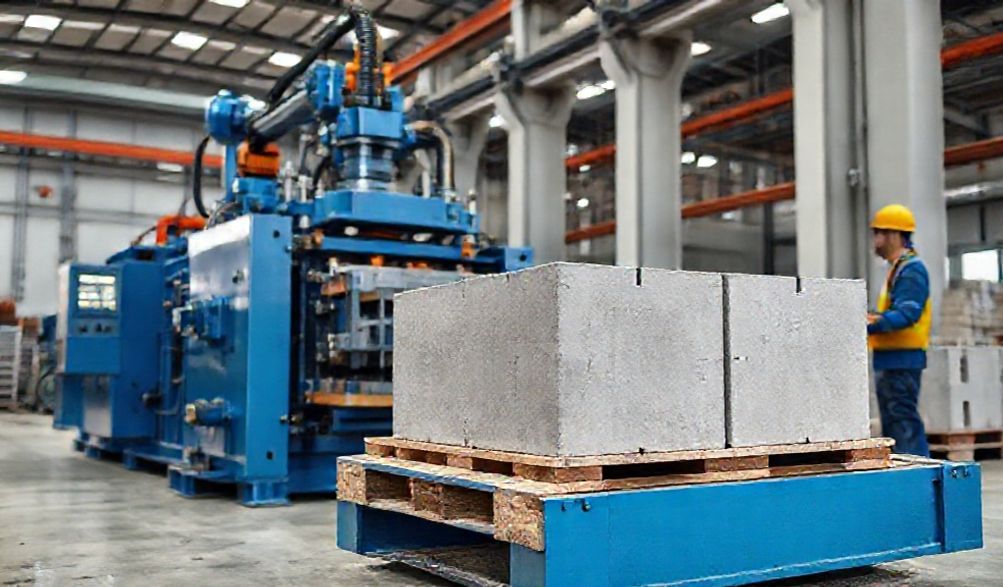
The Ultimate Guide to Sourcing a Block Molding Machine from China (2026 Buyer’s Guide)
Муқаддима
Бозори глобалии блокҳои сохтмонӣ пешбинӣ шудааст, ки аз$450 billion by 2026, fueled by relentless urbanization and infrastructure development worldwide. A staggering 70% of the world’s construction machinery now originates from Chinese manufacturing hubs. For entrepreneurs, project managers, and business owners, this presents a monumental opportunity—and a significant challenge.
Sourcing heavy machinery like a block molding machine from halfway across the globe is fraught with hurdles. How can you be sure of quality when you can’t visit the factory easily? How do you navigate communication barriers, complex logistics, and the sea of suppliers to find one that is truly reliable? The fear of receiving a substandard machine that causes costly downtime is a real concern.
This guide is your definitive solution. Crafted from years of direct industry experience, countless factory engagements, and a deep understanding of international trade standards for construction machinery, this resource is designed to transform your sourcing journey from a risky venture into a strategic, confident investment. We will equip you with the knowledge to leverage China’s manufacturing prowess while expertly mitigating the inherent risks.
Фаҳмидани Мошинаҳои Формасозии Блок: Намудҳо ва Истифодаҳо
Before searching for a supplier, you must understand the tool you’re buying. This foundational knowledge is critical for clear communication with manufacturers and for selecting equipment that aligns perfectly with your business goals.
Core Types of Block Molding Machines
Not all block machines are created equal. They are primarily categorized by their level of automation and output capacity.
- Manual Block Molding Machines: These are entry-level, hand-operated machines. Ideal for very small-scale projects, rural development, or startups with minimal capital. Production is labor-intensive and output is low, but the initial investment is minimal.
- Машинаҳои ним худкор барои сохтани блокҳо: This is the sweet spot for many growing businesses. These machines mechanize the critical processes of vibration and compression but may require manual feeding of raw material or removal of finished blocks. They offer an excellent balance between productivity, cost, and flexibility.
- Fully Automatic Block Production Lines: These are industrial powerhouses. They integrate automatic material batching, mixing, conveying, molding, curing, and stacking. Controlled by PLC systems, they require minimal human intervention and deliver massive, consistent output. The investment is significant but necessary for large-scale commercial or municipal projects.
Key Outputs: What Can You Produce?
A block molding machine is a versatile asset. By simply changing the mold, you can produce a diverse product line to meet market demands:
- Блокҳои ҳолӣ: The standard for load-bearing walls in construction, offering excellent strength-to-weight ratio and insulation.
- Блокҳои сахт: Used for foundations, pavements, and structures requiring high compressive strength.
- Paver Blocks: For landscaping, driveways, walkways, and parking lots. Aesthetic and durable.
- Блокҳои басташуда: Designed to lock together without mortar, enabling faster construction for retaining walls and certain structures.
- Curbstones and Specialty Concrete Products: Including grass pavers, slope protection blocks, and other engineered solutions.
Choosing the Right Machine for Your Project Scale
- Тиҷорати хурд/Оғозӣ A manual or small semi-automatic machine. Focus on versatility and low operational cost. Target local, niche markets.
- Medium-scale Commercial: A robust semi-automatic or a standard fully automatic line. Prioritize consistent output and reliability to supply contractors and larger projects.
- Large-scale Industrial: A fully automated production line with pallet circulation systems. Key considerations are maximum uptime, energy efficiency, and integration with other plant equipment.
Why Source a Block Molding Machine from China?
The decision to source from China is strategic. Let’s move beyond stereotypes and examine the evidence-based advantages, while honestly addressing concerns.
The Competitive Advantages
- Cost-Effectiveness and Value: China’s integrated supply chain for steel, hydraulics, and electronics results in significantly lower production costs. This allows you to acquire higher-capacity machinery for your budget, improving your return on investment (ROI).
- Vast Manufacturing Ecosystem: No other country offers such a concentrated pool of block machine manufacturers. This intense competition drives innovation and gives you unparalleled choice to find a supplier that specializes in your exact need.
- Пешрафти технологӣ: Contrary to outdated perceptions, leading Chinese manufacturers are at the forefront of adopting PLC controls, energy-efficient systems, and IoT-enabled monitoring. They rapidly iterate on global designs.
- Масштабпазирӣ: Whether you need one machine or a complete turnkey plant, Chinese suppliers have the experience and capacity to deliver. They cater to businesses at every stage of growth.
Addressing Common Concerns (Building Trust)
- Perception vs. Reality on Quality: The market is a spectrum. Yes, there are low-end workshops producing cheap copies. However, there is also a tier of high-end, ISO-certified manufacturers who use premium components (like Siemens PLCs or Rexroth hydraulics) and adhere to strict quality control (QC) protocols. Your job is to find them.
- Intellectual Property and Design Integrity: Reputable suppliers respect design patents and often have their own R&D departments developing proprietary technology. Clear contracts and working with established factories are your best protection.
- The Importance of Due Diligence: This is the core theme. The advantages are immense, but they are unlocked only through meticulous research and verification. The following section is your roadmap for exactly that.
How to Find and Vet Reliable Chinese Manufacturers
This is the most critical phase of your journey. Your supplier’s reliability directly determines your project’s success.
Effective Sourcing Channels
- B2B Platforms (Alibaba, Made-in-China):
- Tips: Use precise keyword filters (“fully automatic block making machine,” “concrete paver machine”). Look for suppliers labeled “Verified” or “Gold Supplier” with 5+ years of activity.
- Red Flags: Prices drastically lower than the market average, poor-quality product images, vague company descriptions, and unwillingness to provide a video call or factory tour.
- Industry Trade Shows (e.g., Bauma China, Canton Fair): There is no substitute for seeing machinery in person, operating it, and meeting the engineering team face-to-face. It’s the fastest way to assess build quality and establish a human connection.
- Direct Factory Sourcing via Professional Networks: Leverage industry contacts, hire a sourcing agent with specific machinery expertise, or engage with trade associations. This bypasses intermediaries and connects you directly with decision-makers.
The Critical Vetting Checklist
Do not skip any of these steps. Treat this as your due diligence bible.
- Business License & Certifications: Request their official business license. For trustworthiness, ISO 9001 (Quality Management) is a strong baseline. For export to many regions, CE certification (meeting EU health, safety, and environmental standards) is crucial. SGS inspection reports on their products add another layer of verification.
- Factory Audit Reports & Virtual Tours: Always request a live video tour of the factory floor. Look for organized production lines, modern welding/assembly equipment, and quality testing areas. A professional factory audit report from a third party is gold standard.
- Technical Expertise & R&D Department: Gauge their knowledge depth. Ask detailed technical questions about vibration frequency, hydraulic pressure, cycle time, and control systems. A supplier with a dedicated R&D team can offer better support and customization.
- Client Portfolio & Verifiable References: Ask for a list of past clients, preferably in your region or a similar market. Follow up with these references. Ask about machine performance, reliability, and the supplier’s responsiveness to issues.
- After-Sales Service & Parts Supply: This is the ultimate indicator of long-term reliability. What is the warranty period (12-24 months is standard)? Do they provide detailed English manuals and wiring diagrams? How quickly can they ship common spare parts? Do they offer remote diagnostic support via video?
Navigating the Procurement Process: A Step-by-Step Guide
With a vetted shortlist of suppliers, you now move into the structured procurement phase.
Step 1: Initial Inquiry and Technical Communication
Prepare a detailed Request for Quotation (RFQ). Include:
* Desired block types, sizes, and output capacity (blocks per hour/day).
* Degree of automation (semi-auto, fully auto).
* Power requirements (voltage, phase).
* Specific mold designs you need.
* Raw material specifications (cement type, aggregate size).
Step 2: Quotation Analysis and Negotiation
- Understand Incoterms: Know what you’re paying for.
- EXW: You own the goods at the factory gate. You handle all shipping, insurance, and customs.
- FOB: The supplier gets the machine to the port and loaded on your ship. You handle the main sea freight and destination costs. Most common.
- CIF: Supplier covers cost, insurance, and freight to your nearest port. You handle customs clearance and onward delivery.
- Clarify Inclusions: Ensure the quote explicitly lists included items: standard molds, spare parts kit, toolset, electrical control cabinet, and operator training materials.
Step 3: Securing the Deal and Quality Assurance
- TheProforma Invoice (PI) formalizes the agreed price, specifications, and payment terms. Review it meticulously before making any payment.
- Pre-Shipment Inspection (PSI): THE SINGLE MOST IMPORTANT STEP. Before the final payment is released, hire an independent, third-party inspection company (like SGS, BV, or Intertek) to visit the factory. They will check:
- That the machine is built to your specifications.
- Material and component quality.
- Assembly workmanship.
- Perform a test run with raw materials to verify output and function.
This step alone can save you from a catastrophic financial loss.
Step 4: Logistics, Shipping, and Customs Clearance
- Your machine will likely ship in a 20ft or 40ft container. The supplier should provide all necessary export documents: Commercial Invoice, Packing List, Bill of Lading, and Certificate of Origin.
- Pro Tip for Customs: Work with a licensed customs broker in your country пеш the shipment arrives. Provide them with all documents to correctly classify the goods (HS Code) and calculate duties, ensuring a smooth clearance process.
Maximizing Your Investment: Installation, Operation, and Maintenance
A successful purchase is just the beginning. Proper planning for the machine’s lifecycle is what separates profitable operations from problematic ones.
Planning for Installation
- Foundation is Key: The supplier will provide foundation drawings with precise load-bearing and bolt-setting requirements. Pour a level, reinforced concrete foundation that exceeds these specs. This prevents vibration issues and misalignment.
- Utilities: Ensure your site has the correct stable power supply, water source, and compressed air connections ready before the machine arrives.
- Дастгирии техникӣ: Budget for and request the dispatch of a factory technician for initial installation and commissioning. It is worth the investment to ensure everything is set up correctly from day one.
Operator Training and Safety Protocols
- Insist on comprehensive training for your key operators and maintenance staff. This should cover daily operation, routine adjustments, basic troubleshooting, and critical safety protocols (lockout-tagout procedures, guarding, etc.).
- Document this training. Create simple standard operating procedures (SOPs) for your team.
Routine Maintenance Schedules and Spare Parts
- Follow the manufacturer’s maintenance schedule religiously. This includes daily greasing, weekly bolt tightening, and monthly hydraulic system checks.
- Create a Strategic Spare Parts Inventory: Based on the manufacturer’s recommendation, stock critical spare parts that have longer lead times: vibration motor bearings, hydraulic seals and hoses, specific sensors, and a spare set of mold liners. This minimizes downtime from weeks to hours.
Frequently Asked Questions (FAQ)
Q1: What is the average price range for a block molding machine from China?
A: Prices vary dramatically based on type and capability. A small manual machine can start around $3,000 – $7,000. A quality semi-automatic machine may range from $15,000 – $50,000. A fully automatic production line can range from $70,000 to over $300,000. Remember, the lowest price often correlates with higher long-term costs in maintenance and downtime.
Q2: How do I ensure the machine meets my local safety and quality standards?
A: First, specify your required certifications (like CE) during the initial inquiry and confirm the supplier holds valid certificates. Second, the Pre-Shipment Inspection (PSI) is your objective quality gatekeeper. Finally, consult with a local mechanical engineer to review the machine’s specifications against any national or regional codes.
Q3: Can I get custom molds for specialized block designs?
A: Absolutely. Most reputable manufacturers have in-house mold design and CNC machining workshops. You can provide a drawing or sample, and they will engineer the mold. Expect additional costs and lead time (typically 2-4 weeks) for custom molds.
Q4: What is the typical lead time from order to delivery?
A: For standard models, production takes 30-60 days after deposit. Shipping (sea freight) adds another 30-45 days to most global destinations. Customized machines or complex production lines will take longer. Always confirm timelines in your contract.
Q5: How is after-sales support handled from overseas?
A: Reliable suppliers offer comprehensive remote support: detailed manuals, video guides, WhatsApp/WeChat support, and video call troubleshooting. For critical issues, they can dispatch a technician (at your cost). Ensure you understand their warranty process and the typical shipping time for replacement parts.
Conclusion
Sourcing a block molding machine from China offers unparalleled value, choice, and scalability for your business. The journey’s success, however, hinges entirely on one factor: your commitment to thorough due diligence and systematic supplier vetting. It is a process that rewards patience and punishes haste.
Our final expert recommendation is this: Prioritize the total lifecycle cost and supplier partnership over the initial purchase price alone. A slightly higher investment in a reliable, expert manufacturer from the start will pay dividends for years in productivity, lower maintenance costs, and peace of mind. Your block machine is not just a piece of equipment; it’s the engine of your profitability. Choose its maker wisely.
- Омодаед бо эътимод ба пеш равед? Our team, with decades of combined experience in construction machinery sourcing, can provide a curated shortlist of vetted, top-tier Chinese manufacturers tailored to your specific project requirements. [Contact us for a personalized consultation].
- Want to ensure you don’t miss a critical step? [Download our free, comprehensive checklist for vetting block machine suppliers] to guide your entire evaluation process.
This guide is built on a foundation of practical, hands-on experience in the global construction machinery market. Our aim is to provide you with trustworthy, authoritative information that empowers you to make informed, successful decisions for your business growth.
<