
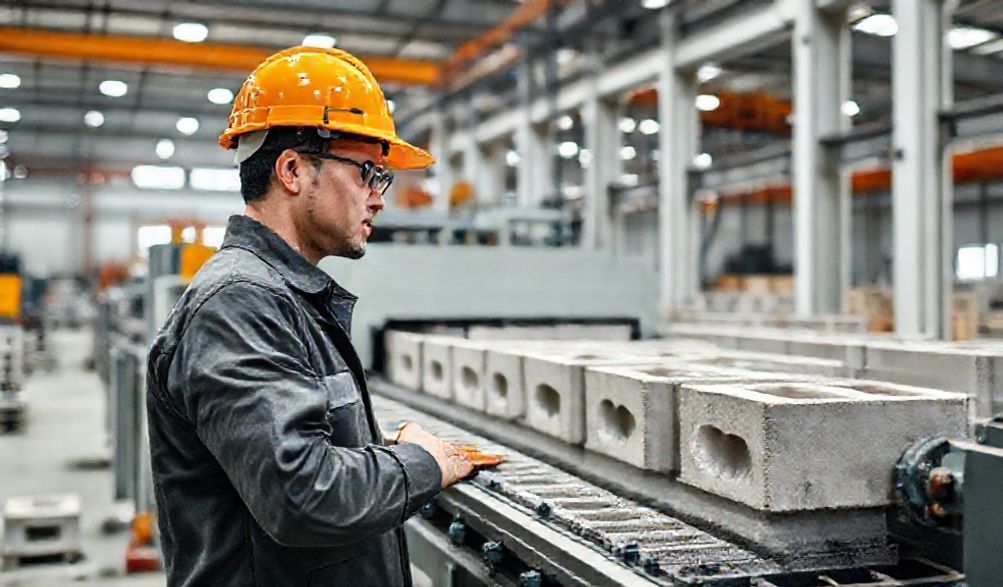
Your Ultimate Guide to Sourcing a Concrete Block Making Machine from China’s Leading Supplier: FUDA Factory
The global construction boom shows no signs of slowing. From affordable housing projects to large-scale infrastructure, the demand for reliable, high-quality building materials is insatiable. At the heart of this material production are concrete block making machines—the workhorses that transform raw aggregate into the very building blocks of our communities.
While manufacturers exist worldwide, China has emerged as the undisputed epicenter for producing these machines, offering an unparalleled combination of scale, technology, and value. However, navigating the vast landscape of Chinese suppliers can be daunting. Choosing the wrong partner for such a critical capital investment can lead to costly downtime, quality issues, and logistical nightmares.
This guide serves as your comprehensive roadmap. We’ll explore the compelling reasons to source from China, provide a rigorous framework for evaluating suppliers, and take a detailed, objective look at one prominent example: the Фабрикаи мошини сохтмонии блокҳои FUDA. The insights here are built on industry procurement best practices, technical specifications analysis, and a deep understanding of what separates a true partner from a mere vendor.
Чаро мошинҳои сохтани блок аз Хитоб мегиранд?
The decision to import heavy machinery is significant. Understanding the core advantages offered by Chinese manufacturers clarifies why this route is the preferred choice for countless businesses, from startups to established contractors, across the globe.
Самаранокии хароҷот ва андоза
The most immediate advantage is economic. Chinese manufacturers benefit from massive economies of scale, a highly developed industrial supply chain, and concentrated expertise.
- Нархгузории рақобатӣ: Integrated supply chains for components like hydraulic systems, PLCs, and steel frames reduce costs significantly compared to regions where these parts must be imported.
- Manufacturing Efficiency: Decades of specialization have optimized production processes, allowing factories to offer robust machines at price points that are often 30-50% lower than Western equivalents, without necessarily sacrificing core functionality.
- Options for Every Budget: The market offers everything from basic, manually-operated machines to fully automated production lines, allowing you to match a machine precisely to your financial constraints and output needs.
Пешрафти технологӣ ва навоварӣ
The outdated stereotype of Chinese manufacturing being purely about low-cost imitation is just that—outdated. Leading factories are now hubs of innovation.
- Сармоягузорӣ дар тадқиқот ва инкишоф: Top-tier suppliers like FUDA invest heavily in research and development, focusing on automation, energy efficiency, and user-friendly control systems.
- Хусусиятҳои зеҳнӣ: Modern machines often feature programmable logic controllers (PLCs), touch-screen interfaces, vibration frequency optimization, and automated pallet handling systems.
- Гуногунрангии маводҳо Advanced models are engineered to work efficiently with various raw materials, including fly ash, slag, and recycled aggregates, supporting greener construction practices.
Гуногунӣ ва Фармоишӣ
No two construction projects are identical. Chinese suppliers excel at providing a vast selection and tailored solutions.
- Comprehensive Range: You can find every conceivable type of machine:
- Аз рӯи амалиёт: Fully automatic, semi-automatic, manual.
- Бо воситаҳои нақлиётӣ: Stationary plants, mobile block machines (ideal for on-site production).
- Натиҷа: Small-scale brick making machines, high-capacity block production lines.
- By Product: Machines specialized for hollow blocks, solid blocks, paving stones, curbstones, and interlocking bricks.
- Tailored Solutions: Reputable factories often provide engineering support to customize machine parameters—like mold design, pressure settings, or production speed—to suit your specific local materials and product requirements.
Evaluating a Chinese Supplier: Beyond the Price Tag
A low quotation is merely an entry point. The true cost of a machine includes its reliability, longevity, and the support backing it. Here’s how to vet a supplier using a framework inspired by the principles of E-E-A-T (Experience, Expertise, Authoritativeness, Trustworthiness).
Key Indicators of a Reliable Factory (The E-E-A-T Framework)
Таҷриба:
* Таърихи амалиётӣ: How long has the factory been in business? A decade or more of operation suggests stability and accumulated know-how.
* Портфолиои лоиҳаҳо: Ask for case studies or examples of machines supplied to projects in regions similar to yours (e.g., similar climate, market size).
* Дастрасии Ҷаҳонӣ: Evidence of successful exports to multiple continents indicates an understanding of international logistics and standards.
Тахассус
* Technical Team: Inquire about the qualifications and size of their engineering and R&D department.
* Навоварӣ Do they hold patents for specific technologies? Can they explain the technical advantages of their machine design?
* Problem-Solving: Gauge their ability to understand your unique challenges and propose technical solutions, not just sell a standard model.
Давлатдорӣ:
* Industry Certifications: These are non-negotiable. Look for valid CE certification (for the European market), ISO 9001 quality management system certification, and other relevant safety marks. These are objective validations of their processes.
* Industry Recognition: Have they received awards or been featured in industry publications? Are they a regular participant at major international trade fairs like the Bauma China?
Содиқӣ:
* Муносибати Ошкора: Is their communication clear, professional, and timely? Do they answer technical questions directly?
* Verifiable Evidence: Request real, detailed factory videos (not just promotional clips), and ask for contact information for 2-3 previous international clients for references.
* Clear Terms: Scrutinize their warranty policy (typically 12-18 months for the core frame), spare parts availability, and the structure of their after-sales service.
The Critical Role of Factory Audits and Site Visits
If the investment is substantial, a site visit is invaluable. If travel isn’t feasible, insist on a comprehensive live video tour.
- What to Look For: Observe the organization of the production floor, the quality of welding and assembly, the inventory of raw materials and components, and the testing procedures for finished machines.
- Контроли сифат: Ask about their QC process at each stage: material inspection, in-process checks, and final performance testing before shipment.
- Virtual Audits: A reputable supplier will gladly arrange a video call to walk you through their facility in real-time, demonstrating they have nothing to hide.
Deep Dive: The FUDA Block Making Machine Factory
As a case study, let’s examine the FUDA factory, a name frequently encountered by those searching for “china concrete block making machine for sale supplier.” This analysis provides a template for what to look for in any supplier.
Пешниҳоди ширкат ва мавқеъ дар бозор
FUDA is typically presented as an established manufacturer specializing in concrete block and brick making machinery, located within China’s major industrial manufacturing zones. They position themselves as an integrated enterprise involved in R&D, production, sales, and service, catering to a global clientele. Their market position is that of a competitive mid-to-large-scale supplier offering a balance of technology and value.
Product Range and Technical Specifications
A supplier’s catalog reveals their capability. FUDA’s range generally includes:
- Машинаҳои пурра худкор барои сохтани блокҳо: High-output lines with automatic mixing, conveying, pressing, curing, and stacking.
- Машинаҳои ним-автоматӣ: Operator-assisted models offering a middle ground on price and output.
- Машинаҳои блоксозии мобилӣ: Self-contained units for direct on-site production, reducing material transport costs.
- Машинаҳои махсусгардида: For producing specific products like hollow blocks, pavers, or interlocking bricks.
Example Specification Comparison Table:
| Model Type | Typical Output (Blocks/8hr) | Power Requirement | Degree of Automation | Common Block Types Produced |
Я вас не понял. Пожалуйста, уточните запрос.
| QT Series (Automatic) | 15,000 – 30,000+ | 30-50 kW | Fully Automatic | Hollow, Solid, Pavers |
| Semi-Auto Press | 5,000 – 12,000 | 15-25 kW | Semi-Automatic | Hollow, Solid |
| Mobile Block Machine | 3,000 – 8,000 | 10-20 kW | Manual/Semi-Auto | Solid, Interlocking |
Note: Specifications are illustrative. Always request the official data sheet for the specific model you are considering.
FUDA’s Commitment to E-E-A-T: An Evaluation Framework
Their Experience: Suppliers like FUDA often highlight 10+ years of operation and thousands of machines installed worldwide. Verify this by asking for project examples in specific countries.
Their Expertise: They may showcase a dedicated R&D team and features like “frequency conversion technology” for energy savings or “multi-directional vibration” for better block density. Their expertise is demonstrated in their ability to offer customization for different block sizes and raw material recipes.
Their Authoritativeness: This is a critical verification point. A legitimate FUDA factory should be able to provide:
* CE Certification documents for applicable models.
* ISO 9001:2015 Quality Management System certificate.
* Test reports for core components like motors and hydraulic systems.
Their Trustworthiness: Key questions to ask them directly:
* Warranty: What is covered, for how long, and what is the process for claims?
* Қисмҳои ивазшаванда: Are parts guaranteed to be available for 10+ years? What are the shipping times and costs?
* Support: Do they provide installation supervision, operator training (on-site or at the factory), and remote troubleshooting via video call?
The Procurement Process: From Inquiry to Delivery
A smooth procurement process is a hallmark of a professional supplier. Here’s a step-by-step overview.
Step 1: Defining Your Requirements
Before contacting any supplier, clarify:
* Натиҷаи дилхоҳ Blocks per hour or per 8-hour shift.
* Намудҳо ва Андозаҳои Блокҳо: Detailed dimensions and required compressive strength.
* Маводҳои хом: The type of cement, aggregate, and potential additives you will use.
* Сатрҳои автоматӣ: How much manual labor is available versus desired.
* Budget Range: Be realistic, including a contingency for shipping, import duties, and installation.
Step 2: Initial Contact and Quotation
Provide the above requirements in a clear RFQ (Request for Quotation). A professional quote should include:
* Detailed machine specifications.
* FOB (Free On Board) price (machine cost loaded onto the ship at the Chinese port).
* CIF (Cost, Insurance, Freight) estimate to your nearest port.
* Payment terms, delivery time, and warranty summary.
Step 3: Negotiation, Contract, and Payment Terms
- Шартҳои пардохт: Standard practice is 30% deposit, 70% before shipment via T/T (Telegraphic Transfer). For larger orders, a Letter of Credit (L/C) is common.
- The Contract: Ensure it includes all agreed specifications, delivery timeline, penalty clauses for delays, detailed warranty terms, and protocols for handling quality disputes. Consider having it reviewed by a local agent.
Step 4: Production, Inspection, and Shipping
- Production Timeline: Acknowledge the production period (typically 20-40 days after deposit).
- Pre-Shipment Inspection (PSI): This is crucial. Either arrange your own agent or hire a third-party inspection company (like SGS or BV) to check the machine at the factory before it is packed. They will verify specifications, workmanship, and perform a trial run.
- Интиқол ва логистика The supplier or your freight forwarder will handle documentation (Bill of Lading, Commercial Invoice, Packing List, Certificate of Origin). Be prepared for customs clearance at your port.
Maximizing Your Investment: Operation and Support
Your relationship with the supplier truly begins once the machine arrives.
Installation, Commissioning, and Operator Training
- Professional Setup: Insist that the supplier sends engineers for installation and commissioning. This is often included in the contract for automatic lines.
- Таълими ҳамаҷониба Ensure they train your operators on safe startup/shutdown procedures, daily operation, routine maintenance, and basic troubleshooting.
Routine Maintenance and Spare Parts Management
- Follow the Manual: Adhere strictly to the maintenance schedule for lubrication, bolt tightening, and system checks.
- Spare Parts Inventory: Purchase a recommended set of critical spare parts (like seals, relays, and wear parts for molds) with your initial order to avoid lengthy downtime later.
Troubleshooting Common Issues
While your supplier is the primary support, understanding basics helps:
* Poor Block Surface Quality: Often related to incorrect water-cement ratio, insufficient vibration time/pressure, or worn mold liners.
* Machine Vibration Issues: Check for loose bolts on the vibration table or motor mounts.
* Hydraulic System Problems: Monitor oil levels, temperature, and check for leaks. Always use the recommended hydraulic fluid.
FAQ Section
Q1: What is the typical price range for a FUDA concrete block making machine?
A: Prices can range from approximately $15,000 for a basic semi-automatic model to over $150,000 for a fully automated high-capacity production line. The final price depends entirely on model, configuration, automation level, and customization. Always request a formal quote based on your detailed specifications.
Q2: Does FUDA provide installation services overseas?
A: Reputable suppliers typically do. This is a key contract point. Usually, 1-2 engineers will be sent for installation and training. Clarify who is responsible for their international airfare, local transportation, accommodation, and meals during the service period.
Q3: How do I ensure the machine meets my local safety and quality standards?
A: First, explicitly state your required certifications (e.g., CE) during the inquiry phase. Second, request copies of all certification documents and test reports before final payment. Third, for absolute assurance, hire a third-party inspection agency to conduct the pre-shipment inspection against your standards.
Q4: What is the lead time for a machine order from China?
A: For standard models, expect 30 то 60 рӯз from receipt of deposit to shipment from the factory. Customized machines or complex production lines may require 60 to 90 days. Always confirm the detailed production schedule in your contract.
Q5: How can I verify the legitimacy and reputation of a supplier like FUDA?
A:
* Check Business Licenses: Ask for their Chinese business license and verify it via platforms like Alibaba’s supplier verification system.
* Demand Visual Proof: Request a real-time video tour of their factory and a running machine.
* Contact References: Ask for and actually contact 2-3 previous international clients.
* Verify Physical Address: Use tools like Google Earth or Baidu Maps to confirm the existence and scale of their claimed factory location.
Conclusion
Sourcing a concrete block making machine from China presents a tremendous opportunity for cost savings, access to advanced technology, and finding a machine tailored to your specific needs. However, this opportunity is only unlocked through meticulous due diligence. Moving beyond price to evaluate a supplier’s Таҷриба, Ихтисос, Эътибор ва Эътимодноки (E-E-A-T) is not just recommended—it’s essential for protecting your investment.
A supplier like the Фабрикаи мошини сохтмонии блокҳои FUDA can exemplify the attributes of a capable partner, but only if their claims are substantiated through certifications, verifiable client references, and transparent processes. Let this guide be your checklist. Approach your procurement with detailed questions, insist on verification at every stage, and build your business relationship on a foundation of clarity and professional rigor. The right machine from the right supplier is more than an expense; it’s the engine of your growth for years to come.
<