
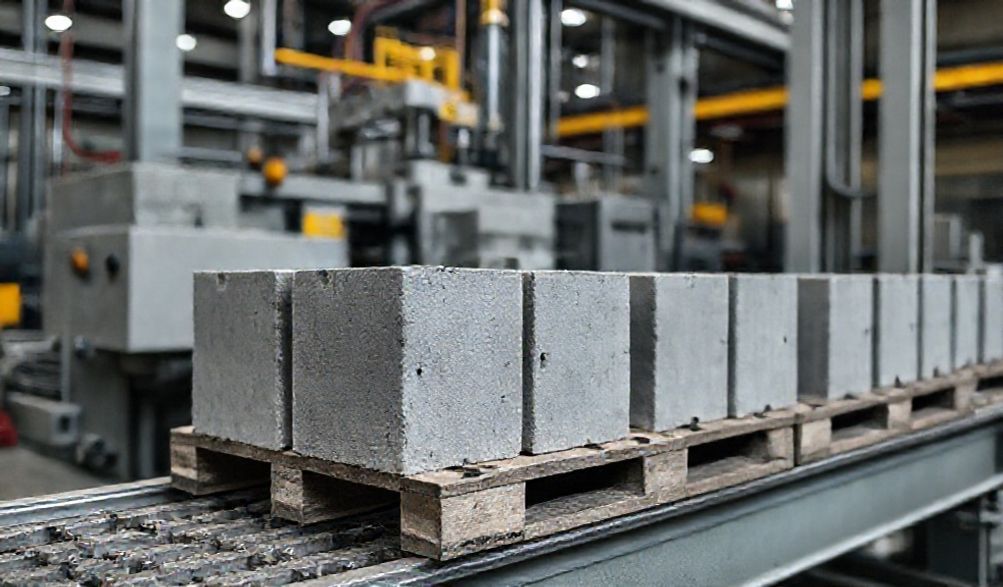
Дастур оид ба нархи мошини блокҳои бетонӣ: Таҳлили нарх ва маслиҳатҳои харид барои соли 2024
Ҳақиқии нархи мошини блокҳои бетонӣ ёфтан метавонад гумкунанда бошад. Тавсифҳо хеле гуногун мешаванд ва хароҷоти пинҳонӣ метавонанд буҷаи лоиҳаи шуморо халалдор кунанд. Шумо танҳо як қисми таҷҳизот намехаред; шумо сармоягузории капиталӣ мекунед, ки барои солҳои оянда иқтидори истеҳсолӣ, сифати маҳсулот ва фоидаоварии шуморо муайян мекунад.
Ин дастури пурра аз маълумоти саноат, муайянкуниҳои истеҳсолкунандагон ва таҷрибаи воқеии харид гирд оварда шудааст, то шумораи зиёди маълумотро коҳиш диҳад. Ҳадафи мо бегарази аст: ба шумо донише медиҳем, ки фаҳмедчӣхарчи истеҳсолро аз воҳидҳои дастӣ ва хурд то корхонаҳои пурра автоматӣ таъмин мекунад. Мо аз нархи нишондодашуда мегузарем ва ба таҳқиқи хароҷоти умумии моликият (TCO) мепардозем, ки ба шумо дар сӯи сармоягузории самаранок ва стратегӣ барои тиҷорати шумо кумак мекунад.
Омилҳои асосӣ, ки нархи дастгоҳҳои истеҳсоли блокҳои бетонӣро муайян мекунанд
Арзиши дастгоҳи блоксозӣ тасодуфӣ нест. Ин аниқ инъикоси имконот, устуворӣ ва пешрафти технологӣи он мебошад. Дарки ин омилҳои асосӣ аввалин қадами барои хариди огоҳона аст.
Иқтидори истеҳсолӣ ва ҳосили он
Муҳимтарин омили нарх, истеҳсолот мебошад, ки одатан бо блокҳо дар соат (BPH) ё даврҳо дар соат (CPH) чен карда мешавад. Муносибат сода аст: ҳаҷми баландтар чорчӯбаи устувортар, системаи ларзиши калонтар, гидравликаи зудтар ва назорати мураккабтарро талаб мекунад.
- Low-Capacity Machines (100-1,000 BPH): Ideal for small-scale projects, startups, or niche products. Prices start low but scale quickly with added features.
- Medium-Capacity Machines (1,000-5,000 BPH): The sweet spot for many small-to-medium enterprises (SMEs). This range sees the most competition and model variety.
- High-Capacity Lines (5,000-20,000+ BPH): Designed for industrial production. Here, you’re paying for speed, relentless durability, and integrated system engineering.
Industry practice shows that aiming for a machine that meets your projected future demand, rather than just your current needs, often provides better long-term value.
Сатҳи автоматсозӣ
Automation directly replaces labor with capital investment, and its level creates distinct price tiers.
- Дастгоҳҳои дастӣ: Operator-dependent for feeding, molding, and stripping. Lowest upfront cost, highest ongoing labor cost.
- Машинаҳои ним-автоматӣ: Automate the core vibration and compaction process. The operator typically loads raw material and removes finished blocks. Offers a balance of cost and productivity.
- Машинаҳои пурра автоматӣ: Incorporate programmable logic controller (PLC) systems, automatic feeders, robotic pallet handling, and stackers. The price premium is substantial, but it minimizes labor, maximizes consistency, and allows for continuous operation.
The decision hinges on your local labor costs, desired output, and tolerance for operational variability.
Machine Type & Block Variety
Not all block machines are created equal. The type of product you intend to manufacture dictates the machine design.
- Standard Hollow Block Machines: The most common and often most affordable starting point.
- Paving Slab & Interlocking Block Machines: Require specialized mold boxes and, often, higher-pressure compaction systems, commanding a higher price.
- Specialized Machines (e.g., for curbstones, retaining walls): Built for specific, heavy-duty products. Lower production volumes and niche engineering lead to higher per-unit costs.
Remember, the ability to change molds to produce different block sizes and styles adds flexibility but also cost. High-quality, wear-resistant mold kits are a significant investment themselves.
Brand, Origin, and Quality of Components
A machine’s price reflects its “bill of materials” and the engineering behind it.
- Established European/North American Brands: Command a premium for proven durability, advanced R&D, and comprehensive after-sales support. You are investing in a long-term partnership.
- Turkish Manufacturers: Often position themselves as a “value” tier, offering a strong blend of quality, features, and price, with good support networks.
- Chinese Suppliers: Offer the widest range, from very economical entry-level models to surprisingly sophisticated high-capacity lines. The key differentiator here is the quality control of components—the grade of steel, the brand of hydraulic pumps and PLCs, and the precision of machining.
Operators report that the upfront savings on a machine with inferior hydraulics or electrical systems can be quickly erased by downtime and costly repairs.
2024 Concrete Block Machine Price Ranges (By Category)
These ranges are estimates based on current market analysis for new equipment. Final pricing is always configuration-dependent and subject to quotation.
Manual & Small Semi-Automatic Machines
Price Range: $3,000 – $25,000
This category serves hobbyists, very small builders, and those producing blocks for specific, limited projects.
* Намунаи баромад: 100 to 1,200 blocks per 8-hour shift.
* Истифодабарандагони Идеалӣ: DIY enthusiasts, small construction firms, community projects, or businesses starting with a single product line.
* What to Expect: Often a single-phase electrical motor, basic vibration mechanism, and manual mold handling. Prices climb within this bracket for features like a more powerful motor, a hydraulic system for demolding, or a semi-automatic control panel.
Stationary Semi-Automatic & Automatic Machines
Price Range: $25,000 – $80,000
This is the core workhorse for established small-to-medium block yards and growing businesses.
* Намунаи баромад: 1,000 to 4,000+ blocks per hour.
* Истифодабарандагони Идеалӣ: SME block manufacturers supplying local builders, contractors, and retailers.
* What to Expect: A robust, stationary machine with a solid vibration table, reliable hydraulic system, and an automatic control system for the molding cycle. In the higher end of this range, you begin to see integrated pallet feeders and simple off-bearing conveyors.
Fully Automatic Production Lines
Price Range: $80,000 – $300,000+
These are complete systems for high-volume, commercial production with minimal manual intervention.
* Намунаи баромад: 5,000 to 15,000+ blocks per hour.
* Истифодабарандагони Идеалӣ: Large block plants, industrial construction material suppliers, and major infrastructure projects.
* What’s Included: The price encompasses a synchronized system: aggregate batcher, mixer, conveyor, high-speed block machine, automatic pallet feeder/cooling system, stacker, and sometimes a robotic arm for packaging. The final price is highly dependent on the level of integration and brand selection.
Mobile Block Machines
Price Range: $50,000 – $150,000
A specialized category for producing blocks directly on a construction site, eliminating transport costs for finished products.
* Намунаи баромад: Varies, but designed for project-based production.
* Истифодабарандагони Идеалӣ: Large-scale remote site developments, disaster relief housing projects, or contractors with repeated on-site needs.
* Key Cost Drivers: The engineering required to make the entire system (often including a small mixer) trailer-mounted and robust enough for site conditions. Self-containment is a premium feature.
Beyond the Sticker Price: Hidden & Recurring Costs
A savvy buyer budgets for the total cost of ownership. Overlooking these elements is a common pitfall.
Shipping, Installation, and Commissioning
The machine price rarely includes delivery to your door.
* International Freight & Insurance: Can add 5-15% to the cost for overseas purchases.
* Customs Duties & Taxes: Vary significantly by country. Must be researched upfront.
* On-Site Setup: Requires a level, reinforced concrete foundation. Factor in costs for local crane rental, skilled technicians (yours or the supplier’s), and potential travel costs for a commissioning engineer.
Essential Auxiliary Equipment
The block machine is the heart, but it needs supporting organs to function.
* Миксер барои омехтани бетон: A pan mixer or planetary mixer of appropriate capacity is mandatory.
* Pallets & Transfer Systems: Steel or wooden pallets are a consumable. Carts, forklifts, and racking for curing represent a substantial secondary investment.
* Curing Infrastructure: This can range from simple plastic sheets to a fully automated, humidity-controlled curing chamber—a major cost variable.
Operating Costs: Power, Labor, and Maintenance
These are the ongoing expenses that determine your profit margin.
* Истифодаи барқ: A fully automatic line with multiple large motors and hydraulic pumps is a significant energy user. Request motor specs to estimate monthly costs.
* Меҳнат: Even automated lines need supervision, maintenance, and material handling staff.
* Preventative Maintenance: Regular oil changes, filter replacements, and bolt tightening are essential. Budget for annual maintenance costs of 2-5% of the machine’s initial value.
* Қисмҳои ивазшаванда: Wear parts like mold liners, vibration motor bearings, and hydraulic seals will need replacement. Establish a relationship with your supplier for parts availability and pricing.
Raw Material Considerations
Your business model hinges on the cost and availability of inputs.
* Cement, Aggregates, Pigments: Fluctuating commodity prices directly affect your block cost. Local sourcing is key to stability.
* Сифати Мавод: A machine designed for high-quality aggregates may struggle with poorly graded local sand, affecting block quality and machine wear.
How to Get the Best Value for Your Investment
With knowledge of costs and drivers, you can now shop strategically.
Define Your Needs Precisely Before Shopping
Answer these questions to create a specification sheet:
* What block types, sizes, and finishes will I produce?
* What is my required average daily and peak hourly output?
* What is my available factory space and ceiling height?
* What electrical power (Voltage/Phase) is available on site?
* What is my total investment budget, including auxiliary equipment and setup?
Where to Source Reliable Machines & Get Quotes
- Direct from Manufacturers: Offers the best technical insight and potentially better pricing, but requires more due diligence on your part.
- Through Local/Regional Dealers: Provides local support, quicker parts access, and someone to advocate for you, often at a slight price premium.
- Trade Shows & B2B Platforms: Events like bauma or B2B marketplaces (e.g., Alibaba, Made-in-China) are excellent for seeing options, but supplier vetting is critical.
Red Flags in Supplier Quotes:
* Vague or missing technical specifications.
* Lack of detailed foundation drawings or electrical schematics.
* No clear after-sales service plan or warranty terms.
* Pressure to pay 100% upfront before production.
The Critical Role of After-Sales Service & Warranty
This is where value is proven. A slightly cheaper machine with poor support is an expensive mistake.
* Warranty: A good warranty (typically 12-24 months) should cover parts and workmanship for the core machine. Understand what is excluded.
* Service Support: Does the supplier offer remote troubleshooting, on-site technician dispatch, or operator training?
* Қисмҳои ивазшаванда: Confirm the availability and lead time for critical spare parts. Request a sample spare parts price list.
Frequently Asked Questions (FAQ)
Q: What is the cheapest concrete block machine I can buy?
A: Small, manual machines can be found for under $5,000. However, they are suitable only for extremely low-volume, non-commercial use. Their slow output and high labor requirement make them impractical for any sustained business activity.
Q: Is it better to buy a new or used block machine?
A: A used machine can offer significant upfront savings. The cons are substantial: unknown maintenance history, potential obsolescence, likely expired warranty, and difficulty sourcing parts. If considering used, insist on a thorough, in-person inspection with a qualified mechanic and ensure technical documentation is available.
Q: How much profit can I make with a concrete block machine?
A: Profitability isn’t guaranteed by the machine; it’s determined by your business acumen. Key factors are local market demand and pricing, your operational efficiency (reject rate, labor cost), and raw material costs. A simplified ROI calculation must factor in all costs outlined in this guide, not just machine price versus block price.
Q: Can I get a concrete block machine for under $10,000?
A: Yes, but manage expectations. In this price range, you are looking at basic manual or very small semi-automatic machines. Realistic output would be suitable for a personal project, a very small side business, or producing a single block type for your own construction use.
Q: What are the most reputable concrete block machine brands?
A: Reputation varies by region and machine type. Established global names include Hess Group (Germany), Zenith (Germany), and Prensoland (Spain). Strong value-oriented manufacturers include AIMIX (China) and QGM (China/Germany). The key is to match the brand’s proven strength with your specific product and capacity needs.
Conclusion
The “price” of a concrete block machine is ultimately a function of your specific production goals and the machine’s total lifecycle cost. It’s a strategic purchase that requires looking beyond the initial invoice.
Our final expert advice is to invest as much time in planning and supplier vetting as you do in financing. The right machine is a capital asset that will drive your business for a decade or more. A rushed decision based solely on the lowest sticker price often leads to the highest long-term cost.
Ready to move forward? Use the factors and worksheets in this guide to create your detailed specification checklist. When you approach suppliers, you’ll do so from a position of knowledge, ready to compare quotes on a truly like-for-like basis. We wish you success in your venture and hope this serves as a lasting resource for your journey in the construction materials industry.
<