
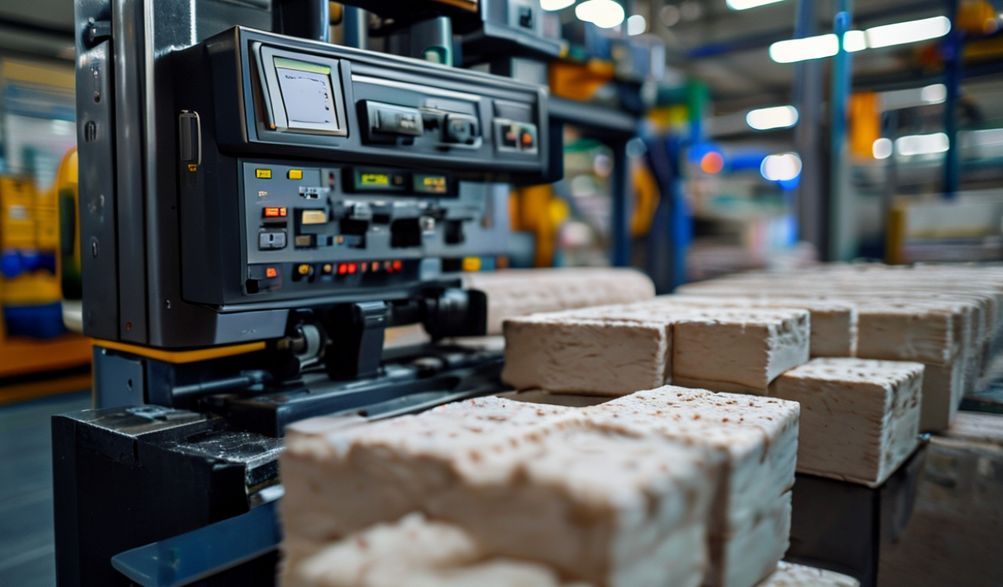
Hollow Blocks Maker Machine Philippines Price Guide 2026: Costs, Types & Buying Tips
Муқаддима
You’re a contractor planning your next subdivision project, an entrepreneur seeing the constant demand for construction materials, or a builder tired of inconsistent block supply. You’ve decided that investing in your own hollow blocks maker machine is the smart move. But a quick online search for “hollow blocks maker machine Philippines price” leaves you more confused than informed. Quotes range from a few thousand pesos to several million. Which one is right? What are you воқеанбарои чӣ пул медиҳед?
The truth is, the price tag is more than just a number—it’s a reflection of your business’s future capacity, efficiency, and profitability. Choosing based on price alone can lead to a costly mismatch: a machine that’s too small, constantly breaking down, or one that’s far too expensive for your actual needs.
This guide is designed to cut through the confusion. Built on insights from industry suppliers, technical specifications, and the practical realities of the Philippine construction market—from power supply quirks to raw material sourcing—we aim to demystify the pricing landscape. Our goal is not to sell you a specific machine, but to arm you with the framework to make an informed, confident investment. We’ll provide balanced information, highlight key considerations, and always advise you to verify details directly with suppliers.
Дар охири ин дастур, шумо мефаҳмед:
* The different types of machines and their typical price brackets.
* The critical factors that swing the final cost.
* How to evaluate suppliers and avoid common pitfalls.
* The essential questions to ask before signing a deal.
Пойтахти сармоягузории худро мустаҳкам созед.
Фаҳмидани Мошинаҳои Блокҳои Ҳавоӣ: Навъҳо ва Истифодаҳо
Before diving into prices, it’s crucial to understand the machine types available. This knowledge will help you self-identify which category aligns with your project scale and budget.
Дастӣ нисбат ба ним-автоматӣ нисбат ба машинаҳои пурра автоматӣ
Your choice here is the primary driver of cost, labor requirement, and output.
-
Дастгоҳҳои дастӣ барои сохтани блокҳои ҳолӣ
- Тавсиф: These are the most basic type. Operators manually mix the concrete, feed it into the mold, and use a lever or a simple mechanical press to form the block. Curing is done separately.
- Барои беҳтарин: Very small-scale projects, backyard operations, or areas with extremely low labor costs. Ideal for producing blocks for personal use or intermittent, low-volume sales.
- Калиди асосӣ: Lowest capital cost, highest physical labor intensity.
-
Semi-Automatic Hollow Block Machines:
- Тавсиф: This category offers a balance. The mixing and feeding may still be manual or partially mechanized, but the compression and vibration processes are powered (electrical or hydraulic). This ensures more consistent block density and quality. Some models include a block ejector.
- Барои беҳтарин: Small to medium-sized businesses (SMBs), construction firms supplying their own projects, and entrepreneurs starting a block-making venture. It’s the most popular choice for growing operations.
- Калиди асосӣ: The “sweet spot” for many, offering a significant boost in output and quality over manual machines without the full cost of automation.
-
Fully Automatic Hollow Block Plants:
- Тавсиф: These are complete production lines. Computerized PLC systems control the entire process: automatic batching of raw materials, mixing, conveying, pressing, curing, and even stacking. They require minimal human intervention.
- Барои беҳтарин: Large-scale commercial production plants supplying retailers, large construction companies, and developers. They are a serious industrial investment.
- Калиди асосӣ: Highest upfront cost, but lowest cost-per-block due to massive output and minimal labor. Requires significant space and a stable three-phase power supply.
Common Machine Models and Their Output (Blocks per Day)
Model numbers often indicate size and capacity. Here are common models you’ll encounter:
| Model | Type | Approx. Output (8-Hr Shift) | Best Suited For |
| :— | :— | :— | :— |
| Small Manual | Manual | 500 – 1,500 blocks | Home use, very small projects |
| QT4-15 | Semi-Auto | 4,000 – 6,000 blocks | Starting business, medium project supply |
| QT4-25 | Semi-Auto / Auto | 6,000 – 10,000 blocks | Growing block-making business |
| QT6-15 | Fully Automatic | 10,000 – 18,000 blocks | Medium-scale commercial plant |
| QT8-15* | Fully Automatic | 18,000 – 30,000+ blocks | Large-scale industrial production |
*Crucial Note: Output claims depend heavily on operator skill, raw material quality (mix design), and machine maintenance. Use these figures for comparison, not as absolute guarantees.
Hollow Blocks Maker Machine Price Ranges in the Philippines (2026)
The following price ranges are estimates for the Philippine market in 2026, based on current trends and economic factors. Always get a formal quotation.
Entry-Level & Manual Machine Prices (PHP 50,000 – PHP 200,000)
- What You Get: This range covers basic manual press machines, often with one or two standard molds (e.g., 4″ and 5″ hollow blocks). Prices at the lower end may be for the machine frame only.
- Муҳоҷизот:
- Extremely low barrier to entry.
- Simple to operate and repair.
- Low power consumption.
- Манфӣҳо
- High and inconsistent labor costs.
- Low output limits business growth.
- Inconsistent block quality can affect structural integrity.
- Physically demanding work.
Mid-Range & Semi-Automatic Machine Prices (PHP 200,000 – PHP 800,000)
- What You Get: This is the most dynamic price bracket. It includes:
- Standard semi-automatic machines (like QT4-15) at the lower end.
- More robust semi-automatic models with better motors, vibration systems, and maybe a simple conveyor or mixer at the higher end.
- Basic fully automatic machines may start appearing near the top of this range.
- Муҳоҷизот:
- Excellent balance of cost, output, and quality.
- Significantly reduces physical labor compared to manual machines.
- Production is fast enough to run a viable business.
- Манфӣҳо
- Requires a more skilled operator.
- Higher power requirement (often three-phase).
- Maintenance is more technical.
High-Capacity & Fully Automatic Plant Prices (PHP 800,000 – PHP 3,000,000+)
- What You Get: This is for complete turnkey plants. The price includes the block-making machine, automatic batching plant, mixer, conveyor systems, block elevator, and pallet stacker. At the multi-million peso level, you are looking at sophisticated, computer-controlled production lines.
- Муҳоҷизот:
- Maximum output and efficiency.
- Unmatched consistency in block quality.
- Lowest long-term labor cost per block.
- Ability to produce a wide variety of block types and pavers.
- Манфӣҳо
- Very high initial capital requirement.
- Requires large space and industrial-grade power.
- Complex maintenance needs specialized knowledge.
- Higher depreciation and overhead costs.
Key Factors That Influence the Final Price
Why does one “QT4-15” model cost PHP 250,000 and another PHP 400,000? These factors explain the difference.
Production Capacity and Machine Size
This is the most straightforward factor. A machine designed to produce 5,000 blocks per day will cost less than one designed for 20,000. Larger motors, stronger frames, and bigger hydraulic systems all add to the cost.
Level of Automation and Technology
- PLC vs. Relay Control: A Programmable Logic Controller (PLC) system is more precise and reliable than old relay systems, but it adds cost.
- Сифати системаи гидравликӣ: High-quality, brand-name hydraulic pumps and cylinders ensure durability but are more expensive.
- Vibration Mechanism: The number, power, and quality of vibration motors directly affect block density and price.
Brand Origin: Local vs. Imported (China, Europe, etc.)
- Local Philippine Brands/Assemblers: Often provide strong after-sales support, easier communication, and parts availability. Prices can be competitive, focusing on durability for local conditions.
- Imported Brands (Primarily China): Dominate the market due to competitive pricing. Quality can vary wildly from excellent to poor. Due diligence is critical. Look for suppliers with a physical presence in the Philippines.
- Брендҳои Аврупоӣ/Амрикоӣ: Represent the premium tier (e.g., Hess, Zenith). They offer top-tier technology, durability, and support but at a price point often 2-3x higher than Chinese counterparts.
Always verify certifications (e.g., CE mark) and understand the exact warranty terms and who honors it locally.
Additional Costs Beyond the Machine
The machine invoice is just the start. Budget for these:
* Муқаррарҳо: Essential and specific. A standard 4″ hollow block mold might cost PHP 15,000 – 40,000. Pavers, interlocking, or fancy block molds cost more.
* Насб ва омӯзиш: Some suppliers include this; others charge extra. Never skip professional installation and operator training.
* Shipping and Logistics: For imports, this is a major line item (CIF cost). For local delivery, factor in trucking to your site, especially if provincial.
* Spare Parts Kit: An initial set of commonly worn parts (seals, springs, gaskets) is a wise investment to minimize downtime.
* Foundation & Power Setup: You need a solid, level concrete foundation and potentially a three-phase electrical connection.
How to Choose the Right Machine for Your Budget and Needs
Assessing Your Project Scale and Business Goals
Ask yourself this checklist:
* Daily Output Target: How many blocks do I need to produce to meet demand?
* Available Capital: What is my total budget (machine + setup + operating capital)?
* Site Space & Power: Do I have space for raw materials, production, and curing? Is three-phase power available?
* Меҳнат: Can I hire/train a skilled operator for a semi/full-auto machine?
* 5-Year Plan: Do I plan to stay small, or aggressively expand? Buying a machine with some room to grow is often smarter.
Calculating Return on Investment (ROI)
A simple framework:
(Selling Price per Block - Cost of Raw Materials per Block) x Daily Output = Gross Daily Profit
Gross Daily Profit - Daily Labor & Overhead = Net Daily Profit
Compare your Net Daily Profit against your Total Investment Cost to see your payback period. A reliable, slightly more expensive machine that runs 28 days a month will have a better ROI than a cheap machine that breaks down every week.
The Importance of After-Sales Service and Warranty
This cannot be overstated. In the Philippine context, a machine without local technical support is a liability.
* Warranty: Seek at least 1 year on major parts. Understand what’s covered and the process for claims.
* Шабакаи Хидматрасонӣ: Does the supplier have trained technicians in your region (or at least in Metro Manila)? How quickly can they respond?
* Дастрасии Қисмҳо: Are common spare parts stocked locally? If you have to wait 60 days for a part from China, your business stops.
Where to Buy: Reputable Suppliers and Manufacturers in the Philippines
(Note: Specific company situations change. Verify these names and their reputations in 2026.)
Leading Local Manufacturers and Distributors
These companies often have showrooms and service centers. Examples include:
* Megablock Industries: A long-standing Filipino manufacturer.
* Sure Equipment Philippines: A major distributor of construction equipment.
* Solidblock Machinery: Known for supplying various models.
Action Tip: Visit their showroom. Ask to see a machine running. Request contact details of at least two current customers for a reference check.
Sourcing from International Suppliers (Primarily China)
If importing directly:
* Use Platforms Wisely: Alibaba.com is a hub. Filter for “Verified Suppliers” and those with “Trade Assurance.”
* Due Diligence is Key: Insist on a video call to tour their factory. Ask for references from previous Filipino clients.
* Understand the Terms: Know the difference between FOB (you handle shipping/insurance) and CIF (they handle it to a Philippine port). Factor in import duties and brokerage fees.
* Start with a Container: It’s often more cost-effective to order a machine, spare parts, and extra molds in one container shipment.
Red Flags to Avoid When Buying
- The “Too Good to Be True” Price: If it’s 40% cheaper than every other quote, quality or support has been cut.
- Vague Specifications: A reputable supplier provides detailed spec sheets (motor power, hydraulic pressure, cycle time).
- Pressure to Pay 100% Upfront: Standard terms are often 30-50% deposit, with the balance before shipment or upon delivery.
- No Physical Address or Local Contact: A P.O. Box and a Gmail address are not signs of a stable business.
- Unwillingness to Provide a Formal, Detailed Contract: Everything must be in writing.
Frequently Asked Questions (FAQ) About Hollow Block Machine Prices
What is the cheapest hollow block machine available in the Philippines?
The absolute cheapest are small, manual press machines, which can start around PHP 50,000 to PHP 80,000. Remember, this low price comes with high manual labor costs and very limited production capacity.
Can I get a quality semi-automatic machine under PHP 300,000?
Yes, it is possible. In this price range, you can find basic semi-automatic models like the QT4-15 from some suppliers. Expect a standard configuration, possibly without an integrated mixer or conveyor. Scrutinize the brand of the motor and hydraulic components.
How much does it cost to operate a hollow block machine daily?
Daily operating costs include:
* Electricity: A semi-auto machine may use 10-15 kW per hour. Calculate based on your Meralco or local coop rate.
* Маводҳои хом: Cement, sand, and gravel. Cost depends on your mix design and local material prices.
* Меҳнат: 1-3 workers, depending on automation level.
* Maintenance Fund: A small daily allocation for wear parts and repairs.
For a semi-automatic machine, a rough estimate for variable costs (materials, power, labor) might be PHP 5-8 per standard hollow block.
Is financing or installment payment available for these machines?
Yes. Many established suppliers offer in-house installment plans (e.g., 30% down, balance over 12-24 months). Others have partnerships with banks for equipment loans. Interest rates and terms vary, so compare options.
What is the typical warranty period for a block-making machine?
A standard warranty is 1 year for parts and service for the core machine. However, this varies. Some offer 6 months, others 18 months. Some may warranty the frame longer than the hydraulic system. Get the exact warranty terms in writing before payment.
Conclusion
Navigating the “hollow blocks maker machine Philippines price” landscape requires looking beyond the sticker. As we’ve explored, the final cost is a spectrum defined by the machine’s type, capacity, level of automation, and the support network behind it.
The most important principle is this: The best machine is the one that matches your specific production needs and business growth trajectory. The cheapest option can become the most expensive through downtime and lost opportunities, while an over-specified machine can strain your finances.
Use this guide as your checklist. Take the next step: Contact at least three reputable suppliers from different categories (local assembler, major distributor, direct importer). Visit them if you can. Ask for detailed quotations, see their equipment running, and talk to their existing customers. Compare not just the price, but the warranty, service commitment, and the confidence you have in each supplier.
Making an informed investment in the right hollow block machine is a foundational step toward building a stronger, more profitable, and sustainable business in the ever-growing Philippine construction industry.
<