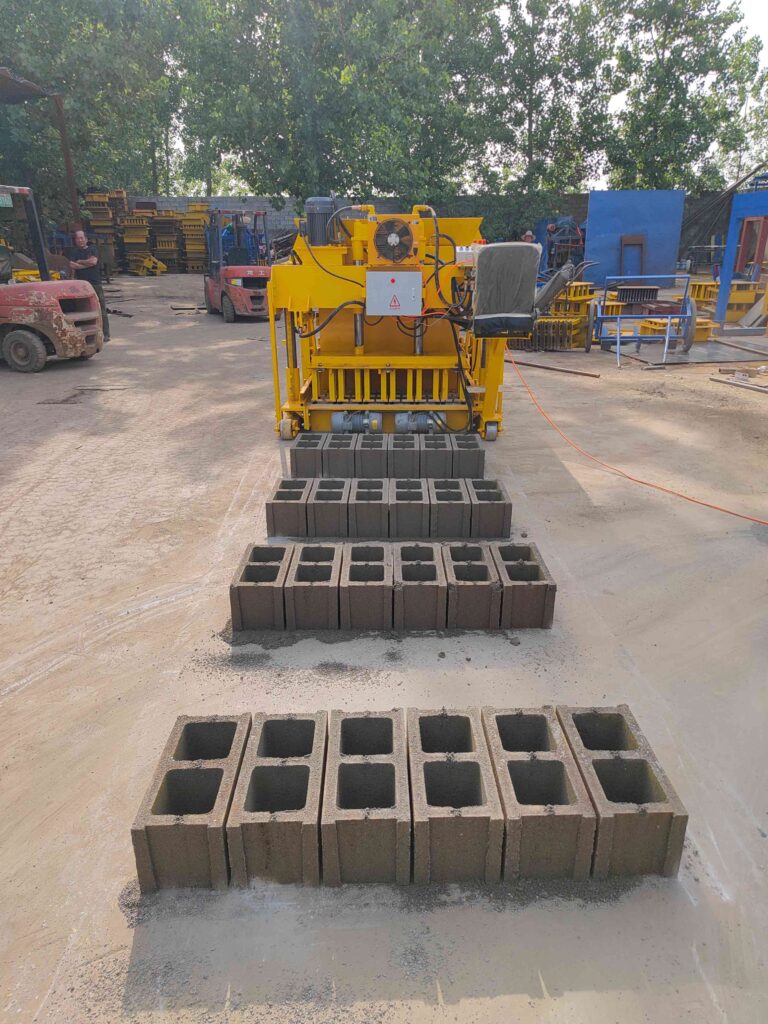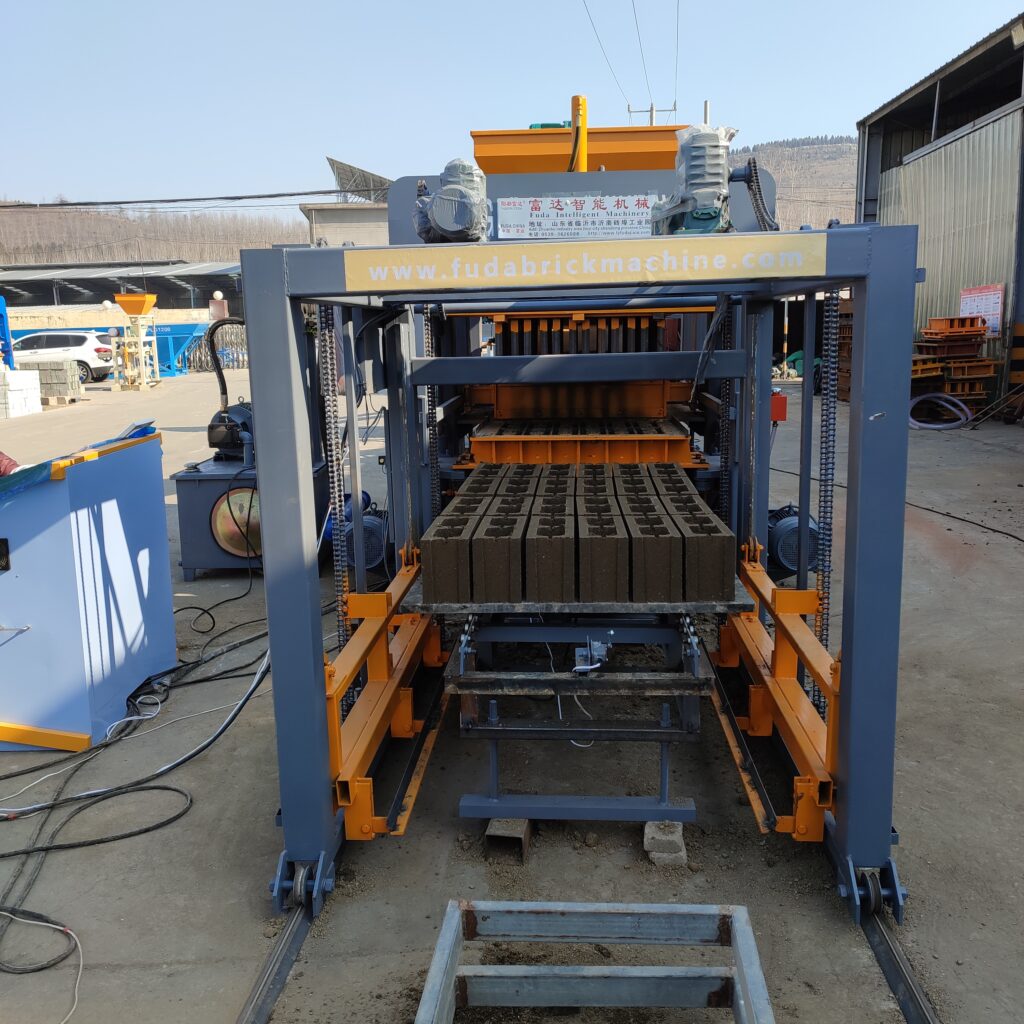
Integrated Process Control: The Central Nervous System
At the core of modern automation lies a sophisticated Programmable Logic Controller (PLC) paired with an intuitive Human-Machine Interface (HMI). This system functions as the plant’s brain, governing and synchronizing all sub-processes.
- Precision Batching and Mixing Automation: The foundation of quality begins with exact material proportions.
- Automated Weight Batching: The system controls pneumatic or motorized valves to discharge aggregates, cement, and water from silos and bins onto high-precision load cells. It automatically compensates for the moisture content in sand using in-line sensors, adjusting water addition in real-time to maintain a constant, optimal water-cement ratio.
- Programmable Mixing Cycles: The PLC manages the entire mixing sequence—ingredient charging, mixing duration, and discharge—ensuring perfect homogeneity batch after batch without operator intervention.
- Machine Cycle Optimization and Synchronization: The forming process itself is entirely automated for peak efficiency.
- Closed-Loop Motion Control: Servo or proportional hydraulic valves precisely control the movement of the feed box, compression head, and mold table. This allows for smoother, faster, and more repeatable cycles than open-loop systems.
- Adaptive Vibration Control: Advanced systems can adjust vibration frequency and amplitude based on the specific mold or product being made, or even in response to sensor feedback during the cycle, ensuring optimal compaction for every block type.
II. Robotic Material Handling and Logistics Automation
Automation seamlessly connects discrete stages of production, eliminating manual transfer—a major source of bottlenecks, damage, and labor cost.
- Automated Product Handling: After demolding, robotic arms, gantry systems, or layered conveyor belts gently lift and transfer the fragile green blocks onto curing racks or carts. These systems are programmed for precise placement to prevent deformation or cracking, operating with a consistency impossible for manual labor.
- Intelligent Pallet Management: A fully automated system manages the entire pallet lifecycle.
- Pallet Return and Cleaning: Pallets are automatically returned from the discharge station to the feed station via an overhead or underground conveyor. They pass through automatic brushing and cleaning stations, and often receive a spray of release agent, all without manual handling.
- Pallet Stacking and Feeding: Clean pallets are automatically stacked and fed into the machine one by one with perfect timing and alignment.
- Curing Automation and Logistics: Automation extends into the curing area. Robotic cart loaders transfer full racks into controlled curing chambers where temperature and humidity are automatically regulated. After curing, systems can automatically de-stack blocks and feed them to cubing and wrapping stations for final shipment.
III. Data-Driven Intelligence and Predictive Analytics
The most advanced level of automation involves the generation and utilization of data to optimize performance preemptively.
- Real-Time Monitoring and Diagnostics: The HMI displays a comprehensive dashboard showing real-time data: production counts, cycle times, hydraulic pressure and temperature, motor amperage, and vibration metrics. Any parameter drifting out of a preset range triggers an immediate visual and audible alarm.
- Predictive Maintenance: The system monitors trends, such as a gradual increase in hydraulic oil temperature or a slight drop in motor efficiency. By analyzing this data, it can predict component failure (e.g., a bearing wearing out, a pump losing efficiency) and generate maintenance alerts пеш a breakdown occurs, scheduling downtime at the most convenient moment.
- Production Data Management and Traceability: Every batch and pallet of blocks produced can be digitally logged with a timestamp, machine parameters used, and raw material batch codes. This creates full traceability, which is invaluable for quality assurance, analyzing production trends, and generating efficiency reports for management.
Conclusion
Automation in modern block making machines represents a paradigm shift from labor-intensive operation to technology-driven manufacturing. It is a multi-layered integration that begins with precise material control, extends through robotic handling that eliminates physical strain and variability, and culminates in intelligent data analytics that optimize the entire system proactively. For the industry professional, this translates to a compelling value proposition: dramatically higher output with lower unit cost, unparalleled product consistency, and a significant reduction in operational risk and waste. By investing in or supplying automated systems, manufacturers are not just buying a faster machine; they are acquiring a deterministic, scalable, and intelligent production asset that defines the future of efficient masonry unit manufacturing.
FAQ
Q1: Does full automation mean the plant requires no human operators?
A: Not entirely. Automation eliminates most manual, repetitive tasks (loading, stacking, pallet handling) but redefines the human role. Operators become supervisors and technicians who monitor the control system, perform quality checks, manage raw material supply, and execute the planned maintenance alerted by the system. The required skill set shifts from physical labor to technical and analytical competence.
Q2: Is automation only viable for very large-scale production facilities?
A: While large greenfield plants showcase full integration, automation is modular and scalable. Even small to medium-sized operations can benefit significantly from core automation like automated batching systems and PLC-controlled machine cycles. These modules deliver immediate improvements in consistency and waste reduction. Additional robotic handling can be added as production volume and justification grow.
Q3: How does automation impact the energy consumption of a block plant?
A: Well-designed automation typically improves energy efficiency. Precise control over motors, hydraulics, and curing environments eliminates wasteful “always-on” operation. For example, variable-frequency drives (VFDs) on motors and pumps match power consumption exactly to demand. Predictive maintenance also keeps the machine running at peak efficiency, avoiding the energy waste of a poorly maintained system.
Q4: What happens during a power outage or system malfunction in a fully automated plant?
A: Robust automated systems are designed with fail-safes. The PLC typically has a battery-backed memory to retain programs and recipes. Safety circuits ensure that in a power loss, all moving parts halt in a safe position. Upon restart, the system often requires a manual reset and diagnostic check to ensure all components are synchronized before resuming automatic operation. Redundancy for critical sensors is a feature of high-end systems.
Q5: Can automated machines produce a wider variety of block types more easily?
A: Yes, this is a key advantage. On an automated machine, changing products is often a matter of the operator selecting a different product recipe on the HMI. The PLC automatically recalls all corresponding parameters: mold-specific vibration profiles, feed settings, and handling robot patterns. This reduces changeover time from hours to minutes and minimizes errors associated with manual reconfiguration, making short production runs of specialty blocks far more economical.