1. Муқаддима
The global construction industry is undergoing a silent revolution, driven by the dual imperatives of efficiency and sustainability. At the forefront of this shift is a product that redefines assembly: the interlocking brick. Unlike conventional masonry, these engineered units form robust structures through precise geometric design, eliminating the need for traditional wet mortar. For distributors, dealers, and procurement professionals, the machinery that produces these innovative components—the industrial interlock brick making machine—represents not just a product line, but a gateway to high-growth market segments. This technology empowers clients to build faster, stronger, and more cost-effectively, addressing critical challenges from affordable housing to resilient infrastructure. This article provides a comprehensive strategic and technical overview for B2B stakeholders seeking to understand, supply, or invest in this transformative manufacturing technology.
2. The Engineering of Connection: Interlock Brick Technology Explained
2.1. Beyond Mortar: The Principle of Mechanical Dry-Stacking
The fundamental innovation lies in the brick’s design. Each unit features precisely molded protrusions (knobs) and corresponding recesses (pockets) on its top and bottom surfaces. When stacked, these elements interlock, creating a mechanical bond that restricts horizontal movement (shear) and vertical displacement. Lateral stability is further enhanced by a patented “lip” or “groove” system along the vertical faces, which locks courses together. This dry-stack method eliminates the time, cost, material waste, and skilled labor associated with mortar application, curing, and pointing.
2.2. Design Evolution: From Basic Blocks to Integrated Systems
Modern interlocking bricks are part of a sophisticated building system. The design has evolved from simple shapes to integrated components that may include:
- Standard Interlocking Blocks: For general wall construction.
- Corner and Half-Blocks: For clean reveals and optimized layouts.
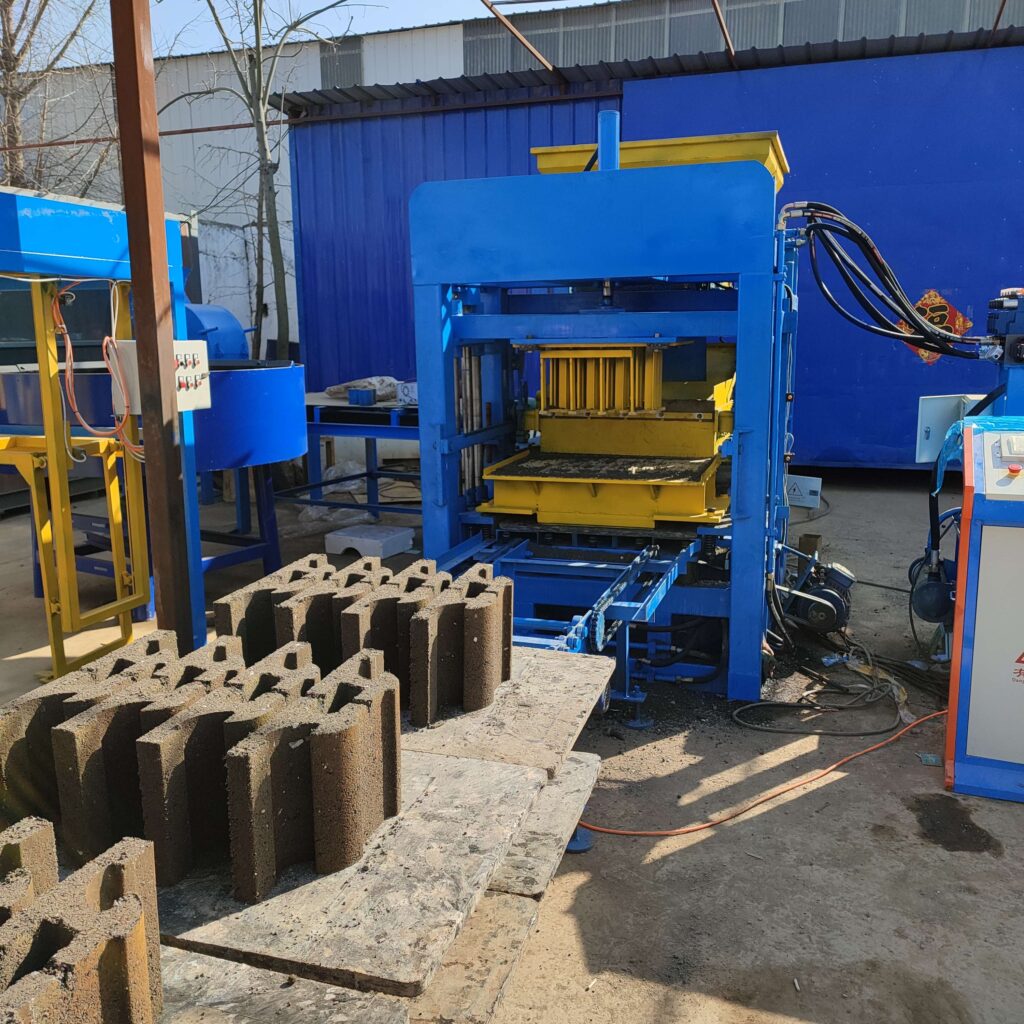
- Channel Blocks: To create continuous reinforcement cavities for vertical rebar and concrete grout, adding seismic and load-bearing capacity.
- Capping Units: To provide a finished top surface.
This systematization allows for the construction of complete, code-compliant structures, broadening the technology’s application beyond boundary walls to primary buildings.
2.3. Core Components of a Modern Interlock Brick Making Machine
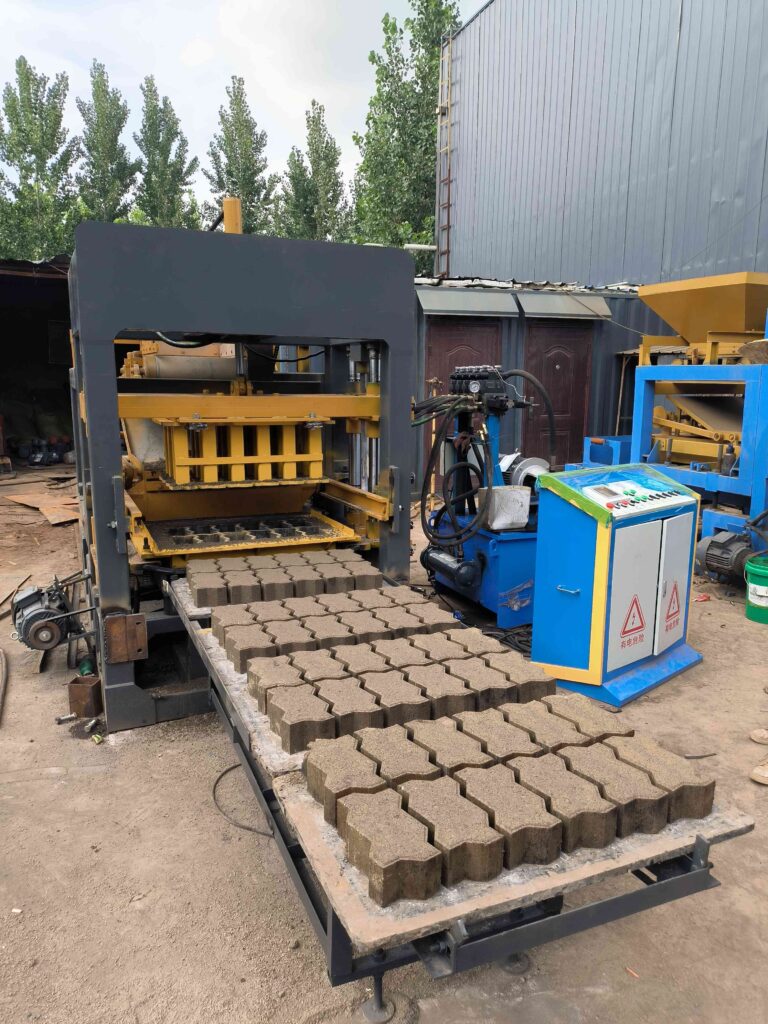
Producing such precision components requires specialized machinery. Key subsystems include:
- High-Tonnage Press Frame: A rigid structure to withstand extreme cyclic pressure, ensuring dimensional accuracy across thousands of cycles.
- Dual-Action Hydraulic System: Provides the immense, controlled force (often 200-1000+ tons) necessary for ultra-high compaction of dry or semi-dry mixes.
- Precision Tooling (Molds & Pallets): Hardened, chromed steel molds are the heart of the process, machined to exacting tolerances to form the complex interlocking geometry. Specific pallets work in tandem with the mold.
- Programmable Automation: A central PLC controls the entire cycle—material batching, feeding, pressing, stripping, and product transfer—ensuring consistency and efficiency.
- Vibration and Compression Integration: Many machines combine high-frequency vibration with hydraulic compression to achieve optimal density and surface finish for cementitious mixes.
3. Market Dynamics and Strategic Opportunities
3.1. Drivers of Global Demand
Multiple powerful trends converge to fuel demand:
- Суръати сохтмон: Projects can be completed 30-50% faster due to dry-stacking and simplified alignment.
- Labor Skill Mitigation: Reduces dependence on highly skilled masons, a critical advantage in regions facing labor shortages.
- Material and Cost Efficiency: Elimination of mortar saves 15-20% on overall wall costs; reduced construction time lowers financing costs.
- Disaster Resilience: Properly engineered and grouted interlock systems demonstrate excellent performance in seismic and high-wind events.
- Sustainability Mandates: The process uses less water, can utilize industrial by-products (fly ash, slag), and reduces site waste.
3.2. Applications and End-User Sectors
The market extends far beyond residential walls:
- Лоиҳаҳои истиқомати арзон: Governments and NGOs are major adopters seeking rapid, durable housing solutions.
- Commercial and Industrial Warehouses: For cost-effective, rapid-enclosure perimeter and interior walls.
- Infrastructure: Retaining walls, sound barriers, and flood control structures.
- Disaster Relief and Military Construction: For deployable, rapid-building systems.
- High-End Architectural Projects: For thermally efficient, modern aesthetic designs using specialized finishes.
3.3. Competitive Advantages for Resellers
For the B2B partner, this technology offers a compelling portfolio addition:
- High-Value Solution Selling: Moves the conversation beyond price-per-brick to total project cost savings.
- Differentiation: Establishes the reseller as a provider of innovative, future-ready construction technology.
- Recurring Revenue Streams: Beyond the machine sale, revenue is generated from mold tooling for new block designs, spare parts, and technical service contracts.
- Market Expansion: Opens doors to public sector tenders and large-scale development projects previously inaccessible with conventional brick machinery.
4. Technical Deep Dive: Machine Capabilities and Production Process
4.1. The High-Pressure Compaction Cycle
The production of structurally sound interlocking bricks requires a meticulously controlled process:
- Автоматӣ кардани бастабандӣ ва омехта кардан: Raw materials (cement, sand, stone dust, additives) are batched and mixed to a consistent, semi-dry consistency.
- Precise Mold Cavity Filling: An automated feeder deposits a measured volume of mix into the intricate mold cavity. Uniform filling is critical for block integrity.
- Simultaneous Vibration and Compression: The mold table vibrates at high frequency to settle the material, while the hydraulic ram applies extreme downward pressure, compacting the mix to near-zero porosity.
- Stripping and Ejection: The newly formed block is carefully stripped from the mold and transferred onto a curing pallet without damaging its delicate interlocking features.
- Curing and Quality Testing: Pallets move to a controlled curing chamber. Finished blocks are tested for compressive strength, dimensional tolerance, and water absorption.
4.2. Material Science: Compatibility and Mix Design
These machines are highly versatile but require specific mixes. They can process:
- Cement-Stabilized Soil: For low-cost, on-site production.
- Concrete Mixes: (Cement, sand, aggregates) for high-strength applications.
- Fly Ash & Slag-Based Mixes: For eco-friendly, high-performance blocks.
- Crushed Stone & Quarry Dust: For optimal density and finish.
Expertise in advising clients on locally-sourced, cost-effective mix designs adds immense value to the machinery sale.
4.3. Automation, Output, and Quality Control
Industrial-grade machines are designed for uninterrupted production. Key performance indicators include:
- Вақти даврӣ: Typically between 10-30 seconds per block, depending on size and complexity.
- Иқтидори баромад Ranges from 1,500 to over 10,000 standard blocks per 8-hour shift.
- Integrated Quality Systems: Modern machines feature sensors that monitor pressure, filling levels, and ejection force, automatically rejecting or flagging sub-standard cycles to ensure near-zero defect output.
5. Investment Analysis and Partner Selection Framework
5.1. Assessing Total Cost of Ownership (TCO) and ROI
A strategic purchase analysis must look beyond the invoice price:
- Capital Expenditure: Machine, tooling, and installation costs.
- Хароҷоти амалиётӣ: Energy consumption (hydraulic and vibration systems), labor, preventive maintenance, and mold refurbishment.
- Revenue Potential: Based on block output, market price, and demand.
- ROI Horizon: Typically, well-operated plants can achieve full ROI in 1-3 years due to high margins and strong demand for the finished blocks.
5.2. Critical Evaluation Criteria for Equipment
B2B partners must vet machinery based on:
- Press Force and Stability: Determines ultimate block strength and suitability for load-bearing applications.
- Tooling Quality and Availability: The durability and precision of molds are non-negotiable. Assess the supplier’s tooling support.
- Automation Level and Ease of Use: From semi-automatic to fully automatic with robotic pallet handling.
- After-Sales Support Infrastructure: Availability of local service engineers, spare parts inventory, and technical training programs is paramount.
- Compliance and Certification: Does the machine produce blocks that meet or exceed relevant international (ASTM, EN) or local building codes?
5.3. Building a Value-Added Partnership Network
Successful market penetration requires more than a sales transaction. It involves:
- Technical Demos and Sample Production: Providing clients with samples from their local materials is the most powerful sales tool.
- Training and Business Planning Support: Helping clients set up operations, source materials, and market their blocks.
- Creating an Ecosystem: Connecting block producers with architects, engineers, and contractors to drive demand for the interlocking building system.
6. Conclusion
The industrial interlock brick making machine is a catalyst for transformation in the construction supply chain. It addresses pressing global needs for speed, affordability, and resilience, creating significant value for manufacturers and builders alike. For the discerning distributor, dealer, or investor, this technology represents a strategic pivot towards high-margin, solution-oriented equipment with demonstrable market demand. By mastering the technical nuances, understanding the driving market forces, and selecting manufacturing partners based on robust quality and support, B2B professionals can position themselves at the forefront of a constructive revolution, building profitable businesses while enabling better, smarter construction worldwide.
7. Frequently Asked Questions (FAQ) for B2B Decision-Makers
Q1: How does the structural integrity of a dry-stack interlock wall compare to a traditional mortared wall?
A: When designed as a system and optionally grouted, interlock walls meet or exceed the structural standards of conventional masonry. The mechanical interlock provides excellent shear resistance. For full load-bearing or seismic applications, the hollow cores are reinforced with rebar and filled with concrete, creating a monolithic, reinforced concrete structure that is exceptionally strong.
Q2: What is the learning curve for operators transitioning from conventional block machines?
A: The core operation is similar, with a focus on mix consistency and machine maintenance. The primary difference is the heightened need for precision in mold handling and setup. Comprehensive training from the equipment supplier typically enables a skilled team to achieve proficient production within a few weeks.
Q3: Can a single machine produce multiple interlocking block designs?
A: Absolutely. Versatility is a key feature. By changing the mold set (which includes the mold box, head, and stripper shoe), the same press can produce a wide array of interlocking shapes—standard blocks, corners, channel blocks, etc. This allows a producer to offer a complete building system from one machine, maximizing market responsiveness.
Q4: What are the primary maintenance concerns, and how is downtime managed?
A: Key maintenance focuses on the precision tooling (mold wear), hydraulic system (fluid cleanliness, seals), and vibration mechanisms. A proactive, scheduled maintenance plan based on operating hours is essential. Reputable suppliers design for serviceability with easy access to key components and provide detailed maintenance manuals to minimize downtime.
Q5: Is this technology suitable for very small-scale or start-up ventures?
A: The market offers a spectrum of machines. While large, fully industrial models target high-volume producers, there are robust stationary or mobile models with lower output (500-1500 blocks per day) that are ideal for community-scale projects, small businesses, or entrepreneurs. The business model remains viable at smaller scales due to the high perceived value of the finished blocks.