I. The Market Position and Value Proposition of Manual Machines
Before dissecting price, it is crucial to understand the unique and persistent demand drivers for manual brick making machinery. These machines are not merely “cheaper alternatives” but strategic tools for specific market conditions.
A. Defining the Manual Machine Segment
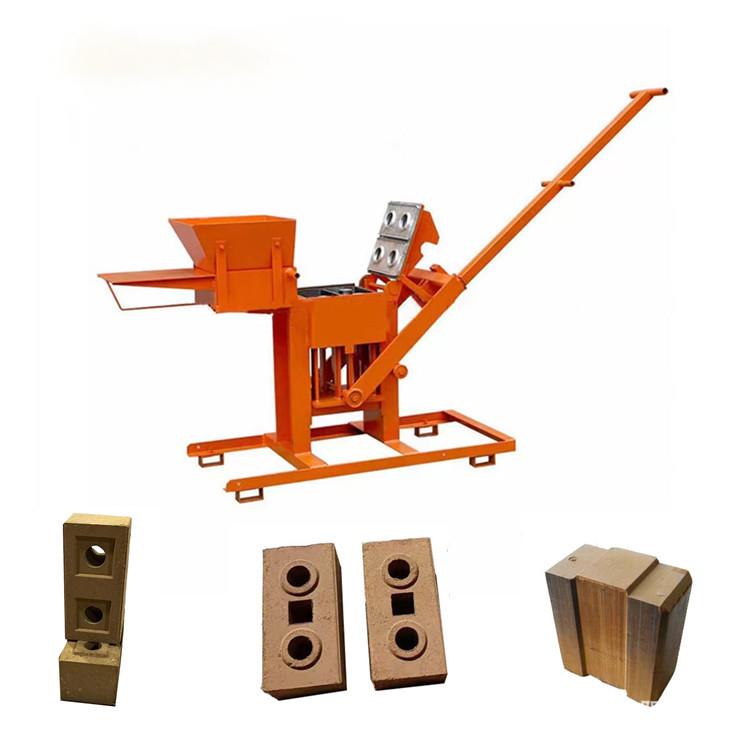
Manual brick making machines are characterized by human-powered operation for key functions such as compression, mold filling, and brick ejection. They require no electrical power or complex hydraulic systems, instead utilizing lever arms, screw presses, or simple hydraulic jacks operated by hand.
B. Core Market Drivers and Client Profiles
- Ultra-Low Capital Entry Point: The primary value proposition is enabling entrepreneurship and small-scale production with minimal initial investment.
- Operational Independence: Ideal for remote or off-grid locations where electricity is unreliable or unavailable. Their simplicity ensures functionality anywhere.
- Micro-Enterprise and Community Projects: The primary clientele includes individual entrepreneurs, small cooperatives, NGOs focused on community-led construction, and homeowners undertaking self-build projects.
- Supplemental and Niche Production: Used for producing specialty bricks, samples, or for small-batch production that does not justify automated equipment.
II. The Anatomy of Price: Key Determinants and Cost Drivers
The price of a manual brick making machine is influenced by a combination of material, manufacturing, and design factors.
A. Material Costs and Build Quality
- Steel Grade and Fabrication: The type, thickness, and quality of steel used in the frame, mold, and lever mechanism are the foremost cost determinants. Machines fabricated from heavy-duty, often mild steel plate with reinforced welds command a higher price than those using lighter, lower-grade materials.
- Critical Component Quality: The durability of the compression mechanism—whether a high-tensile lever arm, a precision-machined screw press, or a reliable manual hydraulic jack—directly impacts cost. Superior bearings, pivot pins, and handling surfaces justify a premium.
B. Design Complexity and Functional Features
- Brick Output and Size Versatility: Machines capable of producing multiple brick sizes or shapes through interchangeable mold boxes are more complex and costly than single-purpose units.
- Ejection Mechanism Design: A well-designed, ergonomic ejection system that minimizes effort and brick damage adds value and manufacturing cost.
- Ergonomics and Labor Efficiency: Designs that incorporate better mechanical advantage, reducing the physical force required per brick, involve more sophisticated engineering. Features like a longer lever arm or a geared mechanism improve productivity but increase price.
C. Manufacturing Overhead and Supply Chain Factors
- Production Scale and Location: Prices vary significantly between large-scale manufacturers using jigs and automated welding (offering economies of scale) and smaller local workshops (with higher per-unit labor costs but potentially lower logistics expenses for nearby markets).
- Supply Chain and Logistics: For import-dependent regions, the final price includes shipping, import duties, and local distribution markups. Locally manufactured or assembled machines may avoid these costs but face different material procurement challenges.
III. Market Price Tiers and Strategic Segmentation
The market for manual machines can be segmented into distinct tiers, each with its own price range and target customer.
A. Tier 1: Entry-Level / Basic Manual Presses (Approx. $100 – $400)
- Product Profile: Often a simple, single-brick mold made from thinner steel, operated by a direct-action lever. May have limited durability and require high operator effort.
- Минтақаи мақсаднок: Individual self-builders, very small-scale homestead projects.
- Пешниҳоди арзиш: Absolute minimum investment. Success depends heavily on operator skill and tolerance for high physical labor.
- Strategic Consideration for Distributors: High volume, low-margin segment. Requires efficient logistics. Quality variance is significant; rigorous supplier vetting is essential.
B. Tier 2: Standard Duty Small Business Machines (Approx. $400 – $1,500)
- Product Profile: The core of the market. Robust steel frame, improved mechanical advantage (e.g., compound lever), often includes a manual hydraulic jack system, and may feature a multi-brick mold (2-4 bricks per cycle).
- Минтақаи мақсаднок: Micro-entrepreneurs starting a small blockyard, community construction groups, small contractors.
- Пешниҳоди арзиш: Optimal balance of affordability, productivity, and durability. Designed for sustained daily use.
- Strategic Consideration for Distributors: This is the most competitive and volume-driven tier for serious B2B sales. Brand reputation for durability and availability of spare parts (like seals for hydraulic jacks) become key differentiators.
C. Tier 3: Heavy-Duty / High-Output Manual Machines (Approx. $1,500 – $3,500+)
- Product Profile: Engineered for near-commercial output. May feature a larger footprint, a more powerful manual hydraulic system or advanced screw press, interchangeable molds for various products (bricks, pavers), and durability suited for cooperative or small enterprise use.
- Минтақаи мақсаднок: Established small businesses, NGOs procuring for multiple projects, vocational training institutes.
- Пешниҳоди арзиш: Highest productivity and longest service life within the manual category. Lowest physical effort per brick and lowest long-term cost of ownership.
- Strategic Consideration for Distributors: Lower volume, higher-margin segment. Selling requires demonstrating lifetime cost savings and reliability. Often includes better after-sales support expectations.
IV. The Total Cost of Ownership (TCO) and Value Beyond Price
For the informed B2B buyer or advisor, the initial purchase price is only one component of the financial equation.
A. Operational and Labor Costs
- Output Efficiency: A $800 machine producing 300 high-quality bricks per day offers better value than a $500 machine producing 150 bricks with high reject rates and operator fatigue.
- Талабҳои меҳнатӣ: Ergonomic design affects the number of operators needed and the sustainability of work over an 8-hour shift.
B. Durability, Maintenance, and Downtime
- Frequency of Repair: Machines with inferior welding or soft pivot points will fail quickly, incurring repair costs and lost production.
- Availability of Spare Parts: A machine is only as good as the availability of its wear parts (e.g., mold liners, piston seals, pivot bolts). Suppliers who provide or can source these parts add immense value.
- Арзиши аз нав фурӯш: A well-known, robust machine will retain a significant portion of its value, effectively lowering its net cost over time.
C. The Cost of Poor Quality
Selling or sourcing a machine that consistently produces bricks with poor dimensional tolerance or low strength passes a hidden cost to the end-user in the form of wasted mortar, slower construction, and potentially substandard structures. Quality has a direct economic value.
V. Strategic Frameworks for Dealers and Procurement Specialists
A. For Dealers: Building a Profitable and Responsible Portfolio
- Curate, Don’t Just Aggregate: Offer a carefully selected machine from each tier, ensuring each represents the best value (quality/price) in its segment. Avoid stocking obviously substandard products that will damage your reputation.
- Develop a Support Ecosystem: Source and stock a kit of common spare parts. Establish basic maintenance training for your clients. This transforms a one-time sale into a long-term relationship.
- Market the Business Case: Create simple ROI calculators for clients, showing how many bricks they need to sell to pay for the machine in each tier. Sell the pathway from subsistence to business.
B. For Procurement Specialists: Sourcing with Discernment
- Due Diligence Beyond the Brochure: Request videos of the machine in operation. Ask for the specifications of the steel used. Physically inspect sample bricks produced by the machine for density and edge sharpness.
- Evaluate the Supplier’s Longevity: Choose suppliers with a track record. A manufacturer that has been producing the same model for years has likely refined its design and resolved flaws.
- Consider the Complete Supply Chain: For large orders (e.g., for an NGO or government program), factor in the cost and feasibility of delivering machines to remote sites and providing basic operational training.
Conclusion
The market for manual brick making machine prices is a nuanced field where cost must be evaluated through the lenses of durability, operational efficacy, and total lifecycle value. For the B2B professional, success hinges on transcending the role of a passive price-point broker. It demands becoming a knowledgeable advisor who can match the right machine—and its associated economic reality—to the specific needs and constraints of the end-user. By developing expertise in the engineering and economic nuances of this segment, distributors can build trusted brands known for reliability, while procurement specialists can make investments that yield tangible, sustainable returns for their organizations or clients. In markets where capital is scarce and reliability is priceless, the true cost of a machine is ultimately measured not by its invoice, but by the stream of quality bricks and the economic opportunity it reliably produces over its working life.
FAQ (Frequently Asked Questions)
Q1: What is a realistic production output we can quote to clients for a standard manual machine?
A: Output is highly dependent on operator skill and machine design. Realistic ranges are:
- Basic Lever Press: 80-150 bricks per person per 8-hour day.
- Standard Hydraulic Jack Press: 200-400 bricks per day with a 2-person team (one filling, one operating).
- Heavy-Duty Multi-Brick Press: 400-700+ bricks per day with an efficient team.
Always emphasize that quality and consistency are as important as sheer quantity.
Q2: What are the most common points of failure in manual machines, and how can they be mitigated?
A: Common failures include:
- Weld Fractures: At stress points on the frame or lever arms. Mitigation: Source machines with robust, continuous welds.
- Bent Levers or Pivot Pins: From inferior-grade steel. Mitigation: Ensure critical components are made from high-tensile material.
- Hydraulic Jack Seal Failure: In manual hydraulic models. Mitigation: Choose machines with standard, replaceable jack units and keep spare seal kits.
- Mold Wear/Damage: Mitigation: Ensure mold faces are made from hardened steel or have replaceable liners.
Q3: How do manual machine prices and value compare to motorized or automated options?
A: Manual machines offer a significantly lower capital entry point (often 10-20% of the cost of a basic electric machine) and zero energy costs. However, their output per labor hour is vastly lower. The comparison is not direct; they serve different markets. The value is in accessibility and operational independence, not competing on pure production volume with automated systems.
Q4: What raw materials are best suited for manual presses, and does this affect machine choice?
A: Manual presses work best with well-graded, low-clay content soils (sandy loam) mixed with a stabilizer like cement. The mix must be relatively dry. Highly clayey or wet mixes will stick and cause operation difficulties. Some heavy-duty screw presses handle slightly wider material ranges. Client education on proper mix design is crucial for success.
Q5: Can manual machines produce interlocking bricks effectively?
A: Yes, but with important caveats. They can produce interlocking bricks, but the precision of the interlock is highly dependent on mold quality and operator consistency. The compressed density (and thus strength) may be lower than that achieved by a high-tonnage hydraulic machine. They are excellent for low-rise, non-load-bearing applications like perimeter walls and landscaping.
Q6: What should be included in a basic spare parts kit for a distributor to offer?
A: A recommended starter kit includes: replacement pivot bolts and nuts, a set of hydraulic seals (if applicable), a spare mold handle or latch, and a set of basic tools for adjustment (wrenches, hammer). Offering a “first-year maintenance kit” as an add-on sale is a valuable service.
Q7: How does the end-user’s location impact the final delivered price and choice of machine?
A: Location is critical:
- Remote, Off-Grid Areas: Manual machines are the only viable option. Final price must include potentially high last-mile transport costs. Durability is paramount due to difficulty of repair.
- Peri-Urban Areas with Unstable Grid: Manual machines still hold an advantage, but clients may be closer to saving for a semi-automatic electric model. Price competition is fiercer.
- Urban Fringes with Reliable Power: Here, manual machines compete directly with low-end electric models. The value proposition must strongly emphasize low cost, no electricity bills, and simplicity of repair.