
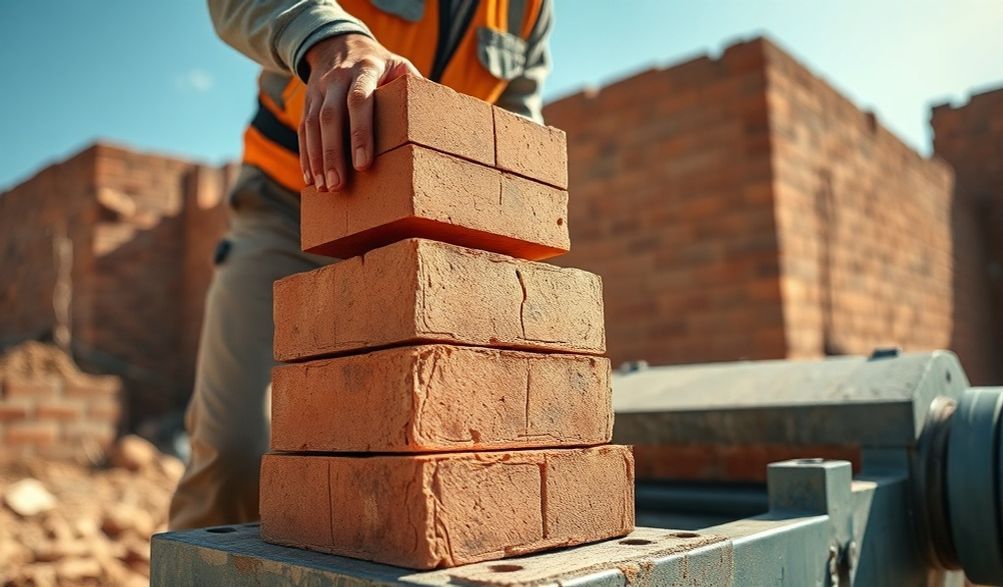
Tanzania Interlocking Brick Machine Price Guide 2024: Costs, Models & Smart Buying Tips
Муқаддима
Tanzania’s construction sector is booming, with an annual growth rate consistently exceeding 6%. In this dynamic landscape, a quiet revolution is building momentum: the shift towards interlocking stabilized soil blocks (ISSBs). For contractors, developers, and entrepreneurs across Dar es Salaam, Arusha, and Mwanza, finding the right Tanzania interlocking brick machine price is the first critical step toward more efficient, sustainable, and profitable projects.
With over a decade of experience supplying construction machinery and advising on projects from the coastal developments to the central corridor, we understand the unique challenges and opportunities in the Tanzanian market. We’ve seen firsthand how the right equipment can transform a business.
This guide is designed to cut through the confusion. We’ll provide you with transparent, localized 2024 price estimates, break down the factors that affect cost, compare machine types for your specific needs, and offer actionable advice. Our goal is to empower you to make an informed, confident investment that delivers real value for your Tanzanian construction business.
Understanding Interlocking Brick Machines & Their Benefits in Tanzania
Before diving into costs, it’s essential to understand what you’re investing in and why it’s becoming the preferred choice for modern Tanzanian construction.
How Interlocking Brick Machines Work: A Simple Explanation
Unlike traditional fired bricks or concrete blocks, interlocking bricks are compressed, not molded wet. Here’s the simple process:
- Омодасозии Маводи Хом: Locally available soil is mixed with a small percentage (5-10%) of cement and water.
- Фарсудан This mixture is fed into the machine’s chamber. A high-pressure hydraulic or mechanical system compresses it with immense force.
- Хориҷ кардан: The machine ejects a dense, solid block with a precise interlocking design (like tongues and grooves) on its top and sides.
- Шифо додан: Blocks are stacked and cured with water for 7-14 days, gaining strength without the need for kiln firing.
The magic is in the compression and the design, which eliminates the need for mortar in vertical joints, saving up to 50% on building time and material costs.
Key Advantages for Tanzanian Construction
- Назарраси сарфаи арзиш Drastically reduces cement and sand use. No mortar for vertical joints means lower labor costs and faster construction timelines.
- Superior Speed: Walls go up 2-3 times faster. A trained crew can lay hundreds of blocks per day.
- Тозагии муҳити зист: Uses local soil, minimizes cement (a high carbon-footprint material), and requires no wood for firing, helping to combat deforestation.
- Proven Strength & Durability: Properly made compressed blocks have excellent compressive strength, often exceeding that of standard fired bricks, and offer great thermal and acoustic insulation.
Common Applications in the Tanzanian Context
- Affordable Residential Housing: Ideal for single-family homes, multi-unit developments, and government housing projects.
- Commercial Buildings: Used for offices, schools, clinics, and warehouse perimeter walls.
- Роҳҳои пиёдагард ва тарроҳии манзара: For durable, permeable walkways, driveways, and garden paths.
- Деворҳои нигоҳдорӣ: Their interlocking nature provides inherent stability for erosion control.
Key Factors Influencing Interlocking Brick Machine Prices in Tanzania
The price tag you see is a sum of its parts and capabilities. From our experience working with contractors in Dodoma and Mbeya, these are the core factors that determine cost.
Намуди Мошина ва Сатҳи Автоматсозӣ
Ин роҳбари асосии нарх аст.
* Дастгоҳҳои дастӣ: Operated by a hand lever or foot pedal. Lowest upfront cost, lowest output, highest labor intensity.
* Машинаҳои ним-автоматӣ: Feature an electric or diesel engine to power the compression. Operator feeds material and activates the cycle. Offers the best balance of price, output, and ease of use for most Tanzanian businesses.
* Машинаҳои пурра автоматӣ: Include automated feeding, mixing, and block ejection. They are production powerhouses with a correspondingly high price, suited for large-scale block yards.
Иқтидори Истеҳсолӣ (Блокҳо дар Соат)
Price scales directly with output. A machine producing 300 blocks per hour will cost significantly less than one producing 1,500 blocks per hour. It’s crucial to match capacity with your project pipeline and business growth plans.
Бренд ва кишвари истеҳсол
- Locally Assembled/Kenyan: Often good support networks. Prices can be competitive.
- Chinese Brands: Dominate the market due to attractive initial prices. Quality varies immensely—from excellent to poor. The critical factor is the local supplier’s backup.
- Брендҳои Ҳинд: Known for robust, simple designs well-suited to African conditions. Often a middle-ground in pricing.
- Брендҳои Аврупоӣ/Амрикоӣ: Premium quality and price. Less common in the Tanzanian market.
Power Source
- Электрикӣ: Clean, quiet operation but requires reliable grid power or a generator.
- Дизелӣ: Higher fuel cost but essential for sites without electricity. Offers high torque.
- Manual/Pedal: No running costs, but limited to very small-scale production.
After-Sales Support: The Make-or-Break Factor
A machine is a long-term investment. A cheap machine with no local support can become a very expensive paperweight. Consider:
* Warranty: What is covered and for how long?
* Service Centers: Does the supplier have trained technicians in Dar es Salaam, Mwanza, or Arusha?
* Дастрасии қисмҳои эҳтиётӣ: Are common wear parts (like moulds, hydraulic seals) stocked locally, or must they be shipped from abroad, causing weeks of downtime?
Detailed Price Breakdown for Tanzania (2024 Estimates)
Огоҳсозӣ: The following prices are estimates in Tanzanian Shillings (TZS) and US Dollars (USD) for guidance only as of early 2024. Final costs are subject to currency fluctuation, import duties (if applicable), shipping to Dar es Salaam port, inland transportation, and local taxes. Always obtain a direct, detailed quotation from your supplier.
Manual Interlocking Brick Machine Prices
- Диапазини нарх: TZS 1,500,000 – TZS 4,500,000 / $600 – $1,800 USD
- Барои беҳтарин: Individual home builders, very small startups, NGOs for community projects, and producing specialty blocks in low volume.
- Натиҷа: 80 – 200 blocks per hour.
Semi-Automatic Machine Prices
- Диапазини нарх: TZS 5,000,000 – TZS 18,000,000 / $2,000 – $7,200 USD
- Барои беҳтарин: This is the most popular and versatile category for growing construction businesses, block-making enterprises, and medium-scale housing projects across Tanzania.
- Натиҷа: 250 – 800 blocks per hour.
Fully Automatic Machine Prices
- Диапазини нарх: TZS 25,000,000+ / $10,000+ USD
- Барои беҳтарин: Large commercial block yards supplying major construction projects, developers with continuous demand, and industrial-scale production.
- Натиҷа: 1,000 – 3,000+ blocks per hour.
Additional Cost Considerations
- Mould/Die Sets: Different block patterns (straight, curve, circle) require specific moulds. Budget TZS 500,000 – TZS 2,000,000 per additional mould.
- Raw Material Prep: A mechanical pan mixer or soil crusher may be needed for efficiency, adding TZS 2M – TZS 8M.
- Transportation & Installation: Cost from port to your site and professional setup.
- Training: Some suppliers include basic operator training; others charge a fee.
How to Choose the Right Machine for Your Needs & Budget
Assessing Your Project Scale and Business Goals
Худ пурсед:
* How many blocks do I need per day/week for my current project?
* Is this a one-off project or an ongoing business?
* What is my 2-year growth vision? Buying a machine with slightly more capacity than you currently need can be a smart move.
Total Cost of Ownership vs. Initial Purchase Price
The cheapest machine can be the most expensive. Calculate:
Total Cost = Purchase Price + (Maintenance & Repair Costs) + (Downtime Costs) + (Energy/Fuel Costs)
A slightly more expensive machine from a supplier with excellent local support often has a far lower total cost of ownership.
Vetting Suppliers and Manufacturers
Саволҳои асосӣ барои пурсидан:
* “Can I visit an existing customer’s site in Tanzania to see the machine working?”
* “Where is your service center located, and what is your typical response time?”
* “Can you provide a list of locally available spare parts and their prices?”
* “What training do you provide?”
The Importance of Seeing a Demo and Testing Soil Samples
Never buy blind. Witness a live demonstration. Furthermore, provide your local soil sample to the supplier. They can test it (or advise you) to confirm the correct soil-cement ratio, ensuring your blocks will be strong and durable.
Where to Buy Reliable Interlocking Brick Machines in Tanzania
Reputable Local Dealers and Distributors
Purchasing from an established local dealer is often the safest route for first-time buyers. They handle import logistics, offer localized warranties, and provide direct support. Look for established companies in:
* Dar es Salaam: The major hub for machinery imports and distribution.
* Mwanza: Key suppliers for the Lake Zone region.
* Arusha & Moshi: Serving the Northern Zone and its active construction market.
Direct Import Considerations
Муҳоҷизот: Potentially lower unit cost for high-volume orders.
Манфӣҳо You are responsible for all import duties, customs clearance, shipping logistics, and technical support. You must vet the overseas manufacturer with extreme diligence.
Exploring Financing and Leasing Options
Some local dealers and financial institutions are beginning to offer financing plans for equipment. This can improve cash flow by spreading the cost over time. Always compare the total repayment amount to the cash price.
Frequently Asked Questions (FAQ) About Interlocking Brick Machine Prices
Q1: What is the cheapest interlocking brick machine available in Tanzania?
A: The absolute cheapest are manual, lever-operated machines, often found starting around TZS 1.5 million. However, we caution that their low output and high labor requirement make them viable only for tiny, personal projects, not for a sustainable business.
Q2: Can I get a good quality machine under TZS 5 million?
A: Yes, absolutely. In the TZS 4-5 million range, you can find entry-level semi-automatic electric or diesel models from reputable brands, particularly Indian or certain Chinese manufacturers with local support. Expect a production capacity of 250-400 blocks per hour, suitable for a small to medium business.
Q3: Are Chinese machines a good option for Tanzania?
A: They can be an excellent, cost-effective option, but due diligence is paramount. The key is not the country of origin but the local supplier. Choose a supplier who has a physical workshop, stocks spare parts, and has a track record. A good Chinese machine with great local support is far better than a premium brand with no local presence.
Q4: How much profit can I make per block to calculate ROI?
A: This is highly location-specific, but here’s a simplified example:
* Cost per block (materials: soil, ~5% cement, labor): ~TZS 250
* Selling price per block (market rate varies): ~TZS 400 – 500
* Gross profit per block: ~TZS 150 – 250
If your machine produces 500 blocks/day, your gross daily profit potential is TZS 75,000 – 125,000. A TZS 10M machine could see a return on investment in a few months with consistent sales.
Q5: What hidden costs should I budget for?
A: Beyond the machine price, budget for:
1. Import duty and VAT (if importing directly).
2. Transport from Dar port to your site.
3. A solid, level concrete foundation for the machine.
4. Initial stock of spare parts (e.g., a set of seals, spare mould wear parts).
5. Operator training time/cost.
6. First batch of raw materials (cement, test soil).
Conclusion & Final Recommendations
Choosing an interlocking brick machine in Tanzania is a significant decision that hinges on your specific project scale, budget, and long-term vision. While the Tanzania interlocking brick machine price is a crucial starting point, it should not be the sole deciding factor.
Our final expert advice, drawn from years in the market, is this: Prioritize total value over the lowest initial price. Invest time in vetting your supplier’s after-sales capability as rigorously as you inspect the machine. A partnership with a knowledgeable, locally-present supplier is an insurance policy for your investment.
Use this guide as a framework for your discussions with potential suppliers. Come prepared with questions about your soil, your output needs, and their support structure. By doing so, you’ll be well on your way to acquiring a machine that builds not just walls, but a stronger, more profitable business for years to come.
Ready to take the next step with confidence? Contact our expert team today for a personalized consultation tailored to your project in Tanzania, or request a quote from our network of trusted, vetted suppliers.
<