
The Complete Guide to Manual Brick Making Machines: Types, Process & Benefits
For millennia, humanity has built shelters from the earth beneath our feet. Today, the quest for affordable, durable, and sustainable building materials is more pressing than ever. Whether you’re a DIY enthusiast dreaming of a backyard studio, a homesteader planning a root cellar, or a community leader in a developing region looking to build a school, the foundation of your project often begins with a simple, yet critical, question: how do we source quality bricks without breaking the bank?
The high cost and logistical complexity of commercial bricks—involving manufacturing, transportation, and middlemen—can stifle small-scale projects and place essential construction out of reach for many. This challenge calls for a return to a more hands-on, self-sufficient approach, powered not by industrial factories, but by human ingenuity and simple, effective technology.
Enter the manual brick making machine: a practical, cost-effective, and profoundly empowering tool. This guide is designed to be your comprehensive resource. Built on a foundation of mechanical principles, construction knowledge, and a commitment to accurate, actionable information, we will explore how these machines work, their undeniable benefits, the different types available, and the key factors you must consider to make a successful investment. Let’s unlock the potential of turning local soil and simple materials into the building blocks of your future.
What is a Manual Brick Making Machine and How Does It Work?
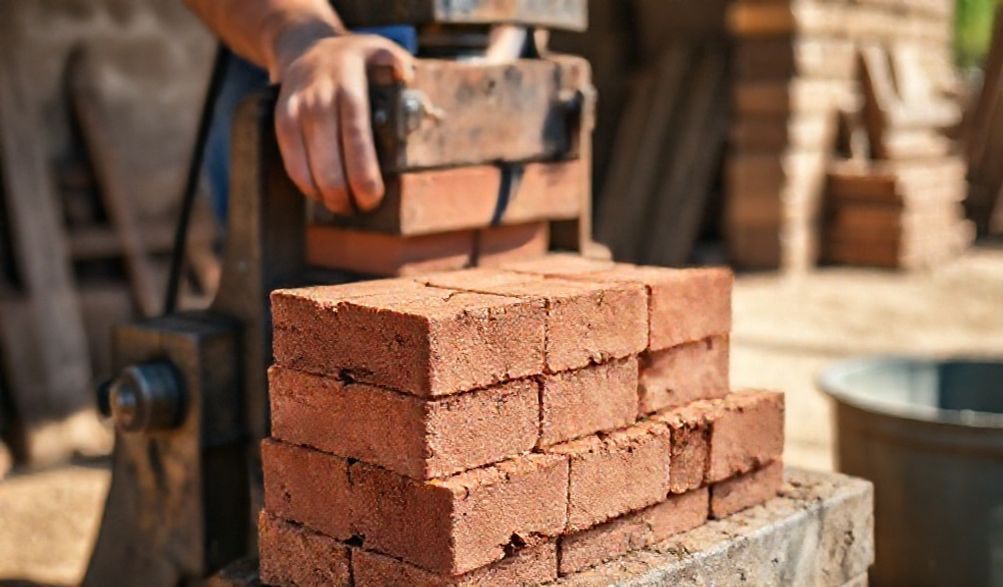
At its core, a manual brick making machine is a device that uses mechanical leverage to compress a raw material mixture into a dense, uniform building block. It bypasses the need for expensive kiln firing or complex machinery, harnessing simple physics to create strength and stability.
Core Principle: Compression and Molding
Принципи асосӣ содда аст:compression. By applying significant pressure to a loose mixture of soil, sand, and a small amount of cement (as a stabilizer), the particles are forced together. This compression eliminates air pockets, increases density, and creates a strong mechanical bond. The mold gives the compressed material its precise, consistent shape, resulting in a “green brick” ready for curing.
Компонентҳои асосӣ шарҳ дода шуданд
While designs vary, most manual presses share these essential components:
- Фрейми Асосӣ The robust, usually steel, skeleton of the machine. It must withstand immense and repeated pressure without bending or warping.
- Молд ё Хоппер: The cavity that defines the brick’s shape (e.g., rectangular, interlocking). This is where the raw mix is loaded.
- Compression Plate/Platen: The plate attached to the lever system that actually descends into the mold to compress the material.
- Механизми ливор The heart of the operation. This long lever amplifies the operator’s force, providing the necessary pressure (often several tons) for effective compression. Some models use a flywheel or cam system for additional mechanical advantage.
- Ejector System: A mechanism to gently push the freshly formed brick out of the mold after compression, often a foot pedal or secondary lever.
The Basic Operational Cycle
The process is cyclical and, with practice, becomes highly efficient:
- Омехта кардан Raw materials (soil, sand, cement) are mixed with a precise amount of water to achieve a consistent, damp—not wet—mixture.
- Пур кардан The mold is filled with the mixture, often slightly overfilled to ensure a complete brick.
- Фаршидани: The operator pulls or pushes the lever, driving the compression plate down and compacting the mixture with great force.
- Берун кардан: The lever is released, and the ejector system is engaged to push the solid, “green” brick out of the mold.
- Шифо додан: The brick is carefully set aside to dry and gain strength over a period of days or weeks through a chemical process (hydration of cement), not firing.
Top Advantages of Using a Manual Brick Press
Why choose a manual press over simply buying bricks? The benefits extend far beyond simple cost savings, touching on empowerment, sustainability, and quality.
Significant Cost Reduction
This is the most immediate advantage. You eliminate:
* Manufacturer and Retail Markups: You pay for materials, not processed bricks.
* Transportation Costs: Often the largest expense for remote projects. You produce bricks directly on-site using locally sourced materials.
* High Capital Outlay: Manual machines are a fraction of the cost of motorized or automated brick plants, with minimal ongoing energy costs.
Empowerment and Self-Sufficiency
A manual brick press is a tool of independence. It allows you to:
* Control Your Supply Chain: Produce bricks on-demand, eliminating project delays due to material shortages.
* Ensure Quality: You directly control the mix design and compression, ensuring every brick meets your standard.
* Build Anywhere: Ideal for off-grid locations, rural areas, or disaster relief where supply chains are broken or non-existent.
Sustainability and Eco-Friendliness
In an era of conscious construction, manual brick making stands out:
* Low Embodied Energy: It requires no fossil fuels for operation or kiln firing.
* Use of Local Materials: Primarily uses subsoil, which is abundant and typically a waste product on construction sites.
* Reduced Transport Emissions: Zero miles traveled for the finished brick.
* Potential for Recycled Content: Crushed construction waste or other aggregates can often be incorporated into the mix.
Durability and Quality of Finished Bricks
Do not mistake “manual” for “inferior.” Properly compressed stabilized bricks are:
* Extremely Dense: High compression creates a water-resistant and durable block.
* Structurally Sound: They achieve compressive strengths suitable for single and even multi-story load-bearing walls when engineered correctly.
* Dimensionally Uniform: Precision molds ensure consistent sizing, making construction faster and easier.
* Thermally Efficient: Earth-based bricks have excellent thermal mass, helping to regulate indoor temperatures.
Common Types of Manual Brick Making Machines
Not all manual presses are the same. The right type for you depends on your project goals, material availability, and desired brick style.
Soil/Cement Interlocking Brick Presses
These are among the most popular and revolutionary designs. They produce bricks with profiled tops and bottoms that lock together like puzzle pieces.
- Key Feature: Mortar-less construction. Walls are built by dry-stacking interlocking bricks, sometimes with a thin surface slurry. This drastically speeds up building time, reduces skilled labor needs, and saves another 30-50% on mortar costs.
- Барои беҳтарин: Building efficient, strong walls for homes, sheds, and perimeter walls. Brands like “Hydraform” have popularized this style, though many manufacturers produce similar manual versions.
Concrete Block Molds (Stationary & Mobile)
This category encompasses a wide range, from simple DIY kits to robust commercial manual presses.
- Stationary Molds: Simple, often single-brick molds made of steel or plastic. You fill them, tamp the mixture down manually, and then disassemble the mold to release the block. Very low cost, but slower and more labor-intensive.
- Mobile Presses: More advanced machines on wheels or a trolley. They feature a lever-operated compression system and can often produce multiple standard blocks (e.g., hollow or solid) per cycle. They offer a good balance of output and affordability.
Clay/Adobe Brick Molds and Presses
Focused on traditional earth-building techniques, these are often simpler than stabilized earth block presses.
- Функсия They shape un-stabilized clay-rich soil mixtures (adobe) into uniform bricks for sun-drying.
- Раванд: The bricks are not chemically stabilized with cement and must be protected from heavy rain unless plastered. They offer the ultimate in low-cost, low-tech, natural building.
- Барои беҳтарин: Dry climates, historical restoration projects, or builders committed to 100% natural materials.
A Step-by-Step Guide to Making Bricks Manually
Success lies in the process. Here’s how to go from raw materials to a finished, cured brick.
Step 1: Sourcing and Preparing Your Raw Materials
The mix is everything. A general starting ratio for a stabilized compressed earth block (CEB) is:
* 70% Sand/Aggregate (provides skeletal strength)
* 30% Clay/Silt (binds the mix together)
* 5-10% Cement (by volume, acts as the stabilizer)
Crucial Pre-Step: The Drop Test. Take a handful of your moist mix, form it into a ball, and drop it from waist height. If it crumbles, it needs more clay/binder. If it flattens like a pancake, it has too much clay and needs more sand. Ideally, it should stay intact with only a few cracks.
Mix thoroughly until the color is uniform and the material holds its shape when squeezed without dripping water.
Step 2: Operating the Machine for Optimal Compression
- Вазифа: Place the machine on a firm, level surface.
- Fill: Scoop the mix into the mold cavity. Do not pack it down; let it fall in loosely but ensure it’s slightly heaped.
- Фурӯборӣ кардан Apply steady, full pressure on the lever through its entire range of motion. You should feel significant resistance. Many machines are designed to “lock” at the point of maximum compression. Hold for a moment.
Step 3: Ejecting, Handling, and Curing the “Green” Bricks
- Берун кардан: Gently engage the ejector to push the brick out onto a pallet or board.
- Handle with Care: “Green” bricks are fragile. Transport them on a flat board without jostling.
- Stack for Curing: Stack bricks with small gaps between them for air circulation. Do not expose them to direct sun and wind immediately.
- The Cure: For cement-stabilized bricks, curing is critical. Keep them moist by covering them with plastic sheeting or lightly spraying them with water 1-2 times daily for 7-14 days. This allows the cement to fully hydrate and develop maximum strength. Full strength is typically reached at 28 days.
Critical Factors When Choosing a Manual Brick Machine
Making the right purchase decision ensures years of productive service.
Production Capacity & Brick Specifications
- Bricks Per Hour: Be realistic. A skilled operator might produce 30-70 bricks per hour. Calculate your daily project needs.
- Brick Size & Style: Does it make the brick size you need (standard, half-block, interlocking)? Can it produce different styles with changeable molds?
- Output per Cycle: Does it produce one brick or multiple bricks per compression cycle?
Build Quality and Durability
Inspect (or ask for detailed photos of):
* Steel Thickness: The main frame and mold should be made from thick, high-tensile steel.
* Weld Quality: Welds should be clean, continuous, and robust.
* Finish: A coat of rust-resistant paint is a good sign of quality control.
* Moving Parts: Pivots and bearings should be solid and protected from dust ingress.
Ease of Use and Maintenance
- Weight & Portability: Can it be moved by two people? Does it have wheels?
- Ergonomics: Is the lever action smooth? Is the operating height comfortable?
- Maintenance Access: Can you easily clean the mold and access parts for lubrication or replacement?
Supplier Reputation and Support
This is perhaps the most critical factor for long-term success.
- Avoid Anonymous Sellers: Be wary of suppliers with no company history, physical address, or customer reviews.
- Seek Documentation: A reputable supplier provides clear assembly and operation manuals.
- Ask About Spare Parts: Are wear parts (like mold liners, shear pins, or ejector pads) available for purchase? A machine is useless if a broken $10 part can’t be replaced.
- Look for Customer Service: Choose a supplier known for responsive support. Your trust and safety in this investment depend heavily on their expertise and reliability.
Frequently Asked Questions (FAQ)
Q: What is the ideal soil mixture for a manual brick press?
A: While a 70% sand/30% clay mix with 5-10% cement is a good starting point, the “ideal” mix is local. Always perform simple field tests (like the drop test) and, for large projects, consider a professional soil lab analysis for best results.
Q: How many bricks can I make in a day with a manual machine?
A: A single skilled operator can realistically produce between 200 and 500 high-quality bricks in an 8-hour day. This depends on machine efficiency, mix preparation speed, and workflow organization.
Q: Do manual bricks require firing in a kiln?
A: No. Bricks from manual presses are either Stabilized Compressed Earth Blocks (gaining strength from cement hydration) or Concrete Blocks. They cure through a chemical process and drying, not thermal firing.
Q: Are these bricks strong enough for load-bearing walls?
A: Yes. When produced correctly with a properly engineered stabilized mix, compressed earth blocks and concrete blocks are used globally for load-bearing construction in single and multi-story buildings. Always consult local building codes.
Q: What maintenance does a manual brick machine need?
A: Maintenance is simple: clean the mold thoroughly after each use to prevent build-up, periodically check and tighten all bolts, and lubricate moving pins and hinges with light oil to ensure smooth operation.
Conclusion
The manual brick making machine is more than just a tool; it’s a gateway to affordable, sustainable, and self-reliant construction. It democratizes the building process, turning locally available earth into durable, quality building blocks while dramatically reducing costs and environmental impact.
By empowering you to control your material supply and quality, it transforms you from a passive consumer into an active creator of your built environment. Whether your goal is a garden wall, a home, or a community project, the principles of compression, proper mix design, and careful curing remain the same.
Use this guide as your foundational knowledge. We strongly encourage you to take the next step responsibly: consult with local building professionals or engineers familiar with earth construction, test your specific soil, and, most importantly, invest in a machine from a reputable, supportive supplier. With the right knowledge and the right tool, you have the power to build something that lasts.
<