
Дастури ниҳоии мошинҳои блокҳои заминфишурда: Ба таври устувор бино кунед
Муқаддима
Imagine constructing a beautiful, durable home or building using the very earth beneath your feet. As the world grapples with the climate crisis and soaring construction costs, the search for sustainable, affordable, and resilient building materials has never been more urgent. Conventional materials like fired bricks and concrete blocks come with a heavy price: high carbon emissions from kilns and cement production, significant financial cost, and complex supply chains that strain local economies.
Enter a time-tested yet innovative solution: Compressed Stabilized Earth Blocks (CSEBs) and the machines that produce them. This technology isn’t a fringe experiment; it’s a proven, engineered method gaining global traction for its elegance and efficiency. This guide is crafted from a synthesis of mechanical engineering principles, on-the-ground construction experience, and current industry data. Whether you’re a builder, architect, community organizer, or a determined DIY enthusiast, this comprehensive resource will empower you with the knowledge to understand, select, and utilize a compressed soil block machine effectively.
We will demystify how these machines work, detail their profound benefits, explore the different types available, and walk you through the entire process—from soil testing to curing. By the end, you’ll be equipped to make an informed decision about harnessing this revolutionary approach to construction.
What is a Compressed Soil Block Machine?
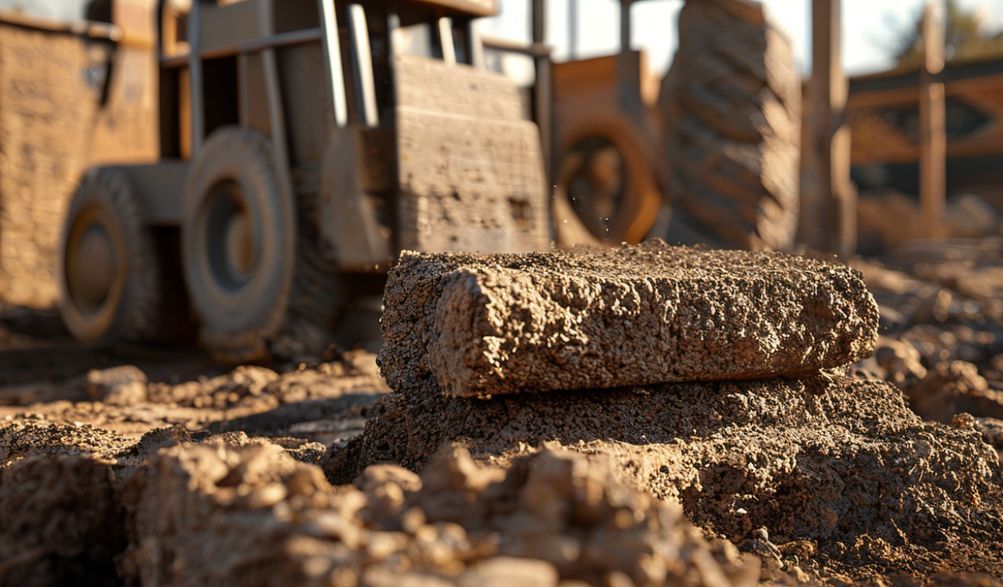
At its core, a compressed soil block machine is a device that compacts a damp mixture of soil and a small amount of stabilizer into a high-density, regular-shaped block—all without the need for firing. It replaces the kiln with immense mechanical force, transforming raw earth into a premier building unit.
The Science Behind Compressed Stabilized Earth Blocks (CSEBs)
The magic lies in the material science. A CSEB is not just mud; it’s a carefully engineered composite:
- Хок: The primary ingredient, ideally a blend of:
- Лой Acts as the natural binder.
- Рег Provides the skeletal structure and reduces shrinkage.
- Лой Fills the voids between sand particles.
- Стабилизатор: A small percentage (typically 5-10%) of cement or lime is added. This chemically reacts with the soil and moisture, binding the particles together permanently and significantly increasing strength and water resistance.
- Moisture: Added to activate the stabilizer and allow for proper compaction.
The key principle is фишори механикӣ. By applying extreme pressure—anywhere from 500 to over 2,000 PSI—the machine forces these particles into intimate contact, eliminating air voids and creating a dense, coherent mass. The stabilizer then cures over time, locking this density into a strong, durable block.
How the Machine Works: From Soil to Block
While designs vary, the fundamental process is consistent across most machines:
- Хӯрок додан The prepared soil-stabilizer mixture is loaded into a hopper or directly into a mold chamber.
- Фарсудан A hydraulic ram or mechanical lever drives a piston into the mold, subjecting the mixture to intense, controlled pressure. This is the defining action that differentiates it from adobe or cob.
- Хориҷ кардан: After compression, the newly formed “green” block is carefully ejected from the mold, maintaining its precise shape and sharp edges.
- Curing (Off-Machine): The blocks are stacked and kept moist under cover for a period (typically 28 days for cement stabilization) to allow the stabilizer to fully hydrate and develop strength.
Think of it as a high-pressure punch that rearranges earth into a robust building Lego.
Key Benefits of Using a Compressed Soil Block Machine
The advantages of this technology span environmental, economic, and performance categories, making a compelling case for its adoption.
Environmental & Sustainability Advantages
- Radically Low Carbon Footprint: Eliminating the fossil-fuel-fired kiln saves an enormous amount of embodied energy. Studies, including those referenced by the Auroville Earth Institute, show CSEBs can have less than 1/3 the carbon footprint of fired bricks.
- Hyper-Local Material Sourcing: The primary material—soil—is often available on or near the site, slashing transportation emissions and costs associated with hauling bricks or concrete.
- Minimal Waste & Fully Recyclable: Production creates virtually no waste. Any broken blocks or leftover material can be crushed and reintroduced into the process. At end-of-life, the blocks can return to the earth or be reused.
Economic & Practical Benefits
- Significant Material Cost Savings: By valorizing local soil, material costs can drop by 30-50% compared to conventional masonry, depending on local context.
- Иқтидори истеҳсолии маҳаллӣ: Producing blocks where they will be used eliminates middlemen, reduces logistics, and gives builders complete control over supply and quality.
- Lifecycle Energy Savings: The high thermal mass of earth blocks naturally regulates indoor temperatures, reducing the need for mechanical heating and cooling, leading to long-term energy bill savings.
Construction & Performance Benefits
- Баланд ва устуворӣ: Properly made CSEBs can achieve compressive strengths exceeding 7 MPa, matching or surpassing many common fired bricks, making them suitable for multi-story load-bearing walls.
- Superior Indoor Climate Control: Their density provides excellent thermal mass, absorbing heat during the day and releasing it at night. They also offer notable acoustic insulation.
- Inherent Safety: Earth blocks are non-toxic, fire-resistant, and, when properly detailed, resistant to pests like termites.
Types of Compressed Soil Block Machines
Choosing the right machine depends entirely on your project scale, budget, and labor context.
Manual Press Machines (e.g., Cinva Ram style)
- Барои беҳтарин: Small-scale projects, community self-build initiatives, NGOs, workshops, and owner-builders.
- Муҳоҷизот:
- Very low capital cost.
- No electricity or fuel required—fully human-powered.
- Highly portable and simple to maintain.
- Манфӣҳо
- Labor-intensive; output is limited (e.g., 50-100 blocks per person per day).
- Consistency depends heavily on the operator’s technique.
Semi-Automatic & Fully Automatic Electric/Hydraulic Machines
- Барои беҳтарин: Medium to large-scale housing projects, commercial production yards, and social enterprises.
- Муҳоҷизот:
- High, consistent output (hundreds to thousands of blocks per day).
- Uniform block quality with less operator skill required.
- Significantly reduces physical labor strain.
- Манфӣҳо
- Substantially higher initial investment.
- Requires a reliable power source (electricity or diesel generator).
- Мураккабтар нигоҳдорӣ.
Mobile vs. Stationary Units
- Mobile Units: Mounted on a trailer, these are ideal for bringing production directly to a soil source or multiple remote sites. This maximizes the “use local soil” advantage.
- Stationary Units: Set up in a central workshop or yard. Requires soil to be transported to the machine, but provides a controlled, weather-protected production environment.
How to Choose the Right Machine: A Buyer’s Checklist
Selecting a machine is a critical decision. Use this checklist to guide your evaluation.
Assessing Your Project Scale & Requirements
- Blocks Needed: Calculate your total block count and divide by your project timeline to establish a required daily production rate. Be realistic.
- Available Budget: Factor in the total cost: machine purchase, shipping, stabilizer (cement/lime), soil testing, sieving equipment, and labor.
Critical Machine Specifications to Evaluate
- Давомнокии фишор: Measured in PSI or MPa. Higher pressure generally yields stronger, denser blocks. For load-bearing walls, seek machines capable of at least 1,000 PSI.
- Натиҷаҳои истеҳсолӣ: Look for “blocks per hour” under realistic operating conditions, not ideal theoretical maximums.
- Андозаи блок ва сербарории қолиб: Ensure the standard mold size fits your design. Check if the manufacturer offers interlocking block molds or other specialty shapes for added value.
- Манбаи барқ Match the machine to your site’s available infrastructure (manual, single-phase electric, three-phase electric, or engine-driven).
- Сифати сохтмон: Inspect the frame (heavy-gauge steel is best), the robustness of the hydraulic system or lever mechanism, and the precision of the mold. This is where reputable manufacturers stand out.
Soil Testing: The Most Crucial First Step
This cannot be overstated. Buying a machine before confirming your soil is suitable is the most common and costly mistake.
- Simple Jar Test: A first-pass field test. Place soil in a clear jar with water, shake, and let settle. The layers will show approximate proportions of sand, silt, and clay. Ideal soil has a balanced mix.
- Professional Lab Analysis: For any serious project, send samples to a local agricultural extension office or geotechnical lab. They will provide a precise particle size distribution and recommend stabilizer type and percentage. Organizations like UNESCO have published extensive guidelines on soil suitability for earth construction, which can inform your testing.
The Step-by-Step Process of Making CSEBs
Quality blocks are the result of a meticulous process, not just a powerful machine.
Phase 1: Soil Preparation & Testing
- Source soil from a consistent, uncontaminated location.
- Sieve it through a screen (typically 10mm or 1/4″) to remove stones, roots, and organic matter.
- Based on your soil test, you may need to “correct” your mix by adding sand or clay to achieve the ideal ratio.
Phase 2: Mixing with Stabilizer
- Use a mechanical mixer (e.g., a pan or rotary mixer) for consistency. Hand mixing is inconsistent for all but the smallest projects.
- Mix dry components first: Thoroughly blend the sieved soil and stabilizer (cement/lime) until uniform in color.
- Then add water: Add water gradually to achieve a “damp” consistency—the mixture should hold its shape when squeezed without dripping water. Uniform moisture is critical.
Phase 3: Compression & Ejection
- Load the correct amount of mixture into the machine’s mold.
- Apply the compression. In practice, builders note that a steady, full application of pressure is better than a rapid, jerky one.
- Eject the block with care onto a pallet. “Green” blocks are fragile until cured.
Phase 4: Curing & Quality Control
- Curing is Paramount: Stack blocks under a plastic sheet or in a shaded, covered area. For cement-stabilized blocks, they must be kept moist by light sprinkling for the first week and protected from direct sun and wind for 28 days to reach their design strength.
- Контроли сифат: Perform simple field tests. A good block should not break when dropped from waist height onto a hard surface, and it should have a clear, sharp ring when struck.
Frequently Asked Questions (FAQ)
Q: How strong are compressed earth blocks compared to fired bricks?
A: Well-made CSEBs typically have a compressive strength range of 4 to 15 MPa. This comfortably matches the strength of many common fired clay bricks (which often range from 5 to 20 MPa), making them more than adequate for low to mid-rise load-bearing construction.
Q: Can I use any soil from my property?
A: Not necessarily. Pure clay will shrink and crack; pure sand won’t bind. The soil must have an appropriate blend. Always start with a jar test. For a construction project, professional testing is a non-negotiable investment.
Q: Are these blocks waterproof?
A: They are weather-resistant, not waterproof. Like most masonry, they require good “boots and a hat”: a raised plinth (foundation) to protect from ground splash and generous roof overhangs to shield walls from driving rain. A final render or plaster provides additional protection.
Q: What is the typical cost comparison to conventional bricks?
A: While variable, total wall material costs can be 30-50% lower. The most significant savings often come from eliminating long-distance transport and the energy costs of firing. The economic case strengthens with on-site production.
Q: Is special training needed to operate the machine?
A: For manual presses, a short workshop or thorough instructional video is usually sufficient. For hydraulic machines, formal training from the supplier on operation, safety, and basic maintenance is highly recommended to ensure quality and longevity.
Conclusion & Final Recommendations
Compressed soil block technology represents a powerful convergence of sustainability, economy, and resilience. It empowers communities and builders to create durable structures with a minimal ecological footprint.
To succeed, follow this core advice: Start with soil science, not machine shopping. Validate your local material first. Then, align your machine choice with honest projections of scale and budget. Finally, respect the process—mixing and curing are as important as the compression itself.
The future of this technology is bright, integral to green building standards like LEED, pivotal in creating disaster-resilient housing, and inspiring a new wave of architectural beauty in earth. The walls of a sustainable future may literally come from the ground up.
Call to Action:
- For the Serious Buyer: Contact several reputable manufacturers. Request detailed specifications, client references, and, if possible, a live demonstration or site visit to see a machine in operation.
- For the Learner: Your next step is simple: perform a jar test on your site’s soil. Research your local building codes regarding earthen construction. Connect with networks like the Good Earth TrustёEarth Architecture online communities.
- For Everyone: Have you worked with CSEBs? What questions do you still have? Share your experiences and inquiries below to help build a collective knowledge base for sustainable construction.