
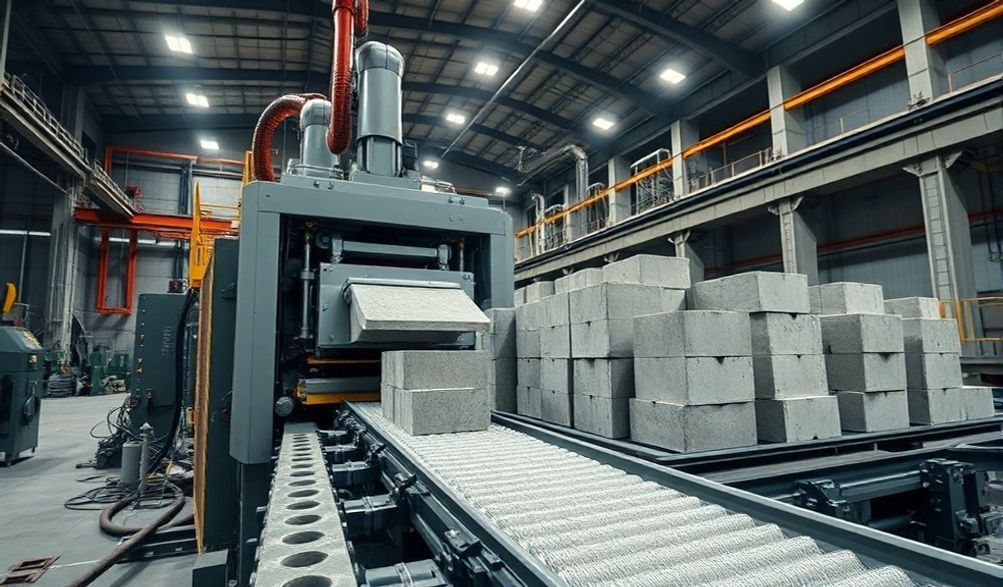
Роҳнамои ниҳоии мошинҳои сохтани блокҳои сементӣ бо автоматикаи пурра дар соли 2024
Муқаддима
Саноати сохтмонии ҷаҳонӣ пешбинӣ шудааст, ки то соли 2030 ба маблағи ҳайратангези 15.2 триллион доллар расад, ки ин аз ҳисоби шаҳрсозии беист ва рушди инфрасохтор аст. Дар ин муҳити пуршиддат, қобилияти истеҳсоли масолеҳи сохтмонӣ зуд, мунтазам ва бо нархи арзон на танҳо як бартарӣ, балки зарурат аст. Дар маркази ин инқилоби сохтмонии муосирмошини пурраи автоматӣ барои сохтани блоки сементӣ, як мӯъҷизаи технологӣ, ки тарзи истеҳсоли блокҳои бетониро тағйир медиҳад. Барои корхонаҳое, ки мехоҳанд миқёс ва сифатро беҳтар кунанд ва бартарии рақобатпазирӣ ба даст оранд, фаҳмидани ин таҷҳизот муҳим аст.
Ин дастури мукаммал бар асоси таҳлили амиқи соҳавӣ, тафсилоти мустақими истеҳсолкунандагон ва маълумоти амалии ҷамъовардашуда аз мудирони корхонаҳо ва муҳандисон тартиб дода шудааст. Ҳадафи мо равшан намудани технология мебошад, то берун аз брошюраҳои фурӯш ба шумо дониши амалие диҳем, ки барои қабули қарори бовариноки сармоягузорӣ лозим аст. Новобаста аз он ки шумо пудраткори ботаҷрибае ҳастед, ки нақшаи ба кор андохтани истеҳсолотро дорад ё соҳибкоре, ки тиҷорати истеҳсоли блокҳоро оғоз мекунад, ин мақола ба шумо дар фаҳмидани тарзи кор, бартариҳои шубҳаноки онҳо, омилҳои муҳим дар интихоби модели мувофиқ ва он чизе, ки аз фаъолияти ҳаррӯза ва моликияти дарозмуддат интизор шудан мумкин аст, кӯмак мекунад. Ҳама маълумот аз принсипҳои муҳандисӣ, таҷрибаҳои беҳтарини соҳавӣ ва маълумоти техникии тасдиқшуда синтез шудааст, то шумо дастури дақиқ, боэътимод ва амалӣ гиред.
Мошини пурраи автоматии сохтани блокҳои сементӣ чист?
Мошини пурра автоматии истеҳсоли блокҳои сементӣ як хати истеҳсоли пурра ва бо компютер идорашаванда мебошад, ки барои истеҳсоли блокҳои бетонӣ бо дахолати камтарини инсонӣ тарҳрезӣ шудааст. Аз лаҳзаи ворид шудани ашёи хом ба система то ба ҷое ки блокҳои ба тартиб гузошташуда барои интиқол омода мешаванд, тамоми раванд тавассути Контроллери Мантиқии Барномарезӣ (PLC) ҳамоҳанг карда мешавад. Ин қуллаи технологияи истеҳсоли блокҳоро ифода мекунад, ки ба ҳадди аксари ҳосилнокӣ, пайвастагии бекаму кост ва бехатарии амалиётӣ афзалият медиҳад.
Core Definition and Operation Principle
In essence, this machine automates the entire block-making cycle. The operator’s role shifts from manual labor to supervisory control—inputting parameters via a touchscreen interface, monitoring system diagnostics, and performing quality checks. The principle revolves around a synchronized sequence: batching and mixing raw materials, transferring the concrete mix to a mold, compacting it under high-pressure vibration, ejecting the green (uncured) block onto a pallet, and then automatically stacking and organizing the finished products. Advanced models may include integrated curing systems to accelerate the hardening process.
Қисмҳои асосӣ ва вазифаҳои онҳо
Understanding the machine’s anatomy is key to appreciating its capabilities:
- Системаи батчкунӣ ва омехтакунӣ: This is the starting point. Automated weigh feeders precisely measure cement, aggregates (like sand and gravel), and water. These are then mixed uniformly in a pan or planetary mixer, ensuring a consistent concrete mix for every single block—a fundamental requirement for quality.
- Системи қолибсозӣ: The heart of the machine. The prepared mix is fed into mold cavities. Here, a combination of hydraulic pressure (often 80 to 300+ tons) and high-frequency vibration densely compacts the concrete, removing air pockets and forming a block of precise dimensions and high strength.
- Curing System (Optional Integrated): While many producers use separate curing racks or rooms, some fully automatic lines include integrated curing chambers. These chambers control temperature and humidity to rapidly cure blocks, significantly reducing the time from production to being sale-ready.
- Системаи ҳаракати паллетҳо: A network of conveyors and lifts that automatically manages the steel or plastic pallets on which blocks are formed. It cleans, oils (for easy release), and feeds pallets back to the molding station in a continuous loop.
- Stacking & Unloading System: Robotic arms or layer stackers gently pick up the cured or green blocks and arrange them into uniform, stable cubes on wooden pallets or directly onto a truck bed, ready for dispatch.
Фарқи он аз мошинҳои нимёридастӣ ва дастӣ
Choosing the right level of automation depends on your scale, budget, and labor market. Here’s a clear comparison:
| Feature | Manual Machine | Semi-Automatic Machine | Full Automatic Machine |
| :— | :— | :— | :— |
| Талабҳои меҳнатӣ | High (5-8 workers) | Moderate (2-4 workers) | Low (1-2 workers for supervision) |
| Қобилияти баромад | Low (500-1,000 blocks/day) | Medium (2,000-8,000 blocks/day) | Very High (10,000-30,000+ blocks/day) |
| Block Consistency | Variable (human-dependent) | Good | Excellent (machine-controlled) |
| Сармоягузории ибтидоӣ | Low | Medium | High |
| Skill Requirement | Basic | Mechanical/Operational | Technical/PLC Supervision |
| Барои беҳтарин | Very small projects, remote sites | Small to medium businesses | Large-scale production, high-volume contracts |
Top 5 Benefits of Investing in a Full Automatic Machine
The decision to upgrade to full automation is a strategic one, justified by compelling long-term returns that go far beyond simple production speed.
Unmatched Production Efficiency & High Output
The primary driver for investment is sheer volume. A full automatic machine operates continuously with cycle times as low as 10-15 seconds per mold. With multiple mold cavities (e.g., 6, 8, 10, or 12 blocks per cycle), daily outputs can easily exceed 15,000 to 20,000 standard blocks in an 8-hour shift. This allows you to take on large infrastructure projects, supply multiple construction sites simultaneously, and build inventory rapidly to meet market demand.
Superior Block Quality and Consistency
Human error is eliminated from the critical processes. Precise electronic batching guarantees the exact same mix ratio every time. Consistent vibration frequency and hydraulic pressure ensure each block is compacted to an identical density. The result? Uniform blocks with predictable—and often higher—compressive strength (readily achieving 7-10 MPa or more), precise dimensional tolerances (e.g., ±1mm), and a perfect surface finish. This consistency builds trust with contractors and can command a premium price.
Кам шудани назарраси хароҷоти меҳнат ва вобастагӣ
While the initial cost is higher, the operational savings are transformative. A fully automatic line typically requires only 1-2 personnel to monitor the control panel and perform periodic checks. This drastically reduces long-term wage expenses, management overhead, and vulnerability to labor shortages or skill gaps. Industry practice shows that this labor saving often forms the core of the machine’s return on investment (ROI), paying for itself within a few years of operation.
Enhanced Operational Safety
Safety is engineered into the system. Automated material handling removes workers from heavy lifting and repetitive strain injuries. Guards enclose all moving parts like conveyors and presses. Emergency stop buttons are strategically placed, and modern PLCs include fault diagnostics that can halt the machine if a sensor detects a misalignment or jam. This creates a safer work environment and reduces the risk and cost associated with workplace accidents.
Optimized Raw Material Usage and Waste Reduction
Precision is economical. The automated batching system measures raw materials to the kilogram, virtually eliminating the overuse of costly cement and the spillage of aggregates common in manual mixing. The consistent compaction process also minimizes breakage and the production of sub-standard “waste” blocks. This lean operation directly boosts your profit margin per block.
Омилҳои муҳим барои баррасӣ пеш аз харид
Purchasing a full automatic block maker is a major capital expenditure. Thorough due diligence, based on your specific needs, is non-negotiable. Here are the key areas to scrutinize.
Арзёбии талаботи истеҳсолии шумо
Start with a clear business plan. Ask yourself:
* Output Needed: Calculate your current and projected future block demand in blocks per day or month.
* Ассортименти маҳсулот: What types of blocks will you sell? Standard hollow blocks, solid blocks, pavers, interlocking bricks? Ensure the machine can accommodate the necessary mold types.
* Масштаби Лоиҳа: Are you supplying a single large project or serving an ongoing retail market? Your output requirement will dictate the machine size.
Муфассал омӯзиши мушаххасоти мошин
Don’t just look at the brochure headline output. Dig into the technical details:
* Давомнокии фишор: Measured in tons (e.g., 150T, 200T). Higher tonnage generally allows for denser blocks and the use of a wider range of raw materials.
* Cycle Time & Mold Configuration: A machine with a 12-second cycle and a 10-cavity mold produces far more than one with a 20-second cycle and a 6-cavity mold. Request verified cycle time demonstrations.
* Талабҳои барқ: These machines are power-hungry. Confirm the electrical supply (e.g., 380V, 50Hz, 3-phase) and the capacity of the hydraulic power pack. Factor in utility costs.
* Automation Level & Control System: The PLC is the machine’s brain. Renowned brands (like Siemens or Allen-Bradley) often indicate reliability. A user-friendly, multilingual touchscreen interface with real-time diagnostics and production data logging is a valuable feature.
Space, Layout, and Foundation Planning
This is often underestimated. A full automatic line isn’t just a single machine; it’s a production floor.
* Floor Space: You’ll need ample length for the main machine, mixer, conveyor lines, and space for block stacking and storage. Ceiling height must accommodate any integrated stackers or curing systems.
* Foundation: This is critical. The machine requires a massive, level, and vibration-dampening concrete foundation, often over a foot thick. Poor foundation work will lead to machine misalignment, premature wear, and production issues.
Total Cost of Ownership Analysis
Look beyond the sticker price. A responsible budget includes:
1. Machine Purchase Price.
2. Shipping, Insurance, and Customs Duties.
3. Installation & Foundation Costs.
4. Initial Operator Training (often at your site).
5. Spare Parts Kit (essential wear items like seals, vibration motors, sensors).
6. Annual Maintenance Costs (lubricants, hydraulic oil changes, professional servicing).
Operating and Maintaining Your Automatic Block Maker
To protect your investment and ensure decades of service, proper operation and disciplined maintenance are essential.
Step-by-Step Operational Overview
A typical production run involves:
1. Power-Up & System Check: Energize the system and run the PLC’s self-diagnostic routine.
2. Parameter Setting: On the HMI (Human-Machine Interface), input the recipe for the block type (mix ratios, vibration time, pressure).
3. Production Start: Initiate the automatic cycle. The machine will sequentially execute batching, mixing, molding, and stacking.
4. In-Process Monitoring: The operator visually checks block quality periodically and monitors the control panel for any fault alerts.
5. Shutdown Sequence: Follow the manufacturer’s procedure to clear the system of concrete, clean key components, and safely power down.
Essential Daily and Periodic Maintenance Checklist
Preventive maintenance is cheaper than repairs.
* Daily: Clean molds and pallets; check hydraulic oil level and for leaks; lubricate guide rails and bearings; inspect vibration motors for loose bolts.
* Weekly/Monthly: Tighten all electrical connections; clean sensors and photo-eyes; check wear parts like mixer blades and conveyor belts.
* Annually: Perform a full hydraulic oil and filter change; have a technician calibrate pressure sensors and the weighing system.
Troubleshooting Common Issues
- Poor Surface Finish/Sticking in Mold: Likely caused by worn mold liners, incorrect oiling of the mold/pallet, or an overly wet mix.
- Low Block Density/Strength: Insufficient vibration time or pressure; incorrect mix design (too much water, not enough cement); worn vibration motors.
- Cracking (During or After Curing): Usually a mix issue—too much water, improper curing (drying too fast), or inadequate aggregate grading.
- Pallet Jams: Misaligned pallet conveyor, damaged pallets, or a faulty sensor.
Safety Protocols for Operators
- PPE is Mandatory: Safety glasses, steel-toe boots, hearing protection, and gloves.
- Lockout-Tagout (LOTO): This procedure—disconnecting and locking the power source before any maintenance—is non-negotiable.
- Maintain Safe Zones: Keep clear of moving parts during operation. Only authorized, trained personnel should be in the machine area.
FAQ: Your Questions on Full Automatic Block Machines Answered
Q1: What is the average price range for a full automatic cement block making machine?
A: Prices vary dramatically based on capacity, brand, and origin. Entry-level models can start around $50,000, while high-capacity, premium lines from established manufacturers can range from $150,000 to over $300,000. Always request a detailed, itemized quote that includes shipping and basic spare parts.
Q2: Can one machine produce different types and sizes of blocks?
A: Absolutely. This is a key flexibility feature. By changing the mold set, the same machine can produce hollow blocks, solid blocks, pavers, and curbstones. However, factor in the cost of additional mold sets and the time required for mold changeover (which can take a few hours).
Q3: What is the typical payback period on this investment?
A: The payback period is highly variable, but based on field data from successful operations, it typically falls between 1 to 3 years. This depends on your local block selling price, operational efficiency, utility costs, and how effectively you market and sell your increased production capacity.
Q4: What kind of after-sales support should I expect from a reliable supplier?
A: A reputable supplier’s support package is crucial. It must include:
* Detailed installation drawings and foundation plans.
* On-site installation supervision by an engineer.
* Comprehensive, hands-on training for your operators and maintenance staff.
* Clear operation and maintenance manuals (in your language).
* A substantive warranty (typically 12-24 months on core components).
* A reliable channel for sourcing genuine spare parts.
Q5: Are there specific raw material quality requirements for optimal performance?
A: Yes. For consistent flow and block strength:
* Агрегатҳо: Should be clean, hard, and properly graded (sized). Excessive fines or oversized stones can cause block defects and wear on the mixer/molds.
* Семент: Use fresh, standard Portland cement stored in dry conditions.
* Об Clean, potable water is best. The moisture content of your sand must be accounted for in the automated batching to keep the water/cement ratio precise.
Conclusion
The transition to a мошини пурраи автоматӣ барои сохтани блоки сементӣ represents a strategic leap forward for any serious block manufacturer. It’s a commitment to scaling productivity, guaranteeing superior product quality, and building a more efficient, safe, and profitable operation. The benefits of high output, labor savings, and material efficiency fundamentally reshape your business’s competitive potential.
As a final expert recommendation, prioritize total lifecycle value over the lowest initial price. A slightly more expensive machine from a manufacturer with a proven track record of durability and stellar after-sales support will save you immense cost and headache in the long run. If possible, always insist on visiting a working installation to see the machine in action and speak directly with its operators.
Before signing any contract, consult with multiple reputable manufacturers, prepare a detailed list of your project specifications, and ask pointed questions about service response times and spare parts logistics. The future of block manufacturing is intelligent and connected, with trends like IoT sensors for predictive maintenance already on the horizon. By making an informed investment today, you position your business at the forefront of this efficient and evolving industry.
<