
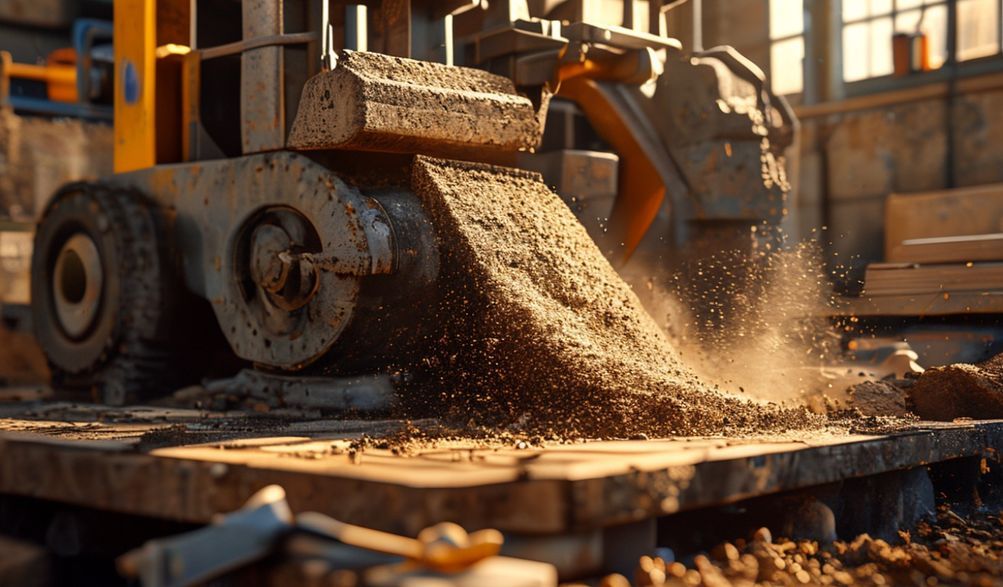
The Ultimate Guide to Hydraulic Compressed Earth Block Machines: Building Sustainably with Modern Power
Муқаддима
The global search for sustainable, affordable, and resilient building materials is more pressing than ever. With the construction industry accounting for a significant portion of carbon emissions and resource consumption, the need for a viable alternative to fired bricks and concrete is clear. Enter compressed earth blocks (CEBs), an ancient building wisdom reimagined for the modern era. These blocks, made primarily from subsoil, offer remarkable thermal mass, fire resistance, and a drastically lower environmental footprint.
However, traditional manual methods for producing CEBs are labor-intensive and inconsistent, limiting their scalability. The true game-changer is the hydraulic compressed earth block machine. This powerful piece of engineering transforms suitable soil into dense, uniform, and structurally sound blocks with efficiency and precision that manual presses cannot match.
This guide is built on a foundation of practical engineering and field experience. It synthesizes principles of mechanical design, soil mechanics, and sustainable construction to provide a trustworthy, comprehensive resource. Whether you’re a builder, architect, DIY enthusiast, or development project manager, this article will equip you with the knowledge to understand, select, and operate a hydraulic CEB machine, empowering you to build a more sustainable future, one block at a time.
What is a Hydraulic Compressed Earth Block Machine?
At its core, a hydraulic CEB machine is a device that uses controlled, high-pressure hydraulic force to compact damp, stabilized soil into an extremely dense and uniform building block. It modernizes an ancient practice, bringing industrial-grade consistency and power to earthen construction.
Функсияи асосӣ ва Принсип
The principle is straightforward but powerful. A specific mix of soil, sand, clay, and a small amount of stabilizer (like cement or lime) is brought to an optimal moisture content. This mixture is then placed into a heavy-duty steel mold. A hydraulic cylinder, powered by a hydraulic system, exerts immense linear pressure—often measured in tons—on the soil mix. This pressure compresses the material, forcing out air voids and creating strong inter-particle bonds, resulting in a solid block that is ejected from the mold, ready for curing.
Таҷзияи ҷузъҳои асосӣ
Омӯзиши таркиби мошин барои дарки қобилияти он асосӣ аст:
- Пакети Нерӯи Гидравликӣ: This is the “heart” of the machine. It consists of a reservoir of hydraulic fluid, an electric motor or diesel engine, a pump, valves, and controls. It generates and regulates the fluid pressure that drives the entire system.
- Compression Chamber/Mold: This is the “form” of your block. It’s a precision steel mold that defines the block’s size, shape, and surface texture. Interchangeable molds allow one machine to produce different block profiles (e.g., standard rectangular, interlocking).
- Hydraulic Cylinder: This is the “muscle.” It converts the hydraulic fluid pressure into the immense linear force required to compress the soil. The tonnage rating of the machine (e.g., 10-ton, 20-ton) refers to the maximum force this cylinder can apply.
- Frame/Structure: This is the machine’s “skeleton.” It is a robust, welded steel frame designed to withstand the high cyclic stresses of operation without deformation, ensuring consistent block dimensions over time.
- Системи идоракунӣ This ranges from simple manual levers controlling valve banks to semi-automatic (push-button cycle initiation) and fully automatic systems with programmable logic controllers (PLCs) for continuous, high-volume production.
The Science of Compression
The hydraulic advantage is rooted in physics. Unlike a manual lever press which applies a lower, impact-based force, a hydraulic system applies steady, immense pressure. This isostatic compression evenly compacts the soil matrix from all sides within the mold. This process:
* Dramatically reduces porosity.
* Increases dry density.
* Maximizes particle-to-particle contact.
* Activates stabilizers (like cement) more effectively.
The result is a block with high compressive strength, low water erosion potential, and excellent dimensional stability.
Why Choose a Hydraulic CEB Machine? Key Benefits & Advantages
Choosing a hydraulic press over manual or simple mechanical alternatives is an investment in quality, efficiency, and project viability. Here’s why it’s the professional’s choice for serious earthen construction.
Unmatched Block Quality and Consistency
- Superior Strength & Density: The high, controllable pressure yields blocks with consistently higher compressive strength, essential for load-bearing walls.
- Minimal Variation: Every block from a well-calibrated hydraulic machine is virtually identical. This uniformity simplifies construction, improves mortar bonding, and is critical for structural integrity and aesthetic appeal.
High Production Efficiency and Output
- Faster Cycle Times: A hydraulic machine can complete a compression cycle in seconds. A single operator can produce 300-800+ blocks in an 8-hour day, depending on the model and workflow.
- Reduced Labor Intensity: The machine does the heavy work. Labor is focused on material preparation and block handling, not on strenuous manual compression, making projects more manageable and less fatiguing for crews.
Operational Power and Versatility
- Wider Soil Tolerance: The high pressure can effectively compact a broader range of soil gradations, though optimal mixes are still required. It better handles soils with slightly less-than-ideal clay content.
- Design Flexibility: With interchangeable molds, you can produce interlocking blocks (for dry-stack or minimal mortar construction), standard blocks, and even specialty shapes for arches or corners.
Enhanced Durability and Lower Maintenance
- Сохтмони устувор: Built for industrial use, these machines are designed to last for years under demanding conditions.
- Reliable System: Hydraulic systems, with proper basic maintenance (clean fluid, intact seals), are known for their reliability and long service life. Major components are typically standard and serviceable.
Economic & Environmental Sustainability
- Material Cost Savings: The primary raw material—soil—is often available on-site or locally for minimal cost, eliminating the need for purchased bricks or concrete blocks.
- Энергияи ҳаҷми паст CEBs require no firing, saving vast amounts of energy compared to fired bricks. The addition of small amounts of cement (5-10%) is typically the only significant source of embodied carbon.
- Carbon Sequestration: Earthen materials have near-zero carbon emissions from processing and can passively regulate indoor humidity, contributing to healthier living environments.
Critical Factors When Selecting Your Machine
Selecting the right machine is a crucial decision that hinges on your specific project needs and long-term goals. This guidance comes from field experience to help you avoid common pitfalls.
Assessing Your Project Needs & Scale
- Project Scope: Are you building a single home, a community project, or starting a commercial block production yard? Estimate your total block count.
- Block Design: Determine the required dimensions and profile. Interlocking blocks speed up construction but may require a more specialized (and sometimes more powerful) mold.
- Суръати истеҳсолот: Match the machine’s output (blocks per hour) to your project timeline. A semi-automatic machine may suffice for a custom home, while a community project might justify a higher-output model.
Technical Specifications to Scrutinize
- Compression Force (Tonnage):Ин муҳим аст.Higher tonnage (e.g., 15-30 tons) generally produces stronger blocks and can handle a wider variety of soils. For stabilized, load-bearing blocks, aim for a minimum of 10-15 tons.
- Манбаи барқ
- Электрикӣ: Clean, quiet, and efficient for sites with grid power.
- Дизелӣ: Offers full mobility and power for remote sites.
- PTO (Power Take-Off): Can be driven by a tractor, useful for agricultural or rural settings.
- Даражан автоматӣ:
- Дастур: Lowest cost, full operator control, but slowest output and most labor per block.
- Ним-автоматӣ: Operator loads material, then a button triggers the automatic compression and ejection cycle. An excellent balance of control, speed, and price.
- Пурра худкор: Features automated material feeding and block handling for maximum output. Highest cost, suited for commercial production.
- Кӯчишавандагӣ: Consider weight and whether it has wheels or a trailer mount if you need to move it between sites.
Soil Preparation & Stabilization Requirements
- Санҷиши хок ҳаргиз ба таври музокиравӣ нест. Do not skip this. A simple sediment jar test can give you the clay-silt-sand ratio. For structural projects, professional lab testing is recommended to determine stabilizer type and percentage (often 5-10% cement by volume).
- Auxiliary Equipment Budget: The machine is just one part of the system. You will likely need:
- A soil sieve (motorized or manual).
- A pan or rotary mixer for consistent blending of soil, stabilizer, and water.
- Pallets for curing blocks.
- A moisture meter for quality control.
Manufacturer & Supplier Evaluation
- Reputation & Track Record: Research the manufacturer. How long have they been in business? Look for customer testimonials, videos of machines in operation, and their presence in industry publications.
- Support & Documentation: Ensure they provide a clear, comprehensive manual (a sign of quality). Ask about the availability of spare partsваtechnical support. Is there a local dealer or service network?
- Warranty & Service: Understand the warranty terms. A confident manufacturer will stand behind their equipment with a clear warranty and support structure.
Operating Your Hydraulic CEB Machine: A Best Practices Guide
Proper operation ensures safety, maximizes block quality, and extends the life of your investment. Always prioritize the manufacturer’s instructions—this guide is a supplement, not a replacement.
Site and Soil Preparation
- Test & Sieve: Process your soil through a <5mm-10mm sieve to remove stones and organic matter.
- Proportion & Mix: Measure the sieved soil and stabilizer (e.g., cement) accurately by volume. Mix them dry in a mixer until the color is uniform.
- Add Moisture: Gradually add water to achieve the optimal moisture content (typically “moist crumbly” – it holds its shape when squeezed but doesn’t leave water on your hand). This is the most critical step for quality blocks.
Machine Setup, Calibration, and Safety Checks
- Read the Manual First: Familiarize yourself with all controls, safety warnings, and lubrication points.
- Pre-Operation Checklist:
- Check hydraulic fluid level and condition.
- Inspect hoses and fittings for leaks or wear.
- Ensure the mold is clean, properly secured, and aligned.
- Verify all safety guards are in place.
- Conduct a few test cycles without material to ensure smooth operation.
The Production Cycle: Step-by-Step
- Боркунӣ: Place the correct amount of prepared soil mix into the mold chamber. Consistency in volume is key to consistent block density.
- Фарсудан Initiate the compression cycle. The hydraulic cylinder will press the material. Hold pressure for a brief moment as specified in the manual.
- Хориҷ кардан: The block is ejected onto a pallet or transfer cart. Handle with care—fresh blocks are fragile.
- Шифо додан: Move blocks to a covered, shaded area. Keep them moist (by misting and covering with plastic) for 5-7 days to allow the stabilizer (cement) to cure properly, then allow them to dry fully. Proper curing is essential for final strength.
Routine Maintenance and Troubleshooting
- Daily: Clean the mold and machine of soil residue. Check for fluid leaks.
- Weekly: Check all bolts and fittings for tightness. Clean hydraulic fluid filters as instructed.
- Common Issues:
- Block Sticking in Mold: Likely over-wet mix or a dirty/damaged mold. Adjust moisture and clean/polish the mold.
- Low Pressure/Weak Blocks: Check hydraulic fluid level and pump function. Could also be under-filled mold or incorrect moisture.
- Hydraulic Leak: Identify source and tighten fitting or replace seal/o-ring.
- Golden Rule: For any major mechanical or hydraulic issue, consult a professional technician. Tampering with high-pressure systems can be dangerous.
The Future of Building: Applications and Sustainability Impact
Hydraulic CEB technology is not a niche product; it’s a cornerstone for a resilient and circular construction paradigm.
Diverse Construction Applications
- Манзилӣ: Single-family homes, multi-unit dwellings, and eco-resorts.
- Institutional: Schools, clinics, and community centers built affordably and comfortably.
- Commercial & Landscape: Office buildings, retaining walls, garden walls, and thermal mass walls for greenhouses.
Role in Circular Economy and Disaster-Resilient Building
- Circular Model: Excavated site soil becomes the building material, minimizing waste and transport. At end-of-life, the blocks can be crushed and returned to the earth or re-used.
- Disaster Resilience: CEB structures have high thermal mass (maintaining comfortable temperatures), are fire-resistant, and, when properly built, can perform well in seismic events due to their mass and flexibility.
Integrating with Modern Building Science
- Passive Solar Design: The high thermal mass of CEB walls is perfect for absorbing solar heat during the day and releasing it at night, reducing HVAC loads.
- High-Performance Envelopes: CEB walls can be combined with exterior insulation systems and natural lime or earth plasters to create healthy, breathable, and super-efficient building envelopes that meet modern energy codes.
Frequently Asked Questions (FAQ)
Q1: What is the typical compressive strength of blocks made with a hydraulic CEB machine?
A: With proper soil and stabilization (5-10% cement), blocks from a hydraulic press typically achieve 2 MPa (290 PSI) to 10+ MPa (1450+ PSI). For context, many building codes require a minimum of 2-4 MPa for load-bearing walls. Strength depends directly on soil type, stabilizer content, compaction pressure, and curing.
Q2: Can I use any soil from my property?
A: Not without testing. Ideal soil is a “loam” with roughly 15-30% clay and silt (as the binder) and 70-85% sand and fine gravel (as the aggregate). Pure clay will crack; pure sand will not bind. A simple sediment jar test is your first essential step. Professional testing is advised for structural projects.
Q3: How does a hydraulic machine compare to a manual or mechanical lever press?
A:
| Feature | Manual/Lever Press | Hydraulic Press |
| :— | :— | :— |
| Хароҷот | Lowest | Higher initial investment |
| Output | Low (50-150 blocks/day) | High (300-800+ blocks/day) |
| Labor Intensity | Very High | Moderate |
| Block Strength | Variable, generally lower | High and Highly Consistent |
| Best For | Small, non-critical projects | Professional, scalable, load-bearing construction |
Q4: What is the learning curve for operating this machine?
A: The basic operation can be learned in a day or two. The true learning curve lies in mastering soil preparation and moisture content, which can take several weeks of practice to perfect. Always follow safety protocols and start with test batches.
Q5: Are hydraulic CEB machines a cost-effective investment?
A: The analysis must look beyond the machine’s price tag. Consider:
* Savings: Drastic reduction in material costs (using on-site soil).
* Самаранокӣ: Lower labor costs per block and faster project completion.
* Value: Creation of durable, high-performance buildings.
For an individual building a single home, renting or a community co-op purchase may be most cost-effective. For builders, developers, or NGOs running multiple projects, the ROI through material and labor savings can be very compelling.
Conclusion
The hydraulic compressed earth block machine is more than just a piece of equipment; it is a powerful enabler of sustainable change. It successfully bridges the profound ecological wisdom of building with earth and the modern demands for efficiency, strength, and consistency. By transforming abundant, local soil into beautiful, durable building blocks, this technology empowers communities, entrepreneurs, and visionaries to take control of their built environment.
It offers a tangible path toward reducing the construction industry’s environmental impact while creating healthy, affordable, and resilient structures. From custom homes to community infrastructure, the potential is built right into the ground beneath our feet.
Ready to explore specifications and models? Download our comprehensive buyer’s checklist for hydraulic CEB machines.
Have specific questions about your project’s soil or scale? Consult with our building specialists today.
Share your thoughts or experiences with sustainable building materials in the comments below.
Author Bio: This guide was authored by a team with combined expertise in civil engineering, sustainable construction machinery design, and on-the-ground project management in earthen building, representing over 20 years of industry experience. Our analysis is informed by engineering studies from institutions like the University of Bath’s Department of Architecture & Civil Engineering and practical resources from organizations such as Good Earth Trust and UN-Habitat.
<