
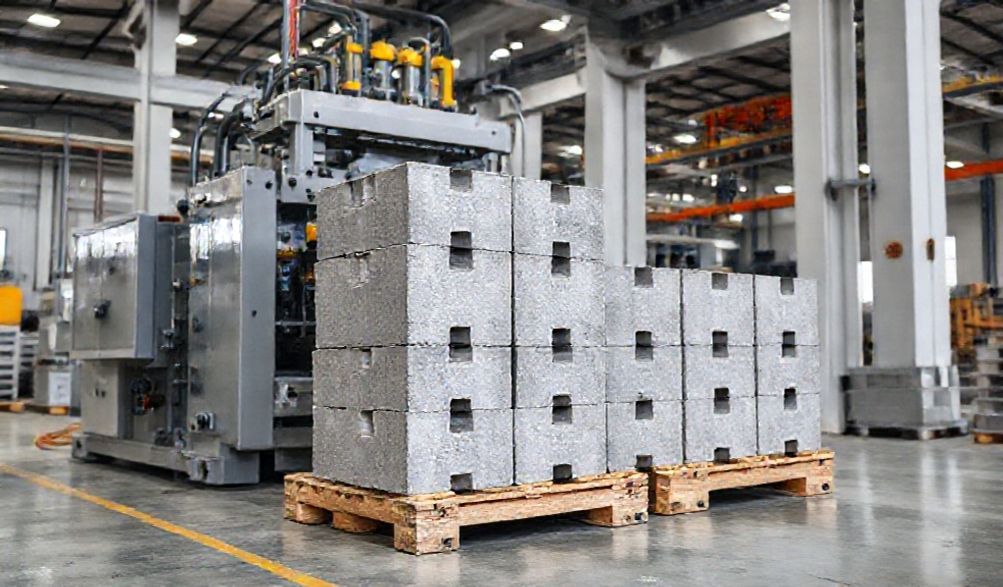
Дастури ниҳоии шумо барои истеҳсолкунандагони машинаҳои блоксозии бепаз: Таъкид ба Корхонаи машинасозии хишти FUDA
Дар ҷаҳони рушдёбандаи сохтмони устувор, технологияи блокҳои бепазӣ инқилоб мекунад, ки чӣ тавр мо месозем. Баръакси хишти анъанавии оташдида, ин блокҳои экологӣ бе истифода аз кӯраҳои баландҳарорат пухта мешаванд, ки энергияро сарфа карда ва пайдоиши карбони худро коҳиш медиҳанд.
Барои корхонаҳо ва лоиҳаҳое, ки ин ҳалли навоварро меҷӯянд, интихоби истеҳсолкунандаи дуруст барои бомуваффақият будан муҳим аст. Ин қарор ба ҳама чиз аз сармоягузории аввала ва сифати маҳсулот то самаранокии амалиётии дарозмуддат ва фоидаоварии шумо таъсир мерасонад.
Ин дастур ба дунёи истеҳсоли дастгоҳҳои блоксозии бепазӣ мебарад, бо таҳлили диққати корхонаи дастгоҳсозии хишти FUDA. Мо технология, меъёрҳои асосии интихобро меомӯзем ва месанҷем, ки оё FUDA ба талаботи сахти сифат, эътимоднокию иҷроиши касбиҳо мувофиқат мекунад.
Фаҳмидани Технологияи Блокҳои Бепухта: Инқилоби Барқарор
Гузариш ба сӯи маводҳои сохтмонии устувор танҳо як равия нест; ин тараққиёти зарурӣ аст. Дар пешсафи ин гузариш технологияи блокҳои бепазӣ қарор дорад, ки равиши тоза ва самараноктарро барои муқобил кардан бо анъанаҳои садсолаи сохтани хишт пешниҳод мекунад.
Блокҳои бехӯрдашуда чист? Илми сарфаи онҳо
Baking-free blocks, often called cement blocks, concrete blocks, or non-fired blocks, are precisely what their name suggests: construction blocks that gain their strength without being baked in a kiln.
- Тарҳрезӣ They are primarily composed of a carefully graded mix of aggregates (like sand, gravel, or crushed stone), a binding agent (usually Portland cement or lime), and water. Special additives or fly ash can be included to enhance properties like curing speed, strength, or water resistance.
- The Curing Process: This is the core differentiator. Instead of firing, these blocks gain strength through a chemical process called ободшавӣ. When water is added to cement, it triggers a reaction that forms hard, crystalline structures binding the aggregates together. This typically happens over 7-28 days under controlled conditions (often just covered with plastic sheeting to retain moisture).
- Бартариҳои асосӣ:
- Самаранокии энергетикӣ: Eliminating the fossil fuel-intensive kiln firing process can reduce energy consumption by up to 70-90%.
- Reduced Emissions: No firing means significantly lower CO2 and sulfur oxide emissions, contributing to a smaller carbon footprint.
- Самаранокии хароҷот: Lower energy use translates to lower production costs. The raw materials are also widely available and often less expensive than high-quality clay.
Барномаҳои асосӣ дар сохтмони муосир
Baking-free blocks are not a niche product. Their versatility and performance have led to widespread adoption.
- Project Types: They are used extensively in residential housing, commercial buildings, industrial facilities, and public infrastructure like retaining walls and boundary fences.
- Навъҳои блокҳо: Modern machines can produce a wide array, including:
- Solid and Hollow Load-Bearing Blocks
- Interlocking Blocks for dry-stack construction
- Pavers and Kerbstones
- Decorative and Landscape Blocks
- Performance Benchmarks: When produced correctly, these blocks excel. They offer excellent compressive strength (often ranging from 3.5 MPa to 40 MPa), good thermal and acoustic insulation properties (especially hollow blocks), and proven durability against weathering when properly sealed or rendered.
Critical Factors When Choosing a Baking-Free Block Machine Manufacturer
Investing in a block-making machine is a major capital decision. The manufacturer you choose becomes a long-term partner. Here are the non-negotiable factors to scrutinize.
1. Technical Expertise and Machine Capability
The machine’s design dictates your production potential.
- Сатрҳои автоматӣ: Choose based on your labor costs and output needs. Manual machines are affordable but labor-intensive. Semi-automatic systems streamline material handling. Fully automatic lines, with robotic pallet feeders and stackers, maximize output with minimal manpower.
- Production Output & Mold Versatility: Clearly define your required blocks-per-hour capacity. A reputable manufacturer should offer a range of machine models. Crucially, assess how easily and affordably you can change molds to produce different block types, allowing you to adapt to market demands.
- Machine Durability & Core Tech: The heart of the machine is its vibration and compression system. Look for:
- High Press Force: Measured in tons or kilonewtons (kN), this ensures block density and strength.
- Robust Vibration: A powerful, well-distributed vibration system is essential for compacting the mix and eliminating voids.
- Сохтмони вазнин: Frame, molds, and core components should be made from high-grade steel to withstand constant pressure and vibration.
2. Manufacturing Quality and Compliance
A machine is only as good as the factory that built it.
- Сертификатҳо:ЯкISO 9001 certification is a strong indicator of a structured quality management system. For export, CE marking (for Europe) or other regional certifications demonstrate compliance with safety and environmental standards.
- Контроли сифат: Inquire about their in-house QC processes. Do they perform stress tests on components? What is their protocol for final machine testing before shipment?
- Material & Component Sourcing: Do they use standardized, internationally recognized parts (e.g., Siemens or Schneider electrics, reputable hydraulic brands)? This simplifies future repairs and spare parts sourcing.
3. Comprehensive Support: Beyond the Sale
This is where many manufacturers fall short, and where your project can succeed or fail.
- Насб ва ба кор даровардан: Will they provide detailed foundation drawings, electrical schematics, and an installation manual? Do they offer on-site commissioning by a technician?
- Operator Training: Proper training is vital for safety, efficiency, and block quality. Ensure comprehensive training for machine operation, maintenance, and basic troubleshooting is included.
- Warranty & After-Sales: Scrutinize the warranty terms—what is covered, and for how long? Most critically, assess their spare parts supply chain. How quickly can they ship a critical replacement part? Is there a dedicated, responsive after-sales team available via email, phone, or WhatsApp?
Deep Dive: Evaluating FUDA Brick Making Machine Factory
With the general criteria established, let’s apply a focused lens to FUDA Brick Making Machine Factory, a name frequently encountered in this sector.
Ширкатнома ва мавқеъ дар соҳа
FUDA is typically presented as an established manufacturer in the construction machinery field, often based in a major industrial region in China. They generally market themselves as serving a global clientele, from small entrepreneurs to larger construction projects.
- Market Presence: Their client portfolio, as often showcased, may include a range of projects both domestically and in developing markets. The scale of operations is usually positioned as a factory with export capabilities.
- Verifiable Credentials: This is a key due diligence point. Prospective buyers must actively request and verify current certifications. Reliance should not be placed on website claims alone; ask for scanned copies of valid ISO or other quality certificates.
Product Line Analysis: Baking-Free Block Machines
FUDA typically offers a spectrum of machines suitable for baking-free block production.
- Рӯйхати моделҳо This often includes manual egg-laying machines, stationary semi-automatic models, and fully automatic block production lines.
- Technical Specifications: Published specs for their machines would include parameters like:
- Production Capacity (e.g., blocks per 8-hour shift)
- Total Power Consumption
- Press Force (e.g., 120 tons, 200 tons)
- Pallet Size and overall machine dimensions.
- Potential Features: Some models may highlight features like frequency-converter controlled vibration for energy savings, automatic material feeding systems, or programmable logic controller (PLC) panels for easier operation.
Assessing FUDA’s E-E-A-T Credentials
Let’s evaluate FUDA through the critical lens of Experience, Expertise, Authoritativeness, and Trustworthiness (E-E-A-T).
- Таҷриба: Longevity in the market can be a proxy for experience. Investigate how long they have been manufacturing block machines. More valuable is evidence of long-running client relationships—ask for case studies or references from customers who have used their machines for 3+ years.
- Тахассус Expertise is demonstrated through depth of knowledge. Assess the quality of their technical documentation. Is it clear, detailed, and professionally translated? Do they have a visible R&D focus or engineers who can answer deep technical questions about mix design or machine optimization?
- Давлатдорӣ: This is about industry recognition. Are there verifiable client testimonials or video case studies? Have their machines been featured in independent industry publications or projects? A strong sign is a client base that is willing to be referenced.
- Содиқӣ: This is paramount. It is reflected in transparency. Do they provide clear, detailed quotations with all costs itemized? Are their contract terms fair and unambiguous? Most importantly, is their post-purchase support structure clearly defined and responsive during the inquiry stage?
Comparative Insights: Making an Informed Decision
FUDA’s Potential Strengths in the Manufacturer Landscape
Based on common market positioning, manufacturers like FUDA may present certain advantages:
- Cost-Competitiveness: They often compete aggressively on initial purchase price.
- Model Flexibility: Offering a wide range from manual to fully automatic can cater to different budget levels.
- Танзимот: Some factories are willing to customize machine configurations or mold designs for specific client needs.
Questions to Ask FUDA and Any Manufacturer
Arm yourself with this due diligence checklist:
- “Can you provide the contact information for 2-3 international clients with a similar machine model, whom I can speak to directly?”
- “May I see the valid ISO/CE certification documents for the specific model I am interested in?”
- “What is the exact warranty period and scope? What is the standard lead time for shipping critical spare parts like a main hydraulic cylinder or vibration motor to [Your Country]?”
- “Do you provide foundation drawings and an installation video? Is on-site commissioning included, and if not, what are the costs?”
- “Can you share a video of this exact machine model producing blocks at your factory or a client’s site?”
The Role of Supplier Verification
Never skip verification.
- Third-Party References: Speaking to an existing client is the most valuable research you can do. Ask them about machine performance, downtime, and most critically, the quality of after-sales support.
- Factory Visit: If the order value is significant, a factory visit is an invaluable investment. It allows you to inspect build quality, welding, assembly processes, and operational discipline firsthand.
- Independent Reviews: Search for reviews on B2B platforms, but be critical. Look for detailed, balanced reviews over short, generic praise.
FAQ: Baking-Free Block Machines and Manufacturers
Q1: What is the main difference between a baking-free block machine and a traditional brick machine?
A: The core difference is in the curing process. A baking-free block machine uses vibration and compression to form blocks that cure through hydration (like concrete), requiring no kiln. Traditional brick machines form clay bricks that must be fired in a high-temperature kiln, consuming significant energy.
Q2: What should be my top priority when selecting a manufacturer?
A: Prioritize proven after-sales service and technical support. A machine is a long-term investment; reliable, prompt access to spare parts and expert troubleshooting is crucial for maintaining uptime, product quality, and ultimately, your profitability.
Q3: Can baking-free blocks match the strength of fired bricks?
A: Yes. High-quality baking-free blocks can achieve compressive strengths that meet or exceed those of standard fired bricks. For example, many concrete blocks easily achieve strengths above 7 MPa, suitable for load-bearing walls, with high-performance mixes reaching much higher.
Q4: How do I verify a manufacturer’s claims about their machine’s output?
A: First, request certified test reports from the factory floor. Ideally, visit a current client’s production site to see the machine running under real-world conditions for a full shift. This reveals true output, stability, and operational nuances.
Q5: Is FUDA Brick Making Machine Factory a certified manufacturer?
A: Prospective buyers should directly request current certification documents (e.g., ISO, CE for specific models) from FUDA to verify their quality management and compliance standards. Do not rely solely on marketing materials; perform independent verification.
Conclusion
Selecting the right baking-free block machine manufacturer is a strategic decision that impacts project viability, product quality, and long-term operational costs. It is a choice that balances technical specifications with the intangible yet critical element of trust.
While manufacturers like FUDA Brick Making Machine Factory present a potential solution in this innovative market, thorough due diligence is non-negotiable. The framework provided here—focusing on technical capability, verifiable quality compliance, and robust, demonstrable after-sales service—is your essential guide.
Prioritize partners who encourage your scrutiny, provide verifiable references, and demonstrate a commitment that extends far beyond the initial sale. Your ultimate goal is not just to purchase a machine, but to secure a reliable foundation for your construction business’s sustainable future. Invest the time in verification upfront to ensure productivity and peace of mind for years to come.
<