
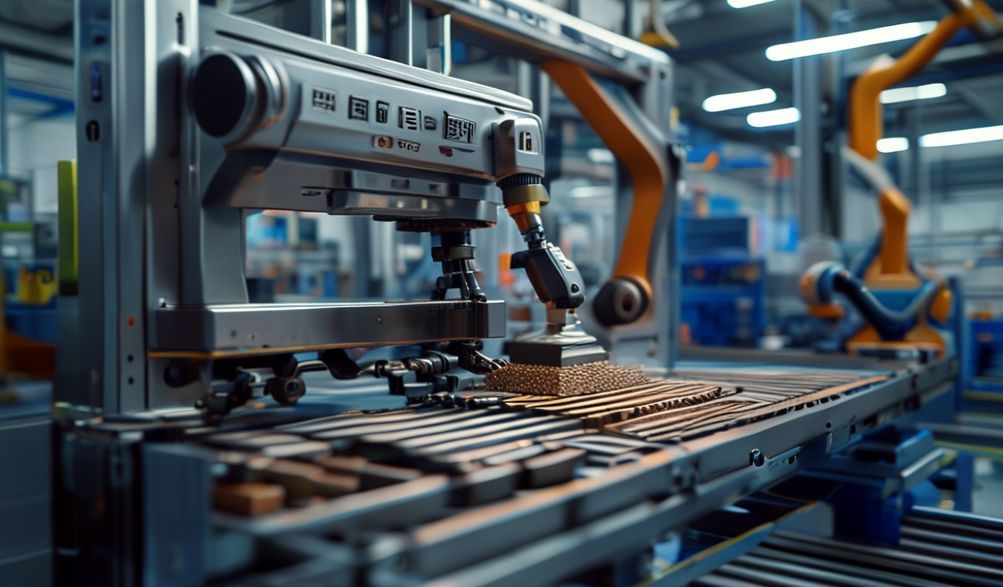
Your Ultimate Guide to Finding a Reliable China Hollow Block Making Machine Supplier
Муқаддима
The global construction industry is in a perpetual state of growth, driven by urbanization, infrastructure development, and the ever-present need for affordable housing. At the heart of this expansion lies a critical demand for cost-effective, durable, and efficient building materials—specifically, hollow concrete blocks. To meet this demand, businesses worldwide are turning to the manufacturing epicenter of the world: China.
However, for a project manager in Nigeria, a construction entrepreneur in Peru, or a building material startup in the Middle East, navigating the vast and complex landscape of Chinese machinery suppliers can feel like a daunting task. The sheer number of options, coupled with legitimate concerns about machine quality, after-sales support, communication barriers, and logistical hurdles, can quickly turn an exciting investment into a stressful gamble.
This guide is designed to cut through the noise. Leveraging years of industry analysis and direct engagement with manufacturers, this definitive resource provides you with a transparent, actionable framework. Our goal is to empower you to identify, evaluate, and ultimately partner with a trustworthy China hollow block making machine supplier, ensuring you secure not just a machine, but a reliable partner for long-term business growth and a superior return on your investment.
Чаро мошинҳои сохтмонии блокҳои ҳолоӣ аз Хитоб мегиранд?
Choosing to source your machinery from China is a strategic decision backed by compelling advantages. Understanding these benefits helps frame your search and justifies the due diligence required.
Арзиши иқтисодӣ ва нархгузории рақобатпазир
The most apparent advantage is cost. China’s unparalleled economies of scale, integrated supply chains for raw materials like steel, and competitive labor markets result in significantly lower production costs. This translates directly to more competitive pricing for you. For a business, this means a faster break-even point and a higher potential ROI. You can acquire a robust, automatic machine for a price that might only secure a semi-automatic unit from other regions, fundamentally changing the profitability calculus of your block-making venture.
Extensive Manufacturing Ecosystem and Variety
China isn’t a monolith of identical factories. It hosts a vast, tiered manufacturing ecosystem. This means you can find a supplier for virtually any need:
* Навъи мошин: From simple, manual egg-laying machines to high-output, fully automatic stationary plants with robotic pallet handling systems.
* Иқтидори баромад Suppliers offer machines producing from 1,000 to over 30,000 blocks per 8-hour shift.
* Танзимот: Need a specific block size, design, or color system? Leading suppliers have in-house R&D teams to modify molds and machine parameters to your exact specifications. This one-stop-shop variety is unmatched.
Пешрафти технологӣ ва навоварӣ
The stereotype of Chinese manufacturing being solely about low-cost, low-tech goods is outdated. Leading manufacturers are at the forefront of innovation:
* They employ advanced CNC (Computer Numerical Control) technology for precision part machining.
* PLC (Programmable Logic Controller) systems from brands like Siemens or Mitsubishi ensure reliable, automated, and programmable operation.
* A strong focus on самарабахшии энергия through optimized hydraulic systems and vibration motors reduces your operational costs.
* Innovations in quick mold change systems and integrated curing rooms showcase a commitment to user-centric design and productivity.
Key Factors to Evaluate a Chinese Supplier (Beyond Price)
While price is a crucial entry point, it should never be the sole deciding factor. The true cost of a machine includes its longevity, uptime, and support. Evaluate suppliers on these critical pillars:
таҷриба ва таҷрибаи истеҳсолӣ
- History & Specialization: How long has the company been manufacturing block machines? A supplier with 15+ years of history has likely navigated market cycles and refined their designs. Prefer suppliers who specialize in construction machinery over general equipment traders.
- In-House Capabilities: Do they have their own factory, foundry, and R&D team? An integrated manufacturer controls quality at every stage, from steel cutting to final assembly, unlike an assembler or trading company.
- Портфолиои лоиҳаҳо: Request case studies or photos/videos of their machines in operation globally. A diverse, international client portfolio is a strong indicator of reliability and adaptability.
Machine Quality and Compliance Standards
- Core Materials: Inquire about the grade of steel used for the frame and molds. Are critical components (hydraulic pumps, PLCs, vibration motors) from reputable international brands (e.g., Siemens, Schneider, Rexroth) or reliable domestic equivalents?
- Build Process: Look for evidence of robust manufacturing: heavy-duty welding, stress-relieving treatments, precision machining of guide rails, and professional anti-corrosion painting.
- Сертификатҳо: Legitimate certifications are non-negotiable. Нишони СЕ indicates compliance with European health, safety, and environmental standards. ISO 9001 certification suggests a managed quality system. A recent SGS inspection report provides a third-party snapshot of the company and product.
- Performance Data: Demand clear technical specifications: cycle time, block density achievable, power consumption, and dimensional accuracy of produced blocks.
After-Sales Service and Support Structure
This is where great suppliers are separated from the rest. A machine is a long-term asset.
* Warranty: A standard warranty is 12 months for parts (excluding wear items). The policy should be clear, in writing, and specify what is covered.
* Documentation: You must receive comprehensive, clear English-language manuals, electrical diagrams, and parts lists.
* Support Channels: Do they offer 24/7 remote support via WhatsApp/WeChat? Can they provide on-site installation and training engineers? What are the costs?
* Қисмҳои ивазшаванда: Ask about their spare parts inventory, guaranteed supply timeline (e.g., “shipped within 7 days”), and recommended critical spares to keep on hand.
A Step-by-Step Supplier Vetting Process
Follow this structured approach to move from a broad search to a confident purchasing decision.
Phase 1: Comprehensive Online Research & Shortlisting
- Leverage B2B Platforms: Start on Alibaba, Made-in-China, or Global Sources. Use filters for “Gold Suppliers,” “Trade Assurance,” and “Assessed Suppliers.” Crucially, look beyond the star rating. Read negative and neutral reviews in detail.
- Analyze Company Websites: A professional, informative website with detailed technical pages, high-resolution factory photos, and clear contact information is a positive sign. Be wary of sites with only stock images and vague text.
- Seek Independent Verification: Use search engines to look for the company name alongside keywords like “review,” “complaint,” or “experience.” Check industry-specific forums or social media groups.
Phase 2: Direct Engagement and Due Diligence
- Craft a Detailed Inquiry: Don’t just ask for “price.” Send a project brief: your location, target block types/sizes, desired daily output, available raw materials, and power supply. A knowledgeable supplier will ask clarifying questions.
- Request a Factory Audit/Video Tour: For a major investment, a third-party factory audit report (from SGS, BV, etc.) is invaluable. If that’s not feasible, insist on a live video call tour of the production floor, warehouse, and testing area. Pre-recorded videos can be deceptive.
- Ask for and Contact References: Request contact information for 2-3 international clients who purchased a similar model. Reach out to them directly to ask about machine performance, reliability, and the supplier’s responsiveness to issues.
Phase 3: Final Verification and Contract Clarity
- Understand Total Cost: Clarify Incoterms (e.g., FOB Shanghai, CIF Durban). “FOB” price does not include shipping and insurance. Calculate the “landed cost” to your site.
- Scrutinize the Proforma Invoice (PI): The PI should be a detailed document listing every machine specification, accessory, spare part, packaging method, payment terms, and delivery time. It becomes the basis of your contract.
- Secure Payment Terms: Standard secure terms are often a 30% deposit via T/T (Telegraphic Transfer) and 70% balance before shipment or against copy of shipping documents. For very large orders, a Letter of Credit (L/C) provides security for both parties.
Red Flags and Common Pitfalls to Avoid
Stay vigilant for these warning signs that can save you from a costly mistake.
Unrealistically Low Prices
If a quote is 30-40% below market average, it’s a major red flag. This typically indicates:
* Substandard materials (thin steel, low-grade hydraulics).
* Lack of proper testing and quality control.
* Hidden costs that will appear later for “essential” accessories or shipping.
* The company may be a scam or a fragile operation.
Poor Communication and Vague Responses
- Delayed, broken-English replies are one thing, but evasive answers to technical questions are a deal-breaker.
- If they cannot explain their machine’s vibration system or pressure settings clearly, they likely lack deep product knowledge.
- Ensure you have a direct contact for both sales and technical support.
Lack of Transparency
- Refusal to provide a live video tour of their own factory.
- Hesitation or inability to share customer references.
- Blurry or generic factory photos that look like they’re from a stock library.
- Evasive language regarding certifications (“CE applied for” is not the same as “CE certified”).
Incomplete or Unprofessional Documentation
- A contract or PI missing key details like model numbers, component brands, or warranty specifics.
- Only providing a Chinese-language manual.
- Unwillingness to specify packaging details (weatherproof, steel frame, etc.) to protect your machine during ocean freight.
Maximizing Your Partnership with Your Supplier
Once you’ve selected a reliable partner, these steps ensure a smooth transaction and successful project launch.
Clear Communication of Your Needs
Provide your supplier with as much context as possible:
* Detailed drawings or samples of the blocks you need.
* Analysis of your local raw materials (cement type, aggregate size and hardness, potential use of fly ash or slag).
* Site conditions: available space, power voltage and phase, climate.
The Importance of Pre-Shipment Inspection
For orders above a certain value, hire an independent third-party inspection company to visit the supplier’s factory before shipment. The inspector will:
* Verify the machine is built to your specifications.
* Check materials and workmanship.
* Witness a test run with production samples.
* Inspect the packaging for seaworthiness.
This single step dramatically mitigates risk and provides leverage for remediation if issues are found.
Planning for Logistics and Installation
- Work with the supplier or a recommended freight forwarder to plan shipping.
- Ensure all documentation (commercial invoice, packing list, bill of lading, certificate of origin) is accurate for smooth customs clearance in your country.
- Discuss and plan for the arrival: Do you need a crane? Is the foundation ready? Will their engineer be arriving for installation, and do you have their visa invitation letter ready?
Frequently Asked Questions (FAQ)
Q1: What is the typical lead time for a hollow block machine from China?
A: Lead times vary significantly. A standard semi-automatic model might be ready in 15-30 days. Large, fully automatic production lines or highly customized machines typically require 30 to 60+ days for production, testing, and packing. A reliable supplier will provide a clear production schedule upon order confirmation.
Q2: How do I handle machine maintenance and spare parts from overseas?
A: This is a critical consideration. Prioritize suppliers who offer detailed maintenance manuals and video guides. Before ordering, agree on a list of commonly needed spare parts and their long-term availability. Discuss minimum order quantities for future spare part purchases and ensure they guarantee a reasonable supply timeline (e.g., shipping spare parts within 7-10 days of order).
Q3: Are Chinese machines compatible with our local raw materials and standards?
A: A competent supplier will ask about your local materials. The mix design (cement-sand-aggregate ratio) and properties like aggregate hardness can affect block strength and machine settings. They can often adjust mold pressure, vibration frequency, and duration to optimize results. Providing a sample of your local raw materials for their testing is highly recommended for large projects.
Q4: What is the best payment method when dealing with a new Chinese supplier?
A: A staggered payment via Telegraphic Transfer (T/T) is most common and offers a balance of security: a 30% deposit to start production, and 70% balance paid after you receive photos/videos of the finished, packed machine and the shipping documents. For orders exceeding $100,000, a Letter of Credit (L/C) is a secure, bank-mediated option, though it involves more paperwork and fees.
Q5: Can we visit the factory in China before ordering?
A: Absolutely, and for a significant investment, it is highly advisable. Reputable suppliers welcome serious buyers for factory audits. It allows you to assess their capabilities, meet the team, and finalize details in person. If travel isn’t possible, a comprehensive live video tour is the next best thing—insist on seeing the actual workshop where your machine will be built, not a showroom.
Conclusion
Sourcing a hollow block making machine from China is not merely a purchase; it’s an investment in your business’s productive capacity for years to come. Success hinges on shifting the focus from finding the lowest price to identifying the most reliable шарик. This requires diligent evaluation centered on proven manufacturing expertise, verifiable quality standards, and a robust, long-term support structure.
Use this guide as your actionable checklist. Ask the detailed questions, demand the evidence, and verify the claims. The right Chinese supplier is not a distant vendor but a collaborative ally in your growth. By applying the principles of thorough research and clear communication outlined here, you build a foundation of trust. This trust transforms a complex international transaction into a straightforward pathway toward acquiring the machinery that will build your future—one solid, precise block at a time.
<