
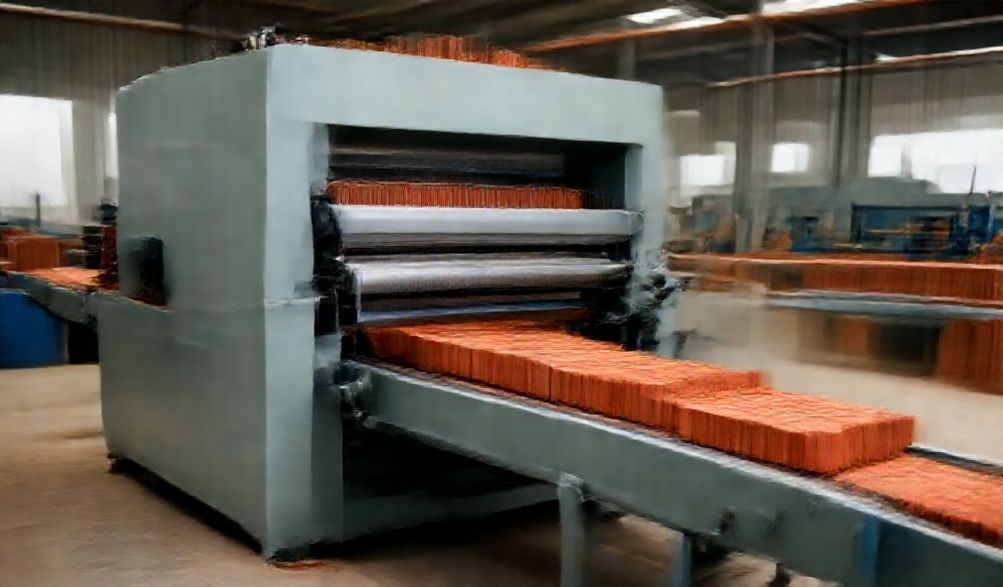
Your Ultimate Guide to Finding the Best Clay Brick Making Machine for Sale in India | Expert Insights from FUDA
Муқаддима
India’s construction sector is not just booming; it’s undergoing a revolution. From ambitious infrastructure projects to the ever-growing demand for housing, the need for high-quality, affordable building materials has never been greater. At the heart of this growth lies a fundamental unit: the brick. But are you, as a builder or entrepreneur, struggling with production bottlenecks, inconsistent brick quality, or the daunting task of selecting the right machinery to power your venture?
Гузаронидани бозор барои якclay brick making machine for sale in India can be complex, filled with technical jargon and varying promises. This guide cuts through the noise. Curated with deep-seated insights from Фуда, a leading корхонаи истеҳсоли блок with decades of hands-on Таҷриба in manufacturing and supplying robust machinery across the Indian subcontinent, this post serves as your comprehensive, unbiased resource.
Our goal is to empower you—whether you’re a small-scale startup or a large-scale plant owner—to make an informed, confident, and trustworthy decision. We’ll demystify machine types, break down key features, discuss realistic pricing, and, most importantly, show you how to choose a supplier that stands by you long after the sale. Let’s build a foundation for your success.
Фаҳмидани дастгоҳҳои сохтани хишти гилӣ: Намудҳо ва технологияҳо
Before investing, understanding the landscape of brick manufacturing technology is crucial. The right machine aligns with your production goals, budget, and operational capacity.
Дастӣ нисбат ба ним-автоматӣ нисбат ба машинаҳои пурра автоматӣ
The level of automation is the primary differentiator, impacting everything from cost to output.
-
Дастгоҳҳои дастӣ: These are the most basic, operator-driven presses.
- Сармоягузорӣ:Нархи пешакӣ камтарин.
- Натиҷа: Low (e.g., 500-1000 bricks per 8-hour shift).
- Меҳнат: High dependency on skilled manual labor.
- Идеалӣ барои: Micro-enterprises, very low-budget startups, or producing specialty bricks in small quantities.
-
Машинаҳои ним-автоматӣ: A balanced choice for growing businesses. They mechanize the critical pressing and ejection processes but may require manual feeding or brick removal.
- Сармоягузорӣ:Миёнарав, пешниҳоди арзиши аъло.
- Натиҷа: Medium to High (e.g., 2,000 – 6,000 bricks per shift).
- Меҳнат: Reduced dependency compared to manual machines.
- Идеалӣ барои: Small to medium-scale businesses (SMEs) looking for a balance between productivity and cost.
-
Машинаҳои пурра автоматӣ: These are complete production lines with automated material feeding, pressing, stacking, and palletizing.
- Сармоягузорӣ: Highest capital requirement.
- Натиҷа: Very High (e.g., 10,000+ bricks per shift).
- Меҳнат: Minimal; primarily for supervision and maintenance.
- Идеалӣ барои: Large-scale plants, industrial brick manufacturing units, and businesses focused on maximum output and consistency.
Key Machine Types for Indian Markets
While “block making machine” is often used broadly, the core material defines the machine type.
- Clay Brick Making Machine: Specifically designed for traditional brick manufacturing using clay or soil. It processes the raw clay, compresses it into moulds, and ejects the green (unfired) bricks for drying and firing. This is the primary focus for businesses using local soil.
- Concrete Block Making Machine: Uses a mix of cement, sand, and aggregates to produce concrete blocks, pavers, and hollow blocks. The process is distinct from clay processing and often involves vibration and compaction.
- Interlocking Brick Machine: A growing segment focused on sustainable construction. These machines produce bricks that lock together without mortar, often using stabilized earth or concrete. They are popular for cost-effective and rapid construction.
Компонентҳои асосӣ ва тавре ки онҳо кор мекунанд
Understanding key components builds trust and helps you evaluate machine quality:
- Mixer/Pugmill: Where raw clay is mixed with water (and sometimes additives) to achieve a homogeneous, plastic consistency crucial for molding.
- Mould/Dies: The heart of the machine. This steel cavity defines the brick’s shape and size (e.g., standard modular, paver). High-quality, hardened steel moulds ensure longevity and dimensional accuracy.
- Системаи гидравликӣ: Provides the immense pressure (measured in tons) to compact the clay within the mould. A robust, well-calibrated hydraulic system is key to producing dense, strong bricks.
- Панели идоракунӣ: Ranges from simple switches in manual machines to advanced Programmable Logic Controller (PLC) systems in automatics. PLCs ensure precise, repeatable operations and ease of use.
Why Choose a Clay Brick Machine from a Reputable Block Making Factory?
Your machine is a long-term partner in productivity. Choosing based solely on the lowest price is the most common and costly mistake.
The Importance of Manufacturing Quality & Standards
A machine built for India must withstand India’s demanding conditions—dust, heat, humidity, and continuous operation. A reputable factory ensures this through:
* Graded Materials: Use of AR (Abrasion Resistant) steel plates for moulds, high-tensile frames, and imported seals in hydraulic systems.
* Robust Engineering: Designs that account for voltage fluctuations and physical stress.
* Сертификатҳо: While not always mandatory, ISO certifications indicate a systematic approach to quality management.
After-Sales Support: The Deal-Breaker
The true test of a supplier begins after installation. Comprehensive after-sales support is non-negotiable.
* Local Service Network: Can they deploy a technician to your site in Rajasthan, Tamil Nadu, or Assam within a reasonable time?
* Spare Parts Inventory: Guaranteed availability of critical spares to minimize costly downtime.
* Насб ва омӯзиш: On-site setup and proper training for your operators are essential for safety and optimal performance.
* Clear Warranty: Understand what is covered (parts, labor) and for how long. Established factories like FUDA stand firmly behind their warranty promises.
Cost of Ownership vs. Initial Price
A cheaper machine can become expensive through:
* Frequent breakdowns and production halts.
* High energy consumption.
* Difficulty in sourcing spares.
* Short machine lifespan.
Investing in a quality machine from a trusted корхонаи истеҳсоли блок translates to lower cost per brick over its lifetime, higher uptime, and greater peace of mind.
Key Features to Look for When Buying a Machine in India
Arm yourself with this checklist to compare models and suppliers effectively.
Иқтидори Истеҳсолӣ (Маҳсулот дар як Соат/Рӯз)
Match the machine’s capacity with your business plan. Don’t over-invest in unused capacity, but ensure there’s room for growth. Clearly understand if the quoted output is for an 8-hour shift or 24 hours, and under what conditions.
Brick Size and Mould Customization
Versatility can open new revenue streams.
* Андозаҳои Стандартӣ: Ensure it can produce the most common bricks (e.g., 9″x4″x3″).
* Custom Moulds: Can the supplier provide moulds for pavers, hollow blocks, or decorative bricks? This flexibility is a sign of a supportive manufacturer.
Power Requirements and Energy Efficiency
This is a critical practical consideration.
* Electric vs. Diesel: Most stationary plants use 3-phase electric motors. Diesel engines are an option for sites with unreliable power but have higher fuel costs.
* Motor Rating: Ensure the motor’s HP/KW rating is sufficient for consistent performance without tripping.
* Efficient Design: Modern machines with well-designed hydraulic circuits consume less power per brick produced.
Automation Level and Ease of Operation
Higher automation brings tangible benefits:
* Мутаносибӣ: PLC-controlled machines produce bricks with uniform density and dimensions, batch after batch.
* Reduced Skill Dependency: Simplifies operation and reduces training overhead.
* Safety: Automated systems often have better safety interlocks.
A Realistic Price Range for Clay Brick Machines in India
Transparency is key. Prices vary widely based on specifications.
Factors Influencing the Price
- Сатрҳои автоматӣ: (Manual < Semi-Auto < Fully Auto).
- Иқтидори истеҳсолӣ: Higher output machines command higher prices.
- Марка ва сифати сохт: Reputed manufacturers invest in quality components.
- After-Sales Package: Comprehensive support is factored into the price.
Estimated Investment Spectrum
- Дастгоҳҳои дастӣ барои истеҳсоли хишти гилӣ Can start from ₹ 1.5 – 3 Lakhs.
- Машинаҳои ним-автоматӣ: Typically range from ₹ 5 Lakhs to ₹ 20 Lakhs, depending on size and features.
- Хатҳои истеҳсоли пурра худкор Investment can range from ₹ 25 Lakhs to several Crores for large, integrated plants.
Эзоҳи муҳим: These are indicative ranges. Raw material costs and technology evolve. Always contact suppliers for detailed, itemized quotations based on your specific needs.
Understanding Financing and Government Schemes
Explore financial avenues to ease your investment:
* MSME Loans: Various banks offer attractive loan schemes for machinery purchase under MSME categories.
* State Subsidies: Some state industrial development corporations offer capital subsidies for setting up manufacturing units. Check with your local District Industries Centre (DIC).
How to Vet Suppliers and Ensure a Smart Purchase
This is where due diligence separates a successful investment from a regrettable one.
The Due Diligence Checklist
- Factory Visit: If feasible, visit the manufacturing unit. Assess their workshop, quality control processes, and scale of operations.
- Client References: Ask for contact details of past clients, preferably in a region similar to yours. A genuine supplier will provide them.
- Live Demonstration: Request a video call or visit to see a machine similar to your interest running in their yard or at a client’s site.
- Verify Certifications: Ask for proof of ISO, trade membership, or other relevant credentials.
Red Flags to Avoid
- Unusually Low Prices: If a quote is drastically lower than the market, scrutinize the material specifications and warranty terms.
- Vague or Short Warranty: A warranty that lacks detail or is very short (e.g., 3 months) is a major warning sign.
- No Physical Address/Service History: Suppliers operating only through online portals with no verifiable factory or service track record.
- Pressure Tactics: Beware of “today-only” discounts designed to force a hasty decision.
Questions to Ask Your Supplier
- What is the exact composition of steel used in the mould and frame?
- Can you provide a list of recommended spare parts I should keep on hand?
- What is your average response time for service requests in my state?
- Do you provide detailed operation and maintenance manuals?
- What is the installation and commissioning process, and what support do you provide?
Spotlight: FUDA’s Approach to Brick Making Solutions
At FUDA, our philosophy is built on partnership, not just transaction. We understand that your machine is the engine of your livelihood.
Our Manufacturing Philosophy
We build machines to last. Using premium-grade materials and precision engineering, we focus on durability, reliability, and innovation tailored for the diverse and demanding Indian market. Our Таҷриба across thousands of installations informs every design improvement.
Tailoring Solutions for Indian Entrepreneurs
We don’t believe in a one-size-fits-all approach. Our process involves:
* Understanding Your Soil: We discuss your local soil type to advise on any necessary additives or process adjustments.
* Aligning with Your Goals: We help you select a machine that matches your current output targets and future expansion plans.
* Site-Specific Advice: We provide guidance on plant layout, power setup, and drying yard requirements.
Beyond the Sale: Our Support Promise
Our commitment begins where the sale ends.
* Expert Installation: Our technicians ensure your machine is set up correctly for day-one productivity.
* Таълими ҳамаҷониба We train your team on operation, routine maintenance, and basic troubleshooting.
* Long-Term Partnership: With a network of service engineers and a ready inventory of spares, we ensure your FUDA machine remains a productive asset for years to come.
Frequently Asked Questions (FAQ)
Q1: What is the average production output of a standard clay brick making machine?
Output varies dramatically. A basic manual press may produce 800-1000 bricks per 8-hour shift, while a semi-automatic model can produce 3000-5000. High-end automatic lines can exceed 15,000 bricks per shift.
Q2: Can I use local Indian soil in these machines, or are additives required?
Most local soils can be used, but the quality of the final brick depends on the soil’s composition (clay, silt, sand content). Often, additives like sand or a small percentage of cement (for stabilized bricks) are recommended to improve strength and reduce cracking. A soil test is advisable.
Q3: What is the typical lead time for delivery and installation across different Indian states?
For standard models, delivery can take 2-6 weeks after order confirmation, depending on the distance and customization. Installation is typically scheduled shortly after the machine arrives at your site.
Q4: How much space is required to set up a small-scale brick making plant?
A semi-automatic operation, including space for the machine, raw material storage, drying yard, and finished stock, would require approximately 5,000 to 10,000 square feet.
Q5: What are the most common maintenance issues, and how can I prevent them?
Common issues include hydraulic oil leaks, worn-out mould liners, and clogged mixers. Prevention lies in following the daily greasing schedule, using clean oil, ensuring raw material is free of large stones, and conducting regular inspections as per the manual.
Q6: Does FUDA provide guidance on brick curing and setting up a drying yard?
Absolutely. We consider the drying and curing process integral to final brick quality. Our team provides detailed guidelines on setting up a proper drying yard (orientation, spacing, covering) and curing methods to achieve optimal strength.
Conclusion
Интихоби дурустclay brick making machine for sale in India is a strategic decision that forms the backbone of your brick manufacturing business. It requires careful consideration of machine type, a focus on long-term quality and service over short-term price savings, and thorough vetting of your supplier.
Remember, this machine is a long-term asset. The time and effort you invest in research today will pay dividends in productivity and profitability for years to come.
Ready to take the next step with confidence? Contact the FUDA expert team today for a free, no-obligation consultation. We’ll help you analyze your specific soil, production goals, and budget to provide transparent, tailored information. Let us guide you in making the right investment for your success in India’s vibrant construction landscape.
<