
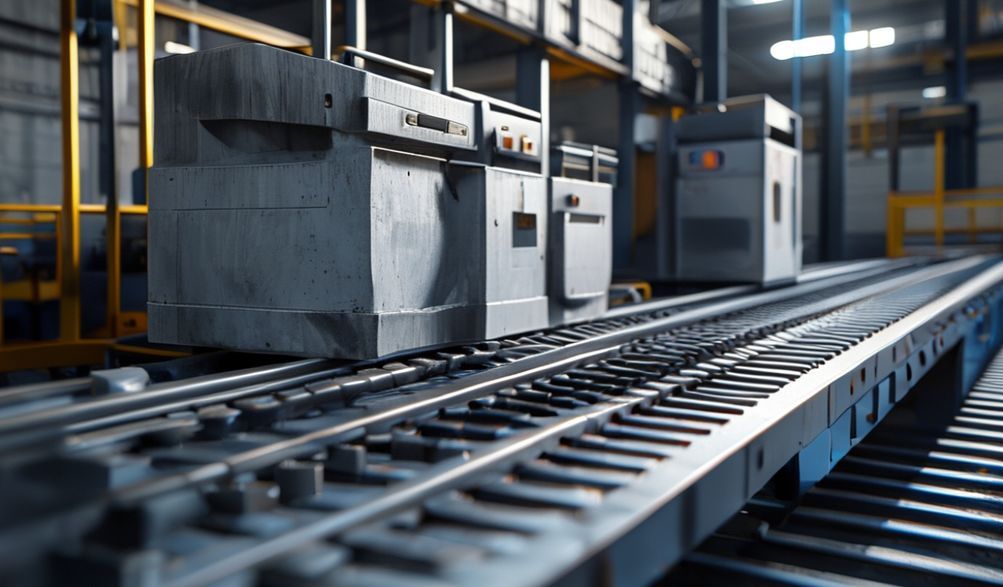
Роҳнамои ниҳоии шумо барои ёфтани дастгоҳи дурусти блоксозӣ барои фурӯш
Муқаддима
Мушкилот бо таъхирҳои лоиҳа, сифати номуназзами блокҳо ё хароҷоти баланди маводи сохтмонии берунӣ? Шумо танҳо нестед. Барои сохтмончиён, пудратчиён ва соҳибкорони боистеъдод, назорат кардани таъминоти блокҳо на танҳо як роҳати оддӣ, балки як қадами стратегиест, ки метавонад самаранокӣ ва фоидаоварии тиҷорати шуморо муайян кунад.
Ин дастури мукаммал барои ҳар касе, ки дар ҷустуҷӯи “фурӯши мошини блоксозӣ” аст, таҳия шудааст. Ин танҳо феҳристи маҳсулот нест; он манбаи ҳамаҷонибаест барои идораи сармоягузории муҳим. Бо такя ба мушаххасоти муфассали соҳавӣ, маълумоти мустақими истеҳсолкунандагон ва таҷрибаи даҳсолаҳои амалӣ, мо маълумоти боэътимод ва амалиро пешниҳод мекунем, ки ба шумо барои қабули қарори боэътимод лозим аст.
Мо мефаҳмем, ки шумо харидории муҳимро баррасӣ мекунед, ки ба иқтидори амалиётӣ, сифати маҳсулот ва даромади шумо таъсир мерасонад. Ин навишта ҳамчун роҳнамои шумо хидмат мекунад, ки ба шумо дар фаҳмидани намудҳои гуногуни мошинҳо, муайян кардани меъёрҳои асосии интихоб, таҳлили хароҷоти воқеӣ ва муҳимтар аз ҳама, пешгирӣ кардани хатоҳои маъмуле, ки харидорони аввалинро ба дом меандозанд, кӯмак мекунад. Биёед дониши шуморо аз асос созем.
Фаҳмидани Мошинаҳои Сохтани Блок: Навъҳо ва Истифодабарҳо
Қадами аввал дар сафари шумо фаҳмидани манзараи технологӣ мебошад. Мошинҳои блокӣ аз рӯи сатҳи автоматизатсия ва ҳаракатпазирӣ гурӯҳбандӣ мешаванд, ки ҳар кадоме барои миқёси муайяни истеҳсолот ва моделҳои тиҷоратӣ тарроҳӣ шудаанд.
Дастгоҳҳои дастӣ барои сохтани блокҳо
Инҳо соддатарин ва дастрастарин нуқтаи вуруд ба истеҳсоли блок мебошанд.
- Идеалӣ барои:Стартапҳои хурд, дӯстдорони DIY, лоиҳаҳои ҷамъиятӣ ё амалиёти хеле камбуҷа, ки дар онҳо меҳнат аз мошинҳо арзонтар аст.
- Онҳо чӣ гуна кор мекунанд: Operators manually fill molds with concrete mix and use a lever mechanism to compress the block before stripping it.
- Муҳоҷизот:
- Very low initial investment and acquisition cost.
- Minimal maintenance with no electrical or hydraulic systems.
- Zero power requirement, perfect for areas with unreliable electricity.
- Манфӣҳо
- Very low output (typically 300-500 blocks per 8-hour shift).
- Хеле меҳнатталаб ва баданӣ тақозокунанда.
- Limited to basic block types (solid bricks, simple hollow blocks) with less dimensional consistency.
- Best Application: Producing blocks for personal construction use, very small local orders, or as a proof-of-concept for a micro-business.
Машинаҳои ним худкор барои сохтани блокҳо
This category represents the optimal balance for most growing small to medium enterprises (SMEs), automating the critical compression phase while retaining some manual steps.
- Идеалӣ барои: Small to medium block yards, local construction material suppliers, and businesses looking to scale from manual production.
- Онҳо чӣ гуна кор мекунанд: An operator places mix into the mold, but the machine uses a mechanical or hydraulic system to provide high-frequency vibration and compression. The block is then ejected automatically or with minimal manual assistance.
- Муҳоҷизот:
- Significantly higher output than manual machines (1,000 to 4,000 blocks per shift).
- Dramatically improved block density, strength, and consistency.
- Reduces physical strain on workers, improving efficiency.
- Манфӣҳо
- Requires a consistent operator and some manual feeding/pallet handling.
- Lower output than a fully synchronized automatic line.
- Requires a stable power source (typically 3-phase).
- Best Application: Businesses with steady daily demand looking to establish a reliable local supply with a manageable investment.
Машинаҳои пурра худкор барои сохтани блокҳо
For high-volume, commercial-grade production, fully automatic plants are the industry standard. They are complete systems designed for maximum efficiency with minimal human intervention.
- Идеалӣ барои: Large block manufacturing plants, export-oriented businesses, and major construction companies supplying large projects.
- Онҳо чӣ гуна кор мекунанд: These are integrated systems with automatic mix feeding, molding, compression, curing, and block stacking/palletizing. Controlled by a PLC (Programmable Logic Controller), they run continuous cycles.
- Муҳоҷизот:
- Maximum output (from 5,000 up to 20,000+ blocks per 8-hour shift).
- Minimal labor required (often just 1-2 operators for monitoring).
- Unmatched product consistency and quality.
- Programmable to produce a wide range of products (blocks, pavers, curbs) by changing molds and recipes.
- Манфӣҳо
- High initial capital investment.
- Requires significant space, a robust foundation, and stable high-capacity power.
- More complex maintenance requiring trained technicians.
- Best Application: Serving large metropolitan markets, government housing projects, or establishing a dominant regional supply brand.
Дастгоҳҳои сохтани блокҳои мобилӣ
A specialized solution that brings the factory directly to the job site.
- Идеалӣ барои: Large-scale infrastructure projects in remote locations, such as dam construction, road building, or rural housing developments.
- Онҳо чӣ гуна кор мекунанд: Mounted on a trailer or truck bed, these are compact, self-contained units that can produce blocks directly where they are needed.
- Муҳоҷизот:
- Eliminates the immense cost and logistics of transporting finished blocks over long distances.
- Reduces material waste and block damage from transit.
- Provides just-in-time production for the project.
- Манфӣҳо
- Generally has a lower output than a stationary plant of similar cost.
- Can face challenges with on-site raw material quality and availability.
- Best Application: Any major project where the transport cost of blocks exceeds 30-40% of their total cost, or where local supply is non-existent.
Омилҳои асосӣ, ки пеш аз харидан бояд ба назар гирифта шаванд
Choosing the right machine is a strategic decision. Beyond the initial price tag, these core factors will determine your long-term success and return on investment (ROI).
Иқтидори истеҳсолот ва талаботи истеҳсолот
Mismatched capacity is a leading cause of business failure. An oversized machine drains capital, while an undersized one caps your growth.
- Таҳвили Талаботи Воқеӣ: Don’t guess. Analyze your market. How many blocks can you realistically sell per day? Consider existing contracts, local construction rates, and competitor output.
- Match to Business Plan: Are you starting small to test the market? A semi-automatic machine allows for growth. Are you fulfilling a large, secured contract? A fully automatic line may be justified from day one.
- Think in Shifts: Machine output is rated in blocks per hour. Calculate your needed daily output and see if it can be achieved in one 8-hour shift or if you need to plan for multiple shifts to justify a smaller machine.
Block Types, Sizes, and Mix Design
Your product line defines your market. Ensure the machine can produce what your customers want to buy.
- Бисёрҷиҳати маҳсулот: Can it make solid blocks, hollow blocks (3-hole, 4-hole), paving slabs, interlocking pavers, garden kerbs, and retaining wall blocks? The more versatile, the wider your potential customer base.
- Системаи қолибсозӣ How quickly and easily can molds be changed? A quick-change system minimizes downtime when switching products. Also, inquire about the cost and lead time for additional molds.
- Мувофиқати Маводи Хом: The machine must work with the materials you have. Test your local sand, aggregate, and cement (or fly ash) with the machine supplier’s mix design recommendations. Some advanced machines are optimized for specific mixes like cement-stabilized earth or lightweight aggregates.
Automation Level and Operational Costs
The purchase price is just the first cost. The true expense is the Total Cost of Ownership (TCO).
- Break Down the TCO:
- Capital Expenditure (CapEx): Machine price, shipping, installation, foundation work.
- Operational Expenditure (OpEx): Electricity consumption, labor wages, routine maintenance, spare parts, raw materials.
- Project Your ROI: A semi-automatic machine has a lower CapEx but higher ongoing labor costs. A fully automatic machine has a high CapEx but very low labor costs and higher output. Create a 3-5 year financial model comparing these scenarios based on your projected sales.
Machine Durability and After-Sales Support
This is the most critical, non-negotiable part of your decision. A machine is a long-term asset; its support network is its lifeblood.
- Build Quality Inspection:
- Фрейм Look for heavy-duty, welded steel construction.
- Системаи Ларзишӣ: The heart of the machine. It should be powerful, balanced, and mounted on robust shock absorbers.
- Hydraulics & Electronics: Components should be from reputable brands (e.g., Siemens, Bosch, Schneider) for reliability and easier servicing.
- The After-Sales Checklist:
- Warranty: What is covered (parts, labor)? For how long (1 year minimum)?
- Қисмҳои ивазшаванда: Is there a local parts inventory? What is the typical delivery time for major components?
- Дастгирии техникӣ: Is phone/online support available? In what languages?
- Инженерони хидматрасон: Can they dispatch a trained engineer for installation and major repairs? What are the costs and response times?
- Always ask for and contact customer references. Visit an existing installation if possible.
Navigating the Market: Suppliers and Pricing Insights
The global market is diverse, with options ranging from established European giants to competitive manufacturers in emerging industrial hubs.
Leading Global and Local Manufacturers
- Established International Brands: Companies like Zenith (Germany), Hess Group (Germany), and Prensoland (Spain) have decades of reputation for engineering excellence, durability, and advanced technology. They often come with a premium price but are known for high resale value and reliability.
- Key Regional Manufacturers: Over the last 20 years, manufacturers in Turkey, India, and China have significantly elevated their quality. Many now produce machines that meet international standards at a more competitive price point. The key is rigorous vetting.
- Vetting Your Supplier: Beyond brochures, insist on seeing production facilities (via video if not in person). Request a list of installations in your region or a similar climate. A trustworthy supplier will be transparent and encourage this due diligence.
New vs. Used Block Making Machines
This is a classic CapEx dilemma.
- New Machine Advantages:
- Full manufacturer’s warranty.
- Latest technology, efficiency, and safety features.
- Predictable performance and reliability from day one.
- Comprehensive training and support.
- Used Machine Advantages & Cautions:
- Pro: Lower upfront capital outlay.
- Critical Cons: “As-is” condition often means hidden wear in bearings, hydraulics, or the vibration table. Technology may be obsolete. Warranties are rare. Original manufacturer may not support it.
- Inspection Checklist for Used Machines: Review maintenance logs. Test run under full load. Inspect for frame cracks or welds. Check hydraulic cylinders for leaks. Evaluate the condition of all motors and the control panel. Factor in an immediate overhaul budget.
Understanding Price Ranges
Prices vary astronomically based on type, capacity, and brand.
- Дастгоҳҳои дастӣ: Can start from Аз 1,500 то 5,000 доллар.
- Машинаҳои ним-автоматӣ: Typically range from $15,000 to $50,000.
- Заминҳои Пурра Автоматӣ: Begin around $50,000 and can exceed $300,000+ for large, high-output systems with robotic palletizers.
- What Drives Price? Brand reputation, level of automation, construction quality, output capacity, and included features (like automatic mixers or stackers). Be wary of prices drastically below market averages—compromises in component quality or support are almost certain.
Ensuring a Successful Purchase and Setup
Your work isn’t done when the purchase order is signed. Proper planning for installation and operation is what separates successful plants from failed investments.
The Pre-Purchase Checklist
Before the machine arrives, your site must be ready.
* Site & Foundation: Ensure you have adequate space (including for raw material storage and block curing). Pour the reinforced concrete foundation exactly to the supplier’s specifications.
* Utilities: Confirm your power supply (voltage, phase) matches the machine’s requirements. Arrange for a reliable water source.
* Маводҳои хом: Secure consistent suppliers for cement, aggregates, and other mix components. Test their quality.
* Logistics & Finance: Finalize shipping (FOB, CIF terms), customs clearance, and have financing fully arranged.
Installation, Training, and First Production
- Professional Installation: Never attempt a DIY installation for semi- or fully-automatic machines. Insist that a technician from the supplier supervises or performs the installation, calibration, and commissioning.
- Таълими ҳамаҷониба This is part of your purchase. Ensure operators are trained on:
- Daily startup/shutdown procedures.
- Basic troubleshooting and safety protocols.
- Routine maintenance tasks.
- Mix design adjustments and mold changes.
- Test Production: Run the machine with your local materials for several cycles. Check the quality of the blocks for dimensional accuracy, strength, and finish before beginning full-scale production.
Routine Maintenance for Longevity
A maintenance schedule is an insurance policy.
* Daily: Clean the machine thoroughly, check hydraulic oil levels and for leaks, inspect mold and pallets for wear.
* Weekly: Grease all bearings and pivot points, check belt tensions, tighten any loose bolts.
* Monthly: Inspect vibration motors, change hydraulic oil filters as recommended, perform a full system check.
* Keep a Spare Parts Inventory: Based on the supplier’s advice, keep critical wear parts on hand (e.g., springs, rubber shock absorbers, specific seals) to minimize downtime.
Frequently Asked Questions (FAQ)
Q: What is the average cost of a block making machine?
A: There is no single “average” cost. Manual machines can start from a few thousand dollars, serving micro-businesses. Semi-automatic machines, suitable for SMEs, typically range from $15,000 to $50,000. High-capacity, fully automatic production lines represent a major industrial investment, starting around $50,000 and reaching several hundred thousand dollars. Your specific output goals and product mix dictate the final price.
Q: Can I get a block making machine with a loan or financing?
A: Yes, financing is commonly available. Many reputable equipment dealers offer in-house installment plans or work with financial partners. Additionally, business development banks, agricultural/industrial loan programs, or government SME support schemes in your country may fund such capital equipment purchases. A solid, well-researched business plan is essential to secure financing.
Q: What is the profit margin in the block making business?
A: Profit margins are highly variable and depend on three key factors: your local market selling price for blocks, your operational efficiency (machine uptime, labor cost), and most critically, your raw material procurement cost. A well-managed plant with good cost control can achieve healthy margins. Focus on maximizing efficiency and securing affordable, consistent raw materials to protect your profitability.
Q: How do I choose between a local and an international supplier?
A: Weigh the trade-offs. International brands often bring proven technology, robust engineering, and global R&D. Local or regional suppliers may offer more competitive pricing and, crucially, faster and more affordable after-sales service and spare parts delivery. The ideal scenario is a reputable international brand with an authorized, competent local service agent in your country.
Q: What are the most common mistakes first-time buyers make?
A: 1. Price-Only Focus: Choosing the cheapest machine without considering durability or support. 2. Overestimating Demand: Buying an oversized, expensive machine that sits underutilized. 3. Hidden Cost Neglect: Forgetting to budget for installation, foundation, training, and initial spare parts. 4. Support Blindness: Failing to verify the supplier’s after-sales service reputation and spare parts availability.
Conclusion
Finding the right block machine for sale is a journey that blends technical understanding with sharp business acumen. The “best” machine isn’t the most expensive or the highest-output one; it’s the one that aligns perfectly with your production goals, budget constraints, and is backed by unwavering local support.
Your due diligence is the foundation of your success. Go beyond brochures and websites. Visit manufacturing facilities if possible, speak directly to other buyers, and start with a crystal-clear business plan. Remember, the machine is a powerful tool, but its success is ultimately determined by your management, maintenance, and market understanding.
Ready to take the next step with confidence? Download our comprehensive Block Machine Buyer’s Checklist to ensure you ask every critical question and inspect every key component before finalizing your investment. For personalized guidance tailored to your specific project and region, contact our team of industry experts today.
<