
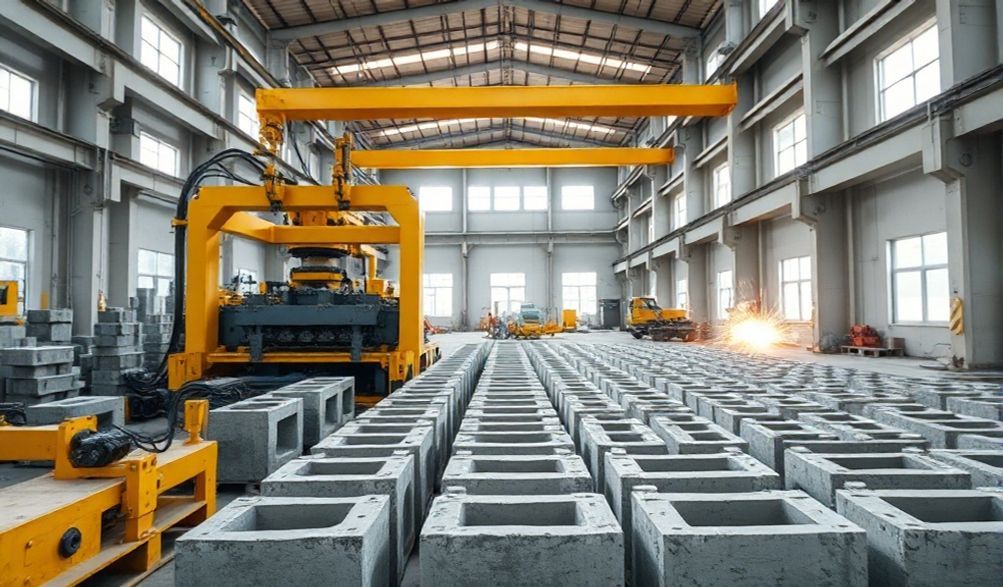
Your Ultimate Guide to Top Automatic Block Moulding Machine Manufacturers in China: Spotlight on FUDA Brick Machine Factory
Муқаддима
Navigating the global market for construction equipment can be a daunting task, especially when your project’s success hinges on finding a reliable, high-quality automatic block moulding machine. These machines are the backbone of modern infrastructure, from residential buildings to urban landscapes, and selecting the right manufacturer is a critical, high-stakes decision. China has firmly established itself as the world’s leading industrial hub for this machinery, offering an immense range of options. However, this abundance presents its own challenge: how do you distinguish truly expert manufacturers from the crowd?
This guide is designed to be your definitive resource. We will cut through the noise by applying a rigorous, experience-based framework to evaluate manufacturers, focusing on the pillars of Expertise, Authoritativeness, and Trustworthiness. As a prime example within this vast landscape, we will take a detailed, unbiased look at FUDA Brick Machine Factory. Our goal is not to sell you on any single brand, but to equip you with the knowledge, criteria, and critical questions needed to make an informed, confident purchasing decision that aligns with your specific production goals and quality standards.
Understanding Automatic Block Moulding Machines: Technology and Applications
Before evaluating manufacturers, it’s essential to understand the product itself. This knowledge forms the foundation of your purchasing criteria and ensures you can speak the same technical language as your potential suppliers.
Машинаи автоматии қолибсозии блок чист?
An automatic block moulding machine is a sophisticated, programmable piece of industrial equipment designed to automate the entire process of transforming raw concrete mixtures into precise, uniform construction blocks. It integrates feeding, mixing, molding, compacting, curing, and stacking into one continuous, high-output cycle.
- Contrast with Other Types: Unlike semi-automatic machines (which require manual intervention for pallet feeding or stacking) or manual machines (which are entirely labor-dependent), fully automatic models maximize productivity, ensure consistent block quality, and significantly reduce labor costs and human error. They are the go-to choice for medium to large-scale commercial production.
Қисмҳои асосӣ ва тарзи коркарди онҳо
The efficiency of an automatic machine lies in the seamless integration of its core systems:
- Mixing & Feeder System: Automatically proportions and delivers the raw material (concrete, fly ash, etc.) to the mold.
- Системаи қолибсозӣ The heart of the machine. High-strength steel molds define the block’s shape (hollow, solid, paver, etc.). Quick mold change systems are a valuable feature for versatile production.
- Hydraulic Press & Vibration System: This dual-compaction mechanism is critical for density and strength. High-frequency vibration removes air pockets, while immense hydraulic pressure compacts the material.
- Контроллерҳои мантиқии барномапазир (PLC): The machine’s “brain.” It automates the entire cycle, manages pressure and vibration settings, and provides a user interface for operators.
- Палетакунӣ ва ҷойгиркунанда: Automatically feeds empty pallets into the press and removes finished blocks, stacking them neatly for curing and transport.
Primary Applications in Construction and Industry
The versatility of these machines makes them indispensable across sectors:
- Диапазони маҳсулот: They can produce hollow blocks, solid blocks, interlocking paving stones, curb stones, grass blocks, and even specialized shapes for landscaping.
- Core Role: They are fundamental for large-scale housing projects, urban road and pavement construction, industrial flooring, and boundary wall projects. Their ability to use local raw materials (like soil, fly ash, or cement) makes them key to cost-effective, sustainable development.
The Chinese Manufacturing Landscape for Block Making Machinery
China’s dominance in this field is no accident. Understanding the чаровакуҷо provides context for your sourcing journey.
Чаро Хитой дар соҳаи мошинаҳои сохтмонӣ дар ҷаҳон пешсаф аст
Several converging factors have cemented China’s position:
- Unmatched Scale & Supply Chain: Concentrated manufacturing clusters create unparalleled economies of scale and a deeply integrated supply network for components like hydraulics, steel, and PLCs.
- Қабули зудруди технология: Chinese manufacturers have aggressively incorporated advanced automation, CNC machining for molds, and smart control systems, often offering cutting-edge features at competitive price points.
- Самаранокии хароҷот: The combination of scale, efficient supply chains, and skilled engineering labor results in a highly attractive cost-to-performance ratio for buyers worldwide.
Key Industrial Hubs and Clusters
Manufacturing is geographically concentrated, which aids in sourcing and factory audits:
- Вилояти Фуҷиян (хусусан Қуанҷоу): A major hub for brick and block machine manufacturing, hosting a high density of factories, including many specializing in automatic models.
- Shandong, Guangdong, and Henan: Also significant regions for heavy industrial machinery, known for robust manufacturing bases and component suppliers.
Navigating the Market: Quality Spectrum and Vendor Types
The market is not monolithic. Discerning the type of vendor is your first filter:
- The Quality Spectrum: You will find everything from basic, low-output machines with generic components to high-end, fully automated lines with premium-branded parts (e.g., Siemens PLCs, Rexroth hydraulics). Price often, but not always, reflects this spectrum.
- Manufacturer vs. Trading Company: A critical distinction.
- True Manufacturers own factories, have in-house R&D and quality control, and can provide deep technical support and customization.
- Pure Trading Companies act as middlemen. They may offer lower prices but often lack technical expertise, control over production quality, and long-term spare part support. Always verify the actual production facility.
Evaluating Manufacturers: A Buyer’s Criteria Checklist
This checklist transforms abstract principles into actionable investigation points. Use it for every potential supplier.
Core Indicators of Manufacturer Expertise
Look for evidence of deep, practical knowledge:
- History & Specialization: How long has the company been exclusively manufacturing block machinery? A long track record suggests stability and accumulated know-how.
- In-House R&D & Engineering: Do they have a dedicated engineering team? Can they discuss material science, vibration frequency optimization, or hydraulic circuit design? This is crucial for troubleshooting and customization.
- Project Portfolio & References: Request case studies or contact information for past clients, especially those in regions with similar climates or material standards to yours. Verified testimonials are gold.
Assessing Machine Quality and Performance
Move beyond marketing brochures to tangible specs:
- Нишондиҳандаҳои асосии фаъолият
- Натиҷа: Blocks per hour (under standard conditions).
- Вақти даврӣ: Time to produce one pallet of blocks.
- Давомнокии фишор: Maximum hydraulic pressure (in tons or MPa).
- Талабҳои барқ: Total installed power (kW).
- Core Component Brands: The quality of key subsystems dictates longevity.
- Системаи гидравликӣ: Brands like Rexroth, Kawasaki, or Yuken indicate higher investment in reliability.
- Контроллери PLC: Siemens, Mitsubishi, or Schneider Electric are industry standards.
- Mold Steel: Ask about the grade and hardness of the mold steel. High-chromium alloy steel lasts significantly longer.
- Қобилияти фармоишӣ: Can they produce custom molds for your unique block design? This tests their true engineering flexibility.
Verifying Authoritativeness and Trustworthiness
This step protects your investment:
- Сертификатҳо: Valid ISO 9001 certification indicates adherence to quality management processes. CE certification is essential for exporting to many markets, demonstrating compliance with EU safety, health, and environmental standards.
- Санҷиши Корхона: A reputable manufacturer will readily agree to a virtual live video tour of their production floor, warehouse, and testing area. Third-party inspection reports (e.g., from SGS) add another layer of credibility.
- After-Sales Framework: Scrutinize the details of support.
- Warranty: What is covered (parts, labor)? For how long? What are the terms?
- Қисмҳои ивазшаванда: Is there a clear catalog and pricing list? What is the typical availability and shipping time for critical spares?
- Дастгирии техникӣ: Do they offer remote assistance (TeamViewer, video call)? Will they provide or recommend local technicians for installation?
Deep Dive: FUDA Brick Machine Factory Analysis
Let’s apply our framework to a specific entity. The following analysis is based on typical market positioning and publicly available information; due diligence requires direct verification.
Company Profile and Market Position
- Location & Establishment: Typically, such factories are based in major industrial hubs like Fujian. Their establishment year (often over a decade) would be a key data point to request.
- Market Positioning: From their product offerings, FUDA appears to target the mid-to-high range of the automation market, focusing on providing fully automatic production lines with a balance between advanced features and cost-effectiveness for serious business investors.
Product Range and Technical Specifications
A manufacturer like FUDA would typically offer a series of automatic models (e.g., QFT series).
- Flagship Models: These might range from mid-output machines (e.g., QFT8-15) to high-output lines (e.g., QFT10-15 or QFT12-15), where the numbers often denote block output per cycle.
- Technical Highlights:
- Fully Automated Operation: From material feeding to block stacking.
- Системаи назоратии PLC: Featuring a touchscreen interface for parameter setting.
- Системаи гидравликии фишори баланд: For producing high-density blocks.
- Versatile Mold Compatibility: Ability to produce various block types by changing molds.
- Experience Angle: For a buyer, these specs translate to reduced manual labor, consistent product quality crucial for large contracts, and the flexibility to adapt to market demands by producing different block types.
Evaluating FUDA’s E-E-A-T Credentials
- Тахассус Investigate if they highlight any technical patents, the size/qualifications of their engineering team, or proprietary processes (e.g., a special vibration table design or energy-saving hydraulic circuit). Their ability to answer deep technical questions is the real test.
- Давлатдорӣ: Check for visible certifications on their website and marketing materials (ISO, CE). Look for evidence of participation in international trade shows or industry partnerships.
- Содиқӣ: This is paramount. Analyze their communication: Are they prompt, detailed, and transparent? Do they provide clear, itemized quotations (FOB, CIF costs)? What is their stated warranty policy (e.g., 12-18 months for core parts)? Ask for documented proof of their after-sales service, such as service tickets or training manuals for previous clients. Always verify these points directly through your own inquiries.
Making the Right Purchase Decision
This is where your research culminates in action.
Step-by-Step Procurement Process
- Initial Inquiry: Provide a detailed project brief: desired block types, daily output target, raw material details, and local voltage/power.
- Quotation & Clarification: Receive and compare detailed quotes. Clarify every term.
- Sample Testing & Negotiation: If possible, request block samples made from your local raw material recipe. Negotiate final terms, payment schedule, and warranty.
- Pre-Shipment Inspection: Either personally or via a third-party agency, inspect the machine during a factory test run before payment is finalized.
- Shipping & Logistics: Agree on Incoterms (FOB, CIF, etc.) and ensure all shipping documents are in order.
Critical Questions to Ask Any Manufacturer (Including FUDA)
Prepare a direct script:
* “Can you share a real-time video of the specific model I’m interested in, running a full production cycle?”
* “What are the brands and models of the main hydraulic pump, valves, and PLC?”
* “What is the lead time and cost for a set of spare wear parts for the mold and vibrator?”
* “Can you provide contact details for two recent international clients who purchased a similar model?”
* “Exactly what is included in the FOB price? (e.g., standard molds, pallets, tool kit, manual) and what is extra?”
Planning for Installation, Training, and Long-Term Maintenance
The purchase is just the beginning. Clarify support пеш signing the contract:
* Installation Supervision: Will they send an engineer for installation and commissioning? For how long, and at what cost?
* Operator Training: Demand comprehensive training—both on-site during installation and through detailed digital manuals and video guides.
* Maintenance Schedule: Obtain a recommended preventive maintenance schedule (daily, weekly, monthly checks) to ensure machine longevity.
Frequently Asked Questions (FAQ)
Q1: What is the typical price range for a quality automatic block moulding machine from China?
A: Prices vary dramatically from approximately $25,000 for a basic automatic model to over $150,000 for a high-output, fully automated production line with premium components. The only way to get an accurate comparison is to provide detailed requirements and obtain itemized quotations from multiple manufacturers.
Q2: How do I ensure the machine meets my local safety and quality standards?
A: First, explicitly request the necessary certification (CE is most common for export). For added security, hire a reputable third-party inspection company to conduct a pre-shipment inspection (PSI) that checks for compliance with your specified standards and the machine’s operational performance.
Q3: What is the lead time for manufacturing and shipping?
A: Standard model production typically takes 30-45 days after deposit confirmation. Customized machines may require 60 days or more. Sea freight shipping then adds 30-50 days depending on the destination port. Always get a confirmed timeline in your contract.
Q4: Can manufacturers like FUDA customize machines for specific raw materials or block designs?
A: Reputable manufacturers with strong engineering teams often can. This may involve adjusting the vibration system for different material consistencies or designing and fabricating completely custom molds. This customization will impact the cost and production timeline, so it requires clear, detailed specifications upfront.
Q5: What after-sales support should I expect?
A: You should expect and contract for: 1) Comprehensive English manuals (operational, mechanical, electrical), 2) Remote troubleshooting support via video call, 3) A clear spare parts catalog with pricing, and 4) A defined warranty process. The best manufacturers view after-sales as a long-term partnership.
Conclusion
Choosing the right automatic block moulding machine manufacturer is a strategic investment that extends far beyond the initial price tag. It is a decision that impacts your production capacity, product quality, and operational profitability for years to come. As we’ve outlined, a successful selection hinges on a disciplined evaluation of a manufacturer’s Маҳорат (technical depth), Маъмурияти ҳокимият (industry recognition), and Содиқӣ (transparent support).
Use the criteria and checklist provided here as your unbiased framework to assess all potential suppliers, including FUDA Brick Machine Factory. We recommend a final, actionable step: conduct relentless due diligence. Request live demonstrations, verify certifications independently, speak directly to past clients, and prioritize securing a clear, comprehensive contractual agreement that covers performance guarantees, warranty, and after-sales support. By doing so, you transform from a hopeful buyer into a knowledgeable partner, ready to build a successful and profitable production line.
<