
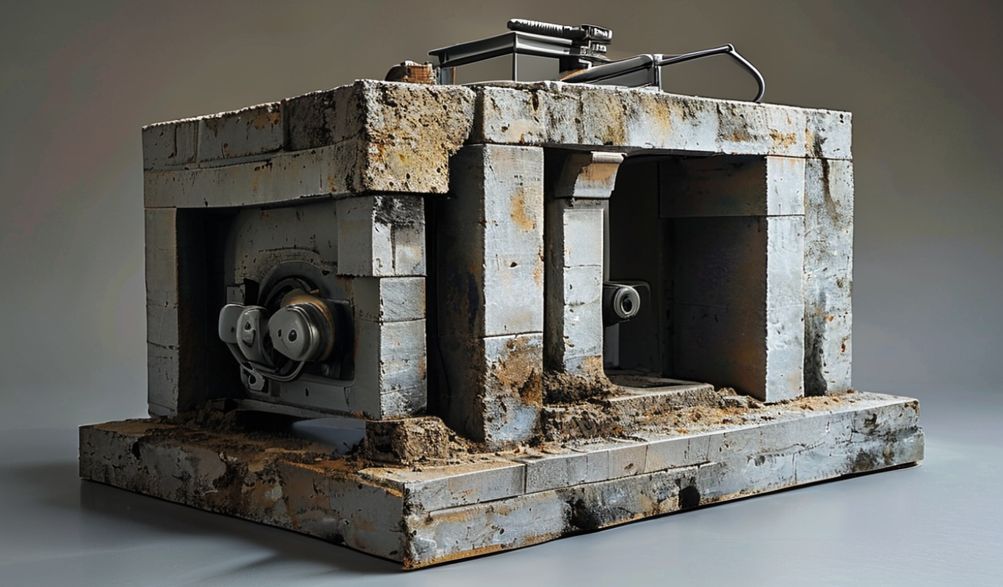
The Complete Guide to Hollow Block Machines: Types, Prices, and How to Choose
บทนำ
Struggling with the high cost, logistical delays, and inconsistent quality of purchased concrete blocks for your construction projects? You’re not alone. For contractors, developers, and entrepreneurs, sourcing reliable building materials is a constant challenge that eats into timelines and profit margins. This is where investing in your own production capability transforms from an idea into a strategic business decision.
This comprehensive guide is designed to be your definitive resource on hollow block machines. Compiled from detailed industry specifications, direct manufacturer data, and decades of collective operational insight, our goal is to cut through the sales jargon and provide you with honest, actionable information. Whether you’re a civil engineer specifying equipment, a contractor looking to vertically integrate, or an entrepreneur launching a block manufacturing business, this guide will equip you with the knowledge to:
- Understand exactly how these machines work and the different types available.
- Accurately assess your needs against machine capabilities.
- Navigate the complex price landscape and calculate true ROI.
- Identify the critical factors that separate a reliable workhorse from a costly headache.
By the end, you’ll have the confidence to make an informed purchasing decision that aligns with your scale, budget, and long-term goals.
เครื่องจักรผลิตบล็อกคอนกรีตคืออะไรและทำงานอย่างไร
Before diving into specifications and prices, it’s crucial to understand the core function and mechanics of the equipment. This foundational knowledge is key to evaluating what you’re truly buying.
Core Function and End Product
A hollow block machine, often called a concrete block making machine, is a device designed to manufacture hollow concrete blocks. These are the ubiquitous, rectangular building blocks with one or more hollow cavities you see on construction sites worldwide.
The hollow design isn’t arbitrary; it provides significant structural and economic advantages:
* น้ำหนักเบา:ขนส่งและจัดการในสถานที่ก่อสร้างได้ง่ายและราคาถูกกว่า
* ฉนวน:โพรงอากาศให้การป้องกันความร้อนและเสียงตามธรรมชาติ
* ประหยัดวัสดุ Uses less concrete than a solid block, reducing material costs without compromising key strength metrics.
* เป็นมิตรต่อการใช้งาน Conduits for electrical wiring and plumbing can be run through the cavities.
Standard sizes vary by region but commonly include 4-inch, 5-inch, and 6-inch blocks, which refer to the wall thickness.
The Basic Operational Principle
While automation levels vary, the core production process for any hollow block machine follows a consistent sequence:
- การให้อาหาร Raw materials—typically a mix of cement, sand (or fly ash), aggregate (like crushed stone), and water—are loaded into the machine’s hopper.
- การผสม The materials are blended into a homogeneous, semi-dry concrete mix. In smaller machines, mixing might be done separately.
- การขึ้นรูปและการอัดอัด The mix is fed into a mold (the shape of the desired block). Here, the most critical action occurs: high-frequency vibration combined with mechanical or hydraulic pressure. This vibration compacts the mix, removing air pockets and ensuring a dense, strong block that holds its shape.
- การปลดออกและบำบัดรักษา The freshly formed (or “green”) block is ejected from the mold onto a pallet or the ground. It then enters the การรักษา phase, where it must be kept moist for several days to allow the cement to hydrate and gain strength properly.
Key Components of the Machine
Understanding the main parts helps you assess build quality:
* ฮอปเปอร์ Holds the raw concrete mix.
* มิกเซอร์ Blends materials (integrated in most semi- and fully-automatic models).
* แม่พิมพ์ / กล่องแม่พิมพ์ The core tooling that defines the block’s shape and size. Interchangeable molds allow one machine to produce different products.
* ระบบสั่นสะเทือน Usually an electric motor with eccentric weights. The frequency and amplitude of vibration are critical for block density.
* ระบบการบดอัด Can be a hydraulic ram that applies pressure from the top (more common) or a vibrating table that compacts from below.
* ระบบควบคุม Ranges from simple levers on manual machines to programmable logic controllers (PLCs) on fully automatic lines.
ประเภทของเครื่องผลิตบล็อกคอนกรีต: จากแบบมือถือถึงแบบอัตโนมัติเต็มรูปแบบ
The market offers a spectrum of machines, defined primarily by their level of automation, output, and investment required. Choosing the right type is your first and most important decision.
Manual or Hand-Operated Block Machines
These are the simplest and most affordable entry point into block production.
- คำอธิบาย: Operated entirely by human labor. The operator manually fills the mold with mix, engages a lever to apply vibration (often via a small engine), and then uses a lever to lift the mold, leaving the green block on the ground.
- เหมาะที่สุดสำหรับ: Extremely small, personal projects (e.g., building a garden wall), NGOs in remote locations with no reliable power, or entrepreneurs wanting to test the market with minimal capital.
- ข้อดีและข้อเสีย:
- ข้อดี: Very low cost, no electricity needed (for some models), simple to maintain, highly portable.
- ข้อเสีย Very low output (100-500 blocks per day), physically demanding labor, inconsistent block quality dependent on operator skill, limited to simpler block designs.
เครื่องจักรทำบล็อกกึ่งอัตโนมัติ
This is the most popular category for small to medium-sized businesses and startup block manufacturing plants.
- คำอธิบาย: The core processes of mixing, feeding, vibration, and compaction are mechanized and powered. However, the movement of blocks—transferring them onto curing racks, stacking, and pallet return—is done manually by workers.
- เหมาะที่สุดสำหรับ: Small to medium construction companies supplying their own projects, entrepreneurs starting a block yard, and businesses with daily production needs in the range of 1,000 to 5,000 blocks.
- ข้อดีและข้อเสีย:
- ข้อดี: Excellent balance of output and cost, significantly less labor-intensive than manual machines, good block consistency, often allows for quick mold changes to produce different block types (solid, paver, etc.).
- ข้อเสีย Requires a steady crew for material handling, output is limited by manual handling speed, requires a stable foundation and three-phase power in most cases.
เครื่องทำบล็อกอัตโนมัติเต็มรูปแบบ
These are industrial-grade production lines designed for maximum output with minimal human intervention.
- คำอธิบาย: These are complete systems. They feature automated material batching and mixing, robotic pallet handling, automatic block stacking, and integrated curing systems. The entire process is controlled via a computerized panel. A key sub-distinction is:
- Stationary Plant: High-speed machines that produce blocks on pallets which are then conveyed through an extensive curing and stacking system. Highest output.
- Mobile “Egg-Laying” Machine: A self-contained unit that produces blocks and deposits them directly onto a level concrete floor, “laying” them like eggs as it moves. Simpler but still highly productive.
- เหมาะที่สุดสำหรับ: Large-scale commercial block manufacturing plants, government infrastructure projects, and businesses supplying major developers or retailers with volumes exceeding 8,000-10,000 blocks per day.
- ข้อดีและข้อเสีย:
- ข้อดี: Very high, consistent output with minimal labor, superior and uniform block quality, highest long-term efficiency for large scale.
- ข้อเสีย Very high capital investment, complex installation requiring expert setup, significant space and power requirements, higher technical skill needed for maintenance.
Concrete Block Machine vs. Interlocking Block Machine
This is a common point of confusion. A hollow block machine is a type of concrete block making machine. The term “concrete block machine” is the broad category that includes machines for making solid blocks, hollow blocks, paving stones, and curbstone.
An interlocking block machine produces a specific design of block (often solid or with minimal voids) that has grooves and tongues, allowing them to be dry-stacked without mortar. While a standard hollow block machine can be fitted with a mold for interlocking blocks, machines specifically optimized for high-volume interlocking block production are often designed slightly differently to handle the specific mix and compaction needs.
Critical Factors to Consider Before Buying
Moving beyond the basic type, you must scrutinize these critical factors to find the right machine for your specific context. This is where due diligence pays off for years to come.
ประเมินความต้องการในการผลิตของคุณ
Start by asking yourself these key questions:
* What is my required output? Calculate in blocks per วัน and per month. Be realistic about current needs and near-term growth. Don’t buy a massive machine for “someday” if it will sit underutilized.
* What is my project scale or market? Are you supplying a single, large project, running an ongoing business, or just supplementing your own construction needs?
* What space is available? A semi-automatic plant needs space for the machine, raw material storage, block curing, and finished product storage. A fully automatic line needs even more, including space for conveyor systems.
* What utilities are accessible? Check power requirements (single-phase vs. three-phase), water availability, and compressed air needs.
ข้อกำหนดและคุณลักษณะของเครื่องจักร
Compare these technical specs across shortlisted models:
* เวลาในรอบการผลิต How many seconds does it take to produce one block or one mold of blocks? Lower cycle time = higher output.
* Output per Hour: The most important capacity metric. Ensure it’s a realistic figure under normal working conditions, not a theoretical maximum.
* ความหลากหลายของแม่พิมพ์ Can the machine easily switch molds to produce different sizes of hollow blocks, solid blocks, or pavers? This flexibility can be a huge business advantage.
* ระบบไฟฟ้า Hydraulic systems are powerful and robust but can generate more heat and require maintenance. All-electric systems can be cleaner and more energy-efficient in some cases.
* แผงควบคุม Is it user-friendly? On semi-automatic machines, look for features like a vibration timer control, which we’ve found is crucial for consistent quality across different operators.
Quality of Construction and Durability
The machine’s physical build is what determines its lifespan and uptime.
* กรอบ It should be made of heavy-duty, reinforced steel, not light-gauge metal. Weld points should be clean and robust.
* Vibrators: These are the heart of the machine. Opt for reputable, brand-name vibrator motors (e.g., Italian or German-made) known for reliability. Frequency-controlled vibrators are a premium feature that extends bearing life.
* ระบบไฮดรอลิก If applicable, check the brand of pumps and valves. A quality system with good filtration will run cooler and last longer.
* Critical Advice: If at all possible, visit the manufacturer’s factory or a working installation. Seeing the machine being built and operated is the best way to judge quality. Ask to run a test using your local raw materials—sand and aggregate characteristics vary and affect performance.
After-Sales Support and Service
This factor can outweigh a slightly lower price. A machine is a long-term asset.
* การรับประกัน: What is covered (parts, labor?) and for how long?
* อะไหล่: Are common wear parts (mold liners, vibrator motors, hydraulic seals) readily available locally or through swift shipping? What is the cost?
* Technical Training: Does the supplier provide comprehensive training for your operators and maintenance staff at installation?
* ชื่อเสียง Research the manufacturer. How long have they been in business? Can they provide references from clients in a similar climate or region?
Hollow Block Machine Price Range and Cost Analysis
Let’s address the most pressing question: cost. The following ranges are estimates for planning and comparison purposes only. Prices fluctuate dramatically based on capacity, brand, country of origin, shipping costs, and local market conditions.
Price Breakdown by Machine Type (Approximate Ranges)
- เครื่องจักรที่ใช้แรงคน $1,000 – $5,000 USD. The price depends on build quality and whether it includes a small engine or mixer.
- เครื่องจักรกึ่งอัตโนมัติ: $10,000 – $50,000+ USD. This wide range reflects output capacity (e.g., 1,000 vs. 5,000 blocks/day), level of automation (e.g., with automatic feeder), and brand.
- เครื่องจักรอัตโนมัติสมบูรณ์แบบ: $50,000 – $300,000+ USD. Stationary plants with extensive pallet handling and curing systems occupy the top end of this range. Mobile egg-laying machines may start in the $50,000-$80,000 range for basic models.
Always request detailed, itemized quotations from multiple suppliers.
เกินกว่าราคาที่ติดฉลาก: ต้นทุนรวมของการเป็นเจ้าของ
The machine’s purchase price is just the beginning. Factor in:
* Installation & Foundation: Pouring a proper concrete foundation and possibly installing three-phase power lines.
* วัตถุดิบ: The ongoing cost of cement, aggregates, and water. Your local material quality will directly affect your mix design and block cost.
* แรงงาน Wages for operators and material handlers. Even fully automatic lines need supervisors and maintenance staff.
* Maintenance & Spares: Budget 3-5% of the machine’s cost annually for routine maintenance and spare parts.
* การใช้พลังงาน The power cost of running motors, vibrators, and hydraulic pumps.
ROI Calculation: Is it a Profitable Investment?
A simplified framework to gauge profitability:
1. Calculate Daily Production Value: (Number of blocks produced per day) x (Selling price per block in your market).
2. Calculate Daily Operational Cost: (Cost of raw materials for daily production) + (Labor cost) + (Energy/utility cost) + (Maintenance amortization).
3. Assess Gross Margin: The difference between #1 and #2 is your daily gross profit.
4. Factor in Overheads & Capital Recovery: Deduct rent, administrative costs, and the cost of financing the machine. How long will it take to pay back the initial investment?
Crucial Step: Conduct thorough market research on the demand and competitive pricing for concrete blocks in your specific area before investing.
Operating, Maintaining, and Troubleshooting Your Machine
Your machine’s performance and longevity depend heavily on how you use and care for it. These practical insights come from years of field experience.
Best Practices for Optimal Operation
- Mix Design is Key: Don’t guess. Work with a local engineer to develop a precise mix ratio (cement:sand:aggregate:water) for your specific materials. The mix should be semi-dry—it should hold its shape when squeezed in your hand, not be soupy.
- Proper Curing is Non-Negotiable: Fresh blocks must be kept moist and covered with plastic sheeting for at least 3-7 days. Steam curing in a chamber is used in advanced plants. Skipping proper curing results in weak, crumbly blocks.
- Safety First: Ensure all operators wear PPE (safety glasses, gloves, hearing protection). Never place hands in the mold area during operation. Lock out the power before performing any maintenance.
Essential Maintenance Checklist
Preventive maintenance prevents catastrophic downtime.
* Daily: Clean the machine thoroughly at the end of each shift, especially removing hardened concrete from the mold and hopper. Check hydraulic fluid levels and for any leaks. Inspect electrical connections.
* Weekly: Lubricate all moving parts (pivots, guide rods) as per the manual. Check and tighten all bolts and nuts, as vibration can loosen them. Inspect mold liners for wear.
* Monthly: Perform a more detailed inspection of the vibrator mounts, hydraulic hoses, and the compaction head. Replace worn seals or parts proactively.
Common Problems and Solutions
- Problem: Cracked or Broken Blocks.
- Solution: Likely a mix issue—too much water, insufficient cement, or poor aggregate grading. Adjust the mix design. Could also be due to rough handling of green blocks.
- Problem: Poor Surface Finish or Blocks Not Releasing from Mold.
- Solution: The mold may need cleaning or a fresh coat of mold release agent. The mix may be too wet. Increase vibration time slightly.
- Problem: Low Production Output or Slow Cycle.
- Solution: Check the hydraulic pressure or motor power. The mix might be too dry, causing it to flow poorly into the mold. Ensure the feeder is not clogged.
- Problem: Machine Vibrates Excessively or Noisily.
- Solution: Immediately check the vibrator mounts—they may have sheared or come loose. An unbalanced vibrator motor will fail quickly if not addressed.
คำถามที่พบบ่อย (FAQ)
Q1: What is the average production capacity of a standard hollow block machine?
Capacity varies wildly. A small semi-automatic machine might produce 800-1,200 blocks per 8-hour shift. A large, fully automatic line can produce 10,000+ blocks in the same time. Always discuss “shifts per day” when comparing capacity.
Q2: Can one machine produce different sizes and types of blocks?
Yes, most semi- and fully-automatic machines are designed for this. You purchase interchangeable molds for different products (e.g., 4″ hollow block, 6″ hollow block, solid block, paving stone). Changing molds typically takes 30 minutes to an hour.
Q3: How much space and what kind of foundation is required for a semi-automatic plant?
As a rule of thumb, you need at least 5,000-10,000 sq. ft. of covered and uncovered space for production, curing, and storage. The machine itself requires a reinforced concrete foundation, often 6-8 inches thick, specified by the manufacturer.
Q4: What is the typical lifespan of a well-maintained hollow block machine?
With proper maintenance and operation, a quality semi-automatic machine can last 15-20 years. Critical components like vibrators and hydraulic pumps may need overhauling or replacement during this time.
Q5: Are there any specific safety certifications or standards I should look for?
Look for machines that comply with international electrical safety standards (e.g., CE marking). The blocks produced should ideally meet relevant local or international construction material standards (like ASTM C90 in the US).
Q6: How do I find reliable suppliers or manufacturers?
Attend international construction equipment expos, research online industry directories, and seek recommendations from other block manufacturers. Prioritize suppliers with a long track record and a physical presence you can verify. Request and contact client references.
สรุป
Choosing the right hollow block machine ultimately boils down to a careful alignment of your production scale, available budget, and business objectives. The journey from a manual machine for a niche project to a fully automatic plant for a market-leading business is a clear progression, and each step has its place.
Our final, strongest recommendation is this: prioritize total cost of ownership and the quality of after-sales support over the allure of the lowest initial price. A slightly more expensive machine from a reputable supplier with local service support will save you money and stress in the long run. The most valuable step you can take is to visit suppliers, see machines in operation, and if possible, conduct a production test using the raw materials
<