
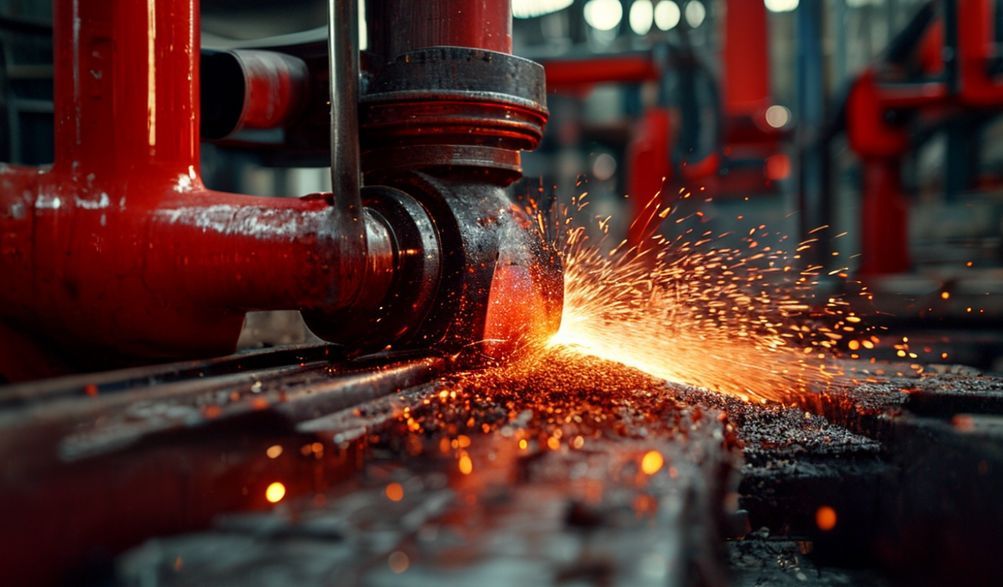
The Ultimate Guide to the Clay Brick Press Machine: Insights from FUDA Brick Making Factory
บทนำ
From ancient hearths to modern skyscrapers, the humble brick has been a foundational pillar of human civilization. Its durability, thermal mass, and structural integrity are non-negotiable. Yet, the quality of every brick is only as good as the machine that forms it. In today’s competitive construction landscape, the choice of a clay brick press machine isn’t just an equipment purchase; it’s a strategic decision that defines your product quality, operational efficiency, and long-term profitability.
At FUDA Brick Making Factory, we don’t just sell machines; we engineer solutions from the ground up. With years of hands-on experience on our own factory floor and in collaboration with hundreds of clients worldwide, we’ve witnessed firsthand the challenges that plague brick production: inconsistent brick density leading to structural weaknesses, crippling labor costs and shortages, production bottlenecks that miss market opportunities, and the relentless downtime from poorly built equipment.
The modern clay brick press machine is the definitive engineered answer to these challenges. However, not all presses are created equal. The real difference lies in the engineering philosophy, manufacturing rigor, and partnership offered by the manufacturer. This comprehensive guide, distilled from FUDA’s operational expertise, will serve as your essential resource. We’ll demystify the technology, detail the critical features, and explain why the right partnership is the cornerstone of transforming your brick production from a craft into a competitive, precision-driven enterprise.
What is a Clay Brick Press Machine? The Core of Modern Brick Production
A clay brick press machine is the industrial heart of contemporary brick manufacturing. It automates the age-old process of forming clay into precise, high-strength blocks through the application of immense, controlled pressure. This technology represents the evolution from labor-intensive, variable manual molding to a consistent, high-output manufacturing process.
หน้าที่หลักและหลักการทำงาน
The principle is elegant in its power. The machine performs a consistent, three-stage cycle:
- การให้อาหาร Prepared clay (with optimal moisture content) is fed into a cavity, known as the mold or die.
- การบดอัด: A hydraulic ram applies immense, calibrated pressure—often measured in hundreds of tons—to the clay within the sealed mold. This high-pressure compaction forces out air pockets and compresses the clay particles, creating a dense, homogeneous structure.
- การดีดตัวออก The newly formed, solid brick is ejected from the mold, ready for drying and firing.
This shift from manual force to automated, high-pressure compaction is revolutionary. It ensures every single brick has uniform dimensions, weight, and, most importantly, structural density, directly translating to higher compressive strength and better performance in the wall.
องค์ประกอบหลักและบทบาทของพวกเขา
Understanding the key components reveals the engineering behind a reliable press:
- The Mold/Die: The defining component. It shapes the clay into the desired brick type (solid, perforated, paving). At FUDA, we use high-chromium alloy steel for molds, ensuring exceptional wear resistance and longevity, even with abrasive clay mixes.
- ระบบไฮดรอลิก: The “muscle” of the machine. Comprising pumps, valves, cylinders, and a power unit, it generates and controls the pressing force. A robust, well-designed hydraulic system ensures consistent pressure and smooth operation.
- The Control Panel: The “brain.” Modern panels feature programmable logic controllers (PLCs) for automating the press cycle, setting pressure parameters, and monitoring operations. It’s the interface for precision control.
- The Frame: The “skeleton.” This heavy-duty steel structure must withstand constant, extreme cyclic loads without deformation. FUDA frames are fabricated from reinforced steel plate and undergo stress analysis to guarantee decades of stable operation.
- The Feeding System: Ranges from a simple manual hopper to fully automated conveyor and proportioning systems that ensure consistent fill volume, which is critical for dimensional uniformity.
Our design philosophy at FUDA centers on robustness and serviceability. Every component is selected and assembled not just to work, but to endure, with maintenance access designed in from the initial blueprint.
Why a Quality Brick Press Machine is a Non-Negotiable Investment
Viewing a brick press as a mere cost is a common mistake. It is a capital investment with a direct, measurable return. Here’s how a quality machine, like those from FUDA, pays for itself.
Unmatched Product Quality and Consistency
High-pressure compaction is the key to premium bricks.
* Increased Density & Strength: The force applied by the press compacts clay particles far beyond manual capability, resulting in bricks with higher compressive strength (often exceeding 15-20 MPa). This means buildings are more durable and safer.
* Dimensional Uniformity: Every brick is identical. This precision speeds up construction, as masons spend less time sorting or adjusting, and reduces mortar consumption by up to 20%. Consistent quality is what earns supplier certifications and repeat contracts.
* การปฏิบัติตามมาตรฐาน Quality presses are engineered to produce bricks that consistently meet or exceed national and international standards (such as ASTM C62, C216, or IS 1077). Our machines provide the controlled process necessary to achieve these benchmarks reliably.
Dramatic Increases in Production Efficiency & Output
The numbers speak for themselves. A skilled manual molder might produce 500-800 bricks in a full day. A standard semi-automatic FUDA press can produce 2,000 to 4,000 bricks per hour. This isn’t just an increment; it’s a transformation of scale.
* การเพิ่มประสิทธิภาพแรงงาน Automation handles the most strenuous, repetitive tasks. One operator can manage a semi-automatic press, freeing skilled labor for material preparation, quality control, and supervision.
* 24/7 Potential: With proper maintenance and shifts, a robust machine can operate around the clock, maximizing your return on investment and enabling you to fulfill large, time-sensitive orders.
Long-Term Cost Reduction and ROI
The initial investment is quickly offset by systemic savings:
* Lower Cost-Per-Brick: Reduced labor, minimal waste from breakage or rejects, and higher yield from raw materials all drive down the unit cost.
* Reduced Operational Risk: Less dependency on large, skilled manual workforces mitigates labor shortage risks.
* Predictable ROI: Based on our experience with clients, a well-utilized FUDA press typically achieves a full return on investment within 12 to 24 months, after which it becomes a significant profit center. The machine’s durability ensures this profitability continues for years.
Inside the FUDA Brick Making Factory: Engineering Trust and Authority
Our authority doesn’t come from a marketing brochure; it’s forged on our factory floor. When you choose FUDA, you are partnering with a manufacturer that lives and breathes the technology it builds.
Our Manufacturing Philosophy: Durability Over Everything
We build machines to last in the harshest industrial environments.
* การเลือกวัสดุ We use high-grade, wear-resistant steel for critical components. Our hydraulic systems are sourced from reputable, tier-one suppliers to ensure reliability.
* การกลึงเจียรนัยแม่นยำสูง: Key components like guide columns and platens are machined to tight tolerances on CNC equipment. This precision ensures perfect alignment, reducing wear and tear and ensuring consistent brick quality.
* การควบคุมคุณภาพอย่างเข้มงวด Every machine undergoes a comprehensive testing protocol before leaving our facility. This includes pressure tests at 110% of rated load, continuous cycle tests (often 500+ cycles), and thorough inspections of every weld, circuit, and function. We dispatch confidence, not just machinery.
R&D and Customization: Tailoring Solutions to Your Needs
No two clay deposits or production goals are identical. Our engineering team’s expertise is your asset.
* การปรับแต่งแม่พิมพ์ We design and manufacture molds for virtually any standard or custom brick size and type—common solid bricks, perforated blocks for insulation, interlocking pavers, or specialty shapes.
* Process Adaptation: Is your clay particularly sandy or sticky? Do you need to integrate with an existing dryer line? Our R&D team can advise on and implement modifications to the feeding system, pressure profile, or ejection mechanism to optimize the machine for your specific raw material and workflow.
The FUDA Support Ecosystem: Beyond the Machine Sale
Our relationship begins at the sale, but our commitment is long-term.
* Comprehensive Documentation: You receive detailed, illustrated manuals for operation, maintenance, and troubleshooting.
* การติดตั้งและการฝึกอบรม We provide clear installation guidelines and, upon request, on-site or remote training for your operators and maintenance staff, covering safety, daily operations, and basic upkeep.
* Dedicated Spare Parts Inventory: We maintain a ready stock of wear parts and critical components. This minimizes your potential downtime, as needed parts can be shipped promptly.
* ฝ่ายสนับสนุนทางเทคนิค Our engineers are accessible for ongoing consultation, helping you optimize production or address any operational questions that arise.
Key Features to Look for When Choosing Your Clay Brick Press
Navigating the market requires a focus on specifications that truly matter. Here’s what to scrutinize.
Pressing Force and Cycle Time: The Power & Speed Equation
- Pressing Force (Tonnage): This directly determines brick density. For standard solid clay bricks, presses ranging from 120 to 300 tons are common. Higher tonnage is needed for denser products like paving stones. Our engineers can recommend the optimal force for your target product strength.
- เวลาในรอบการผลิต The total time for one complete press cycle (fill, press, eject). A faster cycle time increases hourly output. Look for a balance—a robust press with a 15-20 second cycle is often more productive and reliable than a lightweight machine with a theoretically faster, but less stable, cycle.
Automation Level: From Semi-Auto to Fully Automatic Systems
Choose based on your budget, labor market, and production goals.
* กึ่งอัตโนมัติ: The operator places a box of prepared clay into the feed area and initiates the cycle. Ideal for medium-scale operations, offering a great balance of output and affordability.
* Fully Automatic (with Auto-feeder): Integrates a mixer and conveyor to feed clay into the press hopper automatically. The operator mainly supervises. This significantly boosts output and reduces physical labor.
* Robotic Handling Line: The pinnacle of automation. Includes robotic arms for stacking green bricks onto curing carts or pellets. Designed for large-scale, minimum-labor factories.
Build Quality and Ease of Maintenance
This is where premium manufacturers separate themselves.
* Accessible Design: Can you easily reach lubrication points, hydraulic valves, and the mold area for cleaning? Good design minimizes downtime for routine service.
* Standardized Components: The use of common bearing sizes, seals, and hydraulic fittings simplifies repairs and sourcing spare parts locally.
* Protective Features: Look for safety guards, pressure relief valves, and electrical overload protection. These safeguard both your personnel and your investment.
Operational Best Practices for Your Brick Press Machine
A great machine performs best with great operational practices. Here is practical advice from our experience.
Raw Material Preparation: The Foundation of Good Bricks
The press needs consistent material to produce consistent bricks.
* Clay Selection & Crushing: Ensure clay is free of large stones and organic matter. Use a crusher to achieve a uniform, fine particle size (typically under 3-5mm).
* การผสมและเทมเปอริ่ง Mix clay with water thoroughly to achieve a homogeneous, plastic consistency. The optimal moisture content (usually between 12%-18%) is critical. Too dry leads to lamination and weak bricks; too wet causes sticking in the mold.
Routine Maintenance Checklist for Longevity
Prevention is always cheaper than repair.
* Daily: Clean the mold and feeding area. Check hydraulic oil levels and for any visible leaks. Listen for unusual noises.
* Weekly: Lubricate all guide columns, bearings, and pivot points as per the manual. Inspect hoses and electrical connections for wear.
* Monthly: Check and tighten all bolts and nuts on the frame. Filter the hydraulic oil if needed. Inspect the mold for significant wear.
Troubleshooting Common Operational Issues
- Bricks Sticking in Mold: Usually caused by clay that is too wet, insufficient mold release agent (often just water mist), or a worn/damaged mold surface. Check moisture content first.
- Low Pressing Force/Weak Bricks: Check hydraulic oil level and for pump issues. Ensure the pressure setting on the control system is correct. Verify that the clay fill volume is sufficient and consistent.
- Uneven Brick Height/Filling: This points to an uneven feed. Check the feeding system for blockages or wear. Ensure the clay mix is uniform in consistency.
คำถามที่พบบ่อย (FAQ)
Q1: What is the production capacity of a standard FUDA clay brick press machine?
ก Capacity varies by model and brick type. For example, our popular FD-120 semi-automatic model can produce approximately 2,200 to 2,800 standard solid bricks per hour (or 18,000-22,000 per 8-hour shift), depending on operator speed and clay preparation.
Q2: Can the machine produce different types and sizes of bricks?
ก Absolutely. By changing the mold/die set, the same press can produce a wide variety of bricks. FUDA offers a comprehensive mold customization service. The changeover process is designed to be as straightforward as possible, often taking a trained crew a few hours.
Q3: What kind of after-sales service and warranty does FUDA offer?
ก We stand behind our build quality with a comprehensive 18-month warranty on core components like the hydraulic system, frame, and main cylinder. We provide lifelong technical support, a readily available spare parts supply, and detailed documentation to ensure your long-term success.
Q4: How much space and what utilities (power) are required for installation?
ก A typical mid-range press requires a floor space of about 6m x 4m, with strong, level foundations. Electrical requirements are usually in the range of 15-30 kW, 380V/50Hz (3-phase). We provide detailed foundation and utility layouts with every quotation.
Q5: Do you provide training for our operators?
ก Yes. Comprehensive training is a cornerstone of our service. It can be conducted on-site at your facility by our technicians or via detailed instructional videos and manuals. We cover safe operation, routine maintenance, and basic troubleshooting.
สรุป
Investing in a clay brick press machine is a decisive step toward modernizing your production, elevating your product quality, and securing your competitive edge. It’s a transition from variable, labor-dependent output to reliable, precision manufacturing. The key to unlocking this potential lies not just in the machine’s specifications, but in the expertise and partnership of the manufacturer behind it.
FUDA Brick Making Factory brings that essential advantage to the table. We combine factory-direct engineering, a relentless focus on durable construction, and a full-cycle support ecosystem dedicated to your operational success. We don’t just deliver a machine; we deliver a production solution backed by real-world experience and a commitment to your profitability.
Ready to transform your brick production?
* Contact the FUDA engineering team today for a free consultation. Discuss your specific clay properties, target output, and budget. We’ll provide a tailored machine recommendation and a transparent quotation.
* Download our detailed technical specification sheet for our flagship brick press models to compare features and capacities at your convenience.
* Arrange a visit to our factory or request a virtual tour. See our manufacturing process, quality controls, and team in action. Witnessing our commitment firsthand is the best way to build trust for a lasting partnership.