
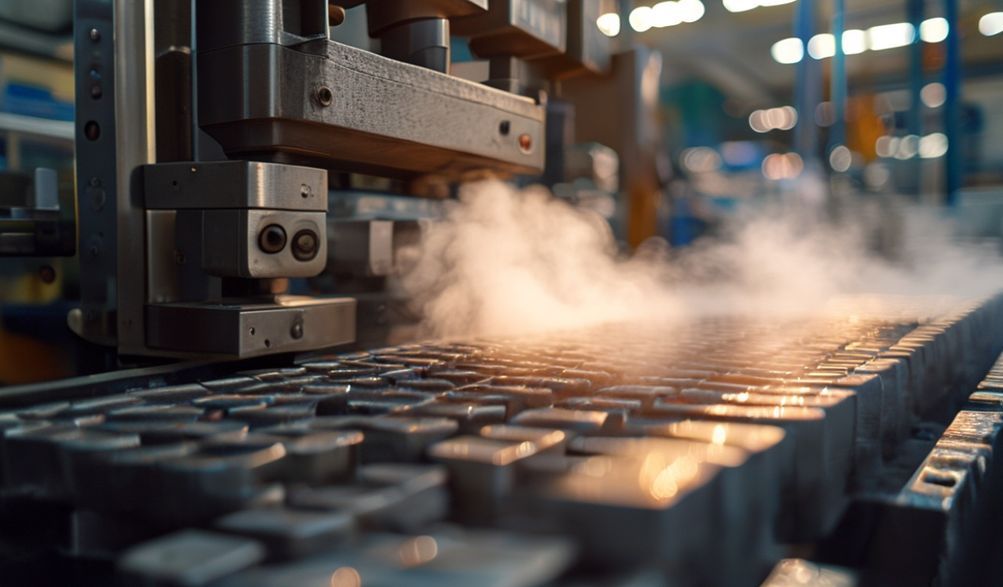
คู่มือขั้นสุดยอดในการซื้อเครื่องผลิตบล็อกคอนกรีตแบบกลวงสำหรับขายในฟิลิปปินส์ (ปี 2026)
บทนำ
อุตสาหกรรมการก่อสร้างของฟิลิปปินส์เป็นพลังขับเคลื่อนแห่งการเติบโต ตั้งแต่คอนโดมิเนียมสูงระฟ้าในเมโทรมะนิลาจนถึงโครงการที่อยู่อาศัยทนทานในต่างจังหวัด ความต้องการวัสดุก่อสร้างที่ทนทานและราคาจับต้องได้นั้นสูงกว่าที่เคยเป็นมา หัวใจสำคัญของความเฟื่องฟูด้านการก่อสร้างนี้คือองค์ประกอบพื้นฐาน นั่นก็คือบล็อกคอนกรีตแบบมีช่องว่าง ซึ่งเป็นวัสดุที่มีราคาประหยัด แข็งแรง และใช้งานได้หลากหลาย ก่อร่างสร้างโครงสร้างนับไม่ถ้วนทั่วทั้งหมู่เกาะ
สำหรับผู้ประกอบการ ผู้รับเหมา และบุคคลที่มีแนวคิดทางธุรกิจ ความต้องการนี้ถือเป็นโอกาสที่สำคัญ อย่างไรก็ตาม การฉกฉวยโอกาสนี้เริ่มต้นด้วยการตัดสินใจที่สำคัญ นั่นคือการลงทุนในเครื่องผลิตบล็อกคอนกรีตแบบกลวงที่เหมาะสม ตลาดในปัจจุบันเต็มไปด้วยตัวเลือกมากมาย ตั้งแต่เครื่องอัดแบบมือไปจนถึงสายการผลิตแบบอัตโนมัติเต็มรูปแบบ ซึ่งแต่ละแบบมีราคา ข้อเสนอ และความซับซ้อนที่แตกต่างกัน แล้วคุณจะเดินทางผ่านภูมิทัศน์ที่หนาแน่นนี้อย่างไร เพื่อหาเครื่องจักรที่เชื่อถือได้ มีประสิทธิภาพ และให้ผลตอบแทนจากการลงทุนอย่างแท้จริง?
คู่มือนี้ถูกออกแบบมาเพื่อเป็นแหล่งข้อมูลที่สมบูรณ์แบบสำหรับคุณ เราตัดสิ่งที่ไม่จำเป็นออกเพื่อมอบแผนงานที่ครอบคลุมและขับเคลื่อนโดยผู้เชี่ยวชาญสำหรับการซื้อของคุณ เป้าหมายของเราคือการมอบความรู้ให้คุณ เพื่อให้สามารถลงทุนได้อย่างรอบรู้ มั่นใจ และมีกำไร โดยอ้างอิงจากความเข้าใจในรายละเอียดทางเทคนิค สภาพความเป็นจริงของตลาดท้องถิ่น และพื้นฐานทางธุรกิจ คู่มือนี้มุ่งหมายที่จะเป็นพันธมิตรที่เชื่อถือได้ของคุณ ในการจัดหาอุปกรณ์ที่เหมาะสมเพื่อความสำเร็จในภาคการก่อสร้างของฟิลิปปินส์
ทำความเข้าใจเครื่องผลิตบล็อกคอนกรีต: ประเภทและการใช้งาน
เครื่องจักรผลิตบล็อกคอนกรีตคืออะไร
เครื่องจักรผลิตบล็อกคอนกรีตกลวง หรือที่มักเรียกกันว่าเครื่องทำบล็อกคอนกรีต เป็นอุปกรณ์ที่ออกแบบมาเพื่อผลิตบล็อกคอนกรีตกลวง (CHB) ผ่านกระบวนการอัดแน่นและสั่นสะเทือน หน้าที่หลักของมันคือทำให้การผลิตบล็อกเหล่านี้เป็นไปโดยอัตโนมัติและได้มาตรฐาน มั่นใจได้ว่าขนาด ความหนาแน่น และความแข็งแรงเชิงโครงสร้างจะสม่ำเสมอเมื่อเทียบกับวิธีการทำด้วยมือล้วนๆ
กระบวนการผลิตพื้นฐานประกอบด้วยสามขั้นตอนหลัก:
1. การผสมการผสมปูนซีเมนต์ ทราย กรวด และน้ำเข้าด้วยกันเพื่อให้ได้คอนกรีตที่ผสมเสมอกัน
2. การขึ้นรูปป้อนส่วนผสมลงในแม่พิมพ์ (หรือ "กล่องแม่พิมพ์") บนเครื่องจักร ซึ่งจะถูกบีบอัดด้วยแรงดันสูงและสั่นสะเทือนเพื่อไล่อากาศและขึ้นรูปเป็นบล็อกที่มีรูกลวงตามลักษณะเฉพาะ
3. การบ่มปล่อยให้บล็อกที่เพิ่งขึ้นรูปใหม่เซ็ตตัวและเพิ่มความแข็งแรง โดยทั่วไปผ่านการอบแห้งด้วยอากาศหรือห้องบ่มไอน้ำเพื่อให้ได้ผลลัพธ์ที่เร็วขึ้น
ประเภทของเครื่องจักรที่มีจำหน่ายในตลาดฟิลิปปินส์
การเลือกประเภทเครื่องจักรที่เหมาะสมคือการตัดสินใจครั้งสำคัญแรกของคุณ การเลือกของคุณจะขึ้นอยู่กับขนาดเป้าหมาย งบประมาณ และทรัพยากรแรงงานของคุณ
-
เครื่องจักรแบบใช้มือ/กึ่งอัตโนมัติ
- เหมาะสำหรับ:ธุรกิจขนาดเล็กเริ่มต้นใหม่ การดำเนินงานในพื้นที่จำกัด โครงการชุมชน หรือธุรกิจที่มีทุนเริ่มต้นจำกัด
- ปฏิบัติการ:สิ่งเหล่านี้ต้องใช้แรงงานคนอย่างมากในการป้อนส่วนผสม การทำงานของคันโยก และการนำบล็อกสำเร็จรูปออก รุ่นกึ่งอัตโนมัติอาจใช้ระบบไฮดรอลิกสำหรับการอัดแน่น แต่ยังคงต้องใช้การจัดการด้วยมือ
- เอาท์พุตความจุต่ำ โดยทั่วไปอยู่ในช่วง 300 ถึง 1,200 บล็อกต่อกะงาน 8 ชั่วโมง
- การลงทุนจุดเริ่มต้นที่เข้าถึงได้มากที่สุด ด้วยราคาเริ่มต้นเพียงไม่กี่หมื่นเปโซฟิลิปปินส์
-
เครื่องจักรอัตโนมัติสมบูรณ์แบบ:
- เหมาะสำหรับ:การผลิตเชิงพาณิชย์ขนาดกลางถึงใหญ่ที่มีเป้าหมายเพื่อปริมาณสูงและคุณภาพที่สม่ำเสมอ
- ปฏิบัติการ:นี่คือระบบควบคุมด้วย PLC ที่ทำให้กระบวนการเกือบทั้งหมดเป็นไปโดยอัตโนมัติ: การชั่งตวงส่วน การผสม การขึ้นรูป การเรียงซ้อน และบางครั้งแม้แต่การส่งกลับพาเลท โดยต้องการการแทรกแซงด้วยมือเพียงเล็กน้อย
- เอาท์พุตสูงและสม่ำเสมอ สามารถผลิตได้ 2,000 ถึง 10,000+ บล็อกต่อวัน
- การลงทุนแสดงถึงการลงทุนด้านเงินทุน (CAPEX) ที่สำคัญ แต่ให้ผลตอบแทนจากการลงทุน (ROI) ในระยะยาวที่ดีที่สุดสำหรับธุรกิจที่จริงจัง เนื่องจากการประหยัดค่าแรงและผลผลิตสูง
-
เครื่องอัดบล็อกเคลื่อนที่:
- เหมาะสำหรับ:ผู้รับเหมาและผู้สร้างที่ทำงานในสถานที่ก่อสร้างขนาดใหญ่และห่างไกล (เช่น การพัฒนาชุมชนใหม่ โครงสร้างพื้นฐานระดับจังหวัด)
- ข้อได้เปกิดเครื่องจักรสามารถถูกลากไปยังสถานที่ก่อสร้างได้โดยตรง สิ่งนี้ช่วยลดต้นทุนและความยุ่งยากด้านโลจิสติกส์ในการขนส่งบล็อกหนักนับพันได้อย่างมาก เนื่องจากคุณผลิตบล็อกเหล่านั้นในสถานที่ที่ต้องการใช้งานพอดี
-
เครื่องผสมคอนกรีต + เครื่องอัดบล็อกคอนกรีตแบบผสมผสาน:
- Critical Insight: The quality of your blocks starts with a consistent, well-proportioned concrete mix. Many suppliers offer packages that include a pan or planetary mixer. Investing in a good mixer is non-negotiable for producing strong, uniform blocks that meet construction standards.
ปัจจัยสำคัญที่ต้องพิจารณาก่อนการซื้อ
Assessing Your Production Needs & Budget
Before looking at any machine, ask yourself these foundational questions:
- What are my daily or weekly output targets? Are you supplying a single project or aiming for continuous retail sales?
- What is the scale of my operation? Is this a primary business or a side venture?
- What is my total available capital (CAPEX)? Remember to budget for the machine, raw material inventory, operating space, labor, and business permits.
Conduct a simple Cost-Benefit Analysis: A cheaper manual machine has a lower upfront cost but higher ongoing labor costs and lower output. A more expensive automatic machine has a higher initial price but can pay for itself faster through scale and efficiency. Calculate the potential return based on local block prices in your area.
Critical Machine Specifications and Features
Once you know your needs, dive into the technical details. Don’t just buy a “machine”; buy the right specifications.
- Capacity: This is the most advertised spec. Look for “blocks per hour” under standard conditions. Be realistic. A machine rated for 1,000 blocks per hour may only achieve 700-800 in a real-world, 8-hour shift with setup and breaks. Match the capacity to your assessed needs.
- Block Sizes & Molds: The machine must be compatible with standard Philippine hollow block sizes:
- 4″ (100mm) x 8″ (200mm) x 16″ (400mm)
- 5″ (125mm) x 8″ x 16″
- 6″ (150mm) x 8″ x 16″
- Ensure the supplier offers these molds. Check the cost and process for changing molds if you plan to produce multiple sizes.
- แหล่งพลังงาน
- ไฟฟ้า Cleaner, quieter, and lower operating cost where grid power is stable. Common for stationary factory setups.
- ดีเซล Essential for locations with unreliable electricity or for mobile machines. Higher fuel cost but offers independence.
- Hybrid (Electric/Diesel): Offers flexibility but at a higher purchase price.
- Build Quality & Key Components: This is where durability is decided.
- กรอบ Look for a robust, heavy-duty steel frame that can withstand constant vibration.
- ระบบไฮดรอลิก The heart of an automatic machine. Reputable brand components (e.g., Bosch Rexroth, Yuken) are a sign of quality and reliability.
- ระบบสั่นสะเทือน Powerful, well-balanced vibration motors are crucial for proper compaction and strong, dense blocks.
Supplier Evaluation in the Philippines
Your machine is only as good as the company that stands behind it. Vetting your supplier is arguably more important than vetting the machine specs.
- Manufacturer vs. Distributor: Buying directly from a manufacturer can mean better pricing and direct technical knowledge. A reputable distributor may offer a wider range of brands and established local service networks.
- Supplier Vetting Checklist:
- ประวัติการติดตาม How many years have they been in business?
- Physical Presence: Do they have a showroom, office, or factory you can visit? Avoid “ghost” sellers.
- Client Portfolio: Can they provide references or case studies from past customers? A credible supplier will have them.
- บริการหลังการขาย: This is critical. Do they have trained technicians? What is their response time for breakdowns?
- The Importance of Local Support: Ensure spare parts (like seals, hoses, and wear plates) are available locally or can be shipped quickly. Ask about the warranty period and what it covers. Does the purchase include on-site installation and operator training?
Navigating the Philippine Market: Prices, Brands, and Where to Buy
Average Price Ranges (PHP Investment Guide)
Disclaimer: Prices fluctuate based on brand, specifications, foreign exchange rates, and supplier margins. The following are broad 2026 market brackets for guidance only. Always contact multiple suppliers for exact, detailed quotations.
- Manual / Basic Semi-Automatic Machines: PHP 50,000 to PHP 200,000. Often includes a few basic molds.
- Mid-Range Semi-Automatic / Entry-Level Automatic Machines: PHP 250,000 to PHP 800,000. May include a mixer and more comprehensive training.
- สายการผลิตแบบอัตโนมัติเต็มรูปแบบ: PHP 1,000,000 to PHP 5,000,000+. This is for high-output systems with automatic stackers, pallet feeders, and sophisticated controls.
Always confirm what’s included: Training, initial set of molds, a starter kit of spare parts, and delivery terms.
Reputable Brands and Manufacturers
While we maintain a neutral tone, we advise you to research these categories:
- Established International Brands: Several German, Chinese, and Turkish brands have a strong presence in the Philippines through local distributors. They are known for advanced technology and durability.
- Philippine-Based Manufacturers: A number of local fabricators have earned excellent reputations for building machines suited to the Philippine climate and operating conditions, often with the advantage of more responsive service and parts support.
Your Research Task: Look for brands consistently mentioned in industry forums, with physical service centers. The best brand is the one with the strongest local support network for your location.
Where to Find Machines for Sale
- Online Marketplaces: Platforms like Facebook Marketplace, Lazada, and OLX are popular starting points. They offer a wide view of available options and prices.
- Safety Tip: Use them for research, not final transactions. Always move the conversation to a verified company phone number or email. Insist on visiting a showroom before any large payment.
- Direct from Manufacturers/Dealers: Search for “Hollow blocks machine Philippines” to find official company websites. Buying direct allows for customization and direct technical discussions.
- Industry Exhibits and Trade Fairs: Events like PhilConstruct are invaluable. You can see machines running, compare brands side-by-side, and talk directly to engineers and company principals.
Maximizing Your Investment: Operation, Maintenance, and Profitability
Basic Operational Guide and Safety
A well-run operation is a safe and profitable one.
- Workflow: Raw Material Storage -> Batching -> Mixing -> Block Molding -> Curing (for 14-28 days) -> Storage/Sale.
- Safety Protocols:
- Operators must wear safety shoes, gloves, and eye protection.
- Ensure all machine guards are in place.
- Lock-out/Tag-out procedures must be followed during maintenance.
- Keep the work area clean and free of slurry buildup to prevent slips.
Essential Maintenance Checklist
Preventive maintenance is far cheaper than major repairs.
- Daily: Clean the machine thoroughly, especially the mold box and pallets. Check hydraulic oil levels and look for leaks. Lubricate all moving parts as per the manual.
- Weekly: Inspect hydraulic hoses for wear. Tighten any loose bolts and nuts on the frame and vibration table. Check the electrical connections.
- Monthly: Change or clean hydraulic and oil filters. Inspect the vibration motors and bearings. Perform a comprehensive check of all systems.
Common Wear Parts: Mold liners, hydraulic seals, hoses, and vibrator bearings. Keep a small inventory of these to minimize downtime.
Calculating Profitability and Business Potential
Here’s a simplified look at the numbers:
- Cost of Raw Materials per Block: Calculate the cost of cement, sand, and gravel needed for one block. For example, a 5″ hollow block may use raw materials worth PHP 12-15.
- Selling Price per Block: Check the current market price in your target sales area. This can range from PHP 20 to PHP 28 for a standard 5″ block, depending on region and quality.
- Gross Profit Per Block: Selling Price – Material Cost = Gross Profit (e.g., PHP 25 – PHP 14 = PHP 11).
- Factor in Other Costs: Deduct your operating costs: labor, electricity/diesel, machine depreciation, maintenance, and transportation.
- Scale is Key: Your daily profit is Gross Profit per Block x Daily Output. A machine producing 2,000 blocks a day at PHP 11 gross profit has a potential gross of PHP 22,000 daily before overhead.
Success Factors: Consistent quality to build brand reputation, efficient production to lower per-unit cost, and understanding local demand cycles.
Frequently Asked Questions (FAQ)
Q1: What is the total starting budget needed for a hollow block business in the Philippines?
ก Beyond the machine (PHP 200k-1M+), budget for: raw material inventory (PHP 50k-100k), land rental or space preparation, labor (2-3 operators), a concrete mixer, pallets, and business permits (DTI, Mayor’s Permit, BIR). A realistic total startup budget for a small-scale operation often starts around PHP 500,000.
Q2: Can I export blocks made with a machine bought in the Philippines?
ก Potentially, yes. However, export markets have strict quality standards (e.g., compressive strength, dimensional tolerance). You would need a fully automatic, high-precision machine capable of producing consistent, high-grade blocks and your production process would need to be certified. Focus on mastering the local market first.
Q3: How long does it take to learn to operate a semi-automatic/automatic machine?
ก For a semi-automatic machine, a competent operator can be trained in 1-2 weeks. For a fully automatic PLC-controlled system, proper training for setup, operation, and basic troubleshooting from the supplier should take 2-4 weeks. Never skip the training.
Q4: What are the most common problems with hollow blocks machines and how are they fixed?
ก
* Block Breakage: Often caused by improper mix (too dry/too wet), insufficient vibration, or rough handling during curing. Adjust the mix and compaction.
* Poor Compaction/Weak Blocks: Check vibration motor power and frequency. Ensure the mix design is correct.
* Hydraulic Leaks: Worn seals or loose fittings. Replace seals and tighten connections.
* ตลอดเวลา refer to your manual first and contact your supplier’s technical support for repairs.
Q5: Is there financing available for purchasing this equipment?
ก Yes, options exist. Some equipment suppliers offer in-house installment plans. Banks provide business loans for capital equipment, though requirements can be stringent. Also, explore government programs through agencies like the DTI (Department of Trade and Industry) or SB Corp. that offer financing support for MSMEs.
Conclusion
Purchasing a hollow blocks machine is a significant step toward building a profitable enterprise in the thriving Philippine construction industry. The key to success lies in careful planning: thoroughly assessing your production needs, understanding the critical machine specifications, and, most importantly, choosing a reputable supplier with proven local support.
Remember, an informed purchase is a sustainable one. Use this guide as your foundational research, but let it be the starting point for your own due diligence. Visit supplier showrooms, ask for live demonstrations, request client references, and get everything—from warranty details to training scope—in writing.
Have more questions about hollow blocks machines? Research diligently, consult with industry experts, and always prioritize quality and service for a successful venture in the Philippine construction sector. Your investment today builds the foundations for tomorrow’s growth.
<