
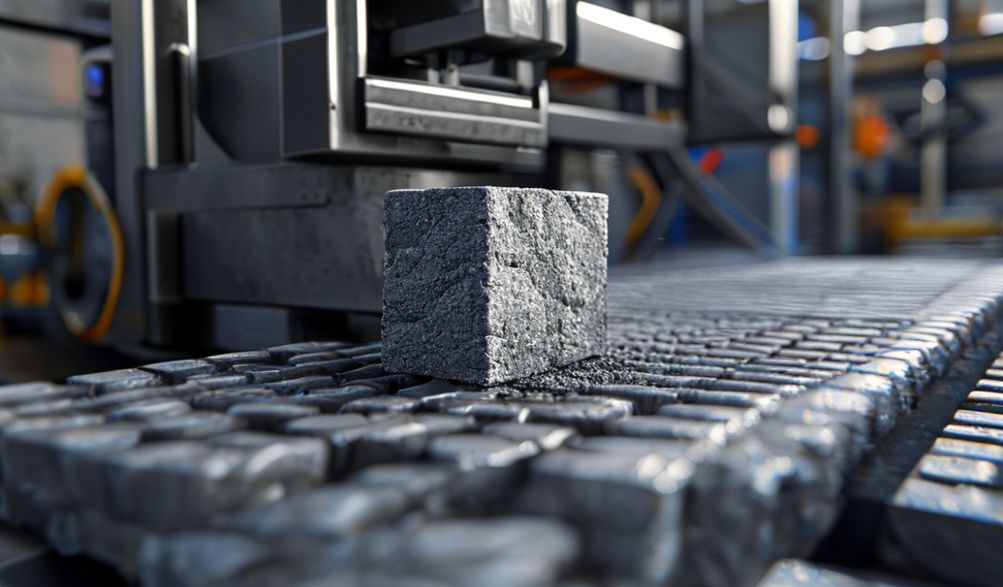
The Ultimate Guide to Cement Blocks Making Machines: Types, Costs & How to Choose
บทนำ
In a world racing to build affordable, durable housing and infrastructure, the humble cement block remains a cornerstone of modern construction. Its demand is insatiable, driven by urbanization, industrialization, and the global need for cost-effective building materials. Yet, behind every sturdy wall lies a critical question: how are these blocks produced efficiently, consistently, and profitably?
For decades, manual labor dominated block production—a slow, inconsistent, and physically demanding process. Today, the landscape has been revolutionized by automation. A cement blocks making machine is no longer a luxury; it’s a fundamental tool for entrepreneurs, contractors, and builders aiming to scale their operations, control quality, and improve margins.
This comprehensive guide is designed to demystify these powerful machines. We will dissect their workings, explore the various types available, and provide a clear financial roadmap for your investment. Compiled from in-depth analysis of manufacturer specifications, industry operational standards, and practical field insights, this guide aims to be your definitive resource for making an informed, confident decision.
What is a Cement Blocks Making Machine? Core Function & Benefits
At its core, a cement blocks making machine is a device that automates the process of forming concrete into precise, high-density blocks. It transforms a raw mix of cement, aggregates, and water into standardized construction units through a combination of vibration, compaction, and sometimes pressure.
Basic Working Principle: From Raw Material to Finished Block
The magic happens in a repeatable cycle. While machine complexity varies, the fundamental stages remain consistent:
- การผสม Raw materials (cement, sand, stone dust, or aggregate) are combined with water in a concrete mixer to achieve a homogeneous, semi-dry consistency.
- การให้อาหารและการหล่อหลอม This mixture is fed into a mold or chamber on the machine. In stationary machines, the mold is filled; in mobile “egg-laying” types, the machine moves over a flat surface to deposit the mix into a mold box.
- การอัดแน่นและการสั่นสะเทือน This is the heart of the process. Powerful vibrator motors, often combined with hydraulic pressure, compact the mixture. This action removes air pockets, ensures uniform density, and gives the block its structural strength.
- Demolding/Ejection: The freshly formed block is ejected from the mold. In manual machines, this is done with a lever; in automatic systems, it’s a seamless hydraulic operation.
- การบ่ม The ejected blocks are transferred to a curing area. They must be kept moist for several days to allow the cement to hydrate fully and achieve its designed compressive strength.
Key Advantages Over Manual Production
Investing in a machine isn’t just about automation; it’s about a fundamental upgrade in your production capabilities.
- ความสม่ำเสมอและคุณภาพ Machines produce blocks with uniform dimensions, density, and strength (often meeting standards like ASTM C90). This consistency is impossible with manual molding and is critical for structural integrity and professional finishing.
- High Output & Efficiency: Compare manual output of a few hundred blocks per day with a worker to a small semi-automatic machine producing 1,500 to 3,000 blocks in an 8-hour shift. This scalability is transformative for business growth.
- ประหยัดค่าแรงและต้นทุนอย่างมีนัยสำคัญ One machine operated by 2-3 workers can replace 10-15 manual laborers. This drastically reduces long-term wage bills, dependency on skilled manual labor, and associated management overhead.
- ความหลากหลายในการออกแบบ With interchangeable molds, a single machine can produce a variety of products—hollow blocks for load-bearing walls, solid blocks for foundations, paving slabs for landscaping, and interlocking blocks for dry-stack construction—maximizing your market reach.
Types of Cement Block Making Machines
Navigating the different types of machines is your first major step. The right choice hinges on your production goals, budget, and operational context.
By Operation: Manual, Semi-Automatic, Fully Automatic, and Mobile Machines
-
เครื่องทำบล็อกคอนกรีตแบบใช้มือ
- คำอธิบาย: Operated entirely by human labor—filling the mold, engaging a lever for compaction, and demolding.
- การลงทุน Lowest cost entry point.
- แรงงาน High requirement, physically intensive.
- เอาท์พุต Low (300-500 blocks/day).
- เหมาะสำหรับ: Micro-enterprises, very small-scale projects, or regions with extremely low labor costs where capital is limited.
-
เครื่องจักรทำบล็อกกึ่งอัตโนมัติ:
- คำอธิบาย: The sweet spot for most small to medium businesses. Key processes like vibration and compaction are mechanized (often with an electric vibrator and hydraulic press), but material feeding and block removal may be manual.
- การลงทุน Moderate. Offers the best balance of cost and productivity.
- แรงงาน Requires 3-5 operators.
- เอาท์พุต Good to High (1,000 – 5,000 blocks/8-hour shift, depending on model).
- เหมาะสำหรับ: Start-up block manufacturing businesses, contractors supplying multiple projects, and municipal works.
-
เครื่องทำบล็อกอัตโนมัติเต็มรูปแบบ:
- คำอธิบาย: The pinnacle of automation. These systems feature automated material feeding, molding, compaction, block ejection, stacking, and even palletizing via a programmable logic controller (PLC).
- การลงทุนค่าใช้จ่ายด้านเงินทุนสูง
- แรงงาน Minimal (1-2 workers for supervision and maintenance).
- เอาท์พุต Very High (8,000 – 20,000+ blocks/shift).
- เหมาะสำหรับ: Large-scale block manufacturing plants, industrial construction projects, and businesses focusing on high-volume supply to distributors.
-
เครื่องผลิตบล็อกคอนกรีตแบบเคลื่อนที่ (ประเภทวางไข่)
- คำอธิบาย: A unique category where the machine moves on wheels, depositing (“laying”) blocks directly onto a level concrete casting slab or the ground.
- ประโยชน์หลัก Eliminates the need for pallets and complex block handling systems. Blocks cure where they are laid.
- เหมาะสำหรับ: On-site production for large projects (e.g., housing colonies, remote construction) where transporting blocks is costly.
By Production Method: Static (Stationary) vs. Egg Laying Mobile Block Machines
This is a crucial practical distinction:
* เครื่องจักรสถิตย์: Produce blocks on pallets. These pallets are then moved to a curing area via forklift or rack system. They are standard for factory settings and allow for precise, high-pressure block production.
* Egg Laying Mobile Machines: Produce blocks directly on a prepared casting bed. They are highly efficient for linear production and reduce handling but require a large, flat, prepared casting yard.
By Output Block Type: Hollow Blocks, Solid Blocks, Paver Blocks, Interlocking Blocks
The product defines the mold. Most machines support multiple molds.
* บล็อกคอนกรีตมวลเบา: The most common. Lightweight with cavities, used for load-bearing and non-load-bearing walls. They provide excellent insulation and are material-efficient.
* บล็อกแข็ง Dense and heavy, used for foundations, retaining walls, and where maximum strength is required.
* บล็อกปูพื้น: Used for driveways, walkways, and patios. They require a high-quality surface finish and are often produced with color pigments.
* บล็อคต่อเชื่อม: Designed with grooves and tongues that lock together without mortar, enabling faster, cheaper construction. Popular for cost-effective housing and boundary walls.
Critical Factors to Consider Before Buying
A common mistake is focusing solely on price or output claims. A holistic evaluation prevents costly operational headaches.
Assessing Your Business Needs & Scale
Be brutally honest with your answers:
* Projected Demand: Are you supplying a single project, a local market, or aiming for regional distribution? Estimate your average daily and monthly block requirement.
* Available Capital: Your budget must include the machine, setup costs, and 3-6 months of working capital.
* อวกาศ Do you have a factory shed? A large, level casting yard? Factor in space for raw material storage, production, curing (which requires the most area), and finished goods.
Machine Specifications Deep Dive
Look beyond the brochure. Ask for and verify:
* Cycle Time & Capacity: “Cycle time” is the time to produce one batch of blocks. A machine with a 20-second cycle time producing 4 blocks per cycle can theoretically make 720 blocks per hour. Be wary of inflated “theoretical” capacities; ask for practical, sustained shift output.
* Block Size & Mold Compatibility: Ensure the machine can produce the standard block sizes in your market (e.g., 4″, 6″, 8″ hollow blocks). Check the cost and availability of additional molds.
* ความต้องการพลังงาน Does it run on a standard 3-phase electric motor, a diesel engine (for areas with unreliable power), or a combination? Hydraulic systems are preferred for consistent pressure.
* ระดับการทำงานอัตโนมัติ For semi-auto and automatic machines, scrutinize the control system. A well-designed PLC interface is more reliable than a simple relay system for complex operations.
Quality of Construction & Key Components
This is where premium brands justify their cost. Inspect or request details on:
* กรอบและโครงสร้าง It should be heavy-duty welded steel, not bolted light-gauge metal, to withstand constant vibration.
* ระบบไฮดรอลิก Look for reputable pump and valve brands. The system should operate smoothly without leaks or excessive noise.
* Vibrator Motors: These are critical for block density. They should be high-frequency, externally mounted for easy maintenance, and properly insulated against concrete dust and moisture.
* วัสดุแม่พิมพ์ Molds must be made from high-carbon, hardened steel with a precise internal finish. Poor-quality molds lead to block sticking, rapid wear, and dimensional inaccuracies.
Understanding the Investment: Cost Analysis & ROI
Transparency about costs builds trust and sets realistic expectations.
Breakdown of Machine Price Ranges
Prices are indicative and vary wildly by region, brand, and specifications.
* เครื่องจักรที่ใช้แรงคน $1,000 – $4,000 USD.
* เครื่องจักรกึ่งอัตโนมัติ: $8,000 – $25,000 USD. (This is the most active market segment).
* เครื่องจักรอัตโนมัติสมบูรณ์แบบ: $40,000 – $150,000+ USD.
* Mobile Egg Laying Machines: $15,000 – $50,000 USD.
Beyond the Machine: Additional Setup Costs
The machine is often only 40-50% of the total initial investment.
* Raw Material Stock: Initial inventory of cement, aggregates.
* Land & Civil Work: Cost of land lease/purchase, constructing a production shed, and laying a strong, level foundation for the machine.
* Utilities & Curing Area: Water tank and piping, electrical connections (transformers for 3-phase), and preparing a large, sheltered curing area with sprinkler systems.
* Labor & Ancillary Equipment: Wages for operators, a concrete mixer, wheelbarrows, and possibly a forklift or trolley system.
Calculating Potential Return on Investment (ROI)
A simplified framework:
1. Calculate Cost Per Block: Add up all variable costs: cement, aggregate, sand, power, water, and labor allocated per block. For a semi-automatic plant, this often falls between $0.30 – $0.60 per standard hollow block, depending on local material costs.
2. Determine Selling Price: Research the local market price. Let’s assume a conservative selling price of $0.80 – $1.20 per block.
3. Estimate Gross Profit Per Block: Selling Price – Cost Price = Gross Profit.
4. Factor in Daily Output: If your machine produces 2,000 blocks/day with a gross profit of $0.30/block, that’s $600 gross profit per day.
5. Calculate Payback Period: Divide your total initial investment (machine + setup) by your estimated daily gross profit. This gives you the number of production days to recover your investment. A payback period of 12-18 months is generally considered very good.
Key Profitability Factors: Local demand consistency, your operational efficiency (minimizing waste and downtime), and effective marketing/sales channels.
Operational Guide: Raw Materials, Mix Ratio & Maintenance
Expertise shines in the day-to-day operations. Here’s what you need to know.
Optimal Raw Material Mix for Quality Blocks
A common mistake is using poor-quality or inconsistent raw materials. The mix is critical for strength (measured in N/mm² or psi).
* A Standard Mix Ratio (by volume): 1 part cement : 3 parts fine sand/stone dust : 5 parts coarse aggregate (6-10mm).
* อัตราส่วนน้ำต่อปูนซีเมนต์: This is vital. Aim for a semi-dry mix—just enough water for hydration. The mixed material should hold its shape when squeezed in your hand but not be sloppy. Too much water drastically reduces final strength.
* คุณภาพวัสดุ Use clean, well-graded aggregates. Cement must be fresh and stored properly. Regularly test the compressive strength of your blocks; this builds credibility with customers.
Step-by-Step Production Process
- การเตรียมวัสดุ Measure and load raw materials into the concrete mixer. Mix for 5-7 minutes until uniform.
- Machine Preparation: Clean the mold, apply a recommended release agent if needed, and ensure the vibrators are functioning.
- การให้อาหารและการอัดอัด Transfer the mix to the machine hopper. Initiate the molding cycle (vibration + pressure).
- Demolding & Handling: Eject the green (uncured) block onto a pallet or the casting bed. Handle with care to avoid deformation.
- การบ่ม Move blocks to the curing area within 20 minutes. Keep them covered with plastic sheeting and sprinkle water 2-3 times daily for at least 7 days for proper strength development.
- Stacking & Storage: After initial curing, blocks can be stacked for air drying and eventual sale.
Essential Maintenance Checklist for Longevity
Preventive maintenance is non-negotiable.
* Daily: Clean the machine thoroughly after each shift, especially the mold and vibrator housings. Check hydraulic oil levels and for leaks. Lubricate all moving parts as per the manual.
* Weekly: Inspect mold liners for wear or damage. Tighten all bolts and nuts (vibration loosens them). Check electrical connections.
* Monthly: Change hydraulic oil filters. Inspect vibrator motors for bearing wear. Perform a full system check on the hydraulic pressure.
* Troubleshooting Tip (Block Sticking): This is often due to a worn/damaged mold, insufficient release agent, or an incorrect (too wet) mix consistency. Address the root cause rather than just applying more oil.
FAQ: Your Cement Block Machine Questions Answered
Q1: What is the average production capacity of a small-scale block making machine?
A small-scale semi-automatic machine typically produces between 1,000 to 3,000 standard blocks (like 4″x8″x16″) in an 8-hour shift, depending on the model and crew efficiency.
Q2: Can I use a cement block machine for other products like pavers or bricks?
Absolutely. This is a key advantage. By simply changing the mold, the same machine can produce paving slabs, solid bricks, kerbstones, and interlocking blocks. Always confirm mold compatibility and required vibration settings with your supplier.
Q3: What is the typical lifespan of a well-maintained machine?
A robustly built machine from a reputable manufacturer, following a strict maintenance schedule, can easily last 10 to 15 years or more. Critical wear parts like molds and vibrators will need replacement, but the main frame should endure.
Q4: How much space do I need to set up a small block manufacturing unit?
For a semi-automatic operation, you should plan for a minimum of 10,000 to 15,000 square feet. This accommodates the production shed, raw material storage, the curing area (the largest section), and space for finished block storage.
Q5: What are the most common operational challenges and how do I solve them?
* Low Block Strength: Usually caused by incorrect water-cement ratio (too much water) or poor-quality cement. Strictly control your mix design and material sourcing.
* Poor Surface Finish or Broken Edges: Often due to a worn-out mold or insufficient compaction/vibration time. Inspect and replace mold liners and ensure the compaction cycle is adequate.
* Machine Vibration Issues: Loose bolts or failing vibrator motor bearings. Follow the weekly tightening schedule and listen for unusual noises from the vibrators.
สรุป
Choosing the right cement blocks making machine is a strategic decision that hinges on a clear understanding of your scale, budget, and product goals. From the hands-on manual press to the humming fully automatic production line, each machine serves a specific purpose in the construction ecosystem.
Our final, most crucial piece of advice is this: never buy based on a brochure or website alone. Your due diligence must include visiting the manufacturer’s workshop to inspect the build quality and, ideally, witnessing a live demonstration at an existing plant. See the machine run, talk to the operators, and ask about after-sales service and parts availability.
A cement block making machine is more than a piece of equipment; it’s the cornerstone of a sustainable construction business or a catalyst for a large-scale project. It represents an investment in efficiency, quality, and growth.
Call to Action: Use this guide as your foundational checklist. Begin researching reputable manufacturers, request detailed quotations with full specifications, and start planning your site. The foundation for your success in the block manufacturing industry starts with the right machine.
<